



SINCE the late 1500s, a small workshop in the Vatican has cared for the hundreds of mosaics that decorate the interior of St Peter’s Basilica in a sea of colour.
The 12 artists on staff at the Vatican Mosaic Studio also produce smaller artworks that Pope Leo XIV uses for a kind
of “mosaic diplomacy”, gifting them to foreign leaders visiting the Vatican or on his own trips overseas.
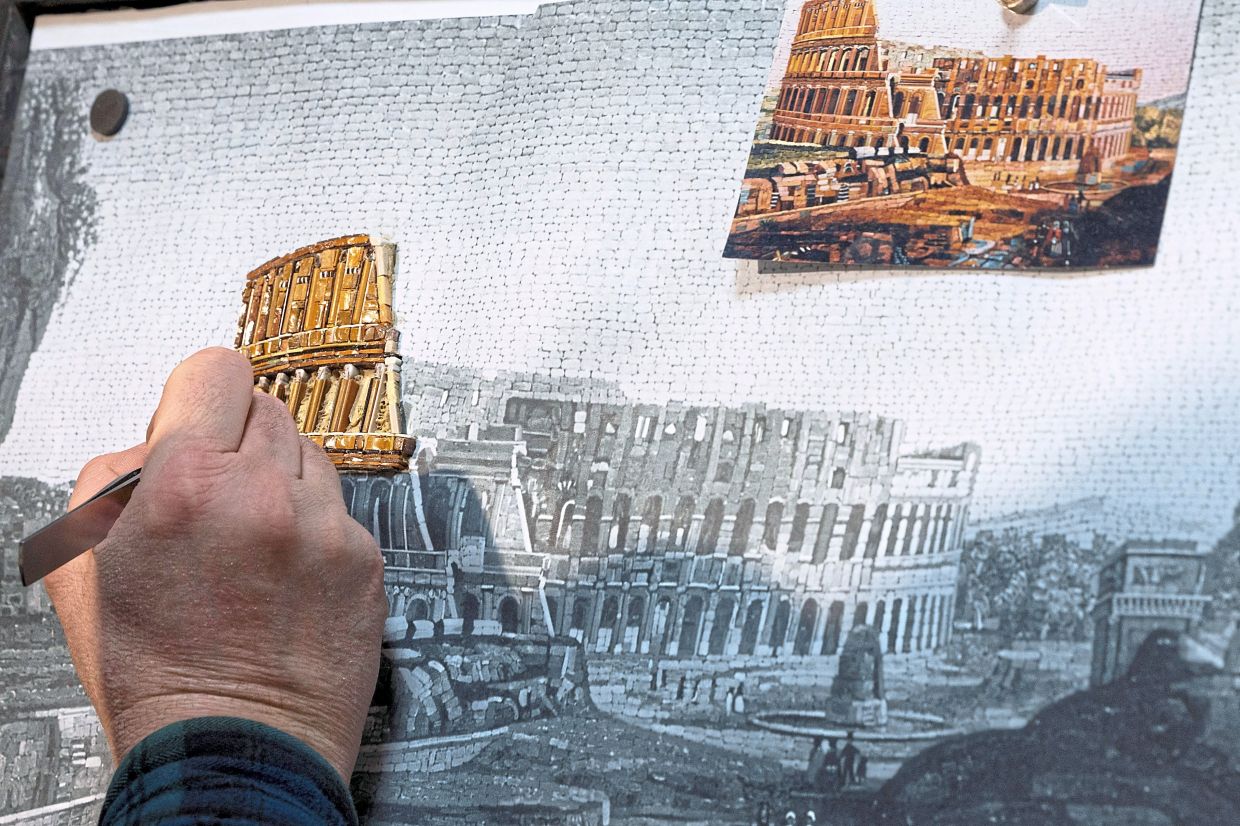
It can take months for the studio to create one mosaic in a slow and intensive process piecing together tiny coloured tiles into devotional items such as depictions of Jesus and Mary or non-religious scenes like a view of Rome’s Colosseum.
“It is very important today to use the mosaic technique because we are saving the ancient tradition,” said Paolo Di Buono, the studio’s director.
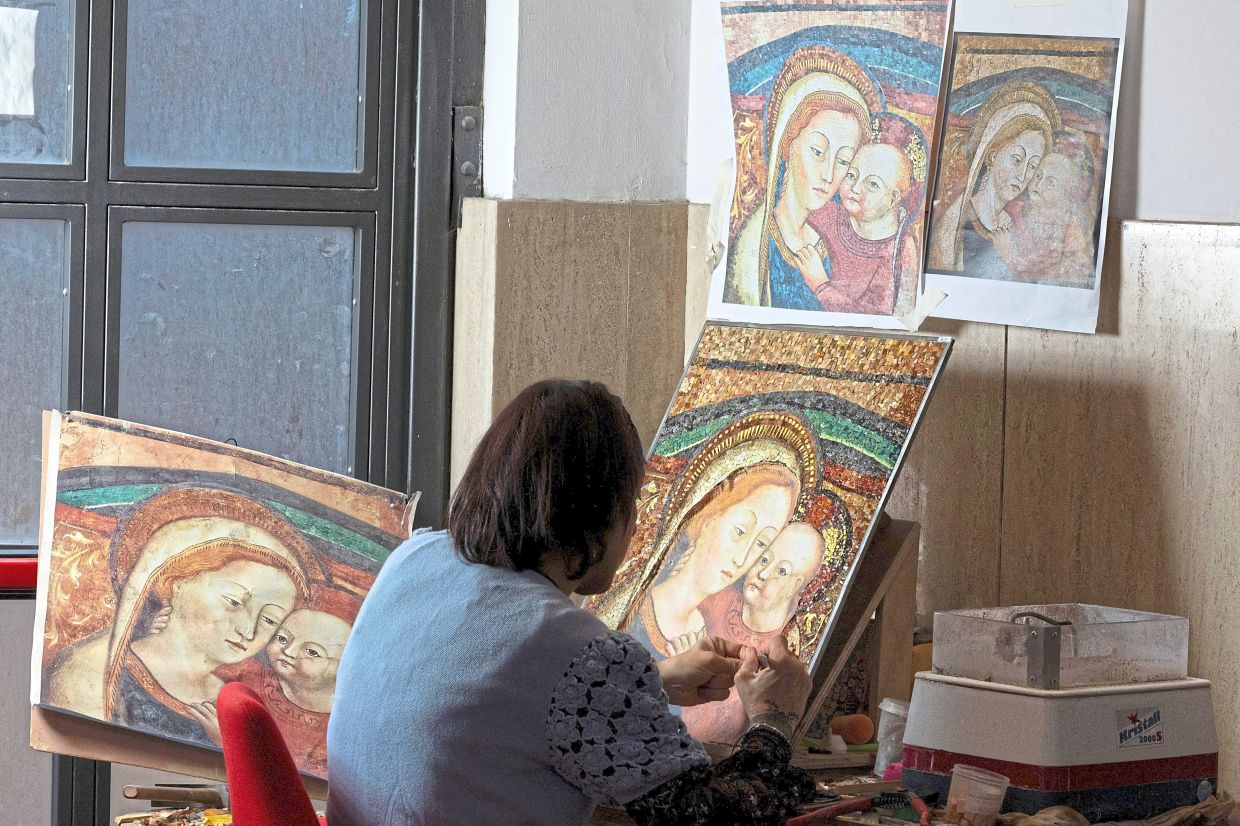
Their work is made to last for centuries.
“We have the idea that we are working for something that (is)... almost eternal,” said Di Buono.
In the basilica, the studio is responsible for 8,360sq m of mosaics, including in the central dome.
Mosaics were used, instead of paintings, because of the smoke produced by candles and incense during liturgies.
One of the studio’s most recent productions was a portrait of the pope, installed at Rome’s Basilica of St Paul Outside the Walls.
The image, produced by a team of three people over five months, contains around 16,000 individual tiles.
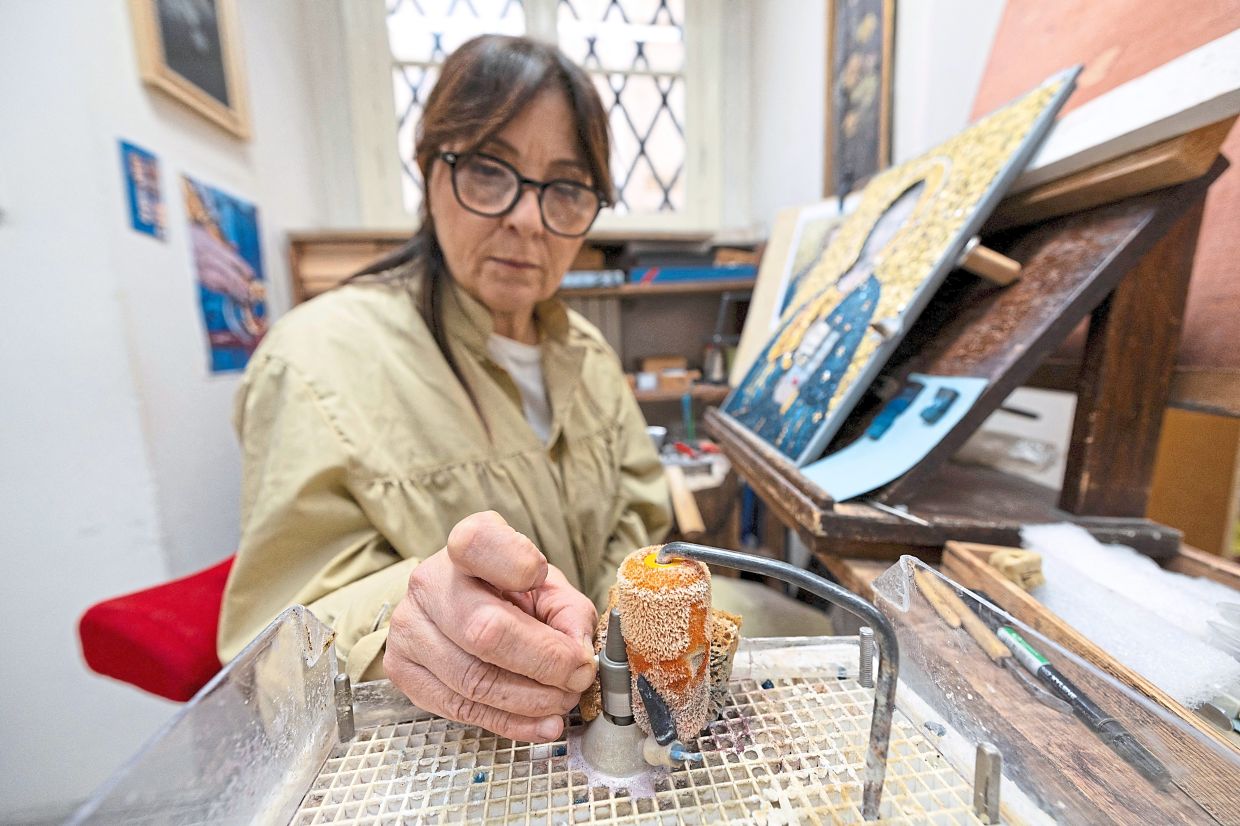
“It is meticulous work because the tiles are very small,” said Nicoletta Marino, one of the studio’s artists.
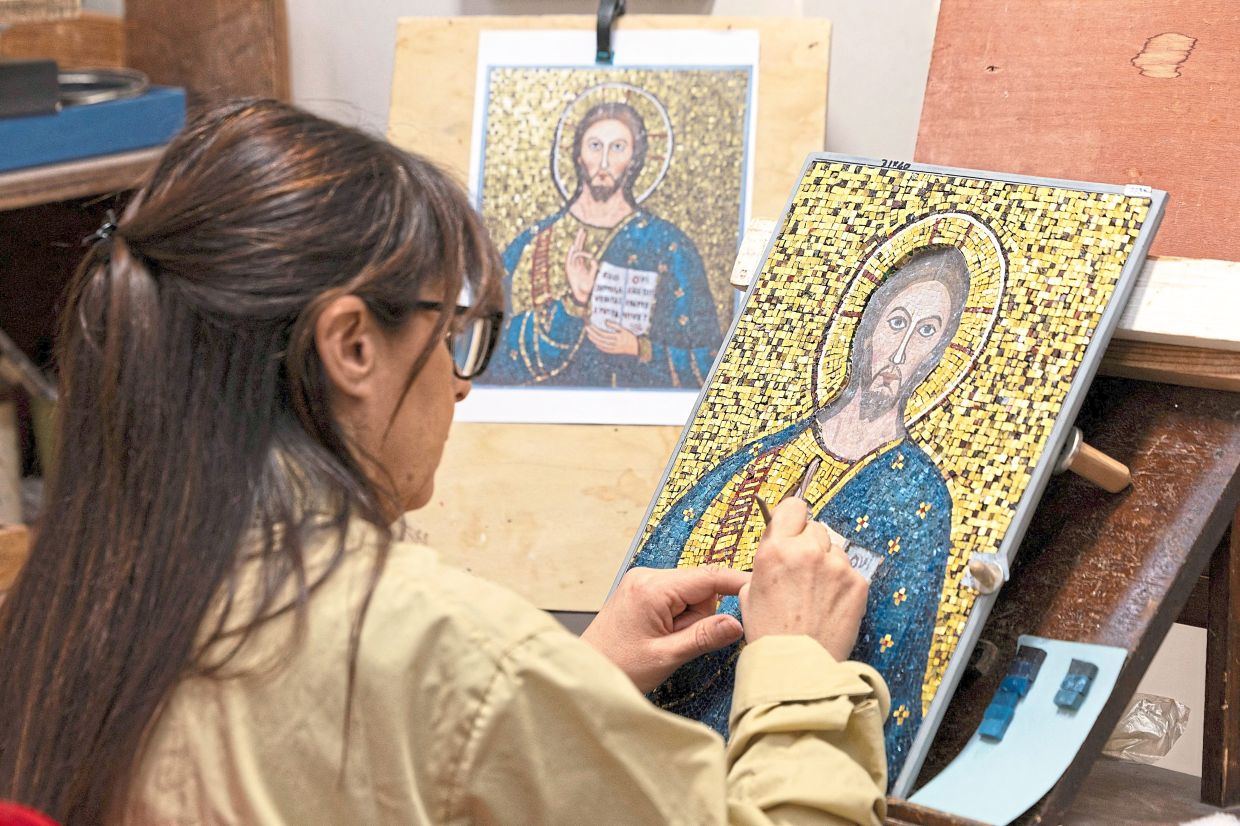
“It takes a lot of patience.”
Adriano Galise, another artist in the studio, showed photos of mosaics he created being given by the late Pope Benedict XVI to former US presidents George W. Bush and Barack Obama during official visits to the Vatican.
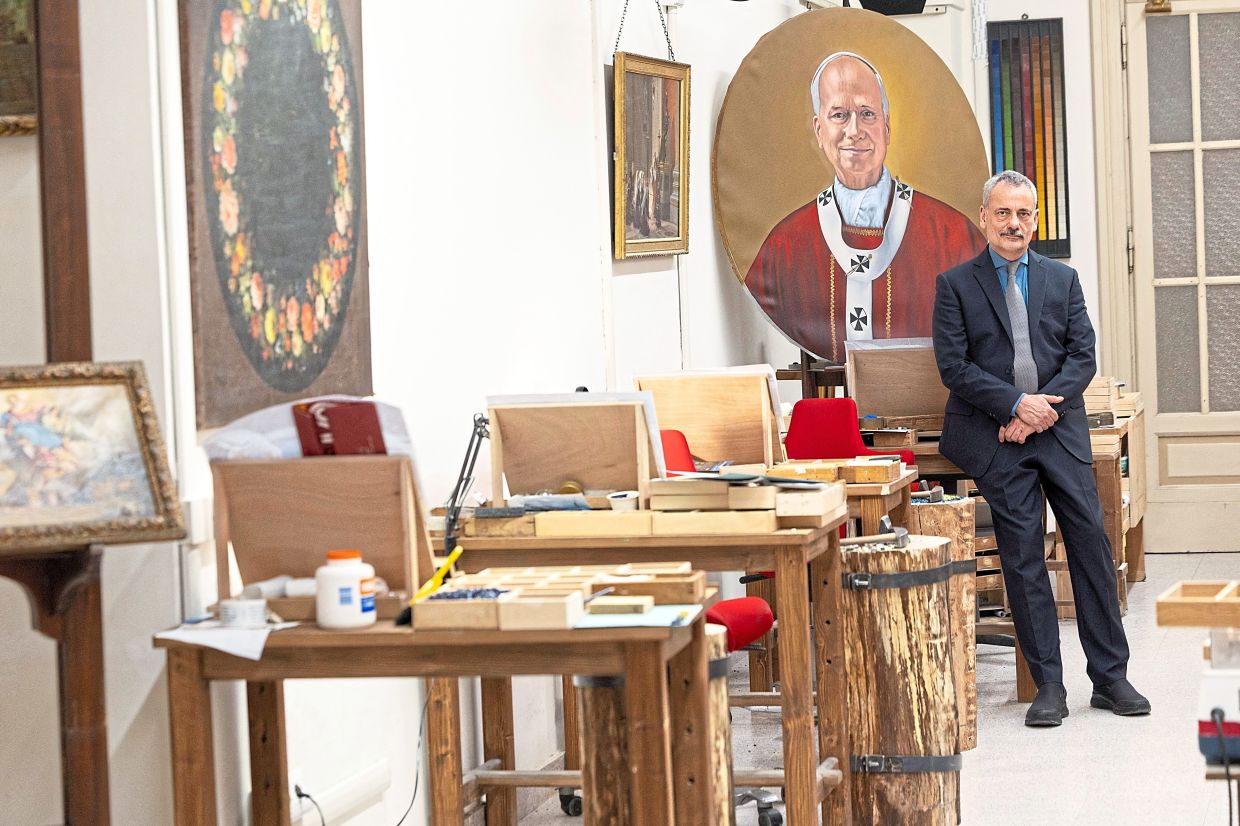
“The fact that our mosaics are used as a gift by the pope is one of the most important traditions in the Vatican,” said Di Buono.
The artists in the studio have different methods for creating their works.
Galise prefers to lay out a black-and-white image with a blueprint of possible places to lay tiles, resembling the plan for a jigsaw puzzle.
Others start with a coloured picture or drawing.
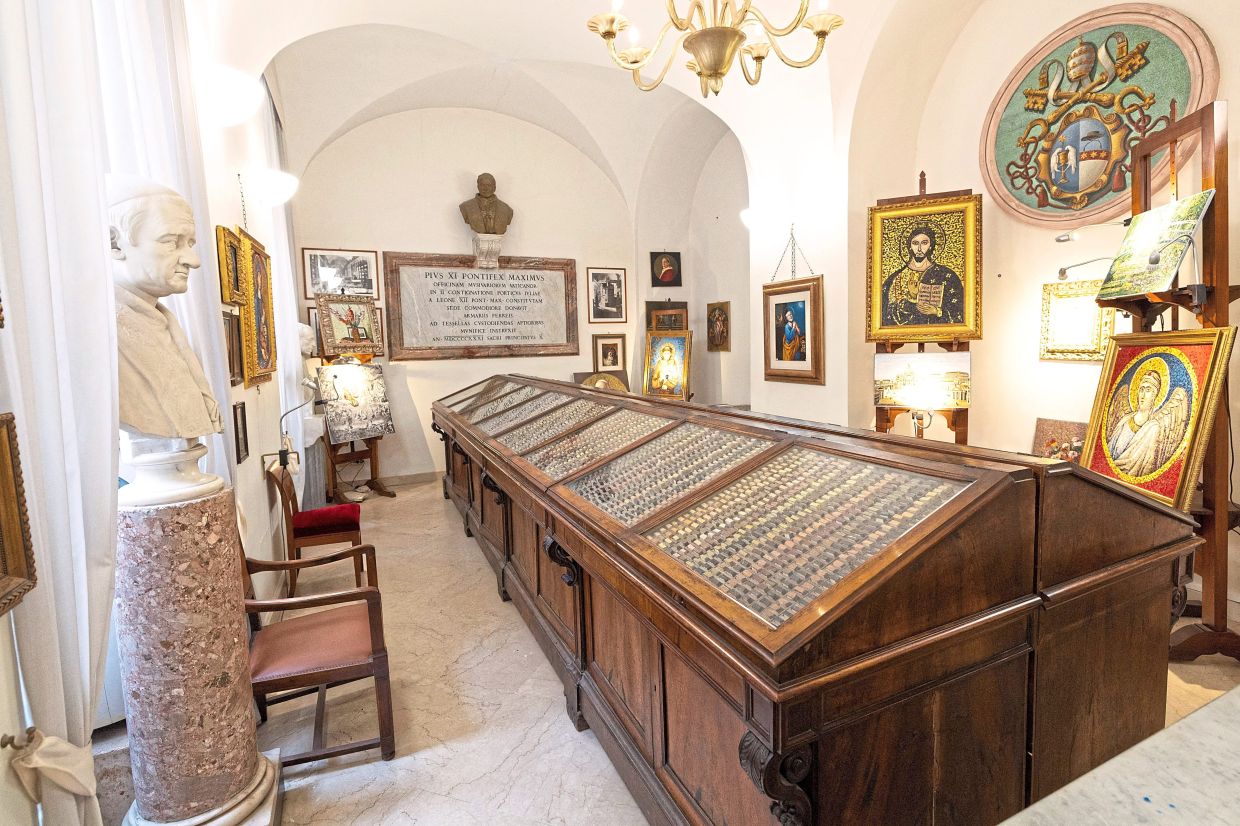
The studio is an artist’s workshop but also a historic archive.
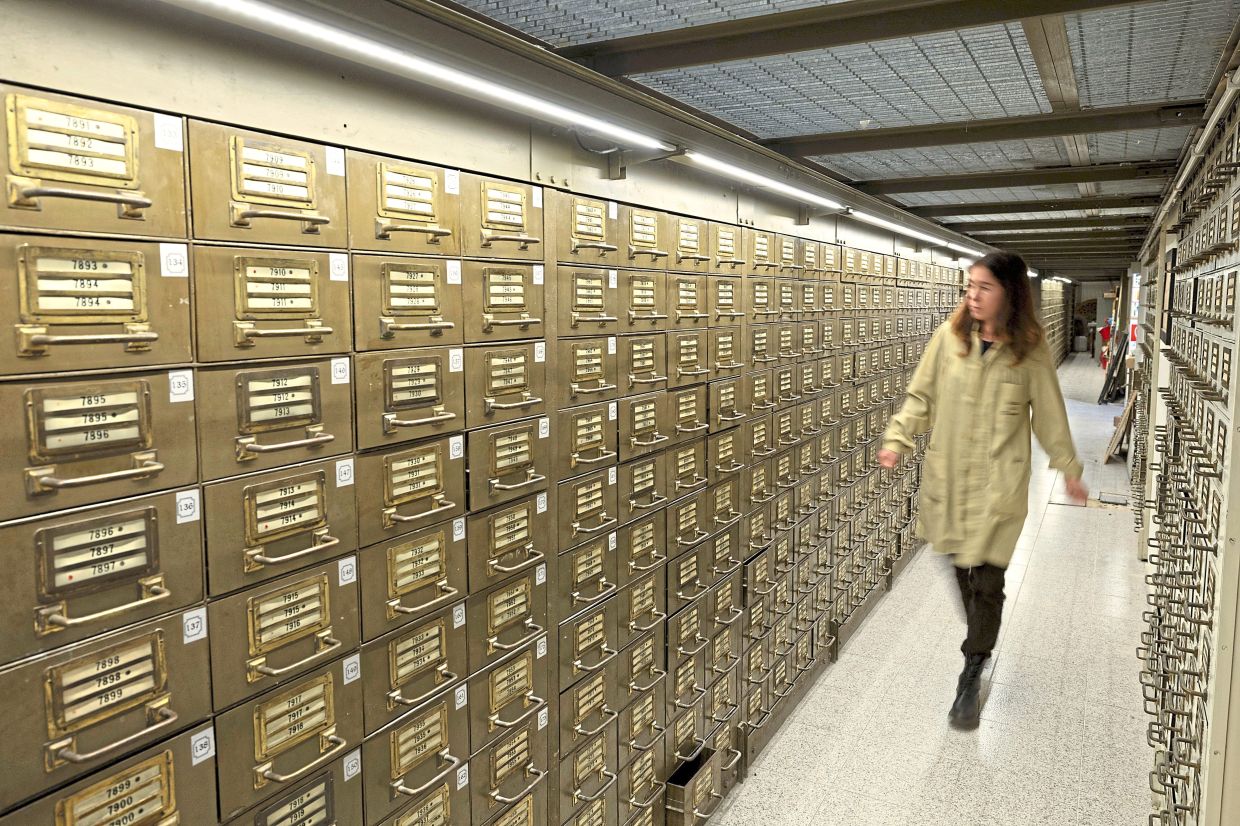
It houses a catalogue of 27,000 varieties of coloured tiles, stored in a 9,000-drawer filing cabinet spanning two floors.
About 23,000 of the tiles are artefacts – stockpiles of colours from past centuries that can no longer be produced and will one day be exhausted.
Some of the artefacts were created with poisonous materials that are no longer used today.
For the portrait of Leo, studio artists dipped into the archive to better capture the shading on the pope’s face.
Inside St Peter’s Basilica, artists from the studio are restoring the mosaics in the dome of the Clementine Chapel, one of the church’s oldest and most venerated spaces.
It is in the grotto, near the tomb of St Peter, the first pope.
“We preserve the works made by our predecessors,” Di Buono said of the studio’s care of the mosaics.
“We are connected in a sort of long chain, of which we are the last part.” — Reuters
