
AS Malaysia faces labour market pressure amid demographic shifts, expanding the nation’s talent pool is essential to sustaining economic competitiveness. The government has set a target of increasing the female labour force participation rate (FLFP) to 60%; currently it stands at 56.6%.
But is reaching 60% enough to secure a sustainable labour environment? Are current efforts sufficient to level the playing field, and can Malaysia find a long-term solution that advances gender parity beyond headline numbers?
Recognition of the care ecosystem
Prof Dr Shanthi Thambiah from Universiti Malaya’s Gender Studies Programme says that increasing FLFP is an important question for Malaysia right now, especially given the country’s economic transition and demographic shift towards an ageing population.
Higher participation can help ease labour shortages, reduce dependency ratios and strengthen household resilience. With rising living costs, urban housing prices and care expenses, dual-income households are increasingly necessary for middle-class stability.
However, increasing women’s participation cannot be separated from how care is organised. Malaysia relies heavily on unpaid care work performed by women. As more women enter paid work, there will be a need to expand childcare and eldercare infrastructure and ensure they are both affordable and high-quality.
“There will be a recognition of the importance of the care ecosystem. This is not just about women ‘working more’, but also about restructuring how care is organised in society,” Shanthi explains.
The next crucial step for Malaysia is to ensure sustained participation, not just getting women into jobs temporarily. But this will require several policy reforms.
It will mean building a strong care infrastructure, expanding public and employer-supported childcare, providing targeted subsidies for middle- and lower-income families, and developing a national eldercare strategy, says Shanthi.
“Countries like Singapore dramatically increased female labour force participation by treating childcare as economic infrastructure – not private charity,” she says. Without a formal elder care system, mid-career women will continue exiting the workforce.
Investment in community- and home-based eldercare services is therefore urgent, as care burdens remain the main structural exit point for women.
Quality of jobs matter
Shanthi cautions that a 60% target is insufficient if women are concentrated in low-paid, insecure, or informal work. At Malaysia’s current stage of development, the issue is no longer simply how many women participate, but the quality of jobs they hold.
“A 60% rate may look good statistically. But if many women are in informal or gig work, or in part-time roles without social protection, then household resilience remains weak, tax contributions remain limited, productivity gains are modest and gender inequality persists,” she says.

Raising participation without strengthening care infrastructure could also increase underemployment. Instead of focusing solely on a single percentage, Shanthi says that Malaysia may need multidimensional targets, including women’s share in formal employment, representation in managerial and STEM (Science, Technology, Engineering, and Mathematics) roles, reduction of the gender wage gap, and improved social protection coverage.
Dismantling barriers
The Institute of Strategic and International Studies (Isis) Malaysia’s cradle-to-grave care economy policy paper estimates that by removing care constraints preventing labour-force participation, Malaysia could have enabled 3.2 million additional workers to engage in paid employment and unlocked about 4.9 percentage points in GDP growth in 2022 alone.
Yet, boosting GDP or even “getting women to work” per se should not be the main objective.
Calvin Cheng, director of the Economics, Trade and Regional Integration programme at Isis Malaysia says that the deeper goal is to dismantle structural barriers that women – and everyone else – face in making the economic choices they actually want across paid work, unpaid care, and community life.
He emphasises the need to recognise the “flipside” of labour-force participation: unpaid care and domestic work that sustains the formal economy. Isis Malaysia’s paper estimates that if unpaid care produced in Malaysian households each day were valued in GDP terms, it would amount to about RM379bil, roughly a fifth of the services sector – underscoring how central yet undervalued it is.
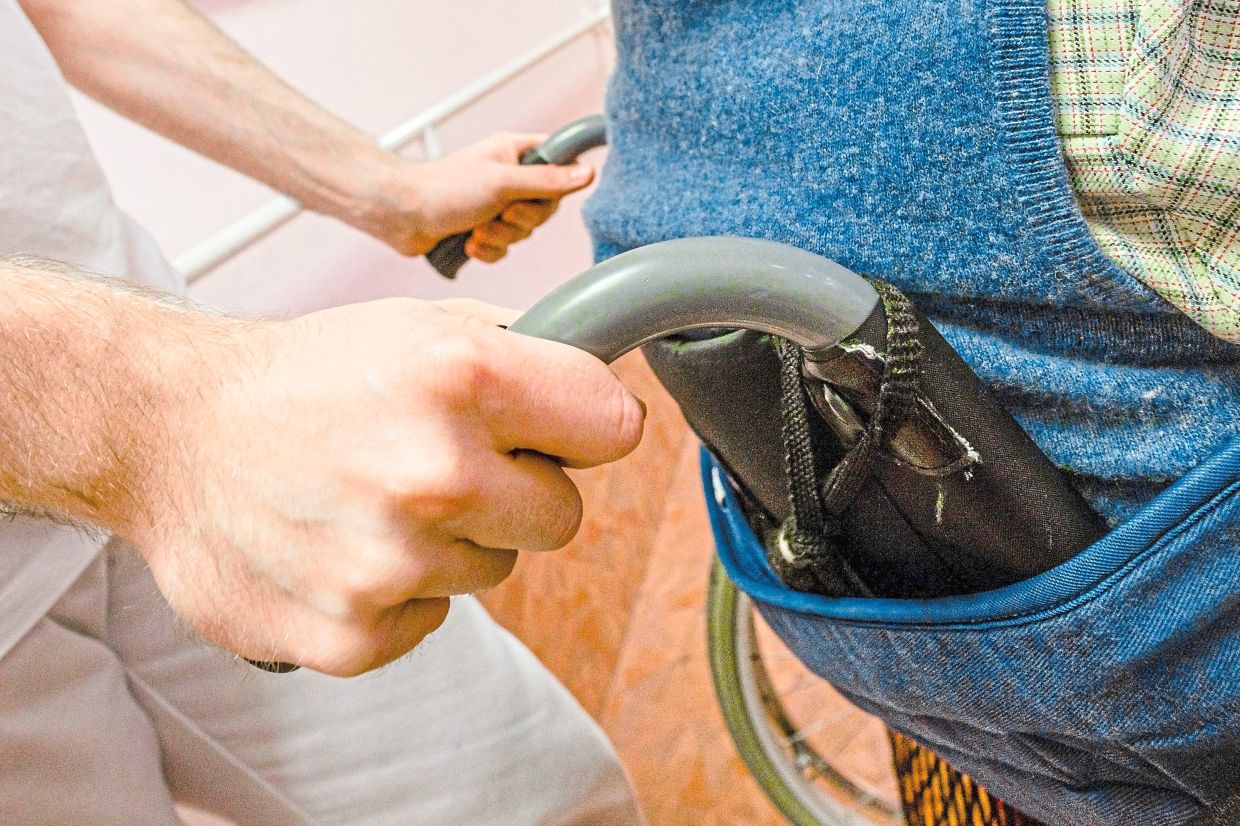
Cheng notes that globally, women spend around three to four times more hours on unpaid work than men. This means women’s participation in unpaid care and domestic work is extremely high, while men’s participation remains comparatively low. Yet, policy targets overwhelmingly focus on raising women’s paid work rather than redistributing unpaid work and care responsibilities.

Cheng acknowledges that current policies are helpful, but cautions that their impact may be limited because they largely operate within existing systems rather than transforming them. Efforts to develop a “care economy”, for example, often monetise care selectively as a growth sector without fully recognising it as a public good.
“To build an inclusive and equitable cradle-to-grave care economy, Malaysia will need a broader approach: revaluing care as a public good, adopting a lifecycle perspective on care needs, and ensuring all income groups have access to a baseline of social care,” he says.
Ultimately, the goal should be to expand and equalise people’s choices – including men’s – across paid and unpaid work, rather than simply increasing women’s labour supply on unequal terms.
While the 60% target is a start, longer-term ambitions could move closer to parity with men’s participation in paid work, alongside improvements in job quality and pay equity.