Cost of cutting local food


Produce and other food items at 4P Foods, a food distributor and delivery company in Warrenton.

AT Happy Hollow Farm, a small, 6.4ha operation in central Missouri, Liz Graznak grows a variety of vegetables, including organic carrots, Swiss chard, radishes and beets.

Some of those vegetables go to local distributors where they are placed in boxes, alongside meat and dairy items also produced in the state, and delivered to low-income people.

Other vegetables are sent to school districts that would normally not have the budget to serve students fresh, locally grown produce.

Onions at 4P, which are among the produce sent to food banks and schools. Over 170 million boxes of free fresh food are sent to Americans in need and farmers who are still struggling after the pandemic. — Caroline Gutman/The New York Times

For Graznak, about US$240,000 (RM1.06mil), or roughly a quarter of her farm’s annual revenue, came from the two federal programmes that supported these efforts.

Early this month, she learned that the Agriculture Department had abruptly eliminated the programmes.

In a Fox News interview, Agriculture Secretary Brooke Rollins called the programmes “non-essential” and “an effort by the left to continue spending taxpayer dollars that was not necessary”.

Now, Graznak fears her small farm is at risk. Like many farmers, she relies on loans and worries about how to make payments on the US$750,000 (RM3.3mil) she owes.

“My farm production has more than doubled in size in the last three years because of these programmes and this income,” Graznak said. “That money was supporting the growth of my farm. I’m leveraged so high, it’s scary. I’m struggling with that right now.”

The Biden administration created the two programmes during the Covid-19 pandemic to strengthen local supply chains.

McDougall said had the programme not been axed, the company would have been given US$3mil to provide food banks and schools with food boxes. — Caroline Gutman/The New York Times

The programmes had provided US$1bil in grants to states, which then made money available to school districts, food banks and distribution hubs to buy produce, meat, fish, dairy and other minimally processed foods from over 8,000 local farmers.

In December, the Agriculture Department announced another tranche of US$1.1bil in funding for the prog­rammes: the Local Food Purchase Assistance Cooperative Agreement and the Local Foods for Schools programme.

But the Trump administration notified recipients in early March that it had decided to terminate both.

Money for the programmes came through the department’s Commodity Credit Corporation, a pot of money replenished annually. The agriculture secretary has broad discretion to revoke that funding and use it for purposes aligned with the administration’s aims.

The first Trump administration used the funds to pay farmers hurt by his trade war with China, while the Biden administration spent it on promoting climate-friendly farming practices and local food systems.

A spokesman for the agency said in a statement that the sunsetting of the prog­rammes marked “a return to long-term, fiscally responsible initiatives” and that “the Covid era is over”.

Some participants, however, have expressed surprise that the programmes were suddenly scrapped, saying they seemed to intersect with many of the Trump administration’s priorities.

The administration has vowed to support farmers and to encourage Americans to eat healthier foods, and to empower states to oversee and distribute the funds.

“These were programmes that had Republican support in many states,” said Katie Nixon, board president for the Kansas City Food Hub, an organisation that connected local farmers like Graznak with community programmes and schools.

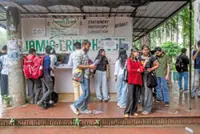
Recently, the group set up outside a diner in Stockton, Missouri, and distributed free boxes of fresh food and produce. About half of the recipients were elderly, and would most likely find it difficult to trek to a larger city for access to a food bank, according to the food hub.

Republican Representative GT Thompson, chair of the House Agriculture Committee, said in a statement: “The administration is acting within its authority to revisit these programmes, which were created as part of the previous administration using temporary American Rescue Plan funds. These were never meant to be permanent, especially when long-standing farm bill programmes already provide food assistance that supports farmers, families and rural communities.”

The Kansas City Food Hub estimates Missouri will lose nearly US$20mil (RM88.4mil) from the two programmes.

“To get notice on a Friday afternoon, with no forewarning,” Nixon said. “It’s already late in the season. Farmers have already started preparing for those sales.”

Tom McDougall, the founder and chief executive officer of 4P Foods, a food distributor and delivery company in Virginia, noted that the local food programmes were not unlike the Farmers to Families boxes created by the first Trump administration. That programme delivered 170 million boxes of free fresh food to Americans in need from farmers whose markets were disrupted by the pandemic.

“These programmes are not handouts,” he said. “These are investments in the future of an ‘America First’ food system, right? And it’s a system where family-owned farms can thrive once again.”

Had the local food programmes not been cancelled, they would have provided US$3mil (RM13.2mil) for 4P Foods to buy produce, meat, dairy and other products from 200 farmers and producers in the mid-Atlantic region to distribute to food banks and schools.

Without the funding, McDougall anticipates having to scale back orders at some farms and stop working with others altogether.

For organisations that provide food directly to children and families, the elimination of the programmes could lead to less healthy meals and fewer purchases from local farmers. — ©2025 The New York Times Company

This article originally appeared in The New York Times

Get 20% OFF The Star Digital Access

Monthly Plan

RM 13.90/month

RM 11.12/month

Billed as RM 11.12 for the 1st month, RM 13.90 thereafter.

Best Value

Annual Plan

RM 12.33/month

RM 9.87/month

Billed as RM 118.40 for the 1st year, RM 148 thereafter.

Follow us on our official WhatsApp channel for breaking news alerts and key updates!
starextra , stardots

Next In Focus

Cultural talks a milestone
Who research is really for
Silicon riches, salary struggles
Gold fever in Ebola’s deadly grip
US-Saudi deal prompts fears of a global nuclear arms race
Editorial: US exhibits lawlessness in its call to dismantle ICC�
Navigating the AI slop
Preparing for the retirement reality
'Golden roomies': A different kind of retirement
Class of AI-dea makers

Others Also Read