A VIDEO showing cockroaches or rats in an eatery is enough to prompt Kuala Lumpur City Hall (DBKL) to send health inspectors to investigate.
No formal complaint is needed, said DBKL Health and Environment Department director Dr Noor Halizam Ismail.
DBKL, she said, monitored online posts highlighting public health concerns, including unhygienic conditions at eateries.
“We don’t wait for a report.
“DBKL officers are informed via WhatsApp to head to the eatery because it is a public health matter,” she said.
In the past, complaints often arrived by email with unclear photographs, said Dr Noor Halizam.
By the time inspectors reached the premises, operators could dispute the content of the images, she pointed out.
Videos posted online have changed that, she said, allowing officers to respond more quickly.
“When there is a video of a rat, the restaurant operator cannot argue with DBKL officers anymore,” said Dr Noor Halizam.
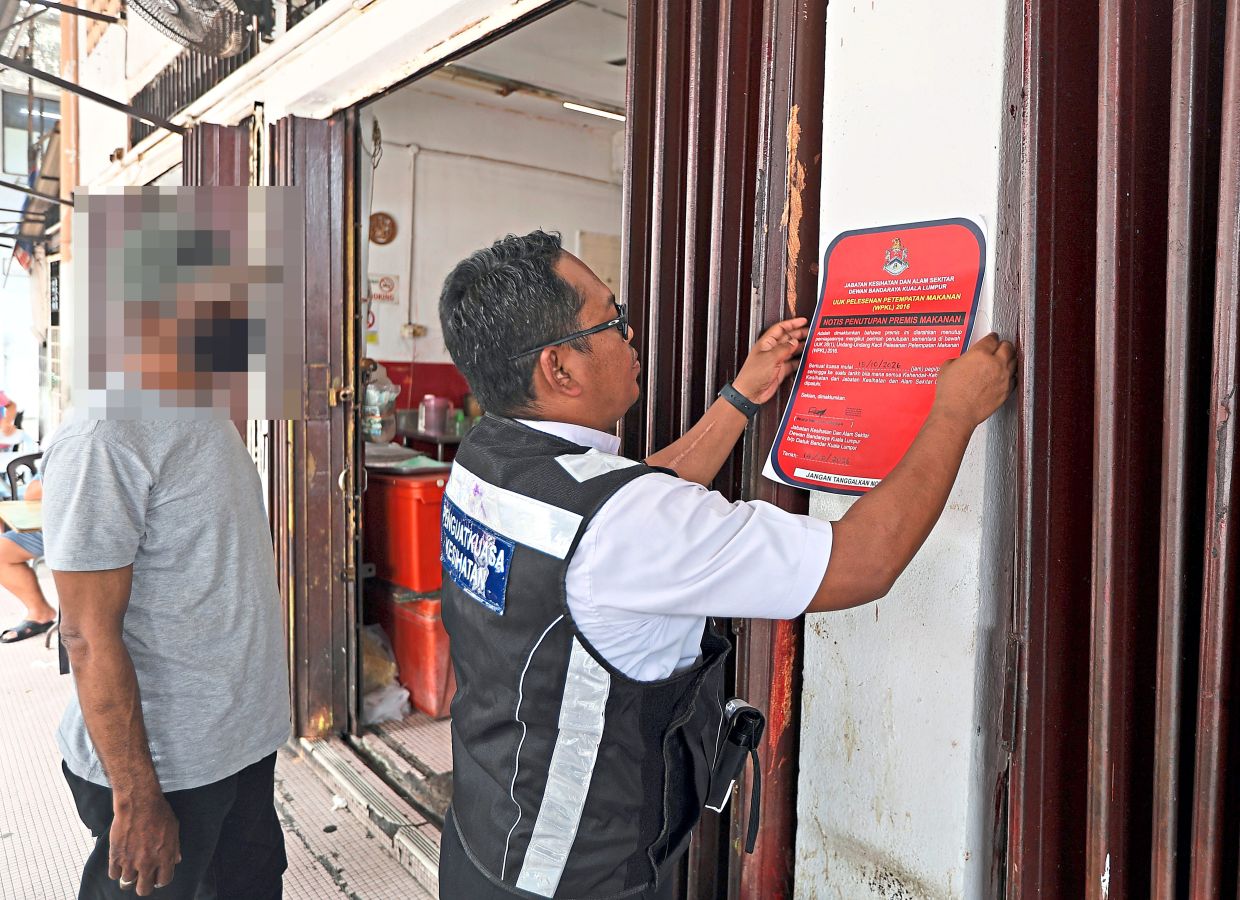
The inspectors, recognisable by their white shirts, black trousers and black vests bearing the DBKL logo, are empowered under the Licensing of Food Establishments (Federal Territory of Kuala Lumpur) By-Laws 2016 to enter and inspect food premises.
Their work covers restaurants, cafes, food courts and hotel eateries, among other places.
The officers, Dr Noor Halizam said, were authorised to issue compounds, close down premises, collect samples and prepare investigation papers for court action.
Growing food scene
Dr Noor Halizam said inspectors had found more hygiene breaches since the Covid-19 pandemic, as the number and variety of eateries continued to grow.
DBKL recorded 7,226 licensed eateries, cafes and restaurants in 2024.
The number rose to 7,515 in 2025 and 7,838 as of August this year.
The figures exclude food courts, hotel restaurants and unlicensed eateries.
Of the 7,838 premises, 6,815 were graded in Category A and the rest in Category B.
“We grade food premises according to cleanliness and food-handling hygiene standards.
“Grade A is the highest rating while Grade B reflects a lower assessment score,” said Dr Noor Halizam.
Much of the growth, she said, was driven by newer lifestyle-oriented businesses, including coffee and tea shops, international chains, and brands with smaller or simpler menus, rather than traditional restaurants serving rice and dishes.
The Category A rating is not permanent, as it is assessed annually.
DBKL may reinspect a premises after receiving a complaint or detecting a hygiene breach.
“If the overall score falls below 80, the Category A rating can be withdrawn and the premises reclassified,” she said.
She added that eateries downgraded to Category B often struggled to regain their previous rating, as they had to demonstrate to inspectors that all identified shortcomings had been rectified.
From January to September, DBKL checked 4,773 food premises and issued 4,454 compound notices for various offences.
The figure refers to the number of compounds, not the number of restaurants, as an outlet may receive two or three compounds for separate breaches.
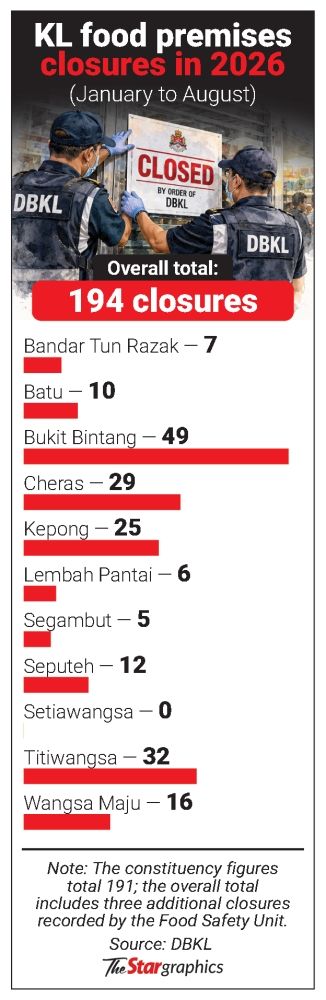
DBKL also closed 616 food premises in 2024, 442 last year and 194 up to Sept 30 this year.
Dr Noor Halizam said all 1,252 premises had since been allowed to reopen after follow-up inspections confirmed that the required cleaning or remedial work had been carried out.
Troubling areas
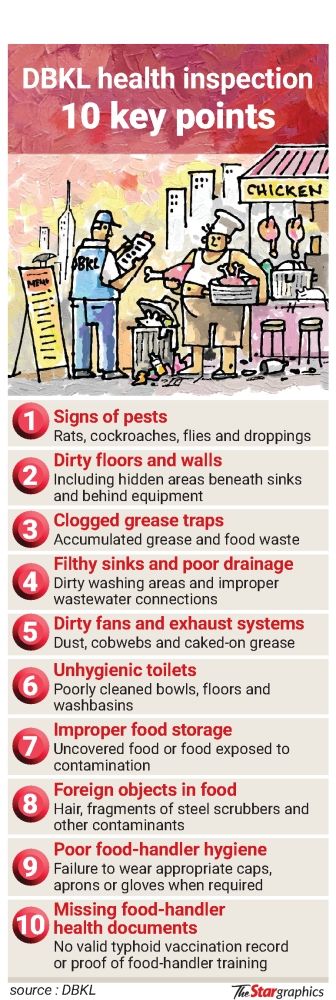
The most common breaches are often found in the least visible corners of a kitchen.
Inspectors check floors, walls and dark spaces beneath sinks.
Rat droppings may indicate an infestation even when no live rodents are noticeable.
Cockroaches, including nymphs, are sometimes found among sacks of rice and other food supplies.
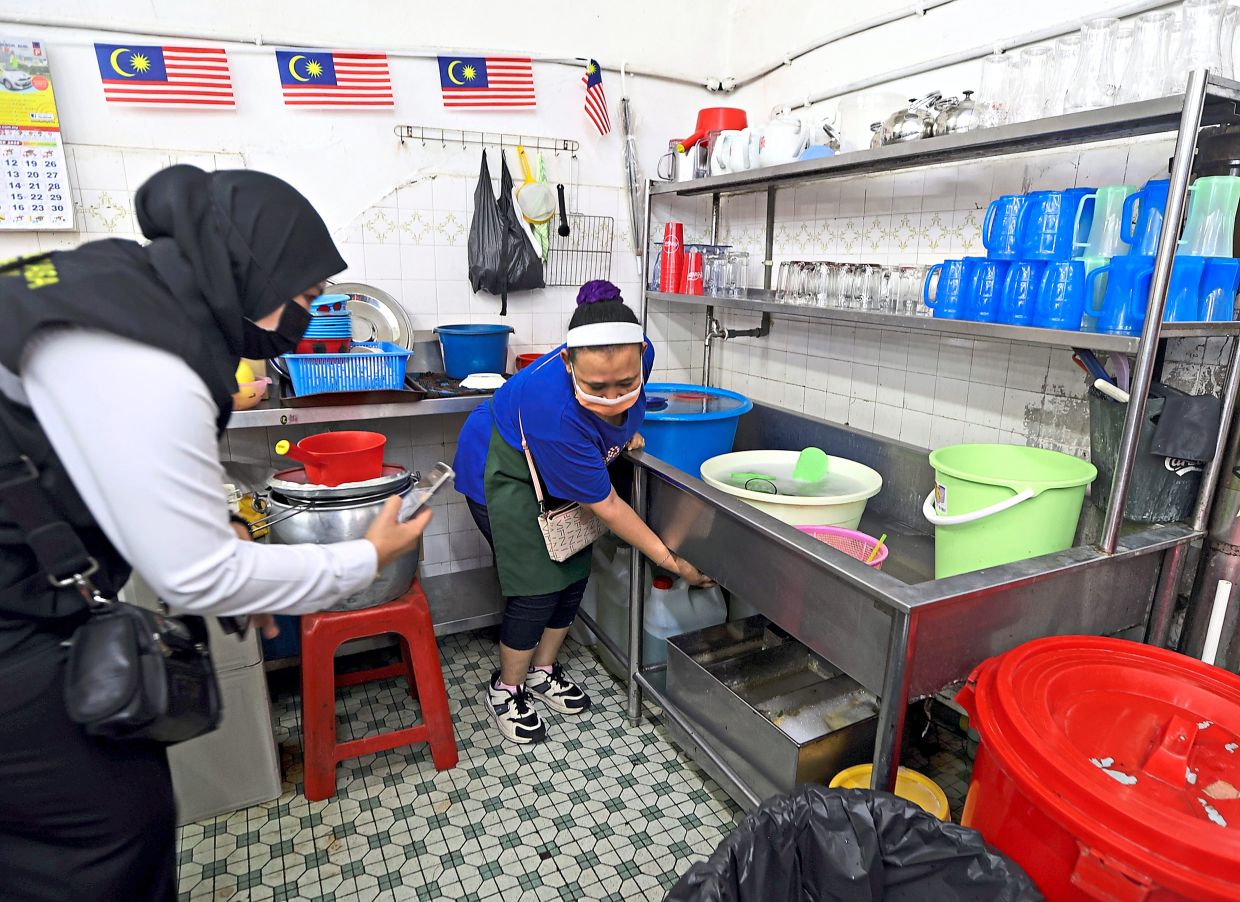
“The area beneath the sink is often dark, dirty and overlooked,” Dr Noor Halizam highlighted.
“Inspectors also check refrigerators, exhaust systems, ceiling and wall fans as well as inside sinks and food-storage areas.
“A kitchen may appear spotless at eye level. But on the floor and corners you can find rat droppings,’’ she said.
“Look up and you see dusty fans with cobwebs and exhaust equipment coated in grime, which will result in a closure notice,’’ she added.
Grease trap is another often-breached licensing requirement.
Some operators install traps underneath their sinks but fail to connect them properly, allowing greasy wastewater to flow directly into drains.
Others fail to clean the equipment, leaving it clogged with grease, food residue and grime.
Dr Noor Halizam said inspectors would sometimes give operators a chance to correct less serious problems if they were genuinely unaware of the requirements.
“We don’t want to be too strict because some of them genuinely do not know. We will give them a chance,” she said.
Toilet cleanliness, she said, was treated seriously because of its link to food hygiene.
Eatery owners are expected to keep cleaning rosters showing how often toilets are cleaned, although inspectors have found that records do not always reflect actual conditions, she noted.
Poorly maintained toilets and sinks could contribute to a closure notice, said Dr Noor Halizam.
Other breaches include hair or fragments of steel-wool scourers found in food, utensils or food being washed by the roadside, and food handlers not wearing required caps, aprons or other protective clothing.
Food handlers must also be vaccinated against typhoid and attend an approved food-handling course.
Food handlers are required to show proof of vaccination, including when it was administered and by whom.
Dr Noor Halizam said inspectors also checked food handlers’ fingernails, as dirt could accumulate underneath long nails.
She said high staff turnover sometimes pointed to restaurants hiring workers who had yet to complete the required vaccinations or food-handling training.
Restaurants are also required to engage registered pest-control operators.
Dr Noor Halizam said DBKL had encountered cases where a single pest-control visit was recorded as if regular servicing had been carried out at the restaurant.
However, health inspectors do not rely solely on records.
Rat droppings, cockroaches and other physical evidence could show whether pest-control measures were effective, she said.
Enforcement could extend to prosecution, she elaborated.
She cited two cases successfully prosecuted in 2017, involving chilli samples found to contain pesticide residues above the permitted level.
She said laboratory results from the food samples were used as evidence.
Eateries in shopping centres were not exempt from scrutiny, even if their dining areas appeared clean, she cautioned.
She said DBKL had received complaints alleging food poisoning involving mall eateries and franchise chains, including those
serving Japanese and Korean-style dishes with raw or partly cooked ingredients.
“Such foods require careful storage and temperature control, so leaving them uncovered or at room temperature for extended periods can increase the risk of contamination,” she said.
Reopening not automatic
Both Health Ministry and DBKL, acting under different laws, can order unhygienic food premises to close.
Section 11 of the Food Act 1983 allows an authorised officer to order the immediate closure of a food premises for up to 14 days if it fails to meet sanitary and hygiene requirements and is likely to be hazardous to health.
DBKL acts under By-law 28 of the Licensing of Food Establishments (Federal Territory of Kuala Lumpur) By-Laws 2016.
It allows the Commissioner, in this case the mayor, to order the immediate closure of a food establishment suspected of being, or likely to become, a source of infection.
Under DBKL’s current procedure, a premises closed for hygiene breaches may be considered for reopening as early as 24 hours after cleaning.
“We give them 24 hours. We will still not let it reopen immediately even if they finish cleaning in eight hours.
“We have to return to inspect the premises,” said Dr Noor Halizam.
She acknowledged that closures could be costly for operators but public health could not be compromised.
“DBKL knows the cost of doing business. It is not easy and they lose income the longer the business stays closed,” she said.
“But at the same time, DBKL wants people to learn their lesson, and the best way to learn is the hard way.”
Operators who repeatedly breach hygiene and licensing requirements might ultimately face licence cancellation, she added.
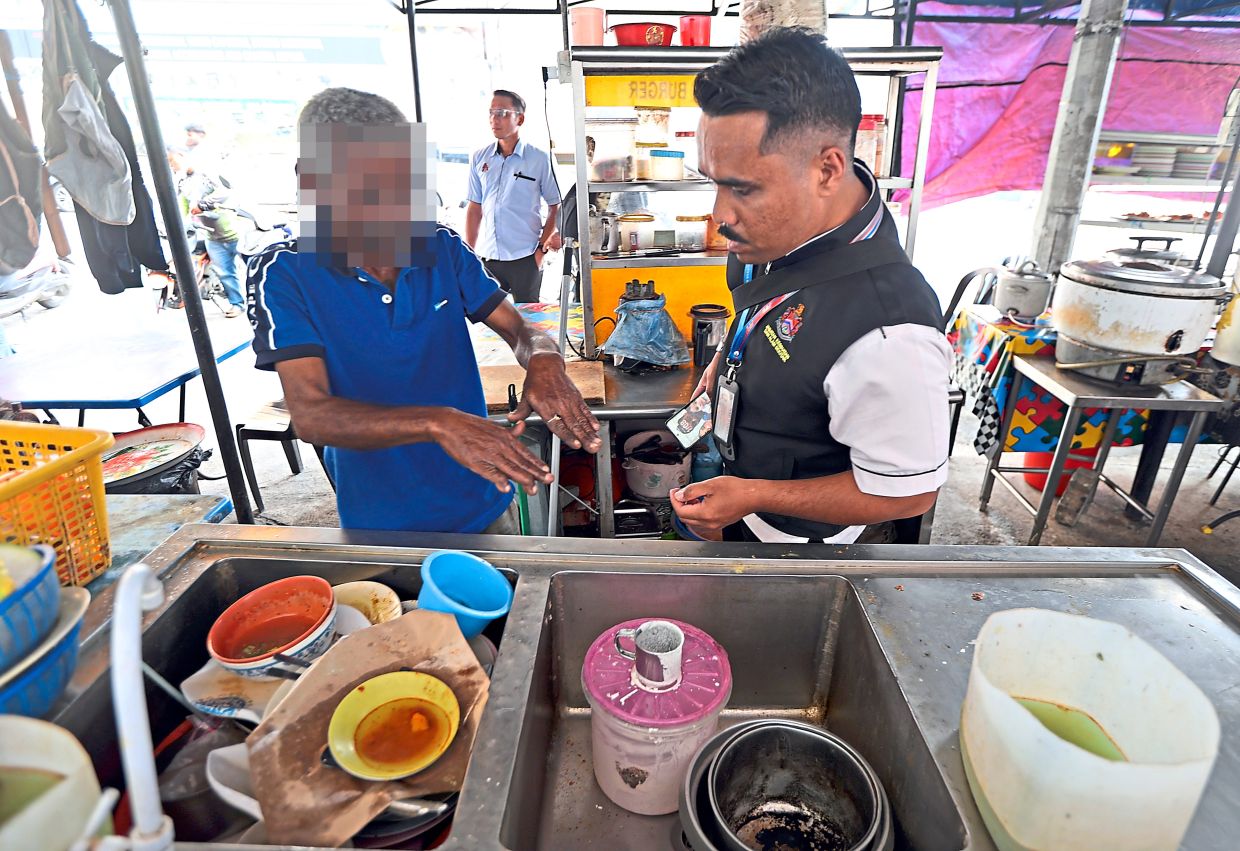

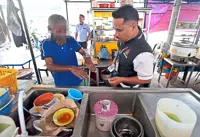
A restaurant worker getting his fingernails checked during a DBKL hygiene inspection in Pudu.
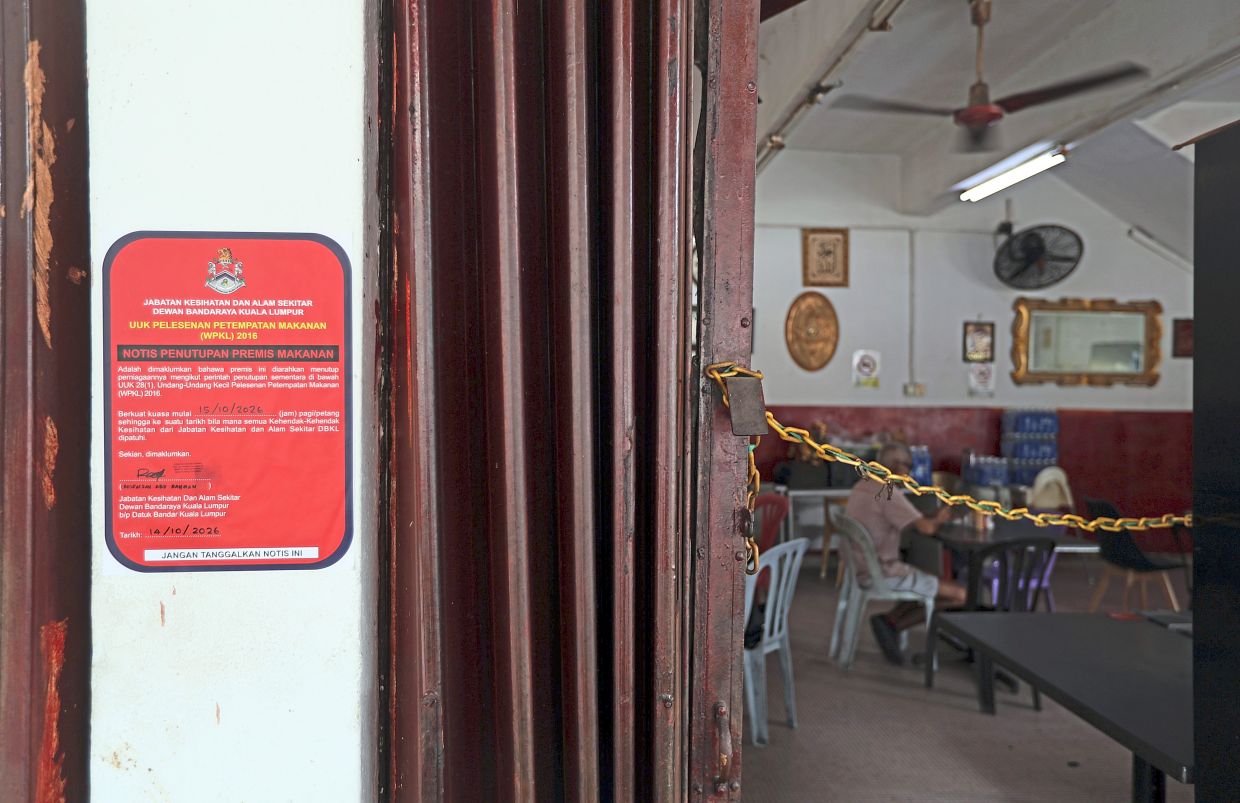
A DBKL officer putting up a closure notice at a food premises during an enforcement operation in Pudu.
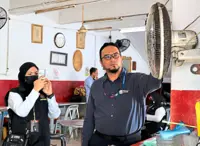
A DBKL health officer taking photos while inspecting the area under the sink of the kitchen of a restaurant.
Dr Noor Halizam says DBKL does not wait for a report as officers head to check a premises if a video on a public health issue surfaces.
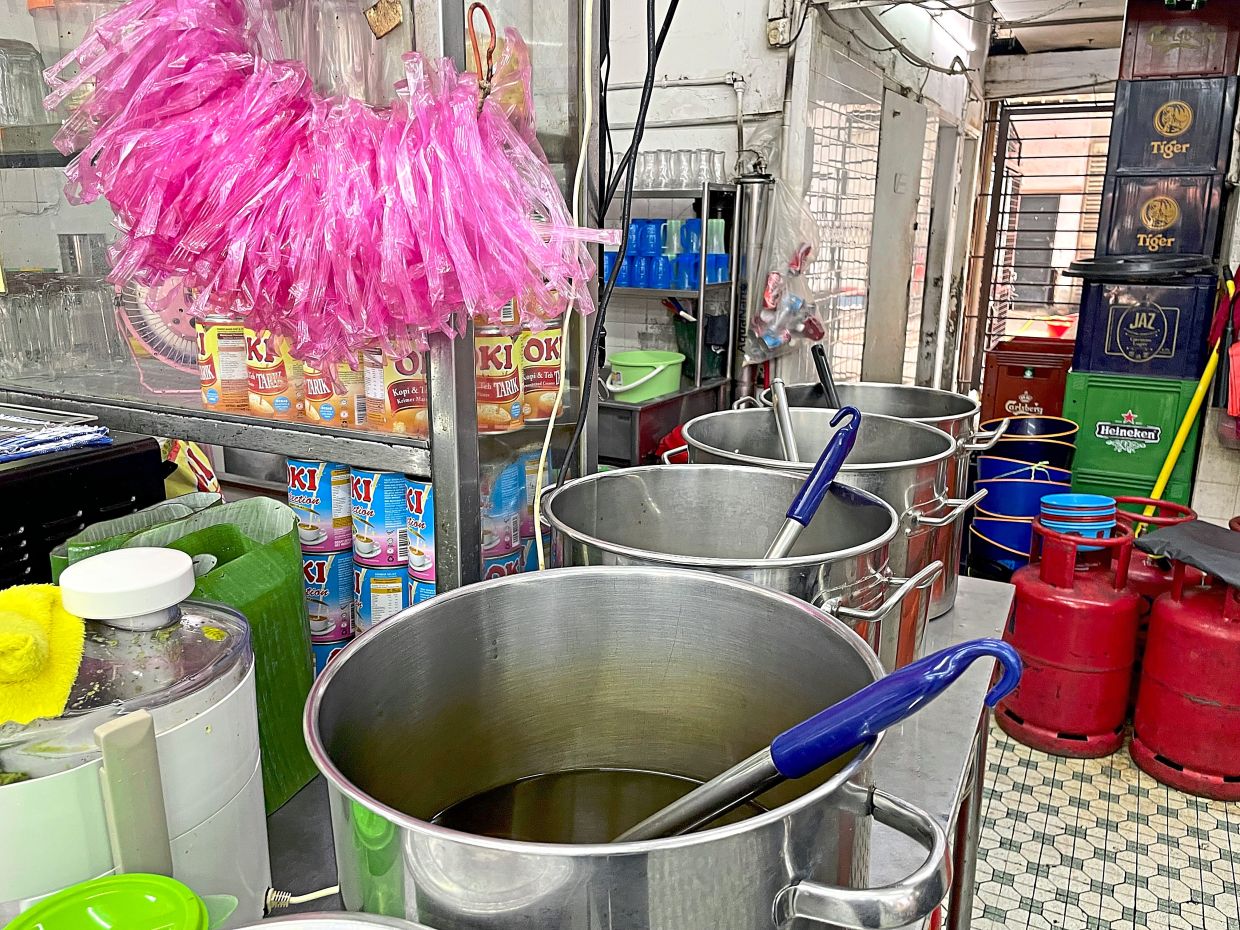
Large stainless-steel pots containing soup left uncovered on the counter which is near the toilet of an eatery in Pudu.
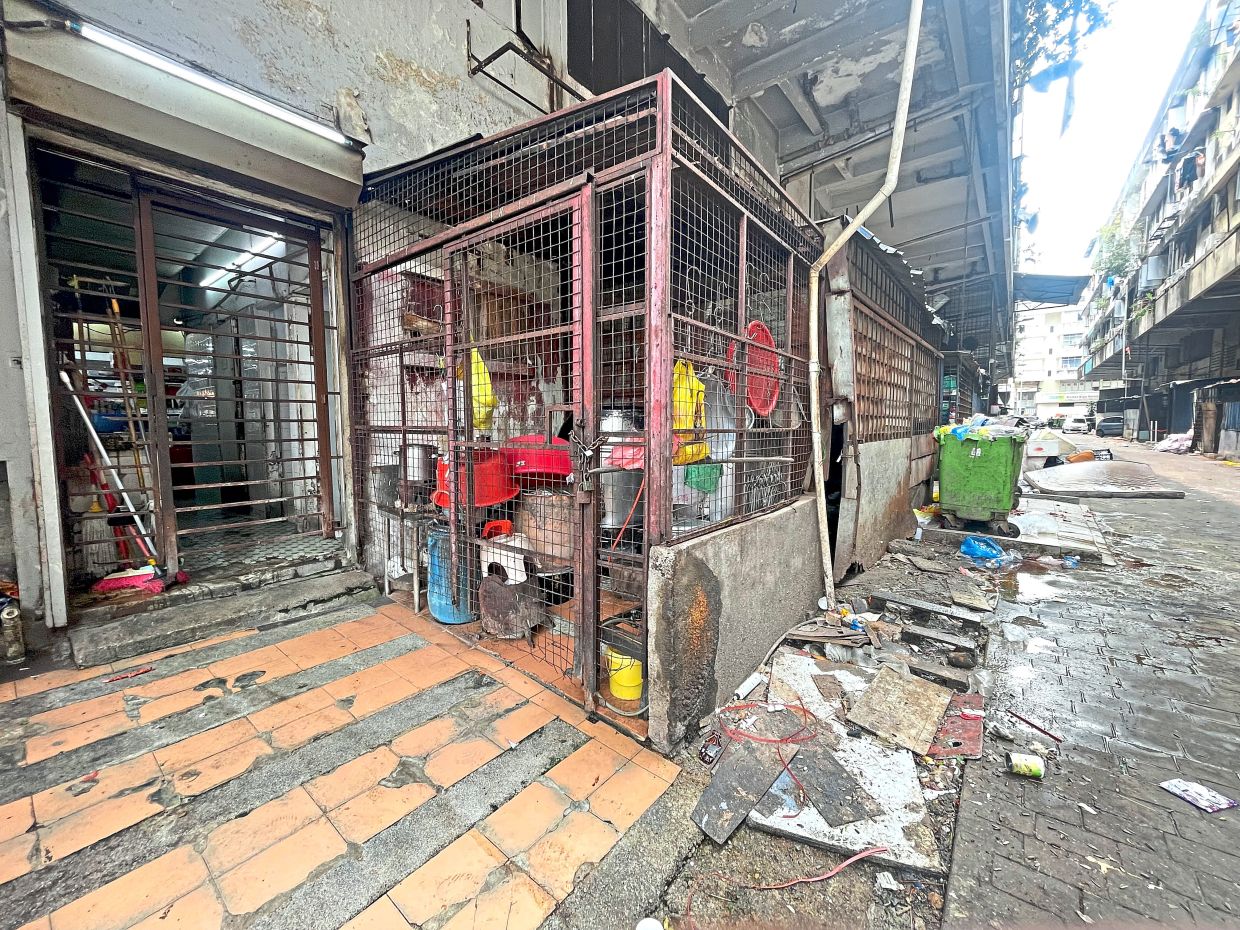
Some restaurants appear clean from the front but are filthy at the back.
A DBKL closure notice is displayed outside a food premises in Pudu, with a chain placed across the entrance.