Not many Malaysians are familiar with telepuk, the traditional art of embellishing fabric with gold leaf or foil.
To introduce the intricate production process to the public, pewter manufacturer and retailer Royal Selangor held a workshop at the Royal Selangor Visitor Centre in Setapak, Kuala Lumpur.
Twenty people participated in the workshop conducted by Langkasuka Movement, a cultural organisation dedicated to preserving, documenting and reviving traditional Malay heritage arts and crafts.
Each participant was given a tool kit containing a piece of smooth-surfaced fabric, a carved wooden mould or block, and gold leaf, Bernama reported.
Guided by artisans, the participants were told to spread out the fabric before applying natural acacia gum to their forearms.
They then pressed the carved wooden mould directly against the thin layer of gum on their skin.
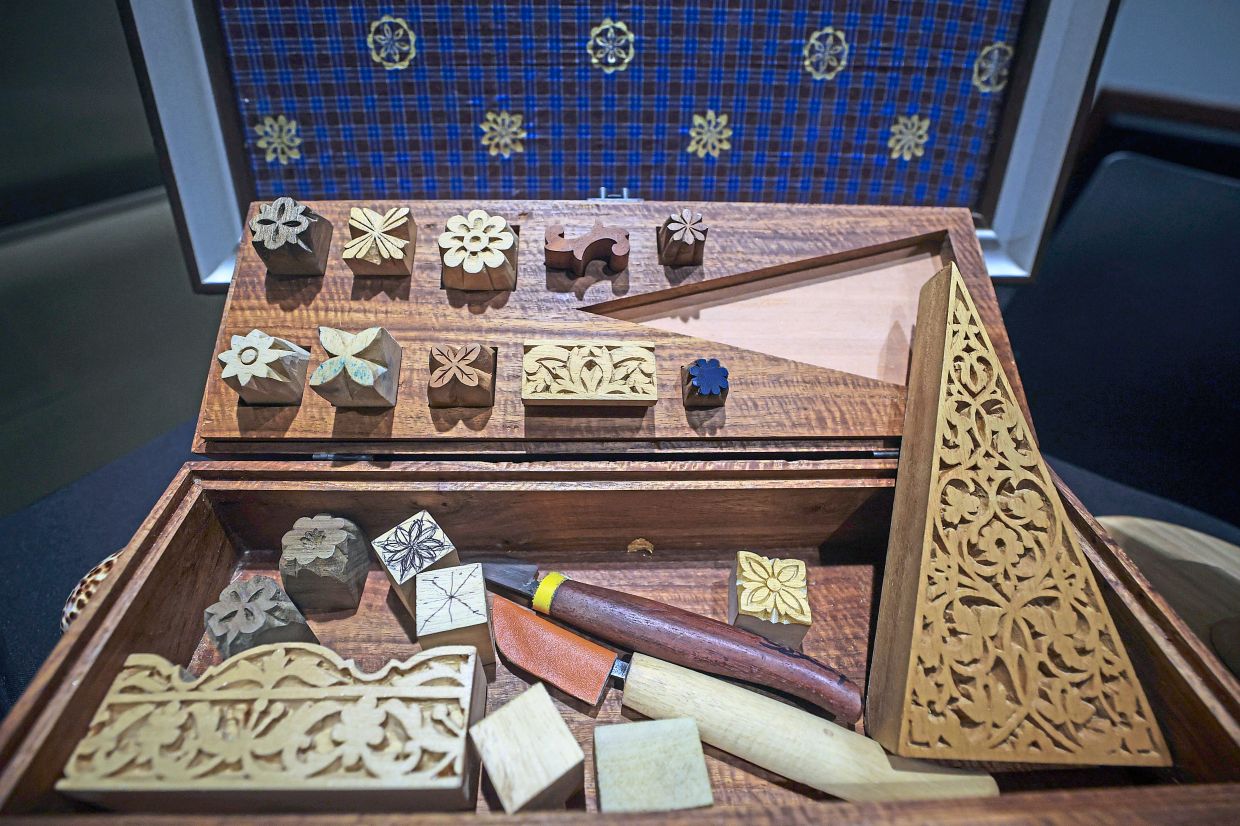
The mould was later pressed onto the fabric to transfer the gum-coated motif.
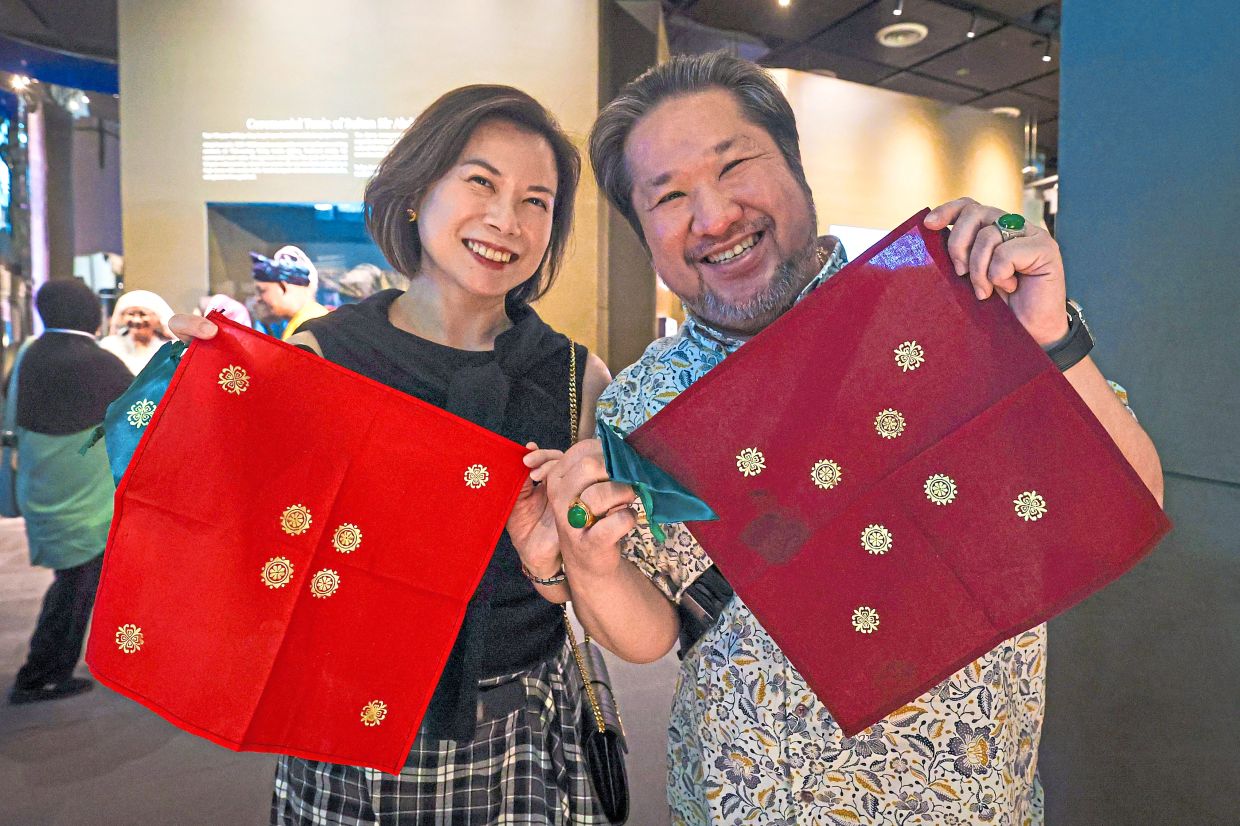
The participants then proceeded to apply genuine gold leaf to the areas coated with gum, before gently brushing away the excess gold to reveal the floral motifs in clear detail.
The experience gave them a deeper appreciation of the skill, precision and patience required by artisans of the past to create telepuk textiles for royal ceremonial attire.
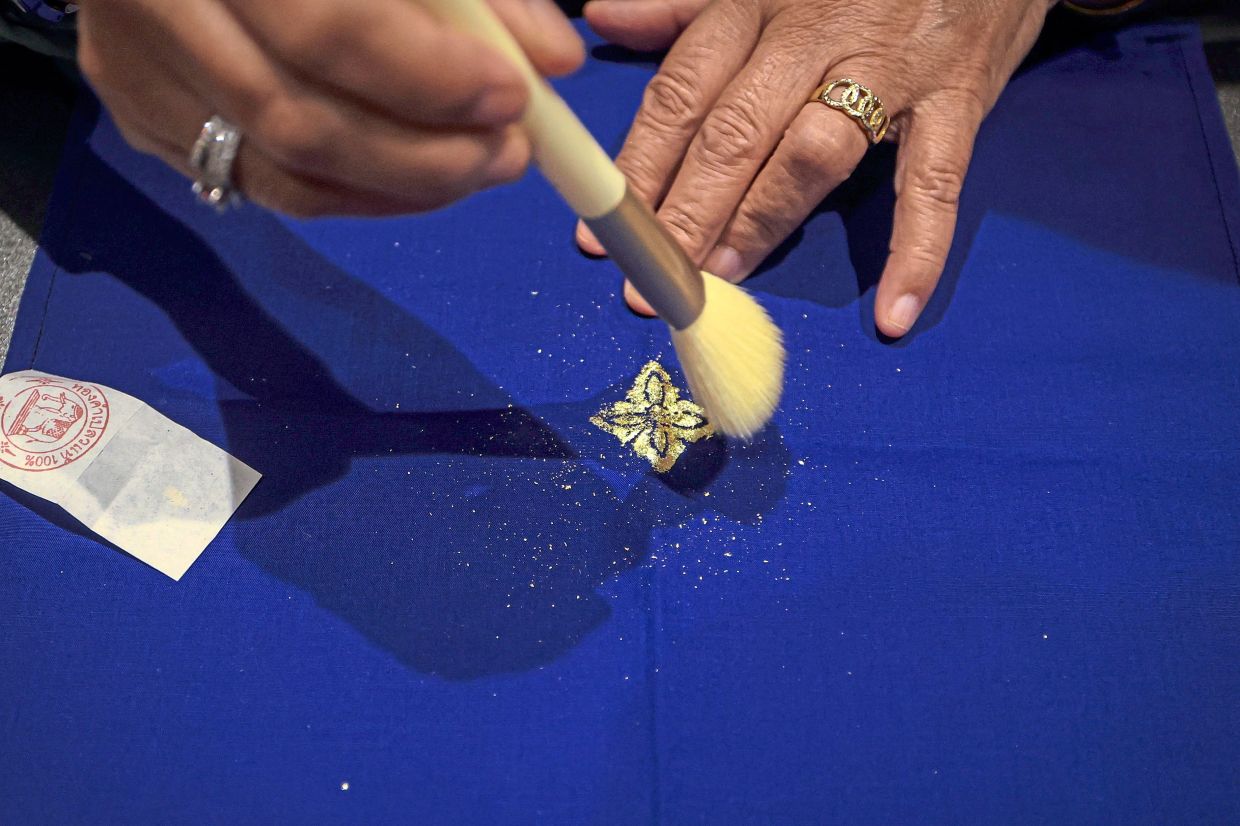
One of the participants, businessman Winston Tham, 50, from Ampang, said the workshop provided an opportunity to learn about telepuk and appreciate the craftsmanship of earlier generations.
“You cannot love what you do not know. Previously, I had no idea what telepuk was.
“If it is not preserved, this art will disappear.
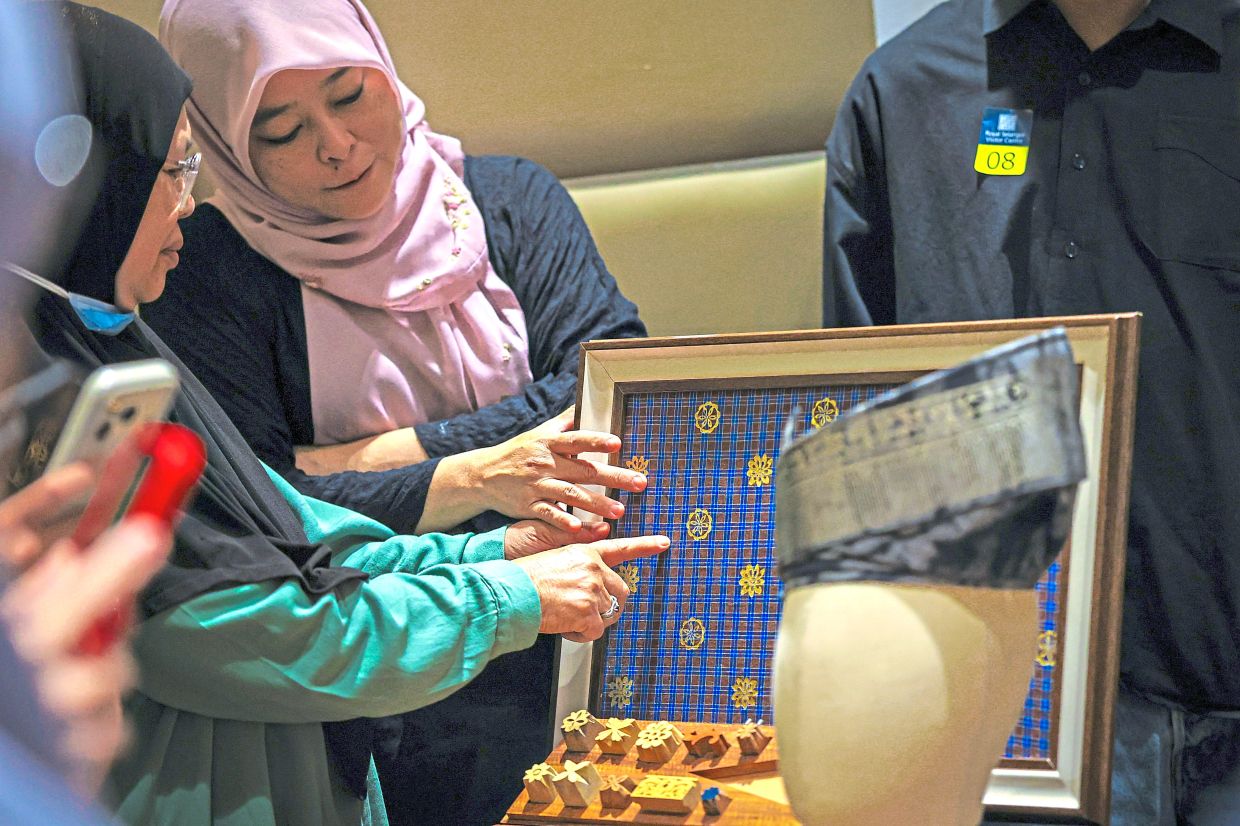
“Perhaps schools could organise workshops to allow students to try their hand at this craft,” he said.
Langkasuka Movement co-founder Intan Jailani said telepuk was the art of applying gold leaf to fabric and involved four skills: weaving, wood carving, grinding and the application of gold leaf.
“Documentation and hands-on exposure like this are crucial because the telepuk art had once ceased and remained dormant for almost 90 years.
“Without records and practical training, this heritage craft could disappear entirely from public memory,” she said.
Intan said the series of workshops held to introduce telepuk had received an encouraging response from people across different backgrounds, making it an effective platform for raising public awareness about the preservation of traditional crafts.
“I hope to share more knowledge about telepuk while I still can.
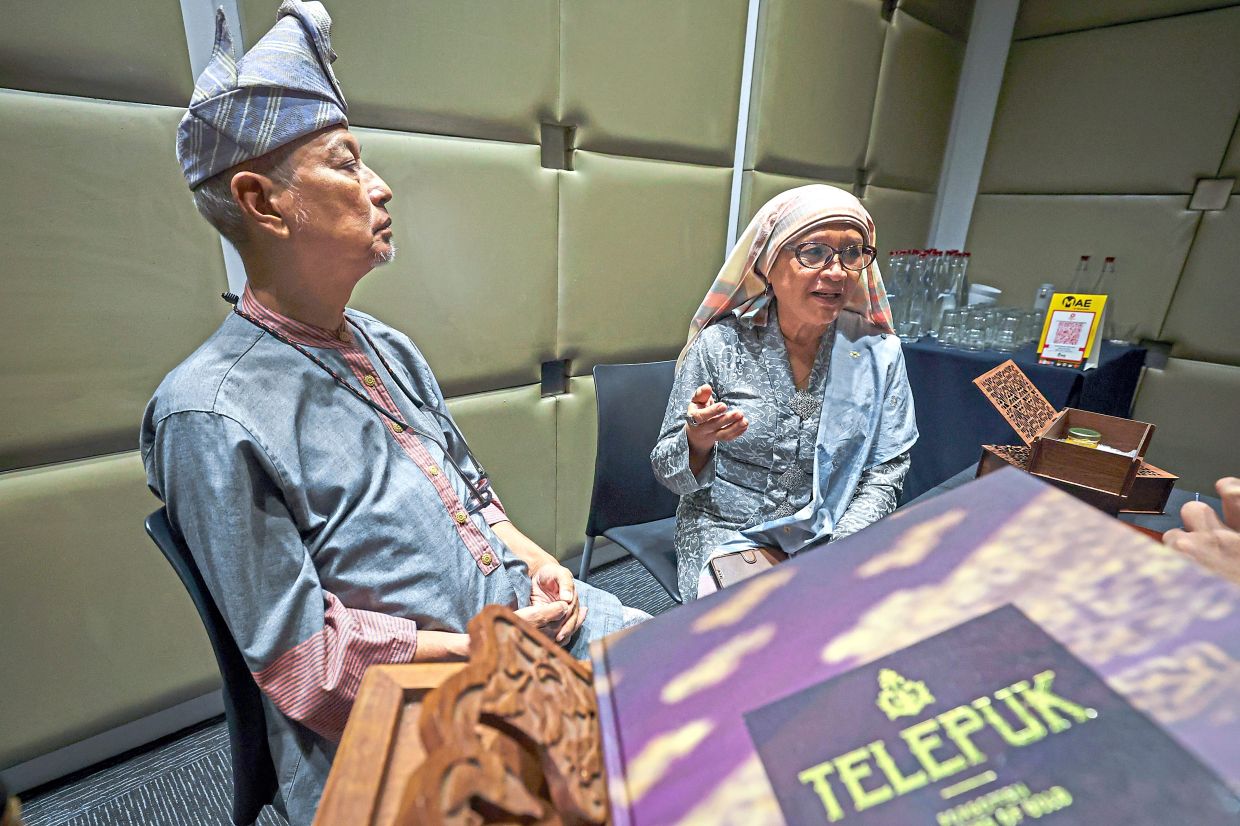
“I want to leave behind knowledge that others can continue to pass on,” she said, adding that she was also working on her third book on telepuk, focusing specifically on its motif patterns.
The workshop was part of the ‘Telepuk: The Imprint of Heritage’ exhibition, which was officiated by the Sultan of Selangor, Sultan Sharafuddin Idris Shah.
The exhibition at the Royal Selangor Visitor Centre is ongoing until Dec 31.
It highlights the intricate artistry of telepuk through displays of textiles, carved wooden printing blocks, materials and tools, besides demonstrations that help visitors understand how gold-leaf motifs are applied to fabric.
One of the main attractions is a mid-19th century royal attire set known as Baju Sikap, associated with Sultan Sir Abdul Samad and loaned by the Museums Department of Malaysia.
Also on display is a collection of 77 telepuk wooden blocks carved between 1920 and 1923 and owned by Sultan Ala’eddin Suleiman Shah of Selangor.
The collection is held at the Victoria and Albert Museum in London and was previously exhibited at the British Empire Exhibition in Wembley in 1924 and 1925.
The exhibition also highlights experiments using alternative materials as embellishments.
Abdul Razak Aziz, another Langkasuka Movement co-founder, said the idea of using tin foil as an embellishment emerged from discussions with Royal Selangor and a study of historical records that mentioned the use of tin, alongside gold and silver, in telepuk.
He said the group subsequently proposed that Royal Selangor explore ways to press tin into sheets that can be applied onto fabric and traditional Malay headgear, or tanjak, using the telepuk technique.
“They accepted the challenge, and we managed to use tin foil as an embellishment to tanjak and other items. It was our first attempt,” he said.
Abdul Razak said that unlike the thin and pliable gold leaf, tin was harder and could not be beaten as thin as gold.
This gives the tin foil embellishments a different appearance and offers an alternative colour when paired with fabric, he said.
However, he stressed that the use of tin foil remained an experimental craft innovation and was not yet available for commercial sale.
“The initiative aims to enrich the aesthetic value of the craft and diversify the materials used in traditional craftsmanship without compromising the authenticity or original purpose of telepuk designs,” he added.
Beyond the textile experiments, Royal Selangor has also translated six patterns from more than 100-year-old telepuk wooden blocks into pewter plaques, which make up its ‘Telepuk Collector’s Set’.
It has also produced two coaster designs featuring telepuk motifs.