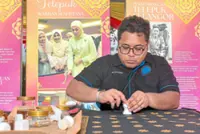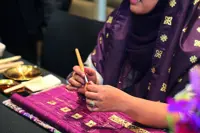
SELANGOR is shining a spotlight on the forgotten art of telepuk-making – a gold leaf technique applied to fabric – once exclusive to Malay royalty and nobility.
To promote the art, Selangor Malay Customs and Heritage Corporation (Padat) has been regularly holding exhibitions, demonstrations and training.
The Padat booth at Festival Sawah Padi Sekinchan 2026 is one such attempt to raise awareness of this rich tradition.
Padat information officer Farhani Shamsudin said more than 10 programmes were held in several states in 2025 spotlighting the heritage.
She said reference books such as Kesenian Telepuk Warisan Melayu Selangor and Warisan Telepuk Alam Melayu were published as well.
Padat also opened the Selangor Telepuk House near Sultan Alam Shah Museum in Shah Alam, offering the
public an opportunity to try their hand at telepuk-making via free programmes or workshops for as low as RM5.
“In Selangor, telepuk can be traced back to the era of Daeng Chelak, the father of Sultan Salehuddin Shah, which proves that this art holds significant historical value within the state’s royal institution,” Farhani told Bernama.
It continued to develop during the reign of Sultan Hisamuddin Alam Shah, she said, through Tengku Ampuan Jemaah who introduced innovative tools.
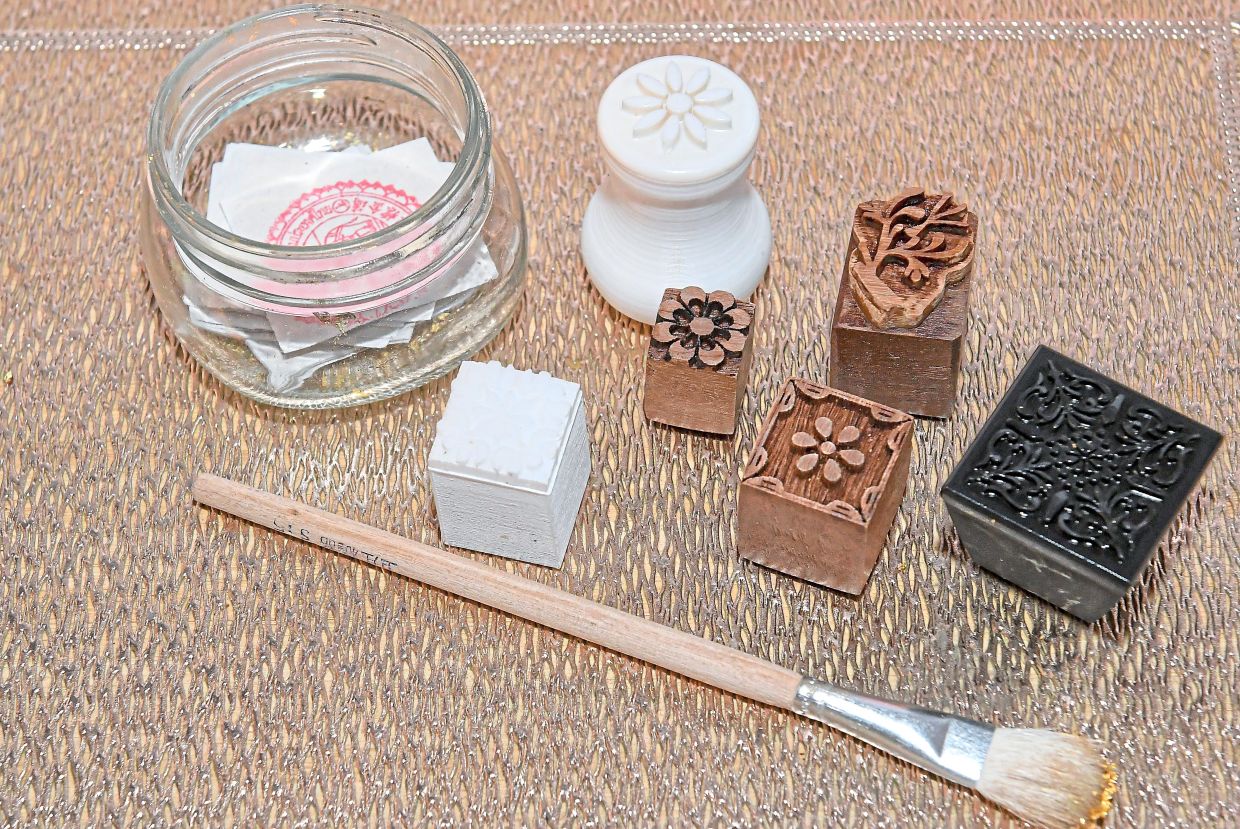
Telepuk is produced using carved wooden stamps with an adhesive applied to the surface, then pressed onto fabric for the gold leaf to stick.
Then it is carefully brushed to reveal the design.
“This process requires a high level of precision and must be done in a controlled environment without wind interference, for a perfect result.”
Farhani said telepuk was used to make tanjak, samping, shawls, sashes and handkerchiefs utilised during royal ceremonies and weddings.
Padat has even introduced a computerised method of making telepuk.
Farhani said the main challenge was the lack of artisans, hence Padat’s move to train its staff as instructors.
A visitor to the booth, Nor Nazihah Mustaffa Kamal, 25, said she learned of telepuk through a book launch but only got a better picture of it after watching a demonstration.
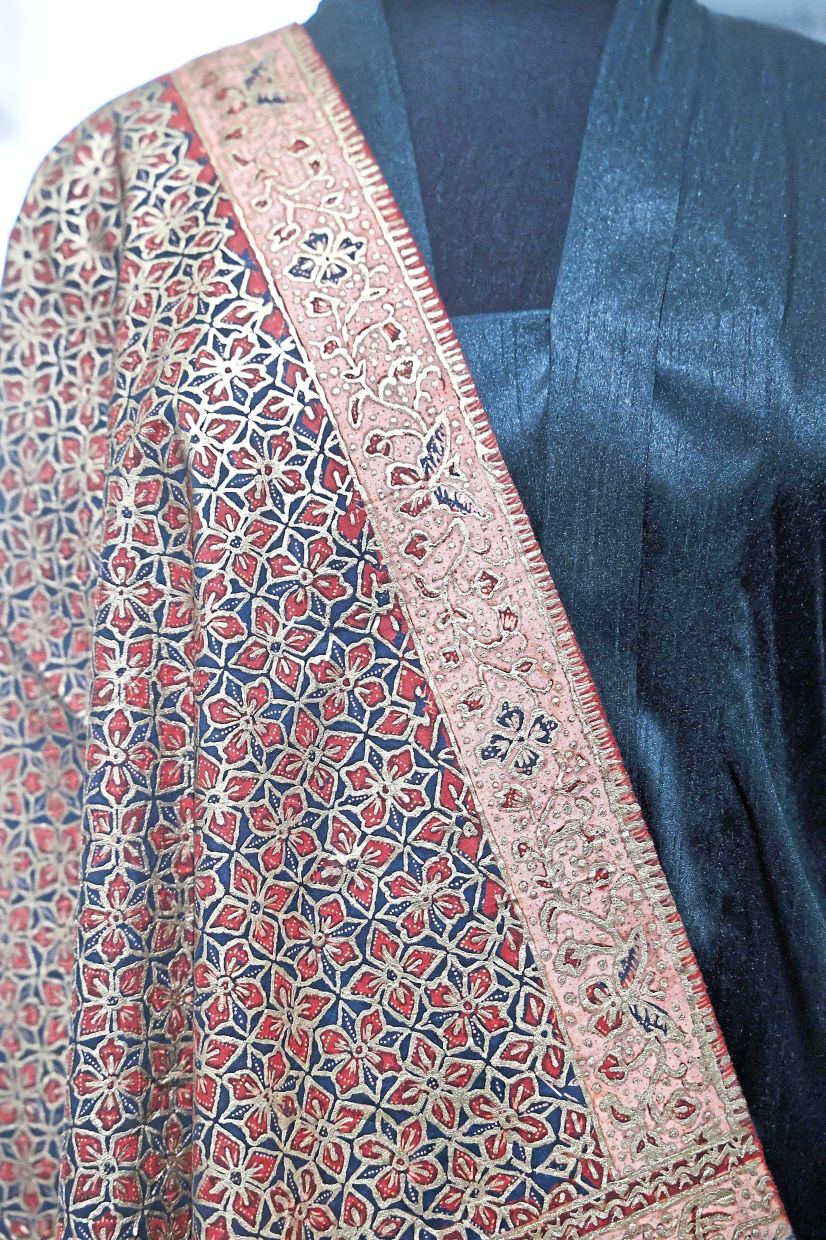
The assistant librarian said it was unique as it used gold leaf.
“This is truly a national heritage that should be highlighted for the younger generation,” she said, adding that she had a go at making it during the demonstration.
Her sister, Nor Nasirafitri, 23, said the patterns and production piqued her interest and that the tradition should be preserved.