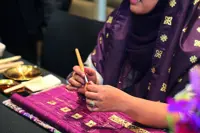
Telepuk is one of the Malay archipelago’s rarest traditional crafts: the delicate art of stamping gold leaf onto polished fabric.
Historically flourishing in royal court centres across Terengganu, Pahang, Kedah, Johor and Selangor, as well as wider maritime trade routes, the craft is anchored today in Selangor, with only about a dozen artisans across Malaysia actively preserving it.
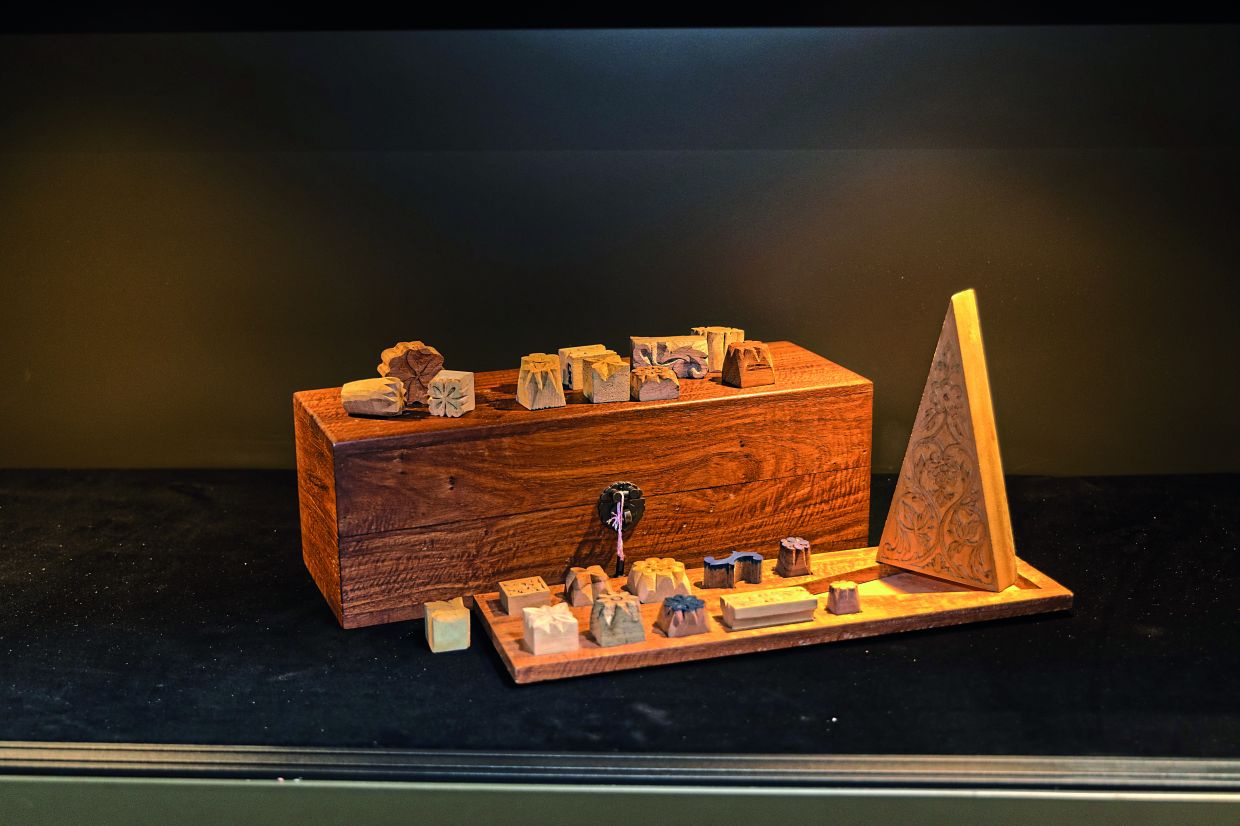
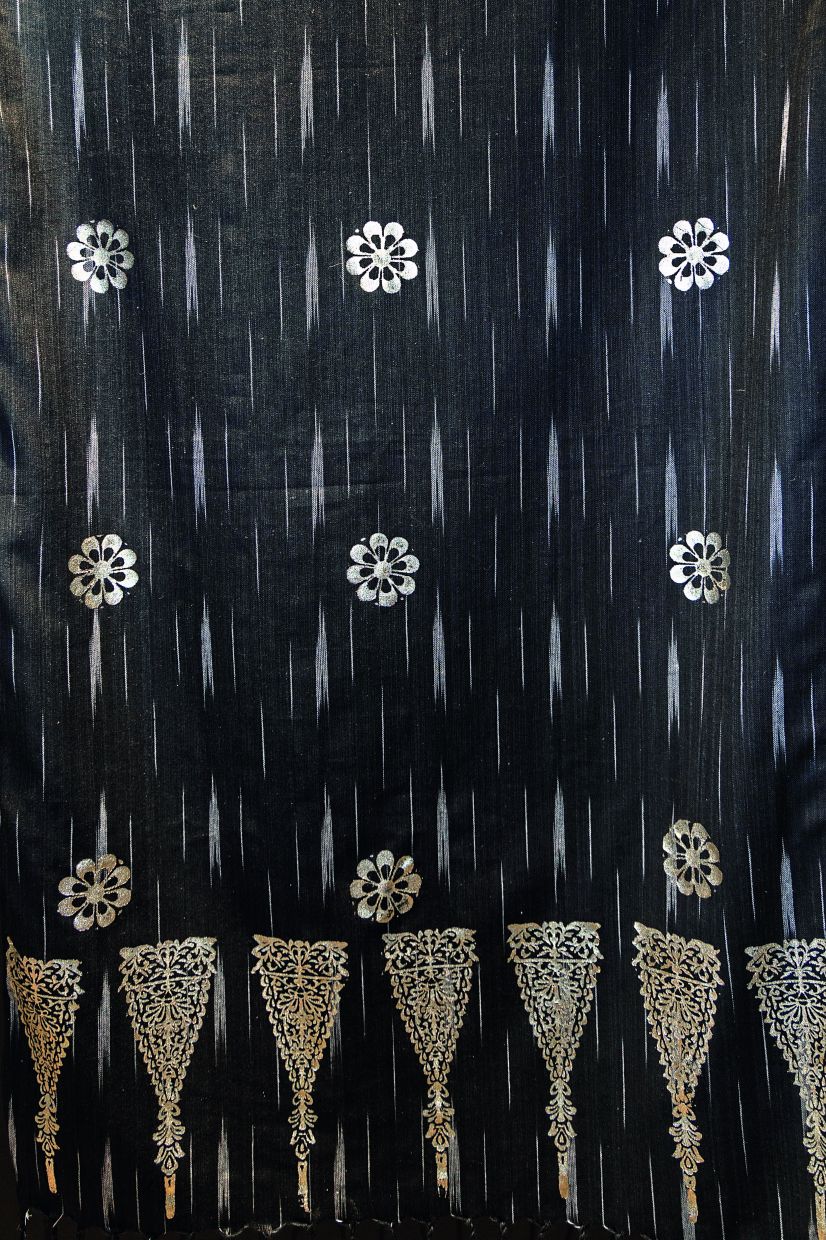
Using carved wooden blocks (sarang telepuk) and natural adhesives, artisans build intricate patterns across cloth entirely by hand and eye. It is a painstaking process where patience, alignment and material knowledge come together to create textiles once reserved for royal courts.
To bring this historic craft out of obscurity, a major exhibition titled Telepuk: The Imprint of Heritage opened at the Royal Selangor Visitor Centre in Kuala Lumpur on August 27, 2026, running through to December 31, 2026.
A satellite presentation will also be hosted at the Royal Selangor Pavilion KL Flagship store starting October 18, 2026 until December 31, 2026.
Officially launched by His Royal Highness the Sultan of Selangor, Sultan Sharafuddin Idris Shah, the showcase presents telepuk as a living practice shaped by artisans, tools, royal court traditions and trade.
Four pillars of an intricate craft
Unlike batik, embroidery or modern metallic printing, telepuk derives its extraordinary intricacy from four master crafts: fine textile weaving, calendering the cloth using cowrie shells, carving the motifs on wood blocks and gilding the cloth using gold leaf.
The preparation begins with selecting finely woven silk or cotton cloth. Next, the fabric undergoes menggerus, a friction-polishing technique using smooth cowrie shells (siput gerus) and beeswax to create an ultrasmooth, glossy foundation.
The artisan then applies a thin layer of natural adhesive, such as gum arabic, onto an intricately carved wooden block (sarang telepuk) and presses it firmly onto the prepared cloth.
Finally, gold leaf is laid over the adhesive impression, and once set, a soft brush gently removes the excess.
Because spacing, alignment and pressure are judged entirely by hand, building a complete piece of cloth requires extraordinary focus.
Royal ties and London archives
Research undertaken for the exhibition uncovered significant historical links between Selangor royal history and international collections.
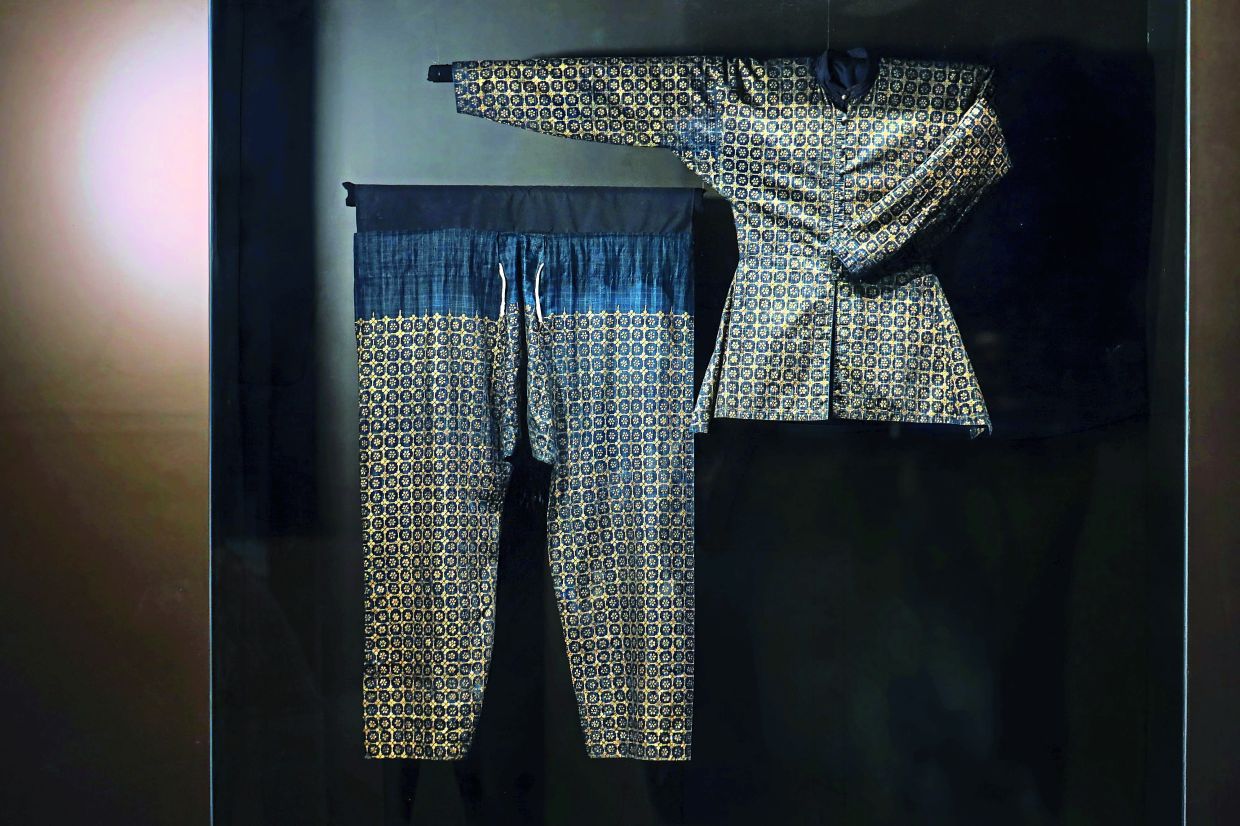
A central highlight on loan from Jabatan Muzium Malaysia was a mid-nineteenth-century royal coat, or Baju Sikap, associated with Sultan Sir Abdul Samad.
Dating back more than 170 years, the garment offered visitors a direct look at how gilded textiles functioned in court attire.
Beyond local shores, a set of 77 telepuk woodblocks carved between 1920 and 1923 and owned by Sultan Ala’eddin Suleiman Shah of Selangor is preserved at the Victoria and Albert (V&A) Museum in London.
These blocks were displayed at the British Empire Exhibition at Wembley in 1924 and 1925, establishing an early international footprint for Malay craft.
Archival research for the project also revealed that zinc electrotype reproductions of the V&A blocks were produced in 1927 by H.W. Caslon & Co. Ltd. and dispatched to the Selangor School of Art. This finding proved that metal stamps were already being produced in the 1920s, adding an earlier documented chapter to the history of the craft.
A collective revival
Keeping telepuk alive has depended on a joint effort by researchers, artisans, royal patrons and heritage institutions.
Project consultant Abdul Razak Aziz and practitioner-researcher Intan Jailani contributed years of field research and practical knowledge to the initiative, following their landmark 2024 publication Telepuk: Forgotten Flowers of Gold.
Specialist woodcarving expertise was anchored by the late master woodcarver, Adiguru Norhaiza Noordin, and Seni Ukir Bakawali.
His personal sketches, tools and carved stamps were displayed to show the intensive planning required before a stamp ever hits fabric.
Institutional partners including Jabatan Muzium Malaysia, Perbadanan Adat Melayu dan Warisan Negeri Selangor (PADAT), Galeri Diraja Sultan Abdul Aziz and Yayasan Hasanah further enriched the showcase through historical garments and reference material.
Exploring tin and pewter
As master pewter artisans since 1885, Royal Selangor explored telepuk through its signature material, tin.
During project development, craftsmen conducted trials applying tin leaf onto fabric using traditional stamping techniques.
While not intended to replace gold leaf, the experiment offered a fresh look at how an alternative metal reacts to traditional methods.
Through a collaboration with the V&A Museum, six traditional patterns from the 1920s Selangor woodblock set were translated into fine pewter.
Classic traditional Malay designs including Bunga Melati (jasmine), Awan Larat (meandering scrolling motif), Bunga Tanjung Pecah Lapan (eight-petalled floral motif) and Tampuk Manggis (mangosteen calyx) were cast into pewter collectibles.
To support the ongoing preservation of the craft, Royal Selangor pledged 20% of net proceeds from each Collector’s Set to the Langkasuka Movement.
A living tradition
The exhibition highlighted that telepuk remains an active tradition rather than a forgotten art.
Contemporary garments on display included a telepuk kebaya featuring the Bunga Tanjung Pecah Sembilan motif worn by Her Royal Highness the Tengku Permaisuri of Selangor, alongside ceremonial attire worn by His Highness the Raja Muda of Selangor, Tengku Amir Shah.
Through public demonstrations, guided tours and hands-on workshops where visitors experimented with adhesives, stamps and leaf to create their own artwork, the initiative successfully transferred knowledge from archives to public understanding, ensuring this golden imprint of Malay heritage continues to shine.
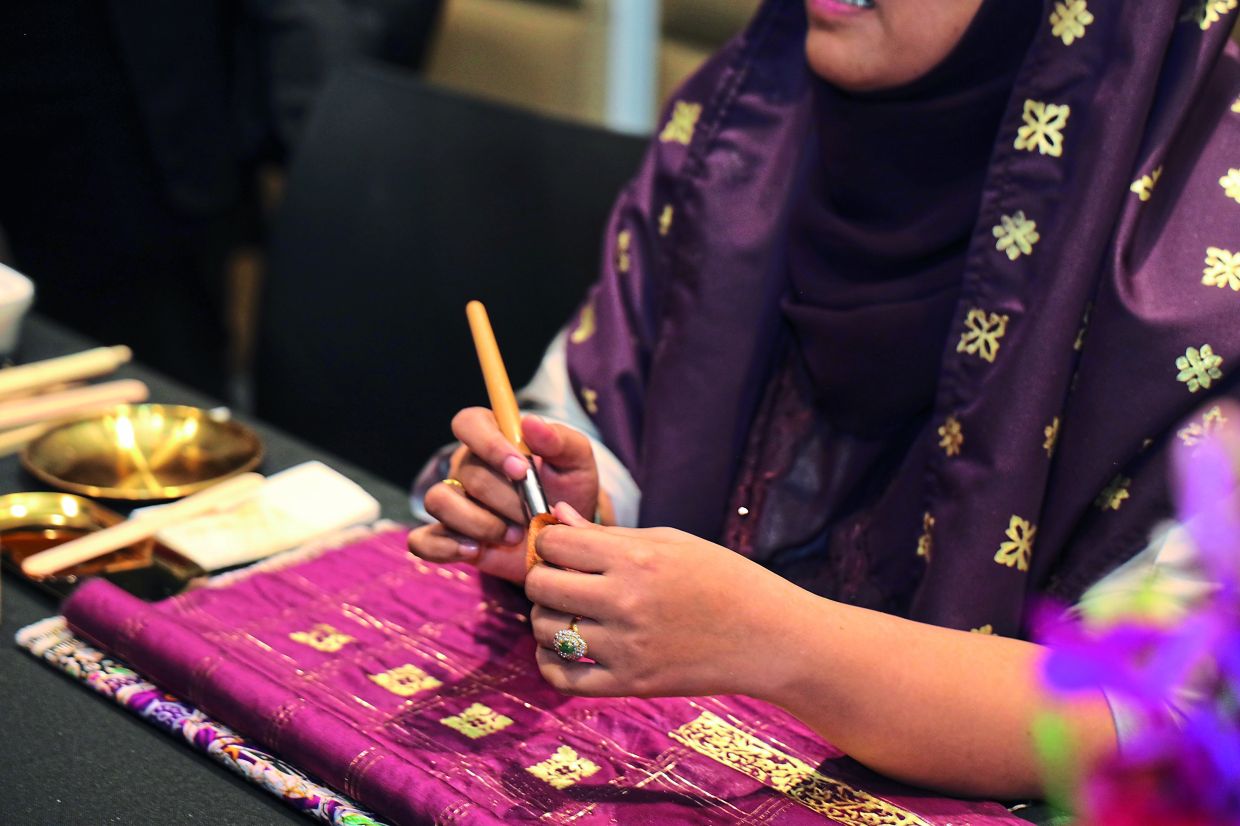
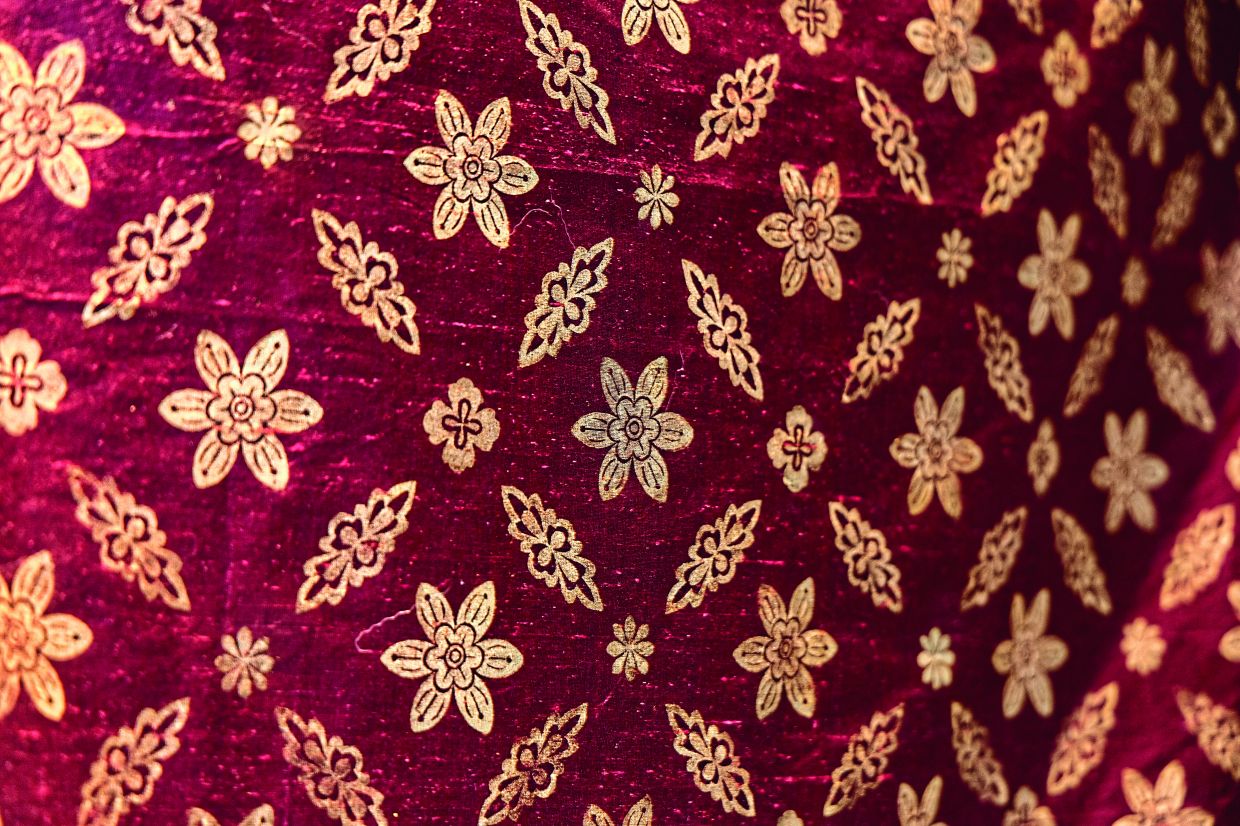
A series of workshops are being conducted throughout the duration of the exhibition. Photos: Royal Selangor
Telepuk, the delicate art of stamping gold leaf onto polished fabric, is one of the Malay archipelago’s rarest traditional crafts.
A painstaking process, artisans use carved wooden blocks (sarang telepuk) and natural adhesives to build intricate patterns across cloth.
Royal Selangor craftsmen conducted trials applying tin leaf onto fabric using traditional stamping techniques.
A major exhibition titled Telepuk: The Imprint of Heritage is currently on at the Royal Selangor Visitor Centre.