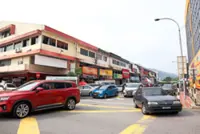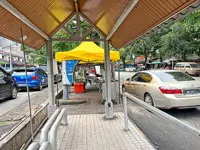
Persistent traffic congestion and shortage of parking in the commercial centre in Taman Melawati, Selangor, are frustrating residents and business owners.
Stakeholders say the issue is compounded by residential and commercial developments that emerged in the area in recent years, which has placed additional pressure on the mature township’s road and parking infrastructure.
While Ampang Jaya Municipal Council (MPAJ) plans for a traffic-flow study for Ampang and stepping up enforcement to address these issues, residents say more needs to be done to improve traffic flow and free up parking spaces.

“Currently, motorists have to make big loops to get in and out of the commercial area.
“Cars are constantly circling inside, and this jams up the whole place.”
Azhari, who has lived in Taman Melawati since 1991, suggested introducing a small roundabout at the MRR2/Jalan Bandar 12 intersection to allow motorists to turn directly into Jalan Bandar.
“This would give motorists another way to enter Jalan Bandar instead of having to make a big loop.
“Of course, the road would have to be widened to accommodate the roundabout.”
Azhari said MPAJ should also address the use of public parking spaces by businesses and mobile stalls.
“On weekends, the entire open-air carpark in Jalan Bandar 4 is taken up by a flea market. On weekdays, many of the spaces are occupied by food trucks and other stalls,” he said, suggesting these businesses be moved to food courts.
“There are also night markets on Tuesdays and Thursdays, as well as a morning market on Saturdays at Lorong Sarawak.
“All these activities take up parking spaces and affect traffic flow.”
An operator of an eatery along Jalan Negara, identified only as Mohd Ishak, said traffic in Taman Melawati had increased over the past few years.
“I have been here for 15 years. This place used to be jammed during lunch time when people came to get food or go to the banks.
“These days, traffic is constantly heavy as more businesses have come up, along with new residential developments.”
Parking along Jalan Negara, he said, was always full, which affected his business because customers avoided the area.
The parking issue in Taman Melawati was also raised during the Selangor state assembly sitting in August, with Hulu Kelang assemblyman Datuk Seri Mohamed Azmin Ali saying he had received complaints from residents about insufficient bays in the town centre.
Azmin had urged MPAJ and the state government to take immediate action to provide safe and accessible parking facilities.
He also called for greater attention to public transport services connecting Taman Melawati and Taman Permata, citing the needs of the Hulu Klang population, which had exceeded 108,000 people.
Meanwhile, MPAJ said it planned to conduct a traffic-flow study in the Ampang area through a consultant.
In a statement to StarMetro, it said the findings would be used to develop a “controlled, systematic and efficient” road and traffic management system.
Taman Melawati currently operates under a one-way traffic system, with MPAJ planning to strengthen enforcement against obstructions along main routes.
MPAJ acknowledged that the commercial area frequently experienced critical parking shortages during peak hours, which it attributed to the high density of business premises and offices.
The council said it currently conducted periodic route assessments and monitored traffic flow through its engineering and revenue departments.
“The assessments cover peak-hour parking patterns, parking bay turnover rates, and causes of congestion at major junctions along the main roads.”
On enforcement, MPAJ said action was being stepped up to prevent parking misuse and ensure motorists paid for bays they occupied.
“Enforcement personnel are stationed at areas with high vehicle density.”
It added that patrols, vehicle towing and enforcement against double parking and misuse of parking bays had also been increased.
According to MPAJ, the commercial area has 1,546 parking bays, comprising 1,339 open bays, 72 barrier-controlled bays and three bays for persons with disabilities.
The council said it had also introduced hotspot zones to better manage parking in the commercial area.
It encouraged motorists to use existing facilities including barrier-controlled parking and spaces within private complexes.
“MPAJ found that barrier-controlled parking areas are not fully utilised because they are located further from areas visitors want to access,” it said.