PARENTS, devotees and community leaders in Brickfields fear ongoing road upgrading works along Jalan Sultan Abdul Samad could worsen congestion and restrict access to nearby schools and a Hindu temple.
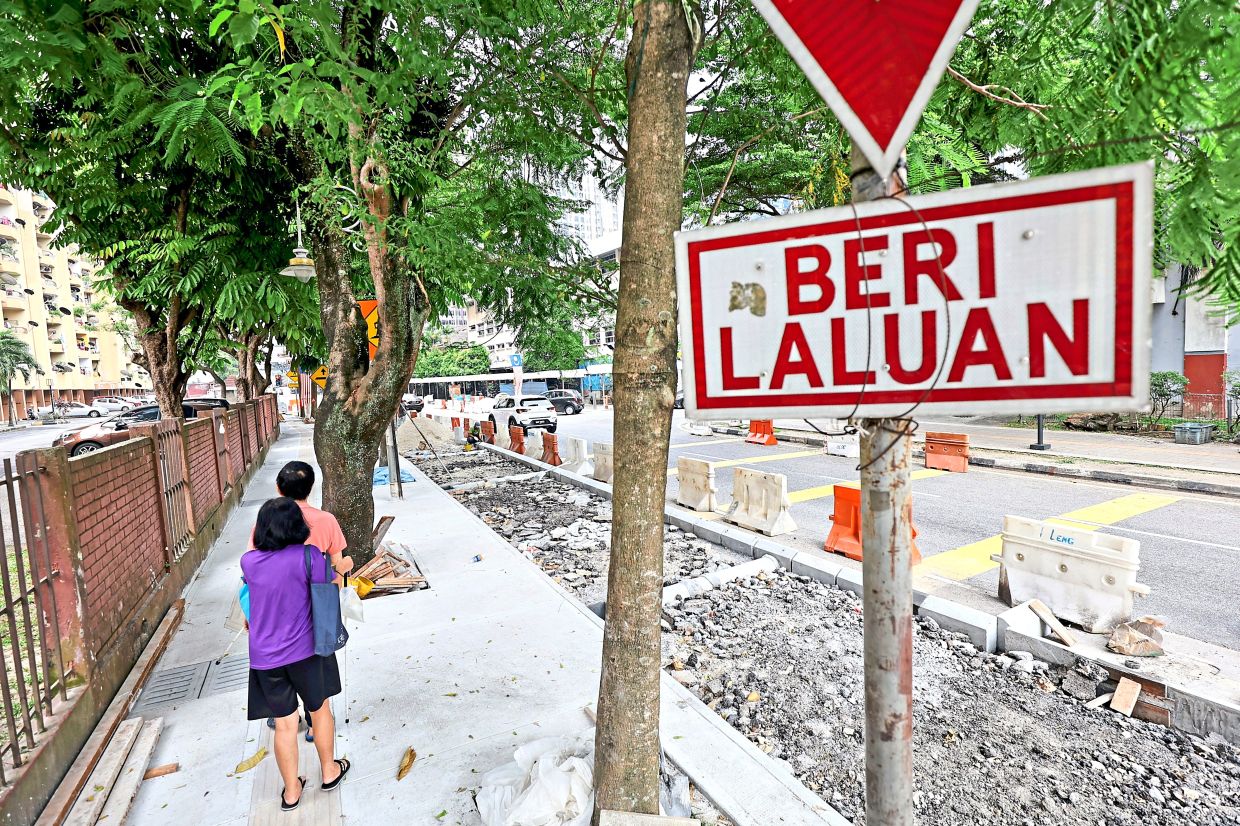
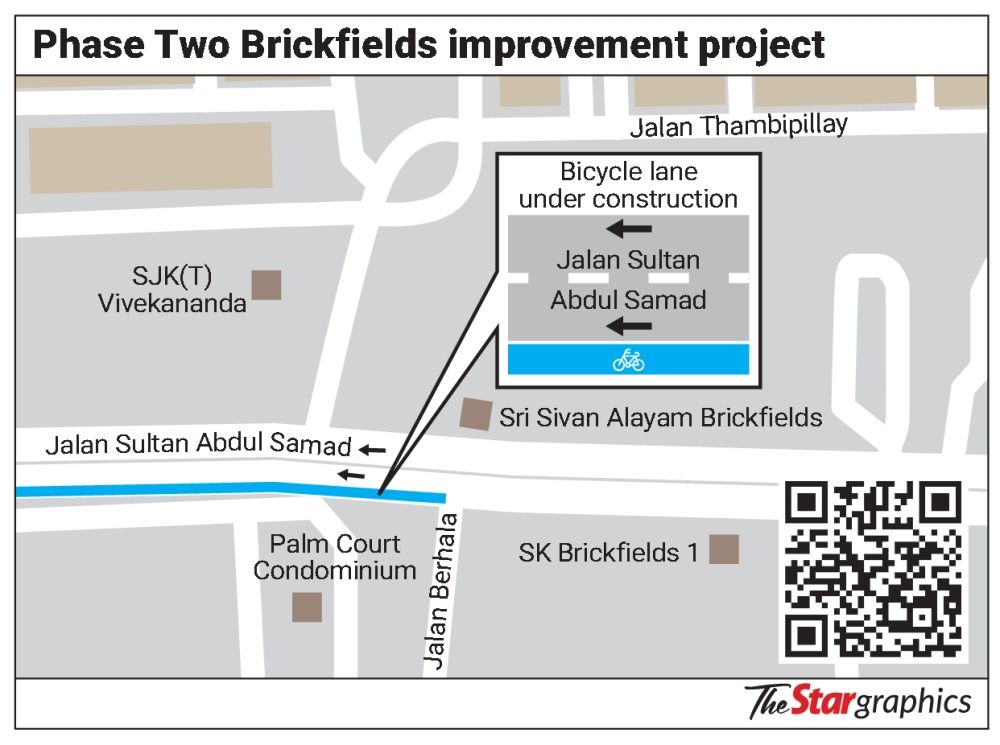
Their main concern is the conversion of one of the three existing lanes into a bicycle lane under Phase Two of the Brickfields improvement project.
Under the project, Kuala Lumpur City Hall (DBKL) is narrowing the width of the road to 6.5m (or 3.25m for each lane) while introducing a 1.3m pedestrian walkway and 1.2m bicycle lane.
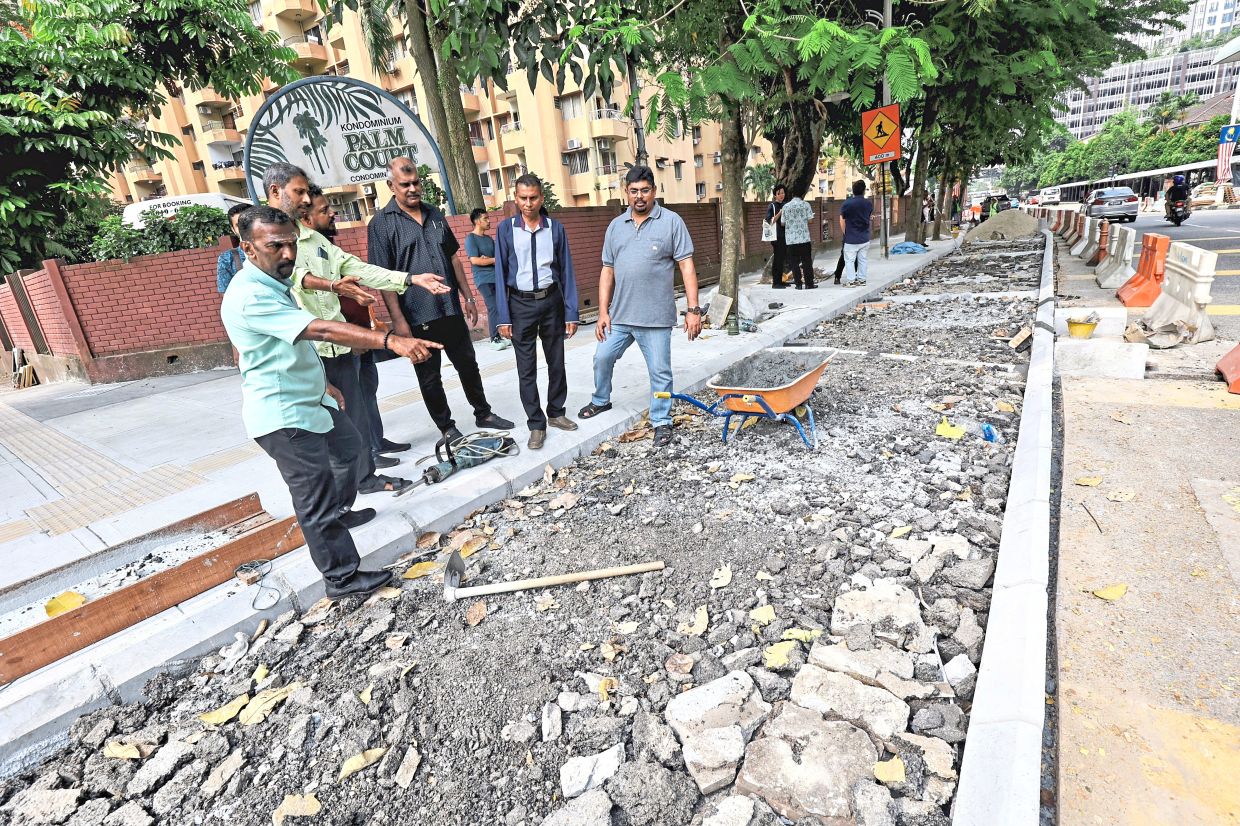
The project, fronting SJK(T) Vivekananda and nearby Sri Sivan Alayam Brickfields temple, forms part of a busy travel route.
SJK(T) Vivekananda Parent-Teacher Association (PTA) chairman Thamilalagan Suppiah said the road changes would remove space used by parents to park briefly to get their children.
Thamilalagan said parents or private transport providers fetch the pupils between 12.50pm and 1.20pm.
“The primary school has more than 300 pupils,” he said.
“Parents have to park, walk into the school to get their children as primary pupils are not allowed to leave without supervision.”
Thamilalagan said those unable to find parking would be forced to make a big circle along the one-way road system before returning to the school.
Sri Sivan Alayam Brickfields chairman A. Rajasingam Arunmugam said devotees also faced a similar problem as they would park on Jalan Sultan Abdul Samad for a short while when going to the temple.
He said devotees would leave their cars for between 10 and 30 minutes as DBKL’s nearby carpark lot was often full by 8am.
Rajasingam said the parking situation was dire during religious festivals when several hundred devotees visited the temple.
“Elderly, the disabled and visually impaired devotees also have to be dropped off close to the temple entrance,” he said.
“With Jalan Sultan Abdul Samad being narrowed, such drop-offs can become challenging on the one-way street.”
Brickfields Rukun Tetangga chairman SKK Naidu said while residents welcomed the walkway upgrades, they were against the implementation of a bicycle lane.
He said the issue extended beyond SJK(T) Vivekananda, as there were 10 schools along Jalan Sultan Abdul Samad.
He estimated that about 4,000 children attended schools and kindergartens in the area.
Many of them, he said, were driven to school by their parents, and a normal drop-off and pick-up system would not work for primary pupils.
He said reducing the number of lanes without providing alternative short-term parking near the school and temple, could lead to double-parking and disputes among motorists, particularly during peak hours.
Naidu also questioned the need for a bicycle lane on a road with limited space, saying the design should have been discussed with the community before construction started.
He said while residents supported improvements to pedestrian safety, particularly at the traffic-light crossing, they wanted DBKL to reconsider aspects of the design that could cause bottlenecks.
SJK(T) Vivekananda PTA member Gopinathan Karuppiah said most schools in the area ended at around the same time.
He said displaced vehicles could spill into surrounding streets and make it difficult for buses and other vehicles to pass.
“If the road cannot be widened, then do not make it narrower,” said Gopinathan
City Hall, however, maintained that the redesign was necessary for pedestrian safety and to reduce vehicle speeds.
DBKL Urban Transportation Department director Muhammad Azri Abdul Aziz said City Hall had been working to improve accessibility in Brickfields since the 1990s, particularly after the establishment of the Malaysian Association for the Blind (MAB) there.
He said the latest improvements were part of DBKL’s road safety collaboration with Global Designing Cities Initiative (GDCI), with support from Bloomberg Philanthropies, which began in Brickfields in 2022.
“Costing more than RM500,000, Phase two covers about 400m of Jalan Sultan Abdul Samad including improvements to the traffic-light system.
“The work is expected to be completed within three weeks.”
Muhammad Azri said the narrower carriageway was deliberately designed to discourage roadside parking and reduce vehicle speeds to 30kph.
The pedestrian crossing, he said, would also be shortened to about 6.3m, reducing the distance children and other pedestrians needed to cross the road.
“Safety comes first. When we narrow the road, drivers will naturally slow down.”
He said the changes would initially draw objections, but added that similar interventions elsewhere had taken time for communities to accept.
He said DBKL aimed to gradually shift the area towards a “drop-and-go” culture while encouraging more people to walk, cycle and use public transport, particularly with Kuala Lumpur Sentral nearby.
Under the “drop-and-go” approach, motorists would stop briefly to drop off or pick up passengers rather than wait or park along the road, he said.
Muhammad Azri added that enforcement against illegal parking and roadside traders was a separate matter to be handled by the relevant DBKL departments.
Naidu, however, said this was precisely what worried residents.
He said without consistent enforcement and a workable arrangement for parents, devotees and traders, the narrower road could end up creating another problem instead of solving the existing one.
Community representatives are planning to appeal to DBKL to review the design before the project is completed.
Muhammad Azri confirmed that an engagement session with stakeholders would begin in mid-September.