SANDAKAN may seem like a mere sleepy town on the east coast of Sabah, but its charms are manifold.
From its vibrant history boosted by the Sandakan Heritage Trail, to food offerings and a focus as the gateway to Borneo’s wildlife, the former capital of British North Borneo has much to offer visitors.
Stepping into history
One of the best ways to learn about the town’s history is the well-known Sandakan Heritage Trail.
The clearly marked, self-guided walk of some 2.6km has 10 sites, each with signboards narrating its historical significance.
As it is almost a complete loop, walkers can start at any point and even meander off-route to check out other interesting sights along the way.
The first landmark on the trail is the Masjid Jamik dating back to 1887, the oldest mosque in Sandakan that still bears the scars of World War II.
A few hundred metres away at Sandakan Municipal Council Square, sits the William Pryer Monument commemorating the founder of Sandakan, alongside two other memorials – one for those who died at the end of the 19th century and the other for townsfolk who died in World War II.
The site leads next to the 100 Steps, which funnily enough is called Tangga Seribu (a thousand stairs). But fear not, as it only ascends some 70m and is the only strenuous part of the heritage trail.
The route was historically used by the Chinese community living on the hill to carry their wares down to the coastal markets, from the late 1800s to the time when Sandakan was known as “Little Hong Kong”.
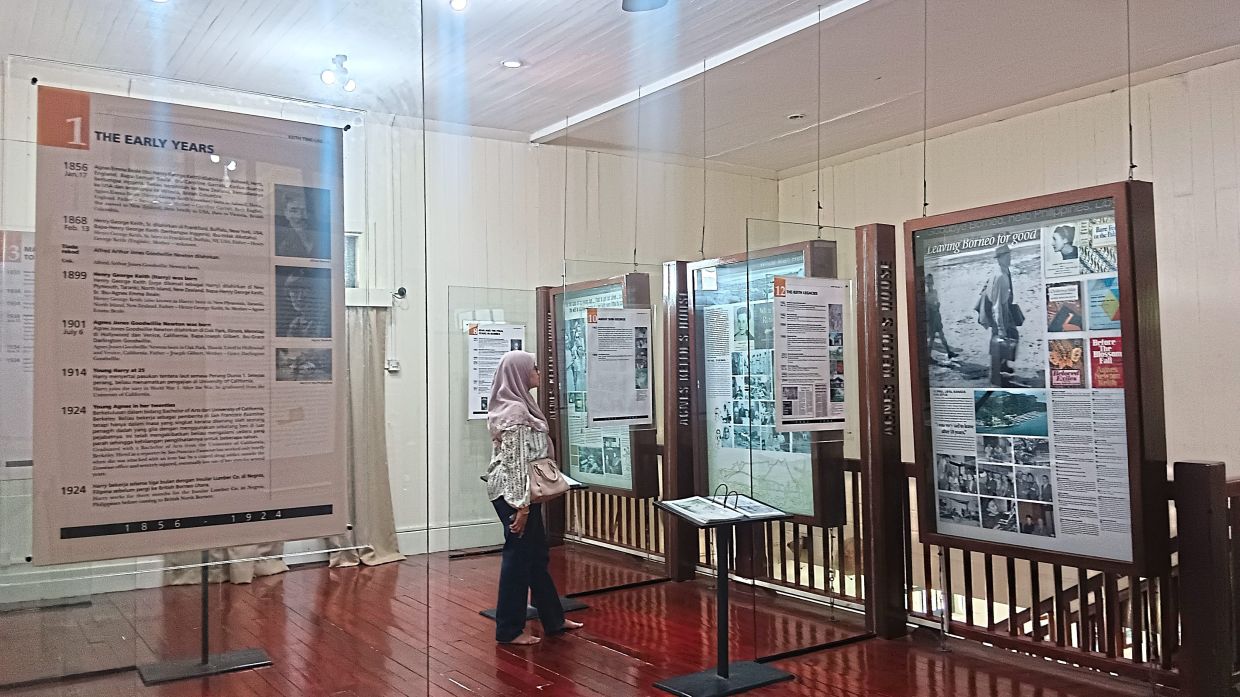
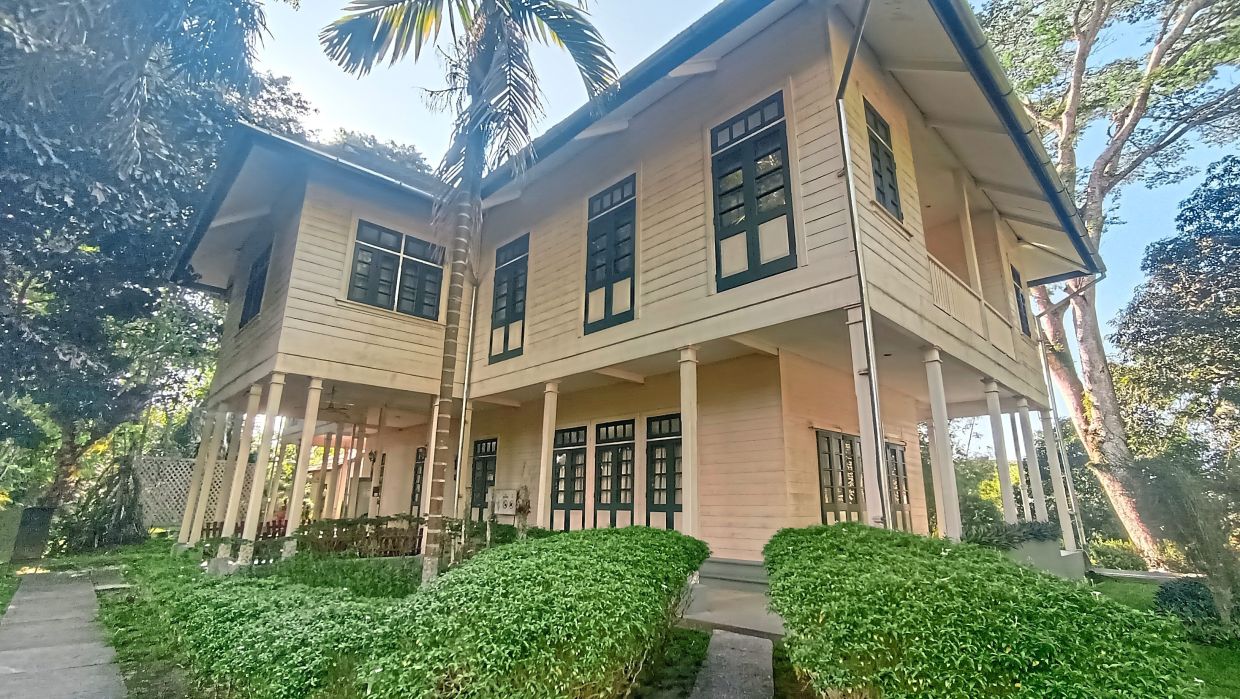
At the top sits Agnes Keith House, the only site on the trail with an entry fee (open from 9am to 5pm).
The restored two-storey colonial property tells the life of its famous resident, the American wife of Henry George Keith, an official of the government of British North Borneo.
Agnes Newton Keith lived in Sandakan from 1934 to 1952, during which she and her son were imprisoned by the Japanese on nearby Pulau Berhala.
Her experiences moulded her literary trilogy Land Below the Wind (1939), Three Came Home (1947) and White Man Returns (1951).
Right next door is the English Tea House and Restaurant (open from 10am to 10pm), a nice spot for a bit of repast – think tea with scones, sandwiches and pastries in the golden afternoon light with a breeze and view of Sandakan Bay.
Back on the heritage trail, it is an almost 1km stroll to stop No.5 – the Remains of the Old Stair-case, thought to be part of the Chinese Consulate (1933-1946).
Off route, a 1.5km road ascent leads to Trig Hill and its historical vantage point over Sandakan Bay and Sulu Sea.
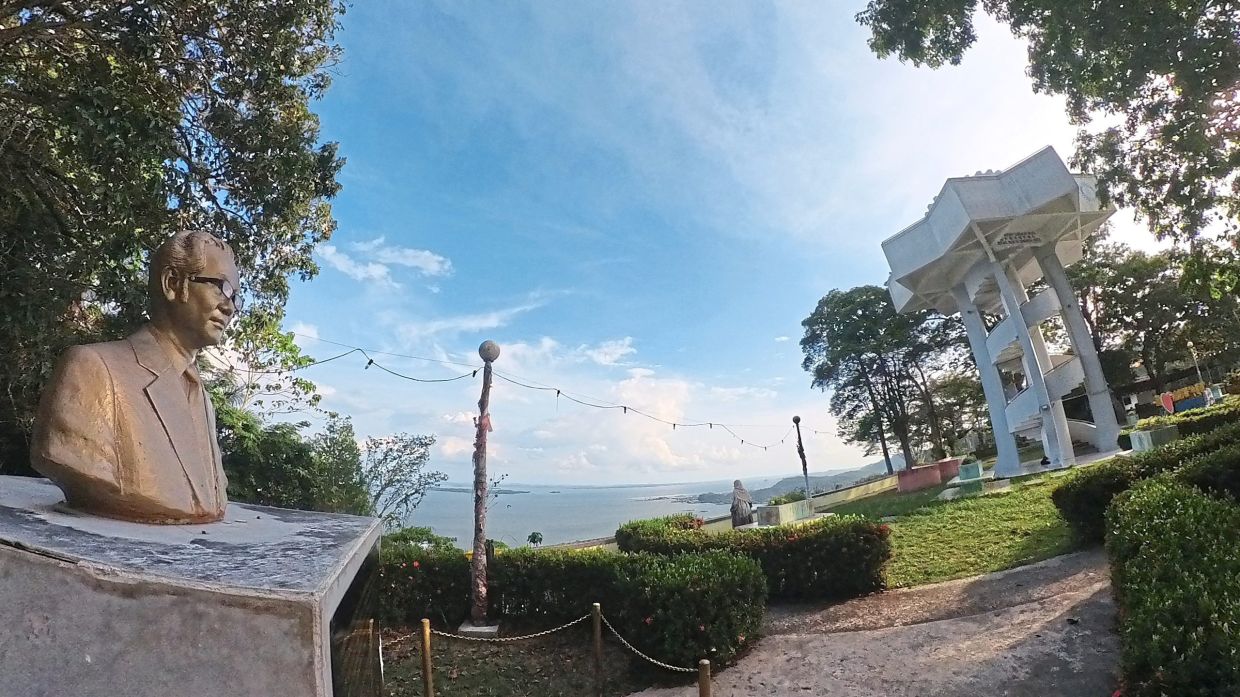
It now serves as a recreational spot and memorial to Sabah minister Datuk Chong Tain Vun, who was killed alongside then chief minister Tun Fuad Stephens and nine others in the “Double Six Tragedy” plane crash of 1976.
The heritage trail continues nearby with the Goddess of Mercy Chinese Temple (stop No.6, open from 7am to 4pm), one of the oldest temples in Sandakan dating back to 1868.
Stop No.7 is St Michael’s and All Angels Church which Gothic Revival construction began in 1893. It is closed to tourists on Tuesdays and Sundays, with a donation required to view the stained glass windows.
The trail also takes in Sam Sing Kung Chinese Temple with its bronze bell that is over a century old, and the Malaysia Fountain, before ending at the colonial-era Wisma Warisan building.
The heritage trail takes anywhere from 90 minutes to half a day. It utilises covered and uncovered roads, paths and crosswalks, so do plan for either a scorching or wet day, depending on your luck.
Life by the water
What was once one of the busiest and most prosperous ports in Southeast Asia, Sandakan still comes alive at the Waterfront, just off the heritage trail.
There are eateries, shops and promenades facing Sandakan Bay, while the rest of the old town has an old-timey charm.
In a mix of old and new, the Harbour Mall sits right by the water, bookended by the Waterfront and the Sandakan Central Market.
The market offers a plethora of produce – vegetables, spices, snacks as well as seafood fresh and dried.
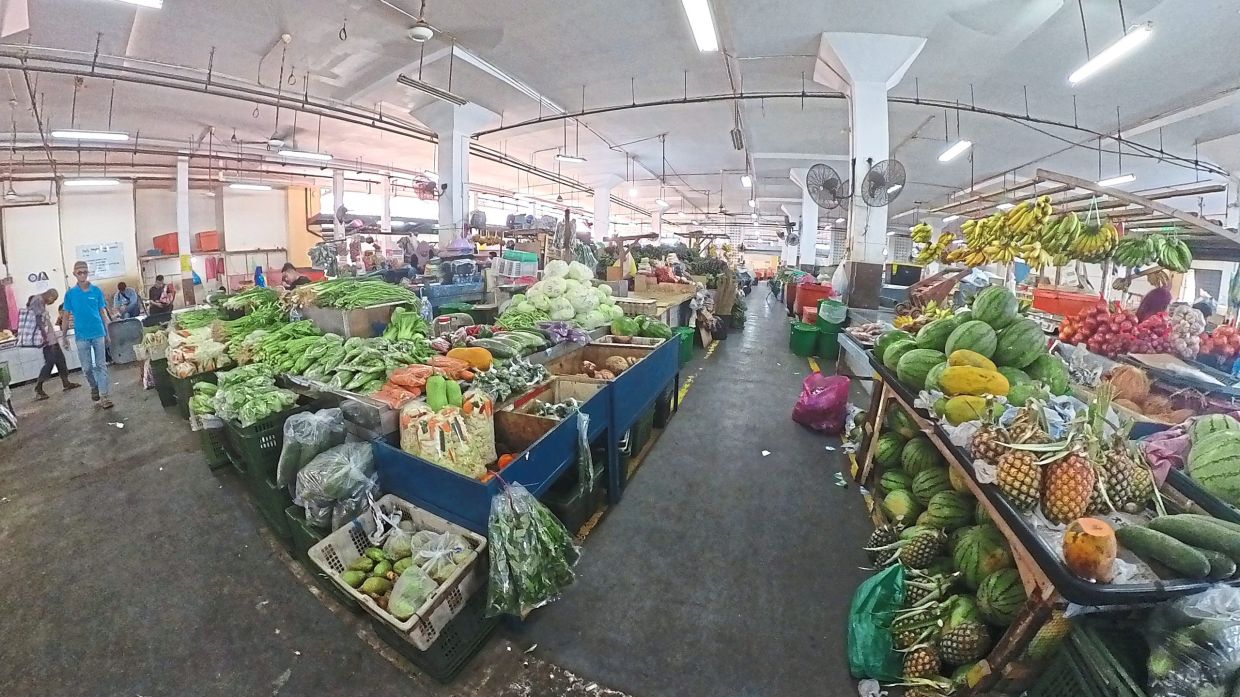
It may also be the best spot to see plenty of action, with catch being landed fresh from the ocean in the early morning.
Internet searches will come up no end of food options in Sandakan, from buying seafood straight from the market (or the fishermen) and taking it to nearby restaurants for cooking, to local specialities like seafood herbal soup, spring noodles and fish paste noodles.
There’s also the iconic UFO tart – a fluffy sponge topped with creamy egg custard and airy meringue, said to have been accidentally invented by a Hainanese baker in 1955.
The top results, however, are in Kampung Sim Sim, the floating village that runs north of the old town and forms part of historic Sandakan.
The village features a number of platforms jutting out to sea, linking homes, community facilities and shops selling everything from necessities to snacks, local cakes and salted fish.
The restaurants are popular for fresh fish, prawn, squid, crab and mussels cooked on the spot, with a “what do you recommend” query likely to be answered with “Kupang masak Kam Heong” (mussels cooked in kam heong sauce, and yes, it was delicious), “Butter Prawn” and salted egg everything.
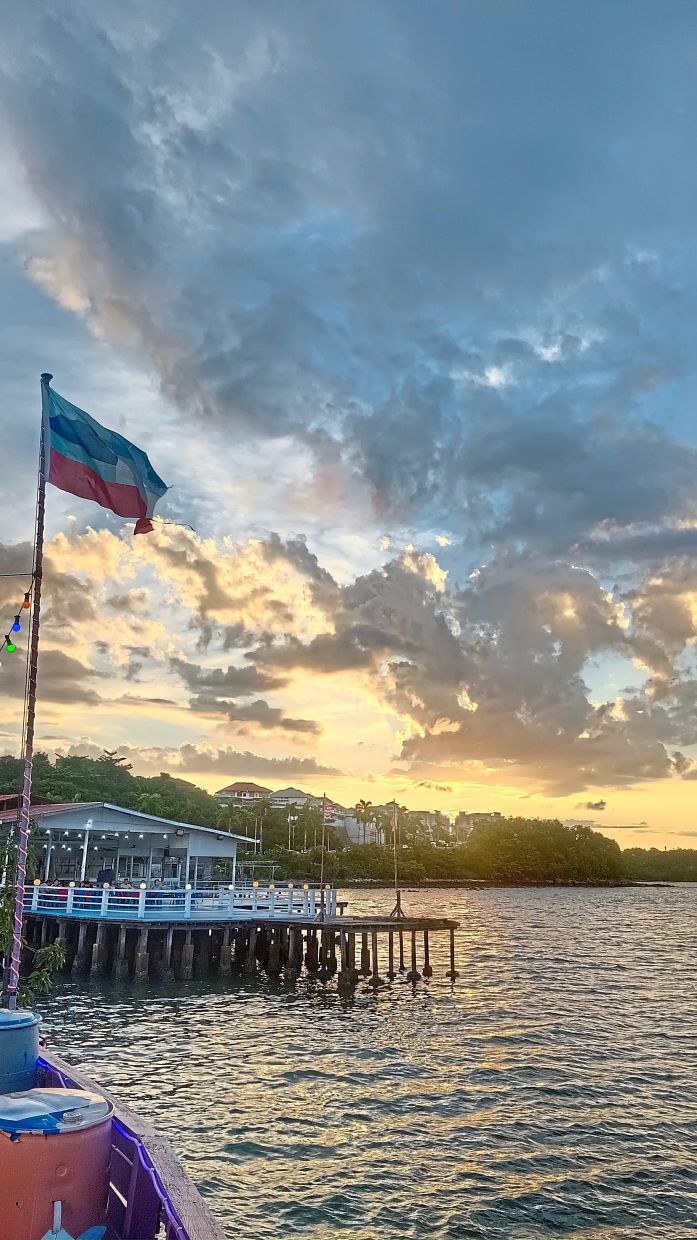
Dinner on the water is enjoyed with the sea breeze, views of Pulau Berhala and the Sulu Sea beyond, and golden rays of the setting sun.
However, a small caution comes in the very nature of floating villages and their lack of sanitation services, a long-standing issue in many coastal areas.
Walking on the ‘wild’ side
Sandakan earns its spot as a gateway to wildlife as it is surrounded by the region’s most crucial conservation centres and highly biodiverse habitats.
About 30km from town is Sepilok, where a hub for nature flourishes as part of the Kabili-Sepilok Forest Reserve.
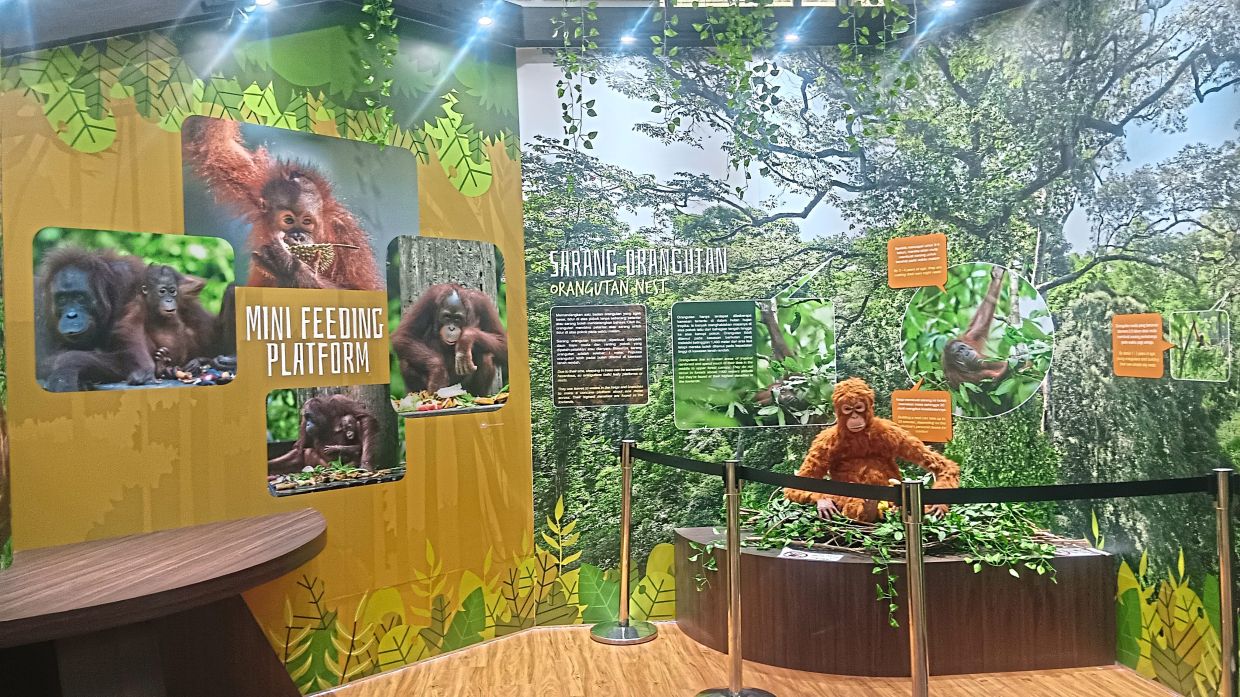
The most well-known is Sepilok Orangutan Rehabilitation Centre, which started in 1964 to rehabilitate orphaned orangutans.
It has since grown into an expansive conservation, education and ecotourism site for the critically endangered Bornean orangutan.
The centre is open 9am to noon, and 2pm to 4pm daily, with an extra hour’s break on Fridays.
Feeding times are at 10am and 3pm, while the outdoor nursery is accessible during opening hours.
Right next door is the Bornean Sun Bear Conservation Centre (BSBCC) focusing on the rescue and rehabilitation of the world’s smallest bear.
The centre is headed by Dr Wong Siew Te, who along with BSBCC won the Star Golden Hearts Award (SGHA) in 2023.
Alongside boardwalks over the bears’ forest pens, there are informative signboards and conservation staff willing to chat about their charges.
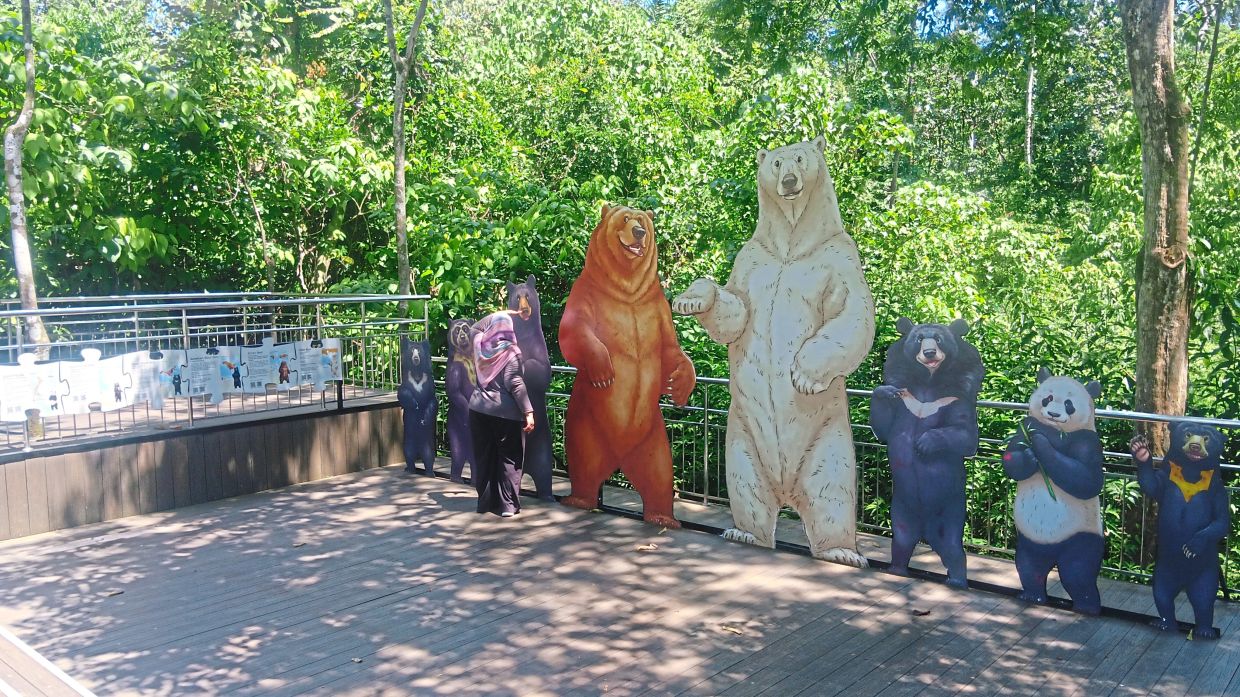
Meanwhile, the education hub plays videos such as Judi Dench’s Wild Borneo Adventure where Oscar-winning actress Dame Judi Dench visited BSBCC and participated in the release of three sun bears back into the wild.
Sharing the same forest ecosystem is the Rainforest Discovery Centre (RDC).
Serving as an environmental education facility, it lets visitors get high up in the tree canopy and immersed in forest life.
It is open daily (from 8am to 5pm), with guided night walks also offered.
From Sepilok, it is another 25km or so to Labuk Bay Proboscis Monkey Sanctuary, where visitors can see this bizarre animal that can only be found on Borneo island.
Feeding times are set at 9.30am and 2.30pm at Platform A, and 11.30am and 4.30pm at Platform B, with the spots being about 2km apart.
The staff will bring out a tray or two of cut fruits, and the monkey harem will meander down from the forest, with the alpha male in the lead.
Be aware that the “road” inside is pretty much oil palm plantation gravel paths, so do account for a slow drive.
Additionally, those looking for more nature adventure can make overnight trips to Kinabatangan Wildlife Sanctuary some 150km from Sandakan.
In memoriam
Close to Sandakan Airport, a small green space has been moulded with great meaning.
This is the Sandakan Memorial Park, built on the grounds of the largest World War II Japanese prisoner of war camp in North Borneo, from which prisoners set off on the Sandakan Death Marches.
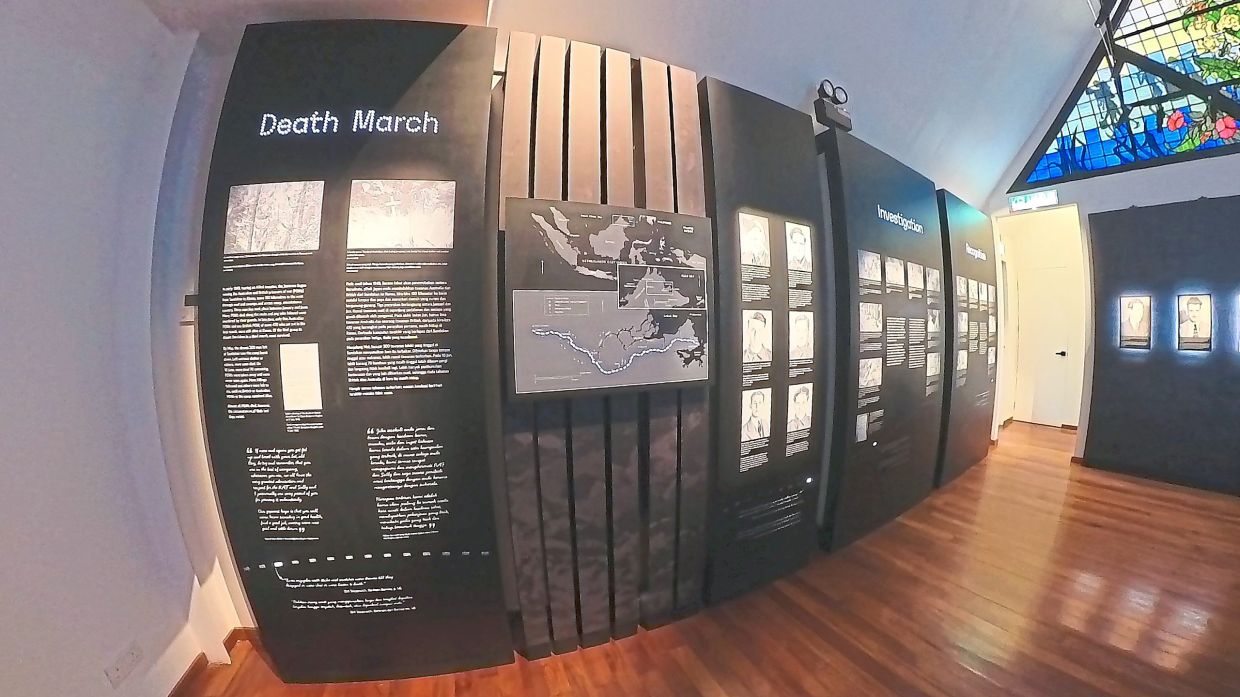
The walking loop is about 1km in length, with signs identifying remnants of the camp such as a sabotaged excavator, generator parts, prisoner compounds, administrative area and the gate through which the prisoners were marched to their deaths.
The park is anchored by a granite obelisk commemorating the 2,400 Australian and British soldiers who perished and the heroic local Sabahans who risked their lives to help them, set on the site of the “Big Tree” that once served as the symbol of hope for the prisoners.
A short distance away, a pavilion displays information about the camp, and the six Australians who managed against all odds to escape and tell the story.
The park, set within a residential area taking up about half the original space of the camp, is a quiet space and though small, is a deep reminder of Sandakan’s place in history, the atrocities of war and the freedoms we enjoy today.