PEAK hour congestion has been significantly reduced along Jalan Seelong in Kulai district, Johor, since implementation of traffic lights powered by artificial intelligence (AI).
Caretaker state housing and local government committee chairman Datuk Mohd Jafni Md Shukor said preliminary monitoring showed that travel time during the morning rush hour had gone down from about 18 minutes to around 14 minutes following use of the Smart Traffic Light (TrafficSens) system at three major intersections along the route.
“The system uses AI Virtual Loop technology to automatically optimise green light durations based on real-time traffic conditions, helping to improve vehicle flow and reduce bottlenecks,” he said in Johor Baru.
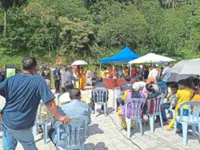
Jafni said he inspected traffic conditions along Jalan Seelong in Senai together with the Kulai Municipal Council (MPKu) president, Kulai district police representatives and relevant officers.
He said the visit was aimed at assessing the effectiveness of measures introduced to address traffic congestion, a long-standing issue faced by motorists in the area.
“As a people-centric government, we cannot rely solely on reports. We need to be on the ground to see the actual situation and listen to feedback from road users who face these challenges every day.”
The incumbent Bukit Permai assemblyman said MPKu had also installed digital countdown timers at the same traffic lights, allowing motorists to clearly see the duration of red and green lights, improving driving discipline and helping traffic move smoothly, particularly during peak periods.
“According to initial findings, vehicle queues along the affected stretches have been reduced by as much as 36% during the morning rush hour.
“For the evening peak period, travel time was shortened by more than five minutes while congestion levels fell by up to 33%.”
Jafni said the encouraging results were also made possible through active traffic control by the police at critical locations.
He said close cooperation between MPKu, police and technical agencies demonstrated that smart technology, when supported by effective traffic management, could provide practical and immediate solutions for the people.
However, he stressed that this represented only the first phase of efforts to tackle traffic congestion in Kulai, with additional measures identified and set to roll out in stages based on traffic data, current needs and the district’s rapid development.
He said that future initiatives would involve a more comprehensive approach covering traffic engineering, smart technology applications, vehicle-flow management and road infrastructure improvements.
“Our goal is not only to reduce congestion today, but to build a more efficient and sustainable mobility system for the future,” he said.