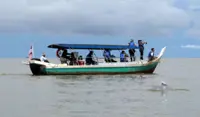
AT THE call of “Up!”, all seven people aboard the boat immediately scanned the endless blue sea in every direction, urgently searching the horizon.
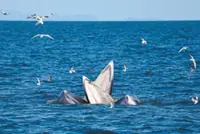
Aware that a marine mammal had surfaced above the waves, the team from MareCet Research Organisation was soon rewarded with the sight of a powerful spout of water shooting up,
followed by a glimpse of a dorsal fin.
Even for the experienced boatman and expedition leader, the sighting sparked immediate grins and exclamations, signalling that the whales were finally back at Pulau Payar, Langkawi in Kedah.
Forming the team
The call for volunteers for MareCet’s The Whale Project came about two months before the programme kicked off in mid-May.
The non-governmental organisation (NGO) sought three adult volunteers for a 10-day research survey aimed at searching for and documenting data on marine mammals in the waters off Langkawi.
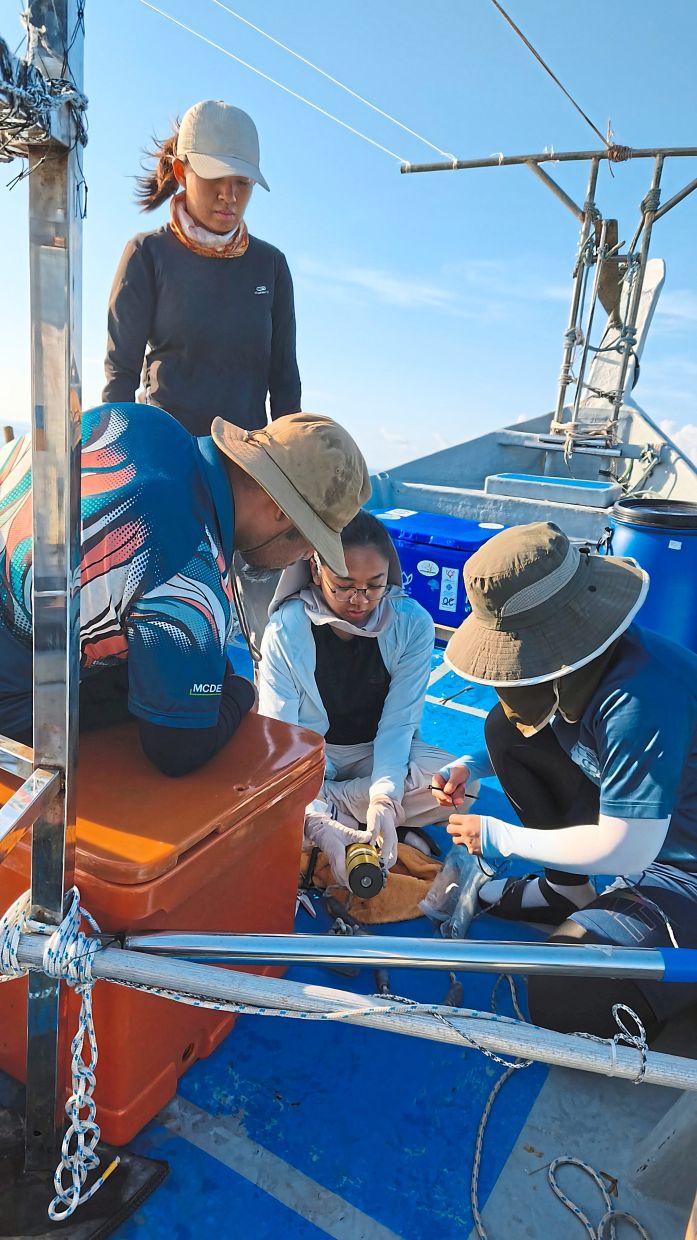
Duties would include searching for porpoises, dolphins and whales as well as moving equipment, taking water parameters, recording data, cleaning and packing supplies.
Warned that rough sea conditions and extreme weather might be part of the package, the project also had one other important condition: volunteers needed to pay for their travel to Langkawi and a basic fee to cover their subsistence.
MareCet programme and operations manager Ng Sher Lynn explained that the aim was to recruit volunteers
who had a serious interest in the field and give them hands-on experience as young researchers.
Rex Fong, who came across the call for volunteers on social media, saw it as an opportunity to get reinvolved in the wildlife field.
Fong, a wildlife biology graduate from Melbourne’s La Trobe University, found the field highly competitive.
After a brief pivot into Singapore’s finance sector, he saw volunteering as a way to test the waters of full-time marine research.
“MareCet’s volunteer programme is a really unique opportunity as it is the only one in Malaysia that focuses solely on marine mammal research,” said the 25-year-old from Kuala Lumpur.
For fellow Kuala Lumpur native Yokie Tai Yuh Han, 27, spending long hours on a boat for research was not something new.
While pursuing a degree in biotechnology and later, a master’s in environmental sciences from the National Taiwan Ocean University in Taiwan, Tai did over 20 dives studying the impact of seagrass on greenhouse gases.
“I want to understand how local NGOs work here, and hopefully spot a whale,” Tai said of her motivation to volunteer.
“I’ve seen many dolphins, but never a whale, even after a whale-watching trip in Taiwan,” she said.
As Tai had learnt from experience, and from survey leader Ng’s caution during interviews, spotting whales in the open sea is far from guaranteed.
Regular volunteer Mohd Hafizuddin Rosli was also prepared for this, but being out in the open sea was an appealing enough prospect for him.
“Life has led me to the IT support sector for my bread and butter, but the real me is someone who loves animals of all kinds,” the 38-year-old Kedahan said.
He first volunteered with MareCet in 2022 by participating in the Langkawi Dolphin Research Project, surveying the friendly cetacean off the coasts of the island.
Water all around
Unlike searching for dolphins, whale surveys are a completely different kettle of fish.
Whales around Langkawi, specifically the Bryde’s whale − a large, dark bluish-grey mammal with a tell-tale three lines on the top of its head − live further out at sea, thus requiring a bigger boat to take researchers to search for them.
For The Whale Project, the team sets sail from the Penarak Fish Landing Jetty and heads out about an hour to sea until little to no land is seen.
A search grid of 2,000sq km containing four blocks is used to document findings.
The team leader selects preset transect lines − straight, predetermined paths used to standardise the search − each day to begin the survey.
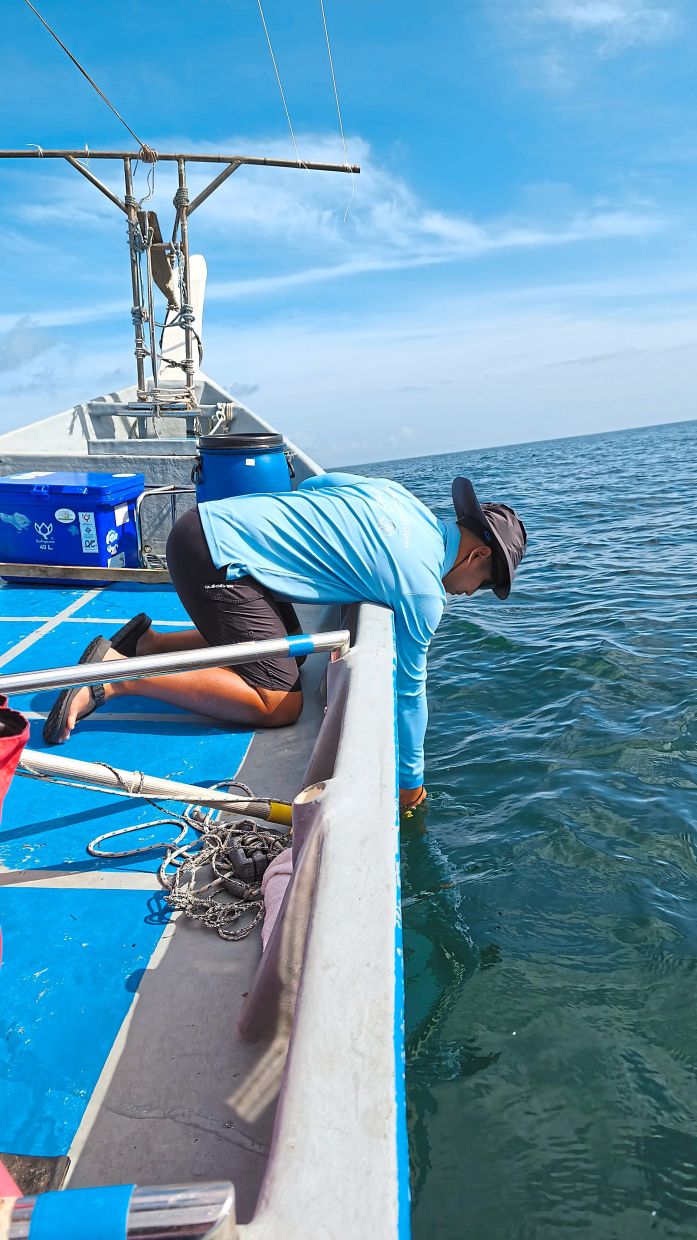
On the first day of the survey last month, Mohd Hafizuddin, Fong, Tai and Ng were tasked as observers on the lookout for the whales while MareCet programme officer Hanna Zahirah Zulmuthi, 26, was responsible for recording the data.
This included meticulously keeping track of where the boat was, how fast it was going, where it was heading, as well as recording water and weather parameters such as temperature, ocean depth, water salinity and cloud cover.
Helming the boat was Asmadi Ismail, 45, a mangrove tour operator the MareCet team affectionately nicknamed Eagle-Eye Edie and with whom they have worked for over 17 years.
Asmadi, who has spent many days on a boat, is often the first to spot cetaceans during surveys.
The May sighting brought double the excitement: not one, but two whales were spotted.
As the animals surfaced, the research team called out a sequence of shorthand codes to track their movements.
They shouted shorthand codes like “blow”, “up” and “dive” to track the movements of the mammals as they broke the surface and plunged back into the deep.
When sightings occur, the location of the boat is immediately taken. The team is then free to follow the creatures as long and as far as the animal allows.
If the team is able to get close enough, a sound trap device is deployed to record acoustics beneath the water; a drone is also sometimes utilised.
During the recent sighting, the team managed to follow one whale for about an hour before it faded into the distance.
All in all, the day was extremely eventful with two whale-sharks and five other whales, including a mother and calf, which were spotted in the afternoon.
The unpredictability of whale-spotting meant none were seen at all on other days.
“In the past, there were surveys where we did not spot a single whale. We knew that it was a possibility, but I felt really bad for the volunteers,” said Ng.
She added that the research surveys would not be possible without volunteers, whom she credited as MareCet’s “heart and soul”.
They have been involved since the very first Langkawi expedition was conducted in 2010, before MareCet was even formally registered in January 2012.
“Our volunteers come from a huge range of backgrounds, ages and walks of life,” said Ng.
“Although we try to prioritise choosing younger volunteers who are looking to pursue marine biology and conservation as a career or have a background in the field, we ultimately open up the programme to anyone who’s interested and keen to learn and contribute.
“MareCet is a very small team. If we didn’t have volunteers supporting us, it would have been impossible for us to have achieved so much in the past decade,” Ng added.
Mapping the future

Feeling the need to do more for conservation, the duo banded together to pursue research and outreach work, with a focus on native marine mammals.
“For me, the science we pursue needs to be applied to real-world situations.
“We live in a world that is rapidly changing and degrading, so our analysis needs to go out fast to decision-makers for them to make informed decisions,” said Louisa who is MareCet chairman and executive director.
Marine mammals, she explained, are a good gauge when evaluating the condition of our seas.
“Marine mammals are sentinels of ocean health. They eat all the seafood that people also eat.
“The Bryde’s whales that we have in Langkawi love ikan bilis (anchovies) and it doesn’t get more Malaysian than that,” Louisa joked.
So, when dolphins, porpoises and whales start to change their behaviour, attention must be paid.
“Protecting marine mammals and their environment means protecting the very resources that people heavily rely on. Essentially, protecting the sea is protecting our collective life on land,” she said.
With that in mind, MareCet launched its first Langkawi Dolphin Research Project in 2010, with Louisa, Fairul Izmal and two volunteers on board.
For eight to 10 hours a day, the group scanned the waves and carefully recorded data.
“Technology such as drones only came about in the last decade. But at the most basic level, we still have to go out to sea and use our eyes to see what is out there,” said Louisa.
The methodology used then was similar to how MareCet’s Langkawi research surveys are done now, with the addition of some updated technology and custom-made 2m-high metal A-frames that give two observers an elevated vantage point.
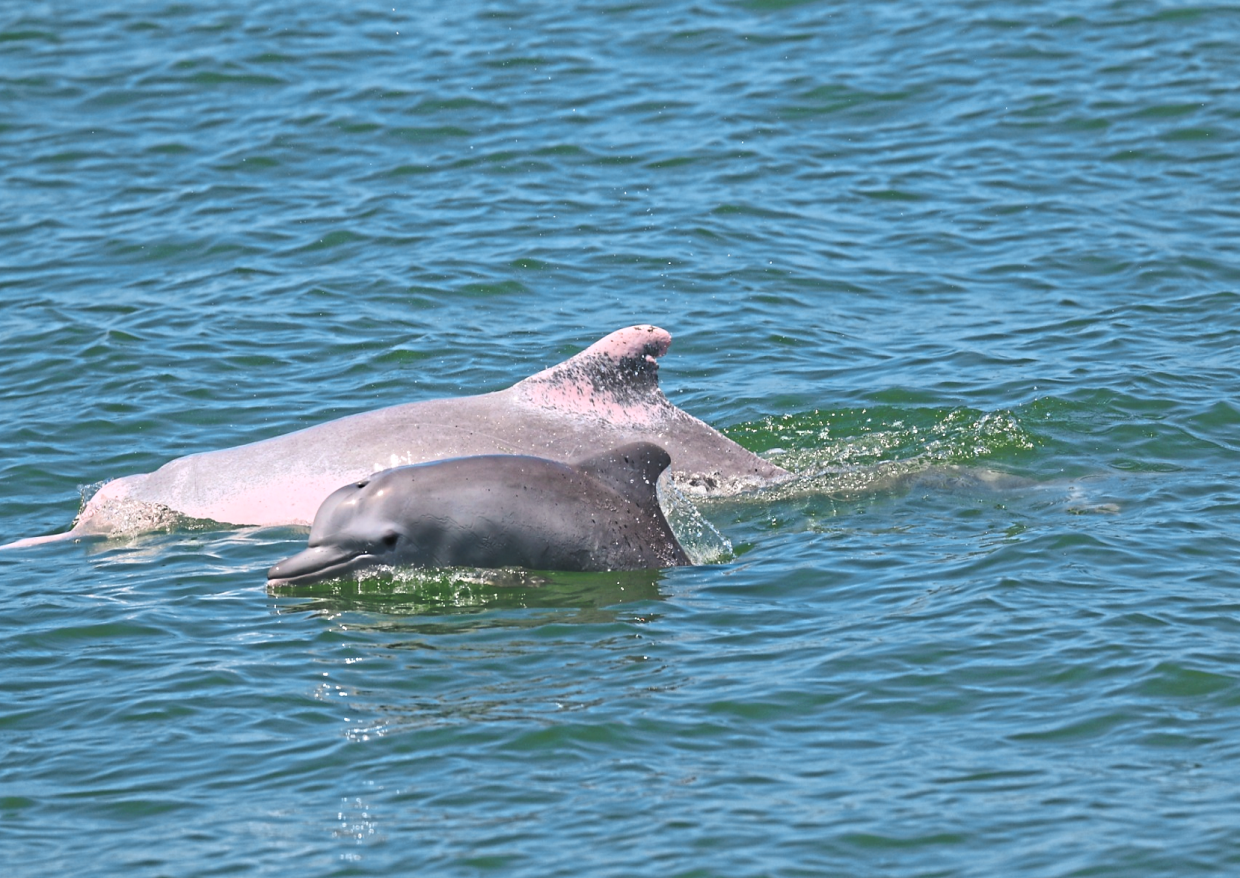
After a decade of research, MareCet can confirm that only two small cetacean species live off the coasts of Langkawi: the Indo-Pacific finless porpoise that has no dorsal fin and the Indo-Pacific humpbacked dolphin, often called pink dolphin.
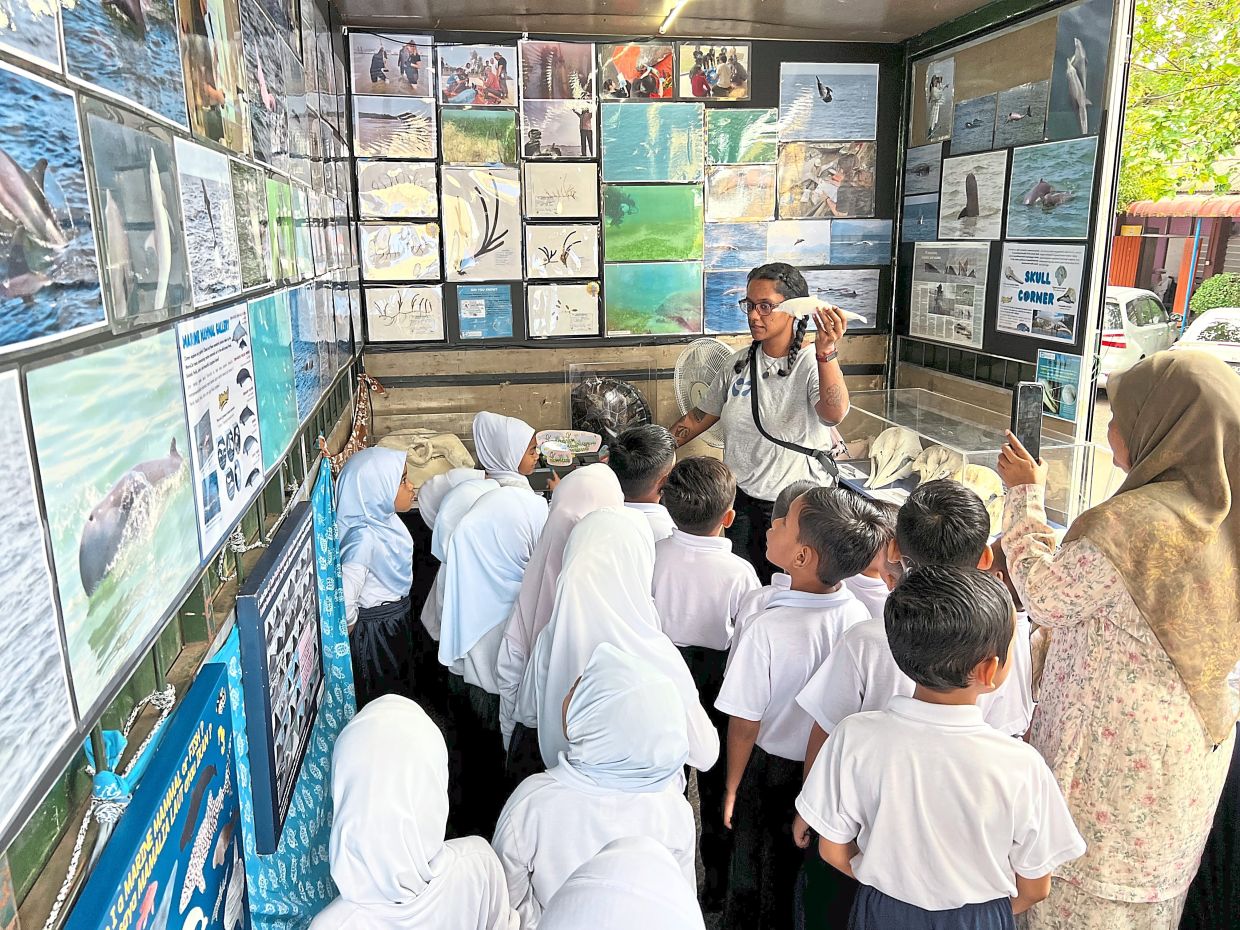
Since its establishment, the NGO has expanded both its areas of research and the types of outreach conducted, including a national Whales On-The-Wheels roadshow.
The opportunity to study whales came with a successful funding pitch to Sime Darby Foundation (YSD) in 2021.

“We saw so much value in what MareCet was trying to do, working with the government to build conservation policies for marine mammals,” Yatela told StarMetro.
An avid diver, Yatela joined the team in Langkawi a few years ago and witnessed the native Bryde’s whales firsthand.
“I’ve seen humpback and blue whales before, but never Bryde’s whales,” she said.
“When I saw them coming out of the water with wide-open mouths to feed, it was a magical experience.”
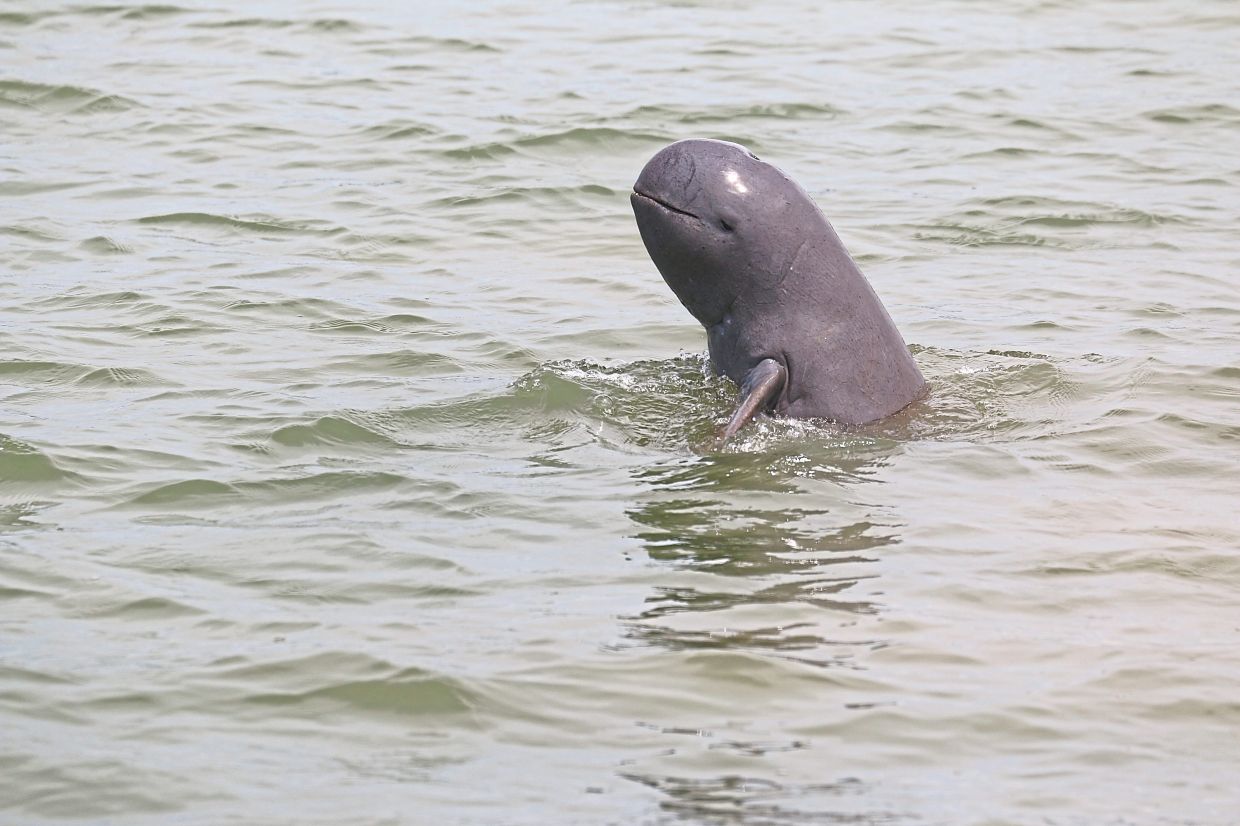
Following Langkawi, MareCet has since opened field sites from Perlis to Matang in Perak (where they saw their first Irrawaddy dolphin) and down to Johor’s east coast where dugongs can be found.
Their latest project is a survey along peninsular Malaysia’s west coast to find out if there are areas that have a healthy concentration of marine mammals.
“It’s a snapshot survey supported by Hasanah Foundation for us to identify places to focus our future efforts on,” said Louisa.
For details and to sign up as a volunteer, visit www.marecet.org