PENANG is facing an existential challenge comparable to those encountered by Captain Francis Light back in 1786 and former chief minister Tun Dr Lim Chong Eu in 1969 after the state lost its free-port status.
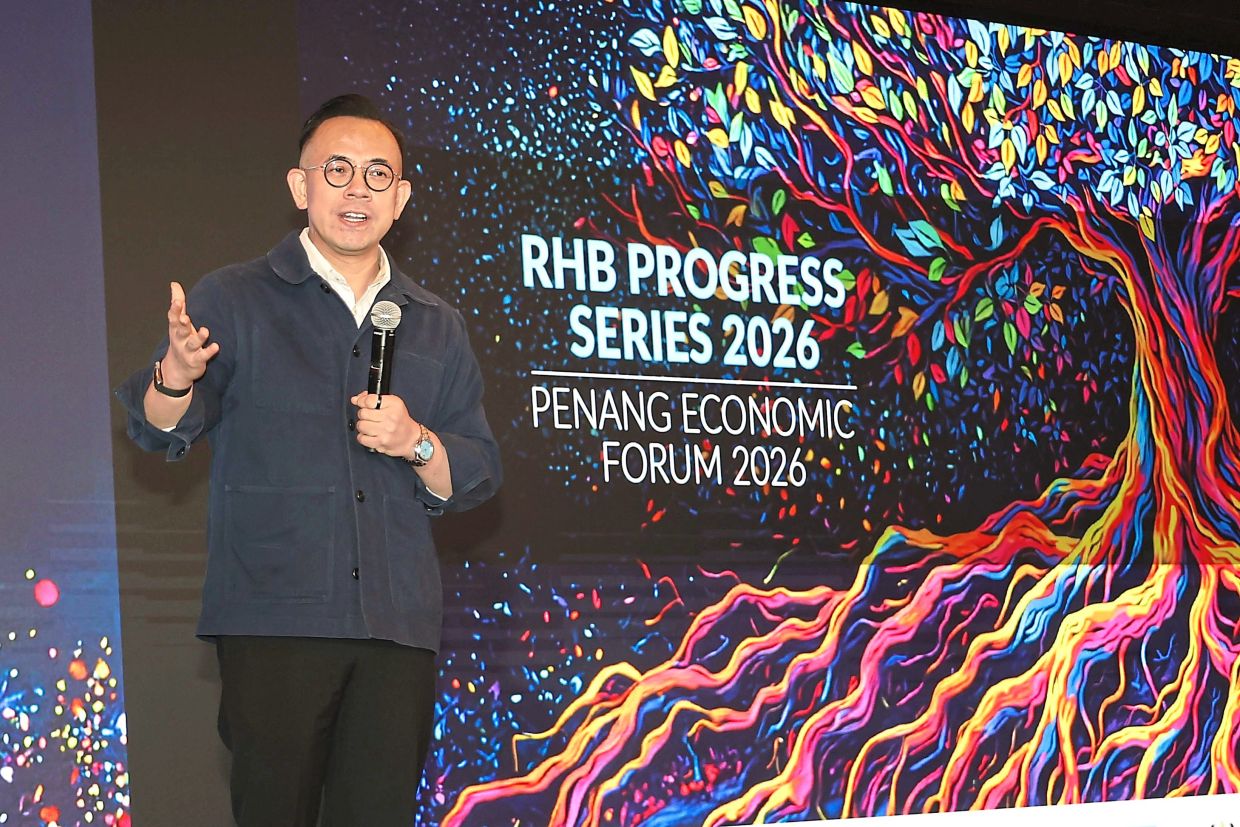
Entrepreneur and Cooperatives Development Minister Steven Sim Chee Keong said Penang was at a “do or die” juncture and must transition to a higher-value economy to stay competitive amid rising global competition, protectionism and rapid technological change.
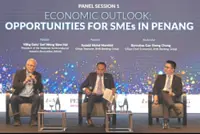
He said this during a fireside chat session titled “Empowering the Entrepreneurial Ecosystem”, moderated by Penang Institute executive director Datuk Dr Ooi Kee Beng at the Penang Economic Forum held at a hotel.
According to Sim, Penang was grappling with what he described as a “trifecta of trouble”, comprising intense global competition, increasing protectionist policies among traditional investment partners and the rapid pace of technological advancement.
“Today, you invest in something, next week, it is obsolete.
“You have to catch up. If not with yourself, then with your competitors,” he said.
To address these challenges, Sim proposed that the state move into a new phase of development known as “Penang 3.0”.
He described Penang 3.0 as a shift from a “Made in Penang” model to a “Made by Penang” model, where the state would focus on creating greater value rather than competing on costs.
“The key word is to move from being a cost centre to a value centre.”
Sim said Penang should avoid competing as a low-cost investment destination against neighbouring economies.
“If the category of investors coming in is the category that we are competing with low-price locations, then maybe Penang is not suitable.”
He likened such competition to a night market price war, where traders continuously undercut one another in a race to the bottom.
“If we continue to compete as a low-cost destination in this region, then our children will not be able to find jobs here.
“They will have to go somewhere else,” he said.
Sim said many SMEs were constrained by the low-cost business model.
“It is not that SMEs do not want to pay higher wages, but many cannot afford to do so because of the business model they operate in.”
He added that this was compounded by the country producing significantly more skilled talent than the economy could absorb.
“We are an economy that produces on average about 50,000 decent high-paying jobs annually, but we produce about 300,000 graduates a year and with Technical and Vocational Education and Training (TVET) graduates, perhaps more than 400,000.
“We have the talents, but the economy, as it is today, is not able to absorb all these talents.
“This is why it is very important to think about that transformation, that shift from a low-cost, low-price business model to something of higher value.”
“Penang 3.0 must go beyond this low-cost, low-price model of development.”
He said Penang should focus on developing value through four key areas, namely talent, technology, products and services, as well as trademarks, brands and patents.
Drawing lessons from history, Sim said Light’s decision to establish Penang as a strategic trading outpost despite the island’s largely undeveloped conditions and Lim’s efforts to transform Penang’s economy through manufacturing demonstrated the importance of making bold decisions during periods of uncertainty.
He noted that Lim’s administration responded to high unemployment by laying the groundwork for Penang’s industrial sector, which eventually transformed the state into one of Malaysia’s leading manufacturing hubs.
“Francis Light did it. Chong Eu did it. I think now it is the turn of our generation,” he said.
The forum, a joint initiative by RHB Banking Group, Penang Institute and the Entrepreneur Development and Cooperatives Ministry, featured discussions on economic opportunities for small and medium enterprises (SMEs), sustainable financing and green capital, as well as strategies to help businesses scale up and move up the value chain.
Also present was Penang state exco member Daniel Gooi Zi Sen.
Malaysia Semiconductor Industry Association president Datuk Seri Wong Siew Hai told a panel discussion at the same event that Penang and Malaysia must move at “super speed” to compete in the global semiconductor industry.
He said the country could not afford to stand still while competing regions advanced rapidly.
“We should not be static. We should move at super speed or we will fall behind.”
Wong cited Chengdu in China as an example of how quickly a city could transform through firm planning and swift execution.
He recalled that Chengdu lacked the infrastructure needed to support a major semiconductor operation when Intel Corporation was considering an investment there in 2012 under China’s “Go West” policy.
Wong, then Intel’s Technology and Manufacturing Group vice-president, said local authorities rapidly upgraded the city’s infrastructure.
“Previously, I was giving them advice. When I went back, I had to learn from them instead.”
Chengdu, the capital of Sichuan province, covers about 14,335sq km and had a population of around 21.47 million in 2024.
Penang has about 1.8 million residents across slightly more than 1,000sq km.
Earlier, Penang Chief Minister Chow Kon Yeow renewed his push for the proposed Penang International Financial Centre, saying a white paper was expected by the end of next month or early August.
He said the document would set out a framework for the centre, intended to help local companies obtain funding to expand overseas and seek public listing.
“If we are serious about building local champions, we must build the financial infrastructure for them to grow.
“The proposed centre is to attract capital, support Penang’s technology sector and give local businesses greater access to funding and professional advice,” he said.
Penang has more than 6,500 manufacturing-related small and medium enterprises and over 350 multinational corporations, but only 106 public-listed companies as of May.
Chow said Penang attracted RM230bil in approved manufacturing investments between 2018 and 2025, four times the amount secured from 2010 to 2017.
In 2025, the state contributed 38.1% of Malaysia’s exports while its Trade Openness Index stood at 575.1 – nearly four times the national average.
More than 1,000 micro, small and medium enterprises had taken part in Industry 4.0 programmes while over 50 integrated circuit design companies were operating in the state that year.
Chow said the state continued to invest in the Penang Mutiara Line light rail transit system, airport expansion, industrial parks, water supply and energy reliability.