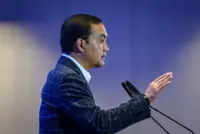
JOHOR must move beyond traditional debates and develop a clear long-term vision if it is to justify its push for a 25% share of federal revenue returned to the state.
Former mentri besar Datuk Seri Hasni Mohamad (BN-Benut) said the State Legislative Assembly must play a more active role in shaping new policies and ideas instead of limiting discussions to administrative or operational issues.
He said this during the debate on the royal address at the state assembly sitting at Bangunan Sultan Ismail in Kota Iskandar.
Hasni stressed that the proposal by Johor Regent Tunku Ismail Sultan Ibrahim for 25% of federal revenue to be returned to the state, required a “new mindset and new agenda” from lawmakers.
Hasni said the role of assemblymen should go beyond asking for allocations, and instead focus on policy creation that could transform Johor into a modern, competitive state.
He further said Johor should be positioning itself as a future metropolis, supported by major infrastructure developments such as the Rapid Transit System (RTS) Link, Electric Train Service (ETS) and other connectivity projects.
He said these developments should be matched with policies that ensured the state retained talent and attracted high-value industries, rather than becoming a transit point for workers heading elsewhere.
“What is the purpose of RTS if it only makes it easier for talent to leave Johor instead of coming here?”
Hasni also raised concerns about basic infrastructure reliability, stressing that Johor could not afford disruptions in water or electricity supply if it wanted to maintain investor confidence.
“We cannot allow even five minutes of electricity disruption or excuses about water shortages due to lack of rain in reservoirs.”
He said new policy thinking was needed to support initiatives such as the Johor-Singapore Special Economic Zone (JS-SEZ).
Hasni also highlighted the need for stronger development planning in housing, transport and land use to support the state’s economic transformation.
He questioned the valuation of Malay reserve land, saying that there should be reassessment to reflect its true potential and location value.
“This requires a paradigm shift in how we view land, development and economic opportunity in Johor.”
He said the state government could not achieve sustained growth alone and required active participation from assemblymen in formulating new strategies.
Hasni also said that lawmakers should be bold in proposing new sectors for Johor, including aerospace and advanced technology industries, to position the state as a regional hub.
He also called for improved coordination among local authorities to ensure balanced development, especially in areas experiencing rapid industrial growth such as data centre zones.
While acknowledging improvements in Johor Baru’s urban landscape, he said more must be done to ensure communities benefitted from development.
“Development must not only be seen in buildings and infrastructure, but also in the surrounding environment and quality of life.”
He noted that the state executive councillors were capable of delivering results but needed stronger policy direction from the assembly.
“Ask them for justification, challenge ideas, and then we will truly function as a meaningful check and balance.”
Hasni called for unity and constructive debate in the august house, stating that Johor’s future depended on collaboration between all political sides.
“If we work together with vision and purpose, Johor will be able to achieve its goals and strengthen its position both nationally and internationally.” — By Mohd Farhaan Shah