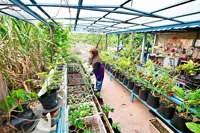
USING residential spaces for vegetable cultivation is seen as a practical way to help urban communities reduce living costs and cushion the impact of global supply disruptions.
The concept of berbudi kepada tanah (nurturing the land and reaping its rewards) through community garden initiatives not only enables residents to grow their own food but also reduces reliance on external supplies vulnerable to rising logistics and energy costs.
Kelab Pencinta Alam dan Rekreasi Kolam Takungan Banjir Sungai Midah chairman Mohd Zainuddin Amran said the effort involved five nearby communities – Kampung Malaysia Raya, Kampung Malaysia Tambahan, Pangsapuri Sri Malaysia, PPR Sri Malaysia and Desa Petaling.
He said an area that was previously abandoned and inaccessible had been transformed into a community space, including a spot for urban farming.
“Previously, the area was locked and often became a site for unhealthy activities, but we have revived it through community initiatives,” he told Bernama.
He said planting activities began to gain traction during the Covid-19 pandemic in 2020 when residents took the effort to grow vegetables as an alternative food source amid movement restrictions.
Among the crops are kangkung, ulam-ulaman, eggplant and banana which are easy to maintain and yield produce relatively quickly.
“Kangkung and ulam can be harvested within a short period, while bananas take between six months to a year,” said Zainuddin.
The cultivation area is about 2,787sq metres around the detention pond, with residents participating based on their availability.
The initiative also indirectly supports a call by Agriculture and Food Security Ministry for the public to take up farming to reduce reliance on imported supplies.
Meanwhile, Cameron Highlands Malay Farmers Association chairman Datuk Syed Abd Rahman Syed Abd Rashid said rising input costs such as fertiliser and diesel had driven up production costs, while farmgate prices remained low, affecting farmers’ incomes.
He said although government subsidies had provided some relief, they were still insufficient as transportation and packaging costs had increased significantly.
The situation has resulted in some produce not reaching the market, with some even left to rot on farms as transporting them to collection centres was not feasible.
Commenting on the suggestion of home cultivation, Syed Abd Rahman described it as a positive step that could help the public save on daily expenses while ensuring their own food supply.
“Growing food for personal consumption reduces dependence on the market,” he said.
A private sector employee, Anis Suraya A. Aziz, 25, said her interest in home gardening was mainly influenced by her family’s practice of using fresh produce from their garden as well as her desire to lead a healthy lifestyle.
“By growing my own vegetables, I save about RM10 to RM20 per month on groceries.
“Among the suitable crops are bayam Brazil, tomatoes and kangkung as they are easy to maintain and grow quickly in the local climate,” she said.
Anis Suraya said those living in apartments could still take up gardening by using pots, recycled containers or medium-sized polybags in small spaces like balconies.
“Limited space is not a barrier. What’s important is ensuring the plants receive sufficient sunlight. Start off with those that are easy to care for.”