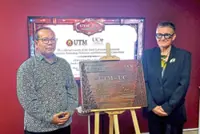
TWO universities have joined hands to boost research and development of artificial intelligence (AI), extended reality (XR) and immersive technologies by setting up a joint satellite laboratory.
Universiti Teknologi Malaysia (UTM) vice-chancellor Prof Dr Mohd Shafry Mohd Rahim said the laboratory, set up in collaboration with New Zealand’s University of Canterbury (UC), aimed to enrich knowledge and explore new areas of learning.
“Our partnership has continued to grow over the years, expanding into new fields such as AI, XR and virtual reality (VR),” he said during the launch at UTM’s campus in Skudai, Johor.
“Through this collaboration, we will undertake several joint research projects.
“This partnership is not one-sided. While UC has a presence here, UTM has also established a laboratory at their campus.”
Both universities were also planning to introduce a joint PhD programme.
The laboratory builds on a memorandum of understanding (MOU) signed in July last year.
The five-year MOU would also focus on developing globally competent graduates and researchers by facilitating joint supervision, mobility programmes and greater exposure to international research ecosystems.
The joint satellite laboratory was expected to accelerate technology transfer and start-up incubation by leveraging shared international industry networks while positioning UTM as a globally connected research hub in advanced computing and immersive digital innovation.
UC deputy vice-chancellor (research) Prof Lucy Johnston, who was present at the launch, said the long-standing partnership between the two institutions had been shaped by people-to-people connections over the years.
“They brought new perspectives, ideas and friendships that continue to enrich our community today.
“Since then, generations of Malaysian alumni have gone on to make significant contributions across business, education, government and industry.”
She pointed out that the joint satellite laboratory would also serve as a platform to translate research into real-world impact.
“It provides opportunities for students and researchers to gain international experience, engage with emerging technologies and develop skills needed in an increasingly connected world.”