NEARLY two years after the contract was awarded to upgrade the Kampung Bohol flood retention pond, work seems to have stalled.
Despite the significance of the project, there is currently no public data regarding the current status of work.
What was originally presented as a key infrastructure upgrade to protect the capital from flooding has instead become a source of confusion.
The upgrading of the retention pond, located alongside the Shah Alam Expressway (Kesas), is being carried out by a private developer as part of a land alienation deal announced in 2024.
According to the original agreement, the upgrade was intended to be completed within five months.
This work was required to be finished before any other development projects on the associated plots could proceed.
However, as of 2026, there has been no update on its completion and questions regarding its timeline persist.
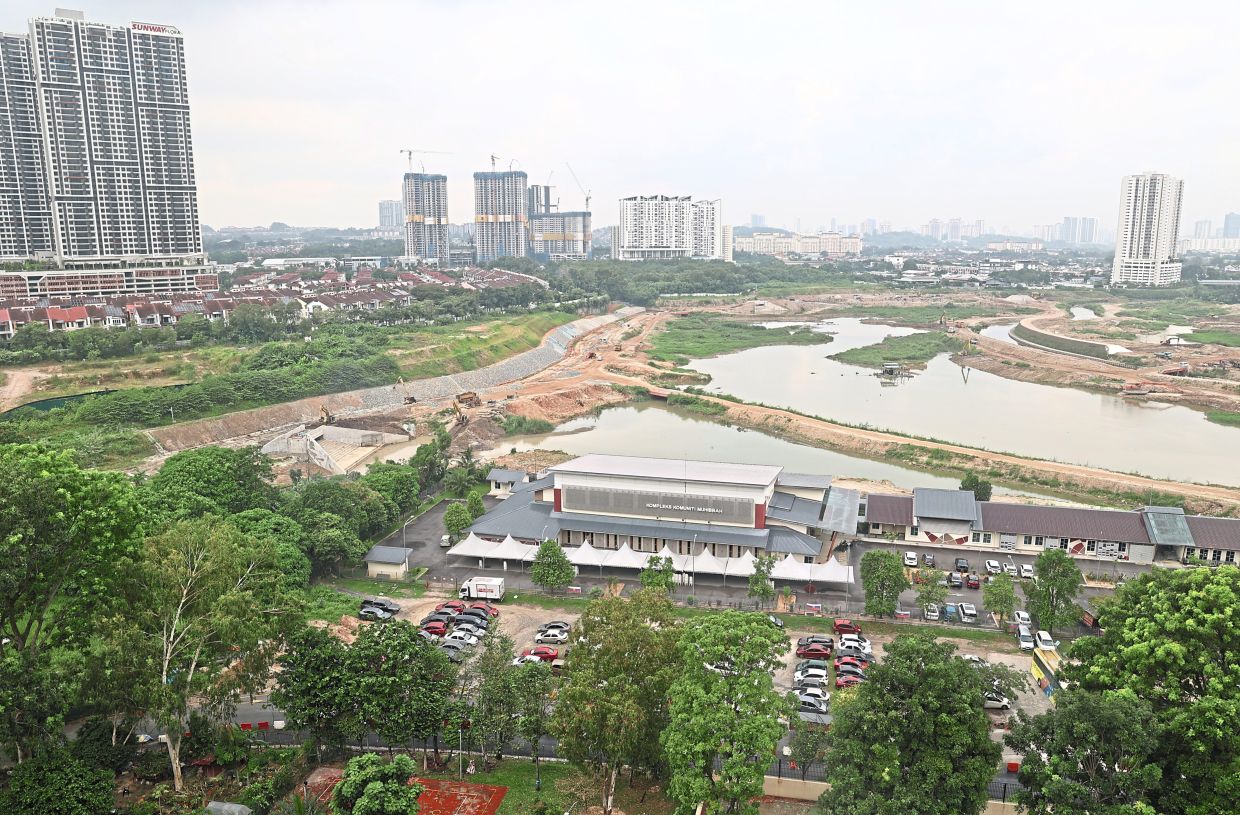
A check by StarMetro at the site revealed work on the pond upgrade appears to be ongoing, though progress is slow.
A significant factor in the current uncertainty is a lack of clarity regarding which government body is responsible for oversight.
The Kuala Lumpur Drainage and Irrigation Department (DID) recently confirmed that it is not directly supervising the physical implementation of the project.
In a statement, DID explained that its role was limited to providing technical input rather than on-site monitoring.
The department said that the overall management of the project, including construction progress and adherence to timelines, fell under the jurisdiction of Federal Territory of Kuala Lumpur Land and Mines Office (PTGWPKL).
“Information on the project’s current status should be directed to PTGWPKL,” a DID spokesperson said, adding that details regarding the commencement and completion of the works fell under that agency’s purview.
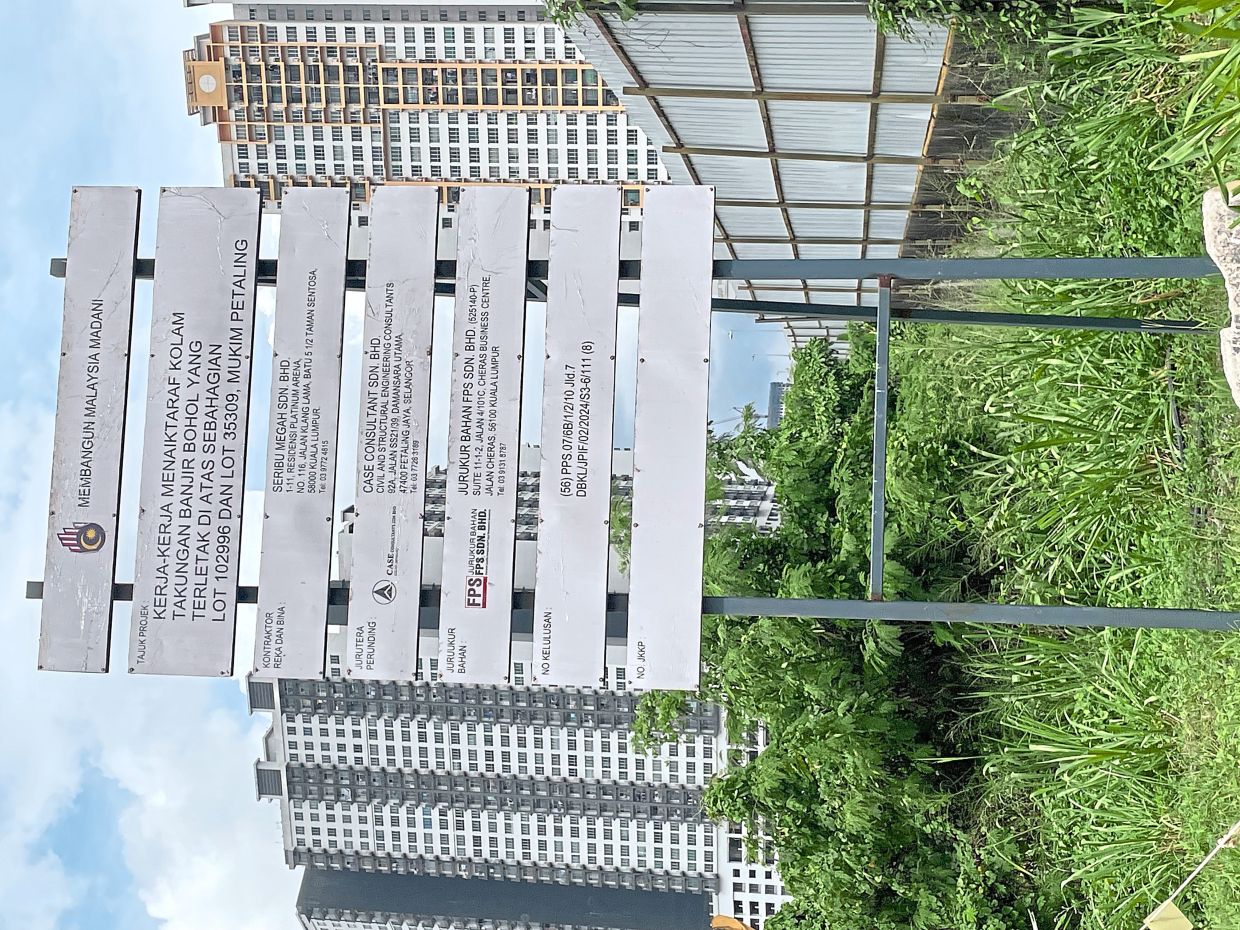
DID confirmed that the technical objective remains to increase the pond’s capacity from 150,000 cubic metres to 1.13 million cubic metres.
The design is required to meet flood protection standards up to a 100 Average Recurrence Interval (ARI), with provisions for future expansion to 200 ARI.
In hydrological terms, ARI is the long-term average time between floods of a specific magnitude, calculated using historical data to estimate probability.
Despite these specifications, DID noted that the final capacity can only be confirmed once the project is finished, based on the developer’s “as-built” drawings.
DID participates in meetings chaired by PTGWPKL to offer technical advice.
“We have set technical requirements that must be complied with by the developer to ensure no flooding incidents occur during construction,” the spokesperson said.
However, technical reports and updates on the progress remain the responsibility of PTGWPKL.
Despite repeated queries regarding these updates, PTGWPKL has not responded to StarMetro’s requests for comment.
Flood protection measures
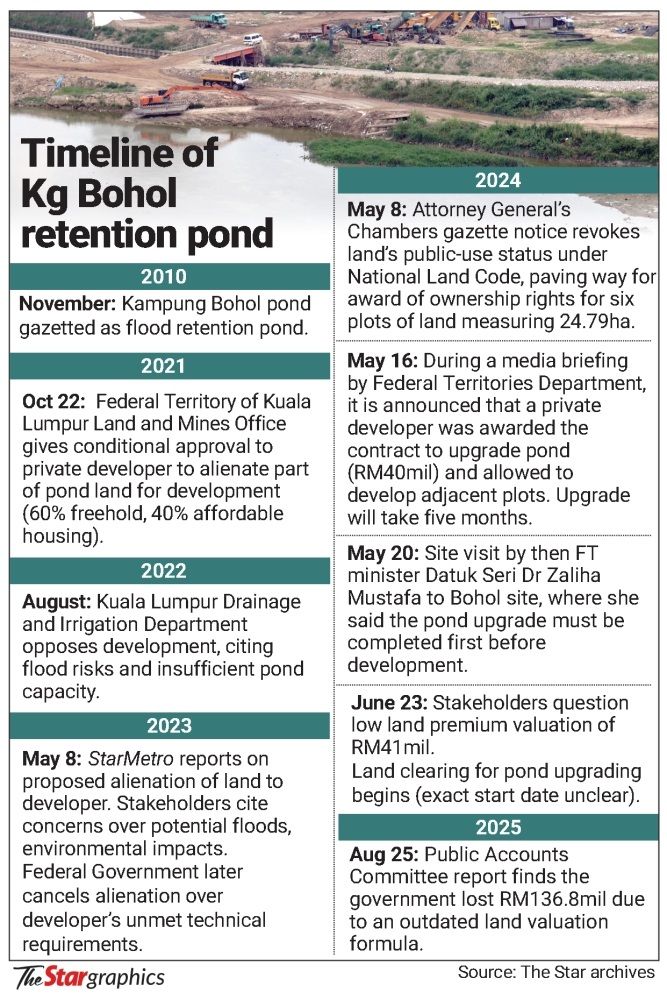
The lack of communication from the managing agency contrasts with the details shared during a media briefing on May 16, 2024.
At that time, Mohd Firdaus Ibaruslan, then PTGWPKL deputy director for land registration, stated that the developer would spend RM40mil on the upgrade.
In return, the developer would pay RM41.7mil in land premiums for six adjacent plots.
During that briefing, it was stated that the developer was finalising details and that construction would take five months to complete.
Officials previously described the existing site as hilly and unsuitable for use as a retention pond in its current state.
The planned upgrade was intended to improve flood protection and integrate the site into a wider flood management plan spanning from Serdang to Puchong, with the area also earmarked for future recreational use.

Still in the dark
The lack of progress has led Seputeh MP Teresa Kok to announce that she will seek answers in the next Parliament sitting.
Kok said that she had been unable to obtain information on the project’s status despite the upgrade tender being awarded nearly two years ago.
“The only way to get an answer is to ask in Parliament,” Kok said.
She noted that she passes the site daily but remains unaware of its status.

“I am questioned about the project all the time, yet as an MP, I face difficulties getting simple answers.
“I understand the people’s frustrations, so I will get the answers they seek in Parliament.”
Kok has maintained a position against the project, arguing that land adjacent to flood mitigation areas should not be sold for private development.
Her concerns follow a report from the Parliamentary Public Accounts Committee (PAC) last year, which identified shortcomings in the land deal.
PAC cited concerns regarding governance and transparency, noting that the land was sold using an outdated valuation formula.
The committee suggested this could result in potential losses of RM136.8mil.
PAC also highlighted issues with oversight, including the use of a selective tender process and failure to address more than 1,200 public objections.
The committee further questioned inconsistencies in the planning process, noting that land originally intended for flood mitigation and public use was later opened for development.
It also raised concerns regarding the specific design of the pond.
Other stakeholders too, have questions about the pond upgrade.
Save Kuala Lumpur chairman Datuk M. Ali said a concrete structure was being built on site as part of the flood mitigation system.
“I am not an engineer, so I cannot say if the work is on track or delayed.
“But from the outside, it does not appear close to completion.
“This is why the authorities must keep the public informed.
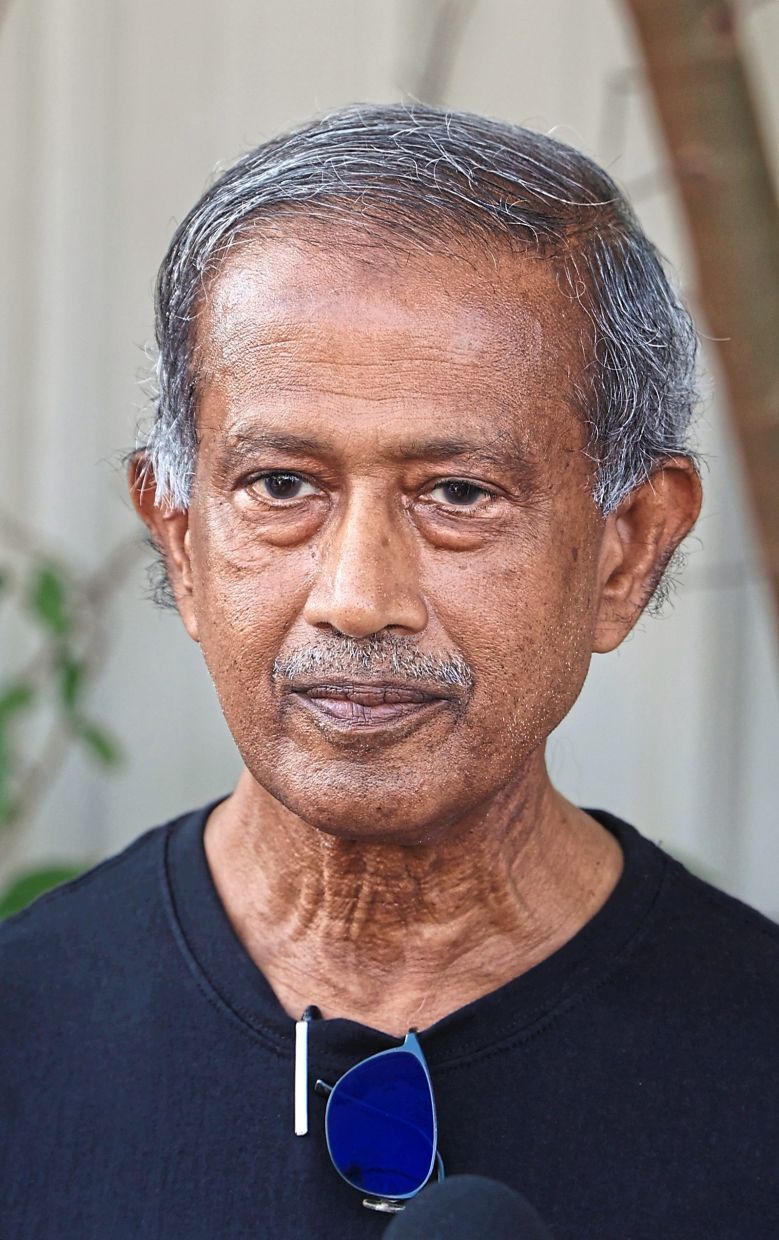
“When a project of this scale goes beyond its original timeline, people deserve clear updates on its progress, and whether development conditions are being met.
“More than 1,200 objections were raised. The least that can be done is to be transparent about what is happening on the ground,” he said, adding that he hoped Minister in the Prime Minister’s Department (Federal Territories) Hannah Yeoh would address the matter.
On May 8, 2023, StarMetro reported that land surrounding the Kampung Bohol flood
pond was being alienated to a private developer, raising concerns over its impact on flood mitigation.
Experts have noted that developing land in the immediate vicinity of retention ponds can increase flood risks.
There were also plans to straighten part of Sungai Kuyoh as part of the broader mitigation strategy.
The Kampung Bohol pond is a central component of the local drainage network.
Located next to Sungai Kuyoh, it serves Kampung Muhibbah in Kuala Lumpur, Taman Kinrara in Selangor, and developments along Kesas.