
THE economic downturn in the early 2000s was a blessing in disguise for Saad Saep.
He lost his job at a plastic component plant, but the change led him down a new path making chappals.
The 60-year-old from Kampung Chemumar Tengah, in Kangar, Perlis, said he learned to make the traditional footwear from a friend when living in Sungai Petani, Kedah.
After a while, he gained confidence to start selling his handmade chappals at night markets and bazaars in the state.
“I noticed there was a demand for chappals especially during Ramadan,” he told Bernama.
His work gradually gained popularity, with sales increasing each year.
In 2009, he registered his business and brand, Saad Capal, with Malaysian Handicraft Develop-ment Corporation (or Kraftangan Malaysia), before moving to Perlis to start a workshop.
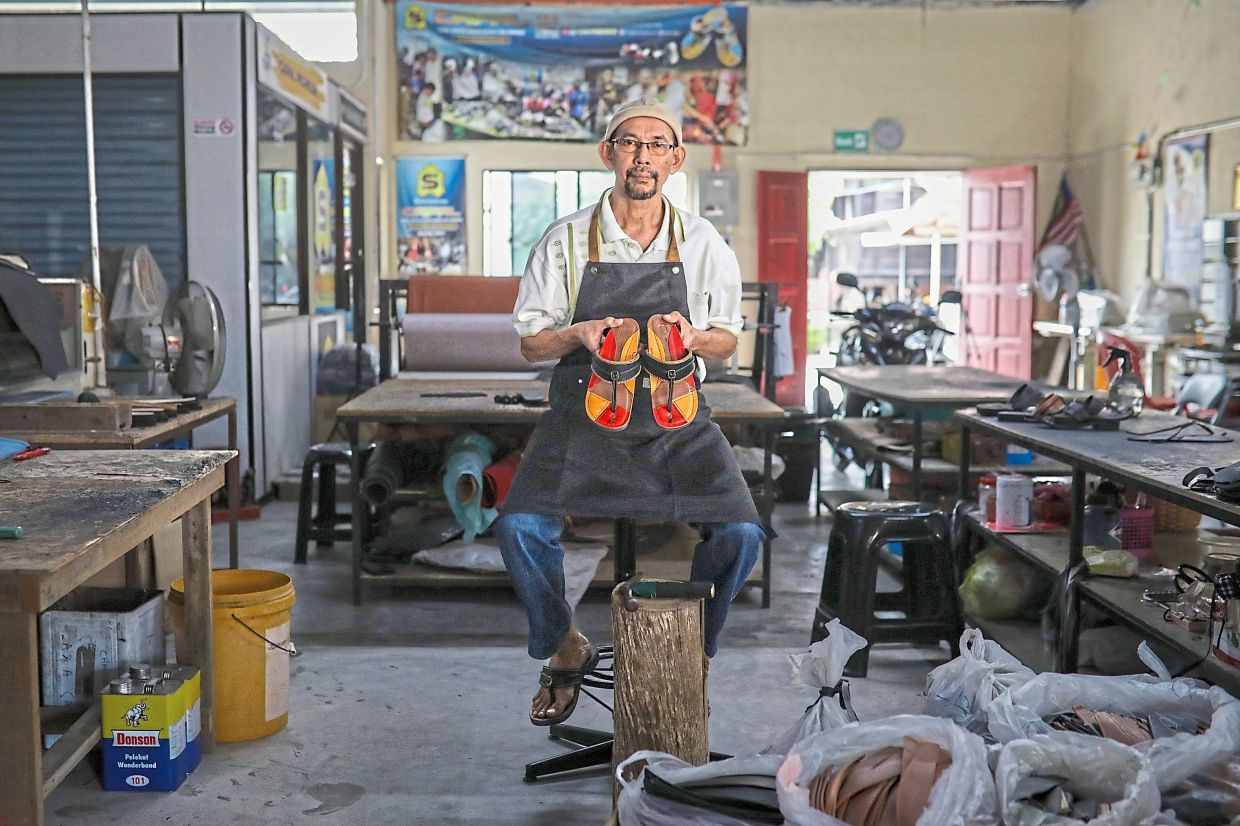
He currently produces eight designs using leather and PVC, priced from RM35 to RM250 depending on materials and intricacy of the design.
“During the festive season, sales can hit 8,000 pairs due to demand for traditional products.
“The highest sales are typically on the eve of Hari Raya.”
Saad now has four workers, with some 90% of his products distributed to sellers in several states.
However, he worries that interest among the younger generation is fading, and the art may be lost.
“The older generation recognises that this is part of the Malay heritage, but the younger people may not.
“I will continue making chappals to ensure this traditional footwear does not disappear,” Saad said.