



THE sun was slipping below the Putrajaya skyline when the azan, the Muslim call to prayer, echoed across the evening air.
Bustling just moments earlier, the administrative capital went silent as thousands of Muslims began breaking their fast.
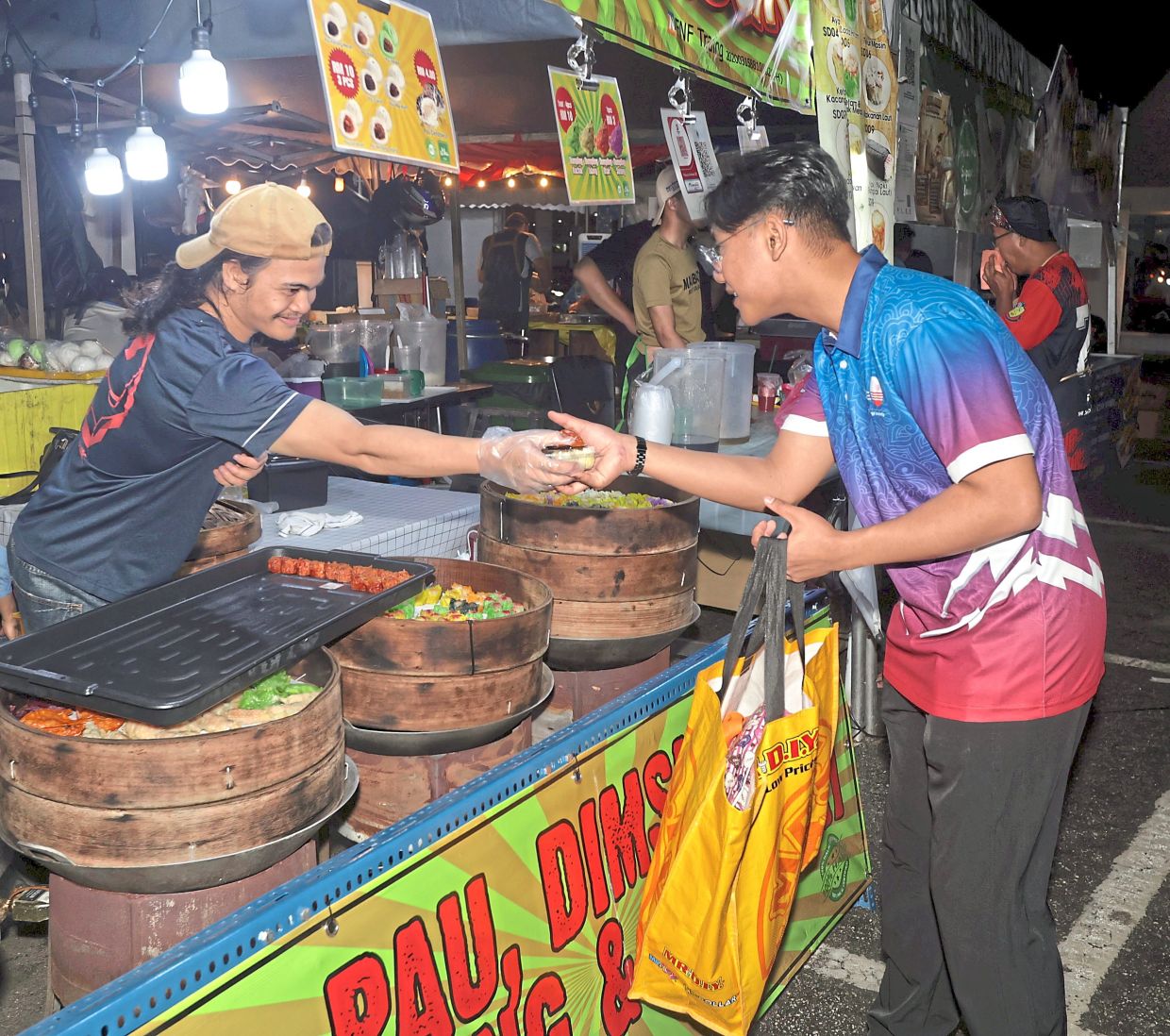
At the Ramadan bazaar in Precinct 3, a group of university students ate quickly before darting through the bazaar’s 280 stalls, collecting unsold food and drinks from traders who were packing up for the day.
Situated opposite Tuanku Mizan Zainal Abidin Mosque, the bazaar is the largest of the four operating in Putrajaya.
Inside an air-conditioned tent set up at the site, the leftovers were carefully inspected before being repacked for delivery.
The students are volunteers with the MySaveFood programme by Malaysia Gema Youth Association (Gema) and Solid Waste and Public Cleansing Management Corporation (SWCorp).
They collect surplus food and drinks from Ramadan bazaars nationwide for distribution to communities such as mosques and surau, orphanages, low- income housing areas and university students.
Under the initiative implemented since 2016, Gema mobilises youth volunteers on the ground, while local authorities provide logistical support.
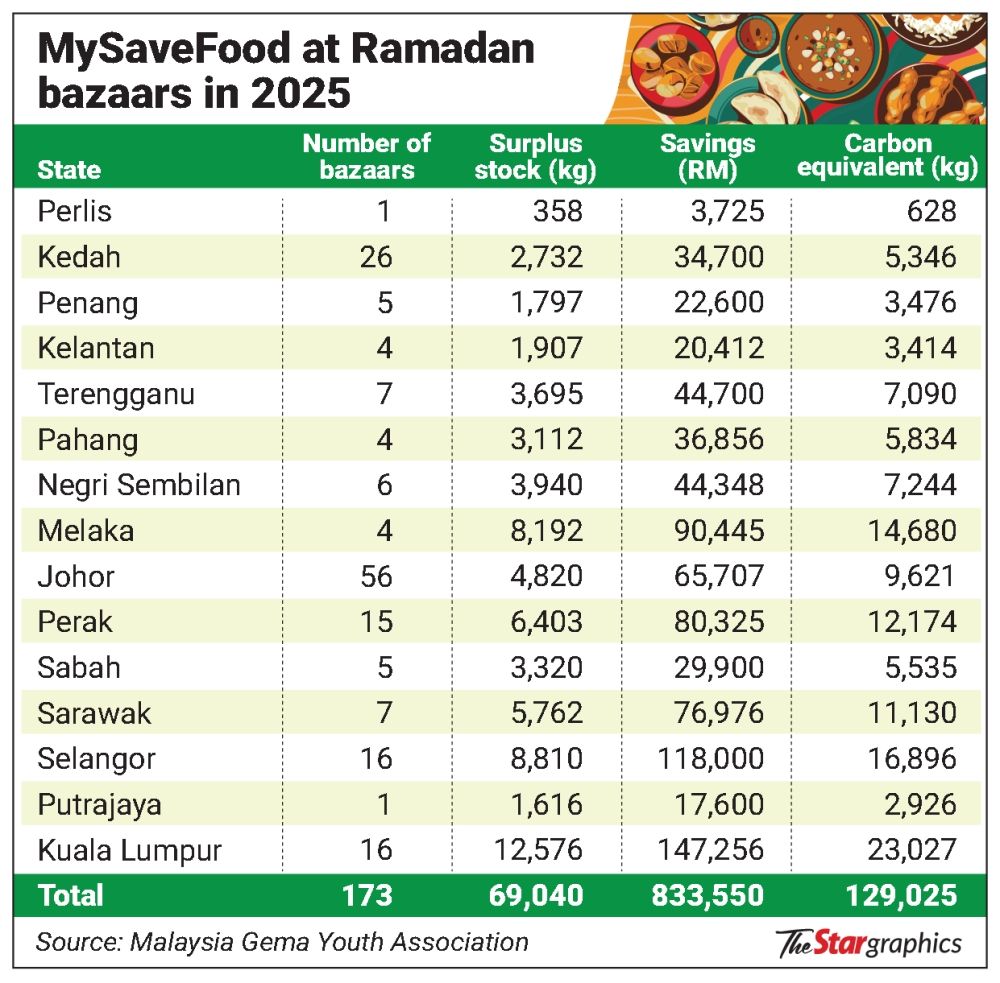
In 2025, it was implemented at over 170 Ramadan bazaars nationwide except Labuan (see chart).
This year, in Putrajaya alone, some 1,400kg of surplus was collected from Feb 19 to March 3, according to live data published by Gema.
Youth involvement
The initiative in Putrajaya involves students from Universiti Tenaga Nasional (Uniten) in Kajang, Selangor.
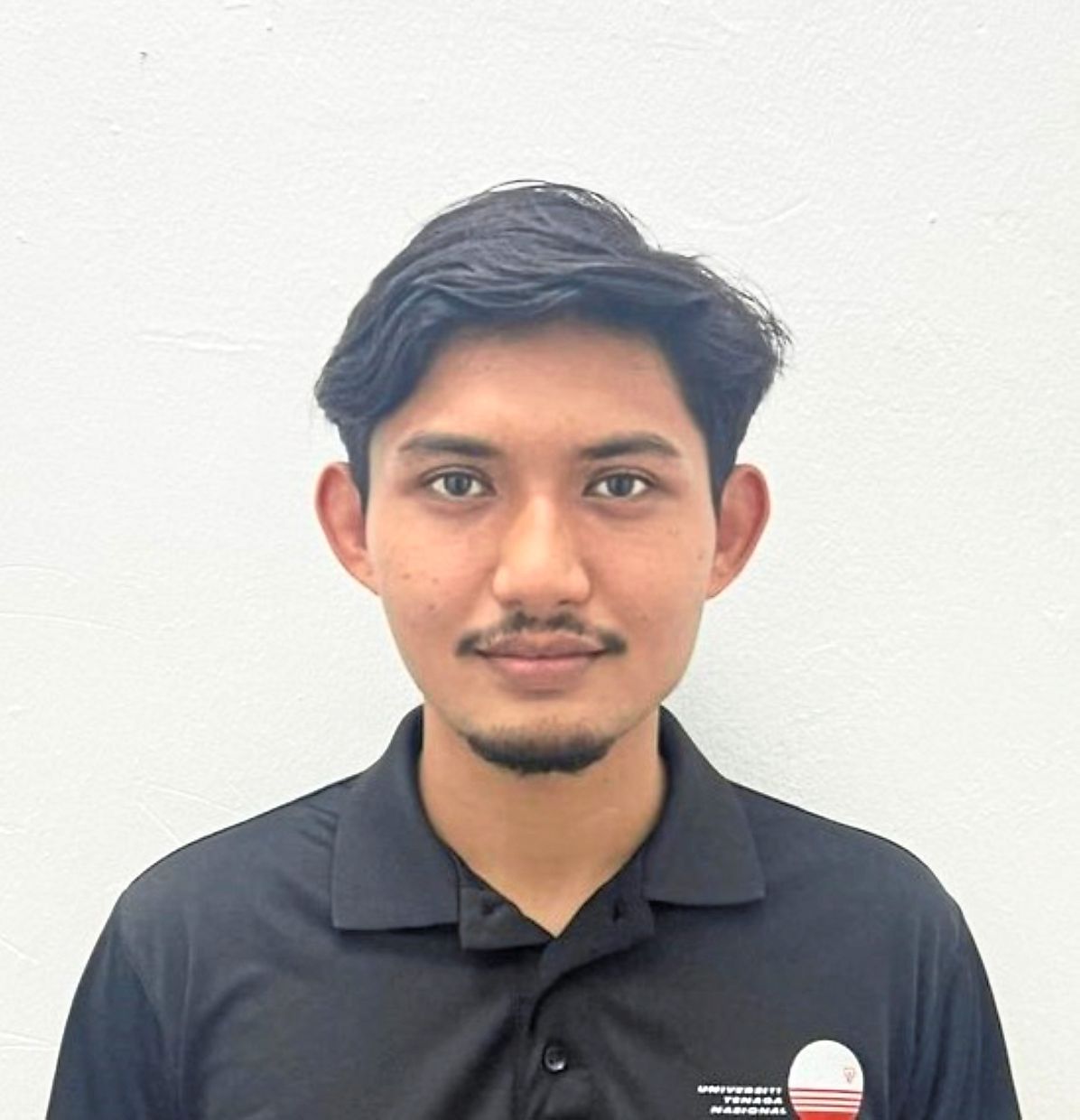
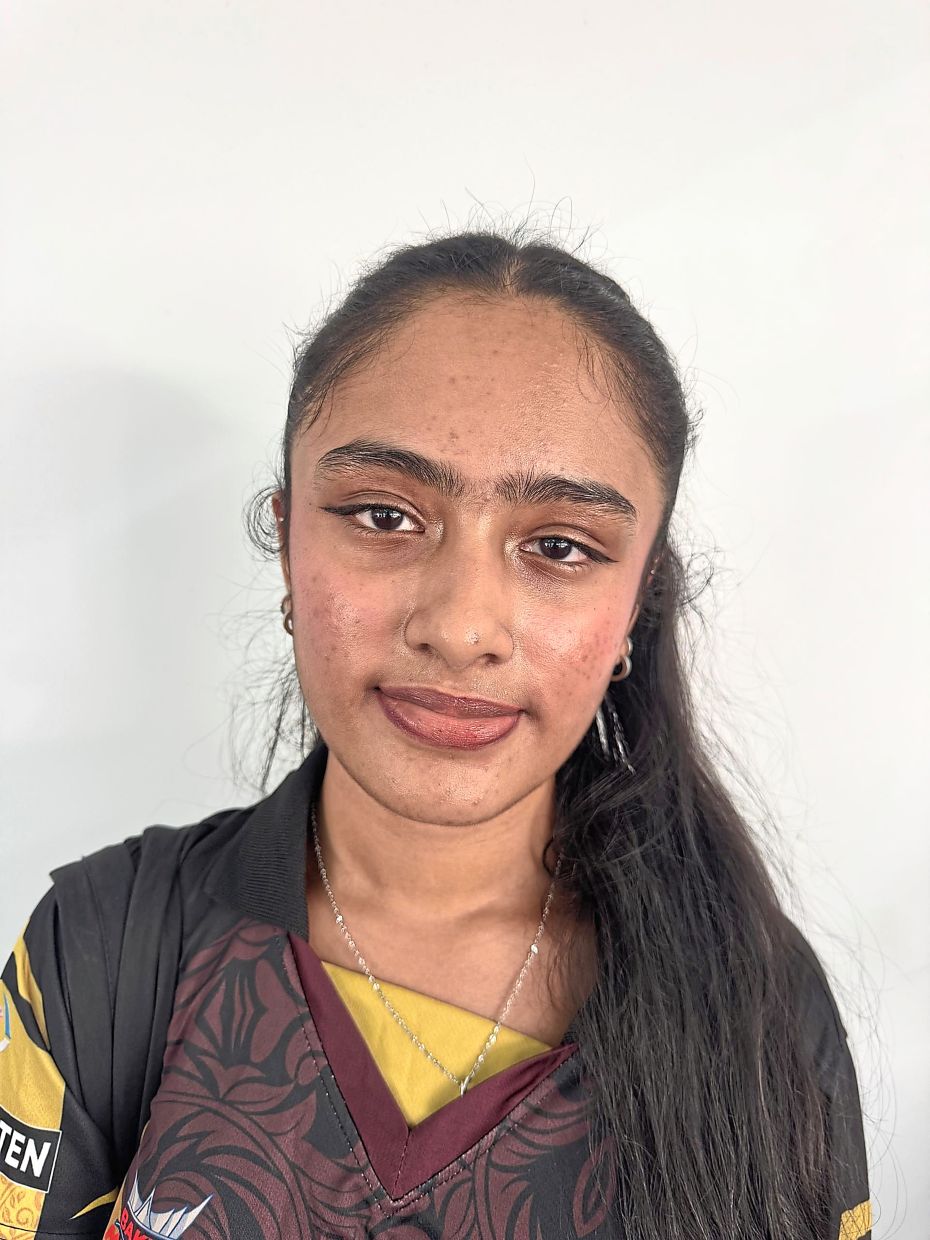
Nasrin Batrisyia Md Nasir, Volunteers of Uniten Association president and Gema representative, said they collected about 200kg of surplus stock daily.
“But the amount changes from day to day. When it rains, we usually collect more leftovers because fewer people come to the bazaar.
“So far, the highest we have recorded in a day is 400kg, with kuih and drinks making up the bulk,” said the third-year Business Economics degree student.
Volunteers work in teams of 15 on rotation, and the surplus is delivered to Masjid Uniten in Kajang and Masjid Saujana in Puchong.
“We have informed the mosques’ management beforehand and they know to expect the deliveries,” said Nasrin Batrisyia.
“We also send some leftovers to fellow students who stay at Uniten residences,” she said, adding this was her third consecutive year as a volunteer.
To ensure it is safe for consumption, Nasrin Batrisyia said the items will be inspected before being repackaged.
“Those that smell bad or appear to be spoiled are set aside,” she added.
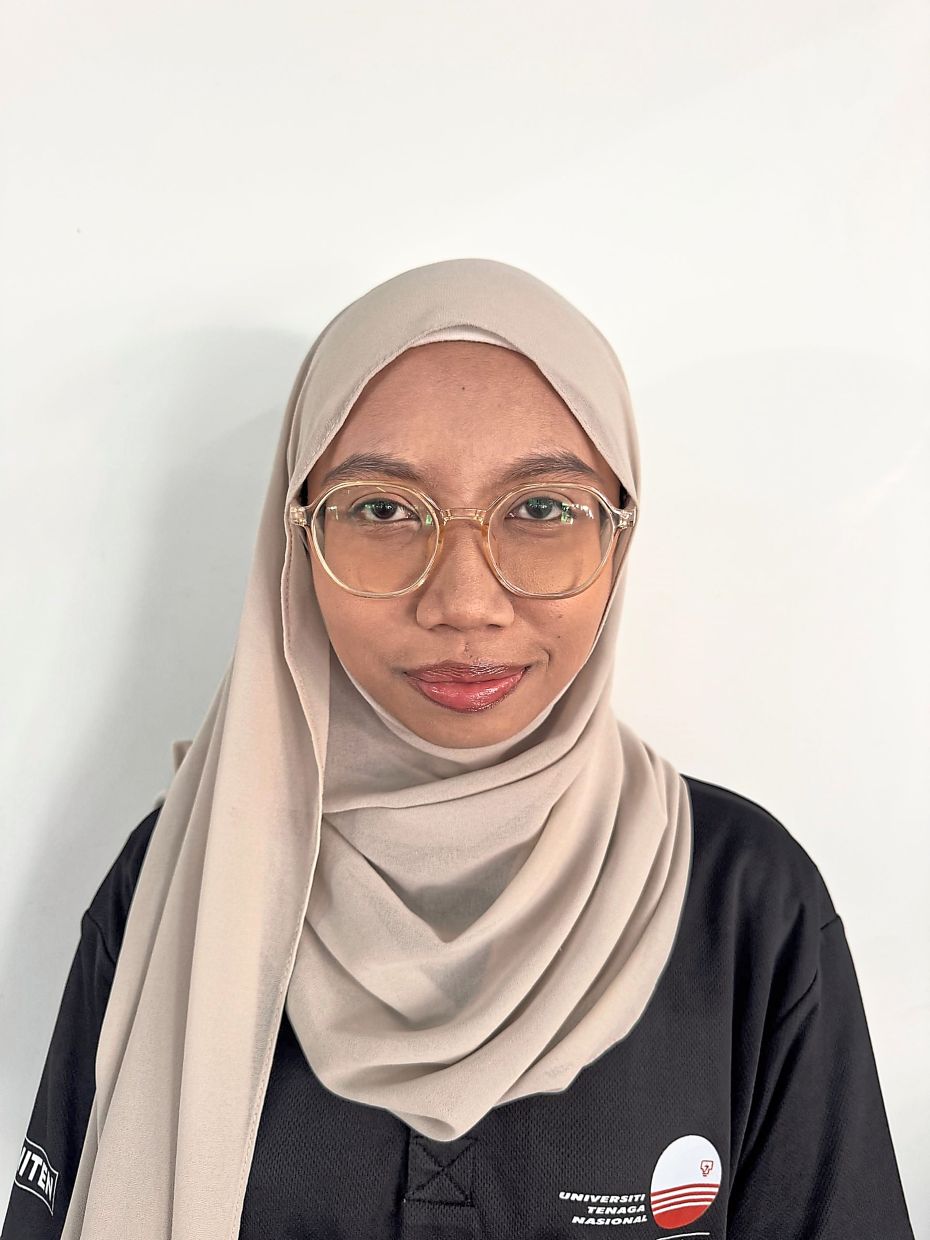
Fellow volunteer Sahana Kathiravan, a Foundation in Engineering student from Uniten, said a counter was set up for traders to donate their unsold products.
“If they need assistance, the volunteers can go to their stalls to collect excess food and drinks.”
Sahana also helps by posting updates on the student group’s social media pages.
“Recipients occasionally ask for specific dishes, but we explain that we cannot control what leftovers are available.”
To ensure smooth operations, five leaders are appointed to oversee and delegate tasks.
Delegation of duties
Irfan Syahmi Ramli, who supervised the first few days of work, said volunteers typically operate in three groups from 6pm to 9pm daily.
“Each group has a specific role, whether it is collecting, repacking or delivering
leftovers.”
He stressed that the priority was to make sure surplus items collected were distributed before they expired.
“Traders usually expect their dishes to be eaten within two to three hours after buka puasa.
“So we have to get the repacked food to the recipients as quickly as possible.”
Stickers are also affixed to the food containers to indicate it is safe for consumption.
They also remind recipients to check the food before eating it.
Conveying the project’s aim clearly to traders is part of their task, as Electrical Power Engineering degree student Irfan Syahmi discovers.
“I had approached a murtabak seller to ask if there was any leftover, but he thought I was asking for free food.
“I had to explain about our programme to clear up the misunderstanding,” he said with a chuckle.
Beyond reducing waste, some students see the effort as an opportunity to sharpen their communication and networking skills.
Accounting student Muhammad Hasif Mohd Fauzi, began taking part during last year’s Ramadan after being encouraged by a friend.
“We learn lots of theories in lectures, but out here is where we get to experience things firsthand.
“Through the programme, I am learning how to communicate more confidently through daily interactions with traders and government personnel.”
Wan Danish Rifdi Wan Mohd Nasir hopes volunteering in activities will give him an edge when looking for employment after graduation.
Last year, the Bachelor of Economics undergraduate was part of a team sent by Yayasan Sukarelawan Siswa to Ho Chi Minh City, Vietnam, to assist local communities there in setting up small businesses.
“The MySaveFood programme has really helped me learn how to build and manage relationships,” he said.
Another accounting undergraduate, Siti Nur Atiesha Ahmad, described the MySaveFood initiative as a meaningful way to spend time in the fasting month.
“There are fewer activities during Ramadan and this is an opportunity to do community work with friends,” she said.
Electrical and electronics engineering student Shahd Nazim, from Sudan, signed up after
seeing updates about the programme on social media.
“This is a good platform to pick up new skills and immerse myself in Malaysian culture.”
Less wastage
The bazaar in Precinct 3 produced significantly less waste since the start of Ramadan, compared with the same period last year.
Between Feb 23 and 27, only 38.7 metric tonnes of waste was produced, down from 73.6 metric tonnes.
The nearly 50% decline was achieved despite a minimal reduction in the number of traders, with 280 operating this year compared to 300 in 2025.
SWCorp chairman Hee Loy Sian attributed the improvement to ongoing efforts to minimise food waste and maintain cleanliness at the bazaar site.
“This indicates improved waste management driven by better facilities and consistent engagement with traders,” he said after a walkabout at the bazaar.
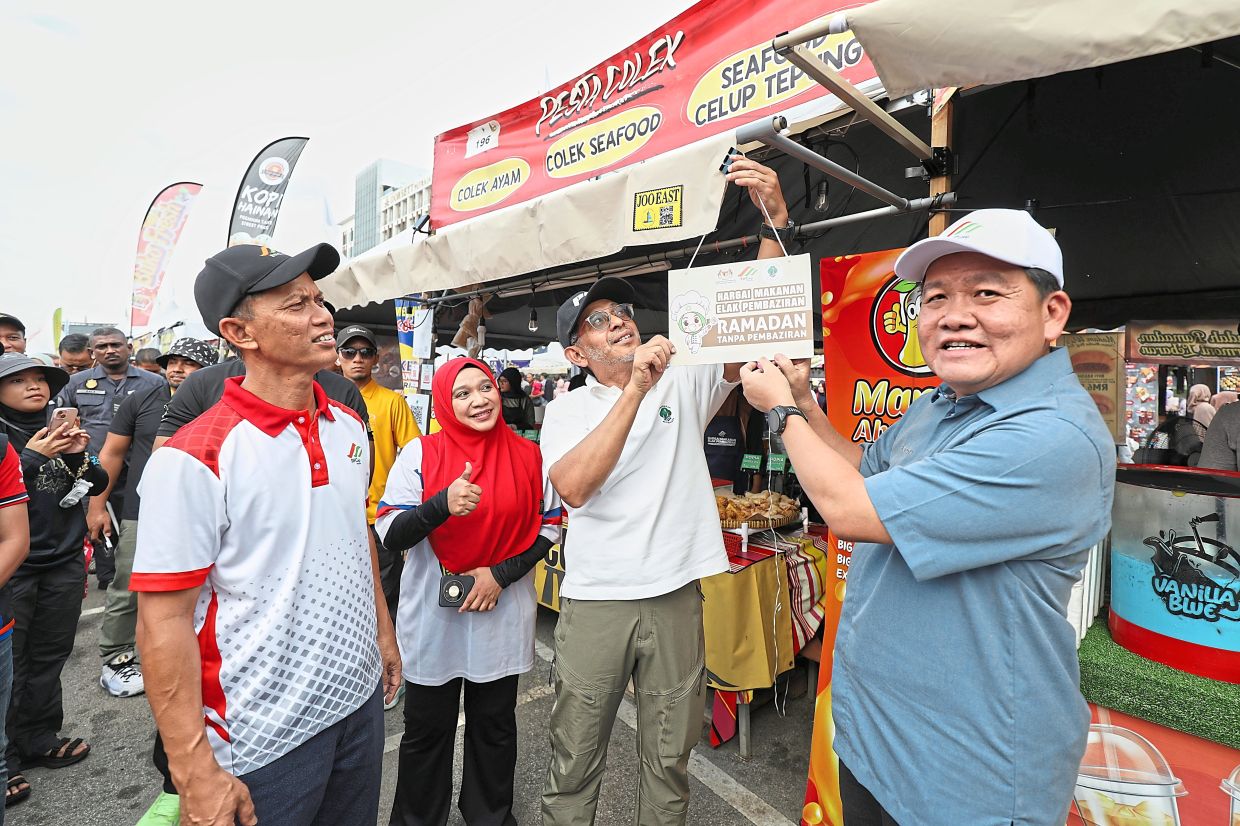
Also present were SWCorp financial department director Ummi Kalthum Shuib, Federal Territories SWCorp director Nordin Amat and Putrajaya Corporation (PPj) president Datuk Mohd Sakeri Abdul Kadir.
Hee also gave out food containers and Touch ‘n Go tokens to encourage visitors to shift from single-use plastics and adopt cashless payments.
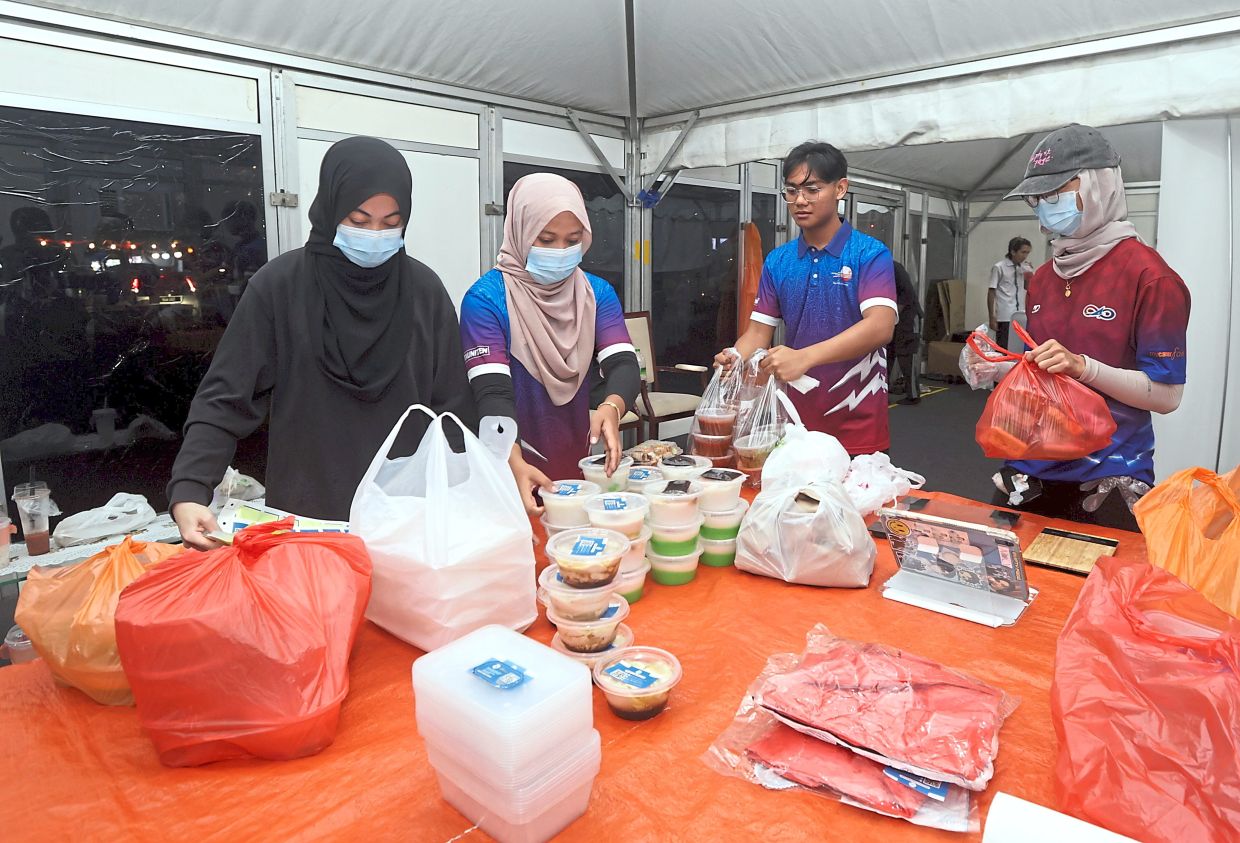
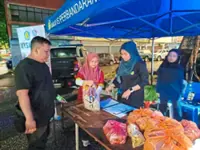
Uniten student volunteers repacking unsold food from the Precinct 3 Ramadan Bazaar under the MySaveFood initiative. — Photos: CHAN TAK KONG, YAP CHEE HONG/The Star and courtesy photos
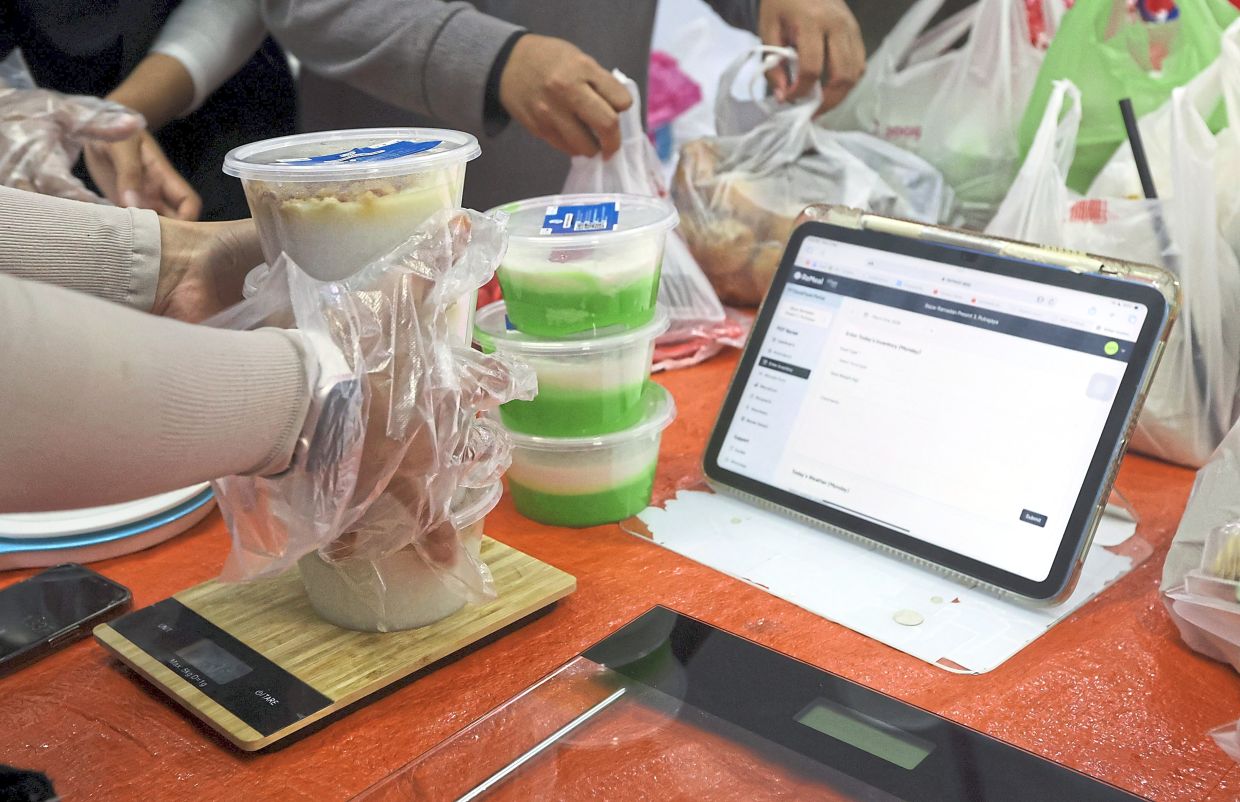
Food and drinks being weighed and recorded to facilitate monitoring with stickers affixed to indicate the items are safe for consumption.
Irfan Syahmi: We have to get the repacked food to the recipients as quickly as possible.
Nasrin Batrisyia: When it rains, we usually collect more leftovers because fewer people come to the bazaar.
Sahana: Recipients occasionally ask for specific dishes, but we cannot control what leftovers are available.
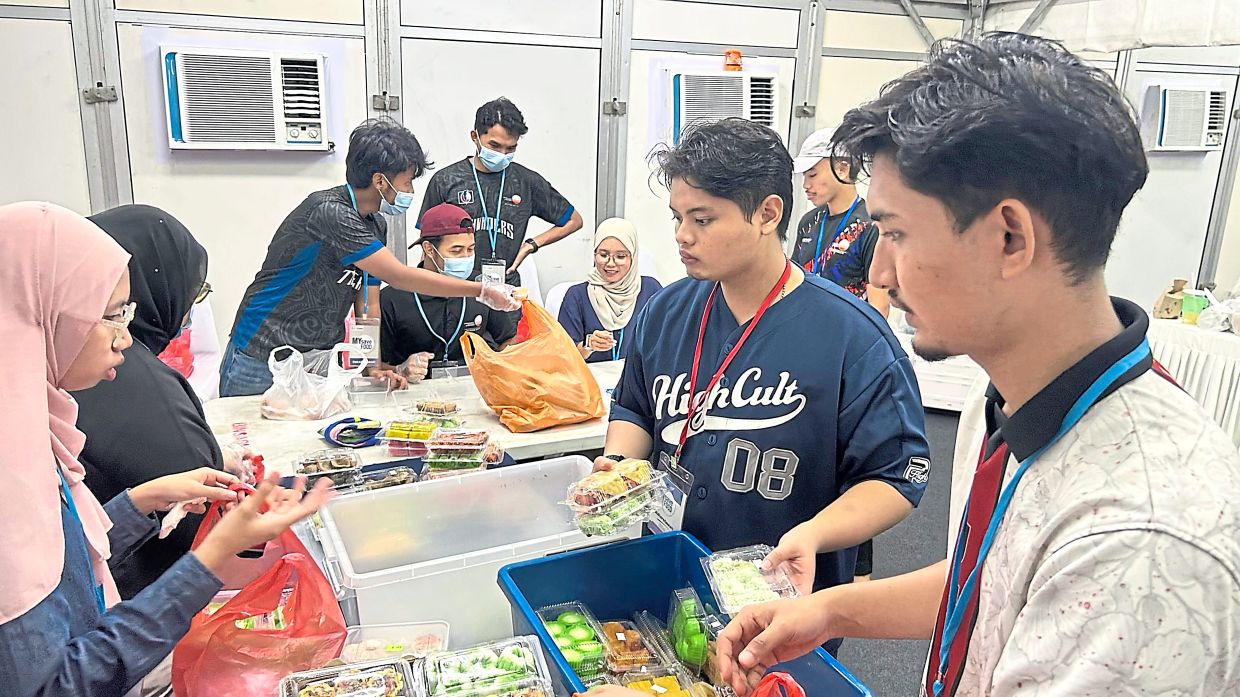
Kuih makes up the bulk of unsold food items.
A student volunteer (right) collecting unsold stock from a Ramadan bazaar trader.
From left: Nordin, Ummi Kalthum, Mohd Sakeri and Hee holding up a sign on the campaign to reduce food wastage at the Precinct 3 Ramadan Bazaar in Putrajaya.


