Under the blaze of the mid-morning sun, I felt my knees buckle and my lungs bursting as I hauled myself up the steep scorched slope. I struggled to reach the voices beckoning to me from the ridge, a little more than 50m above.
“Come on, ML! You’re almost there. You have to see this!” As if those voices were the divine summon from Lord Shiva himself, I gave myself one last heave and clambered up the grassy top of the Bedni Bugyal.
We were on the third day of our trek in India’s Garhwal Mountains, a place far up in the Himalayas. From here, glacial meltwater race down to form the tributaries of the Ganges, 200km downstream.
To the north-east, about 40km away, lies the sacred Nanda Devi Sanctuary, home to India’s second highest peak – Nanda Devi – standing at 7,816m.
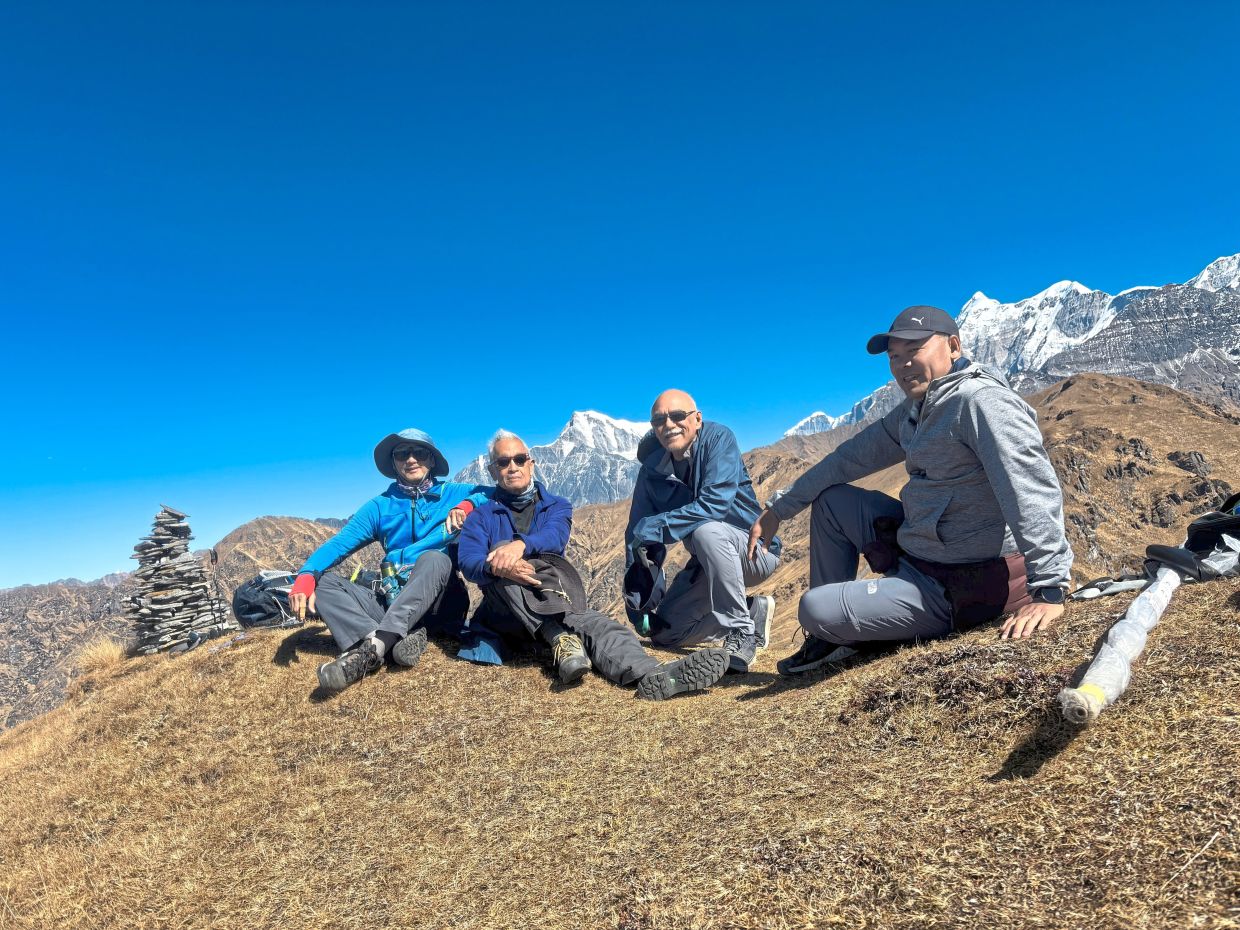
But on that day, at the crest of the ridge we were faced with the grand Trishul Massif and its snow-dusted peaks: Trishul I, II and III, which are between 6,000m and 7,000m high.
We flopped down on the thinning turf of the Bedni Top (3,860m) to take in the panorama. Three of my hiking buddies had signed up to join me on this four-day trek in the Indian Himalayas; it was our first trek together in the sub-continent. We are Malaysian retirees – three of us are in the so-called “autumn of our lives”, but with plenty of days left before “winter” arrives. We have been itching to roam around the world, specifically to trek or hike, though nothing too technical.
The meadows along the Ali-Bedni Bugyal trail had all the elements for a short easy-going trek: Rolling grassy knolls with close-up views of snow-white peaks. The total trail distance is just 28km, and the highest point is 3,825m above sea level.
But reality soon came biting us where it hurt the most, in the form of a long and excruciating off-road ride in a 4WD. The drive lasted nine hours, and took place mostly at night.
We reached the upper regions of Uttarakhand State after a day’s drive from Delhi to Dehradun, the gateway to the Garhwal Mountains. This was followed by another long night ride in the 4WD along winding broken hill roads. We arrived at Wan Village, the trailhead, at dawn.
Altogether, it was 550km of road travel.
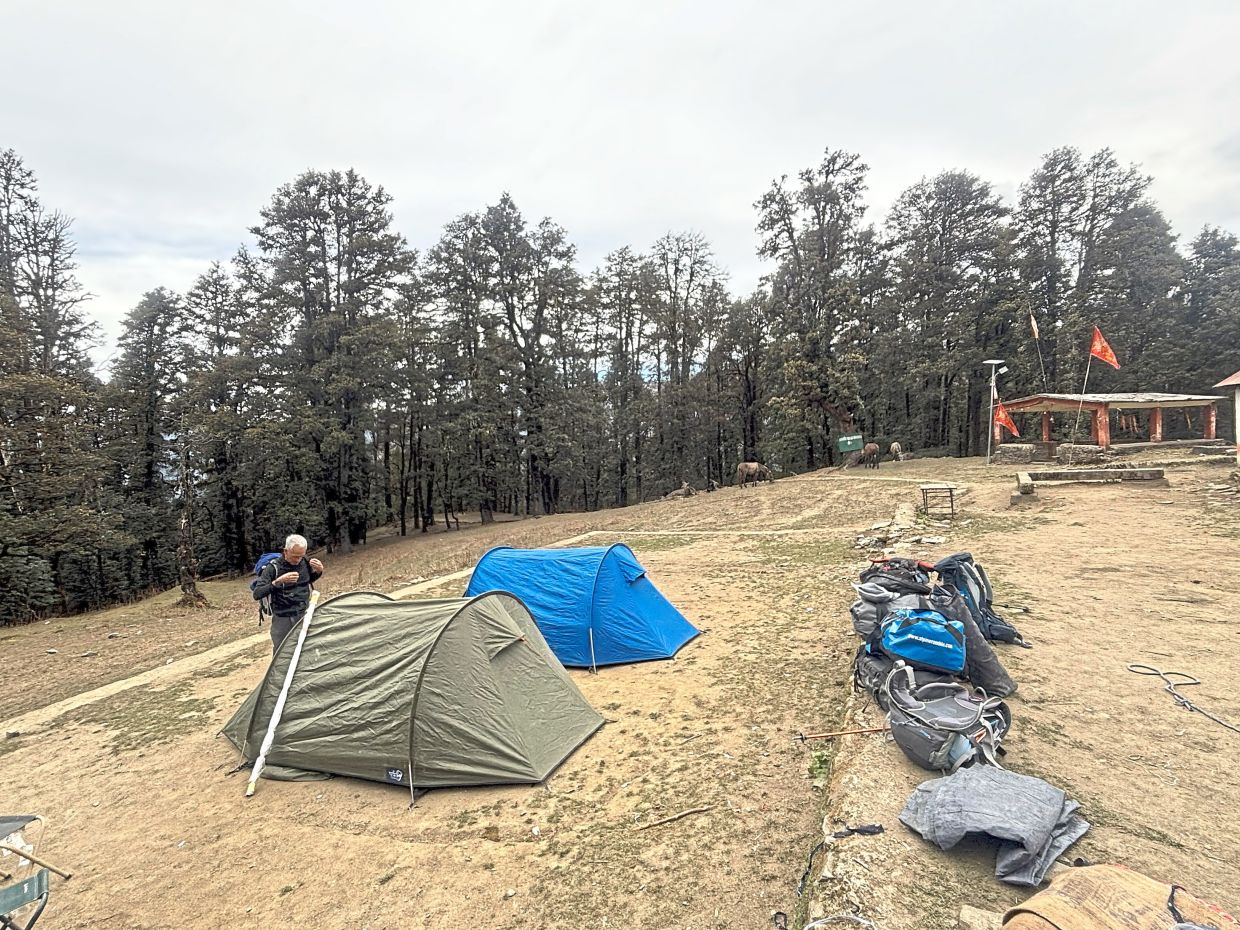
On the first day of our trek, we made an elevation gain of 700m, but not before descending 200m to a valley floor and then trudging up through rhododendron forests to reach our camp at Gairoli Patal.
The quandary deepened when we realised the temperature had dropped (to below 10°C on some nights).
The trekking route we took covered Wan Village, Gairoli Patal (camp), Bedni Bugyal, Ali Bugyal (camp), Bedni Top, Tola Pani, Didni Village (camp) and Lohajung. The trek can also be done in reverse order.
So, did we men in our “golden years” fulfil our desire to roam the "Golden Meadows" of the Hindu Gods?
Yes, if the plan was to walk, breathe, smell and step back into the wilderness beyond our mundane retirement routine.
And yes, if the desire was to sip coffee on a rocky ridge, to gaze over molten gold meadows, to catch crimson sunsets, and to bathe in the silence and grandeur of the night sky.
The trip was certainly a test of our patience (packing and re-packing our gear was a nightmare), of our stamina (hiking up and down the mountains is no mean feat) and of our sense of wonder.
At our age, we try to keep things simple and wonderful. For most of us, each journey is also one of rediscovery.
If you plan to do this trek, do note that stopovers can be made along the way. For example, you can stop at Devprayag to see the confluence of the Alakananda and Bhagirathi Rivers (which form the Greater Ganges), or at at Rishikesh to practise yoga.
The views expressed are entirely the writer’s own.