
He did it against all odds. Mohd Khafiz Bachok, better known as Khafiz al Kicok, summited the world’s highest mountain in what is said to be one of the most unpredictable climbing seasons in Mount Everest history.
Khafiz is also the 30th Malaysian to do so since the first ones – M. Magendran and M. Mohandas – did it on May 23, 1997.
It could have been a doomed season. A huge serac stood in the way along the treacherous Khumbu Icefall. It halted the works of the “icefall doctors”, who were fixing ropes and preparing ladders to allow climbers to pass through.
The Khumbu Icefall is a constantly moving section of the Khumbu Glacier, which creates crevasses that can swallow a house whole. This section is said to be the most dangerous one on the trail to the summit, and apparently, more people had died here than anywhere else on the mountain.
Avalanches can happen at any time, while broken seracs can create havoc to climbers and sherpas alike.
For almost two weeks, the trek to Camp 1 was almost impassable. At Everest Base Camp (EBC), nearly a thousand people – climbers and guides alike – were waiting to start their acclimatisation process.
This year, the Nepali government issued a record-breaking 492 climbing permits. The Tibetan side was closed for all activity, so one can imagine just how crowded it was on the Nepal side of the mountain.
Khafiz, 49, is one of Malaysia’s elite climbers. Together with R.J. Nagarajan, he summited Manaslu (8,163m) in Nepal, the eighth highest mountain in the world, in September 2022.
In June 2023, Khafiz sold his house and went to Pakistan to attempt a feat considered by many as “suicidal” – to climb K2, the planet’s second highest mountain.
In terms of ratio, more climbers died on K2 than any of the other 8,000m+ peaks.
But Khafiz kept pursuing his dream and finally on July 29, 2023, he reached the K2 peak.
On the same day, the incredible Norwegian female climber, Kristin Harila, also completed her record-breaking feat of climbing all 14 of the 8,000m+ peaks in the world. What’s even more amazing is that she did it in 92 days.
It took legendary climber Reinhold Messner 16 years to do the same thing for the first time, 40 years ago (1986). Recently, former UK Special Forces soldier Nirmal Nims Puja completed the challenge in six months and six days, which is double the time that Harila did hers.
Khafiz and his guide Saila Mingma, who was also his guide during the Manaslu trek, knew that simply waiting at the EBC was not a good thing; as no one was sure when the route to Camp 1 would open at the time.
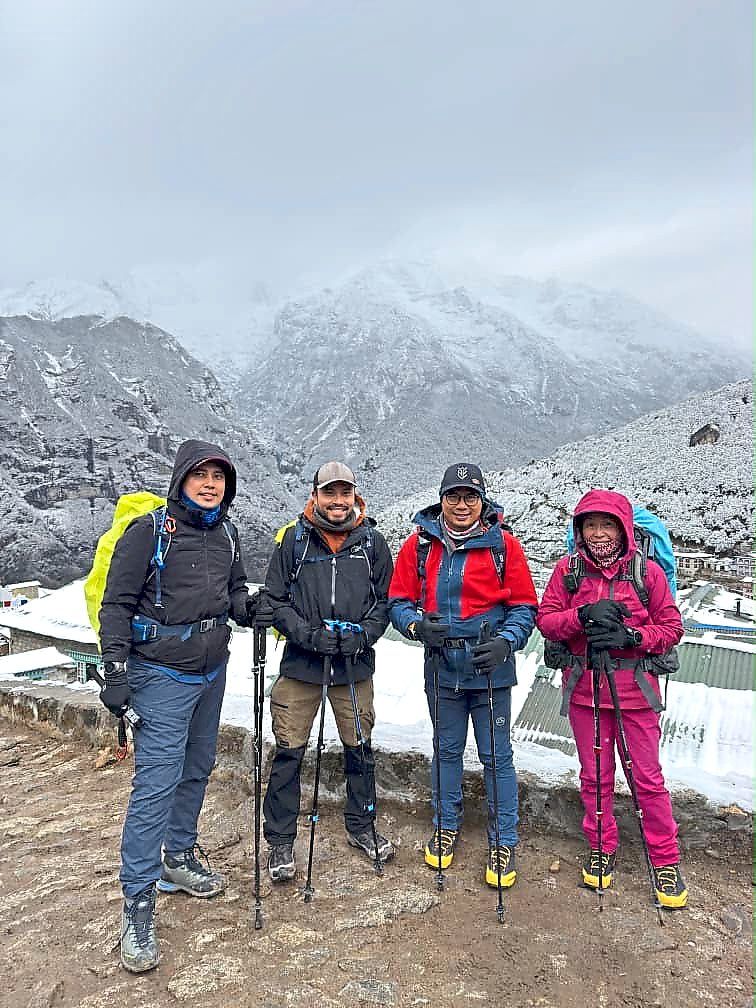
To acclimatise and stay active, they climbed Island Peak (also known as Imja Tse), which stood at 6,189m. It was a tough but necessary climb for them.
They then returned to the EBC to rest. Later, they decided to go for another climb, this time at Lobuche East (6,119m).
After that, the route was re-opened and they were ready to tackle the big climb. They knew that “human traffic jams” would likely happen along the way, especially at the critical route from Camp 4 where climbers usually make their final push.
Khafiz and Saila’s strategy was to start really early: They were at Camp 2 on May 11, and made their way to Camp 3 four days later.
By the evening of May 17 they were ready for the summit push. It took them 12 hours from Camp 4 to reach the notorious Hillary Steps.
They timed their ascent to make sure that when they got to the peak, the sun would be there to greet them.
On May 18, Khafiz was at the top of the mountain at 5.24am.
He is now one of two Malaysians who have conquered three 8,000m+ mountains; the other climber is R.J. Nagarajan.
To date, Khafiz has climbed Manaslu, K2 and Everest, while R.J. Nagarajan has summited Manaslu, Lhotse and Everest.
Khafiz was actually aiming for a “double” record – summiting Everest and her “sister” peak, Lhotse (8,516m) – but was advised against doing so as he was already showing signs of frostbite.
Thankfully, that was just a false alarm, but when you’re at more than 8,000m high, the danger of acute mountain sickness (AMS) and frostbite are real.
Khafiz himself had suffered from AMS before while climbing “smaller” mountains. In 2011, he was struck with AMS while summiting Mount Damavand (5,617m) in Iran.
He had also almost succumbed to cerebral edema (swelling of the brain) while attempting Mount Kilimanjaro (5,895m), the highest peak in Africa.
Along with all his wins, Khafiz has encountered failures, too. The failed attempt at summiting Mount Elbrus, Europe’s highest mountain, was one such occasion.
He summited Mount Aconcagua (6,961m) in Argentina, the highest peak in South America in 2016. It was a breakthrough in his high-altitude bid.
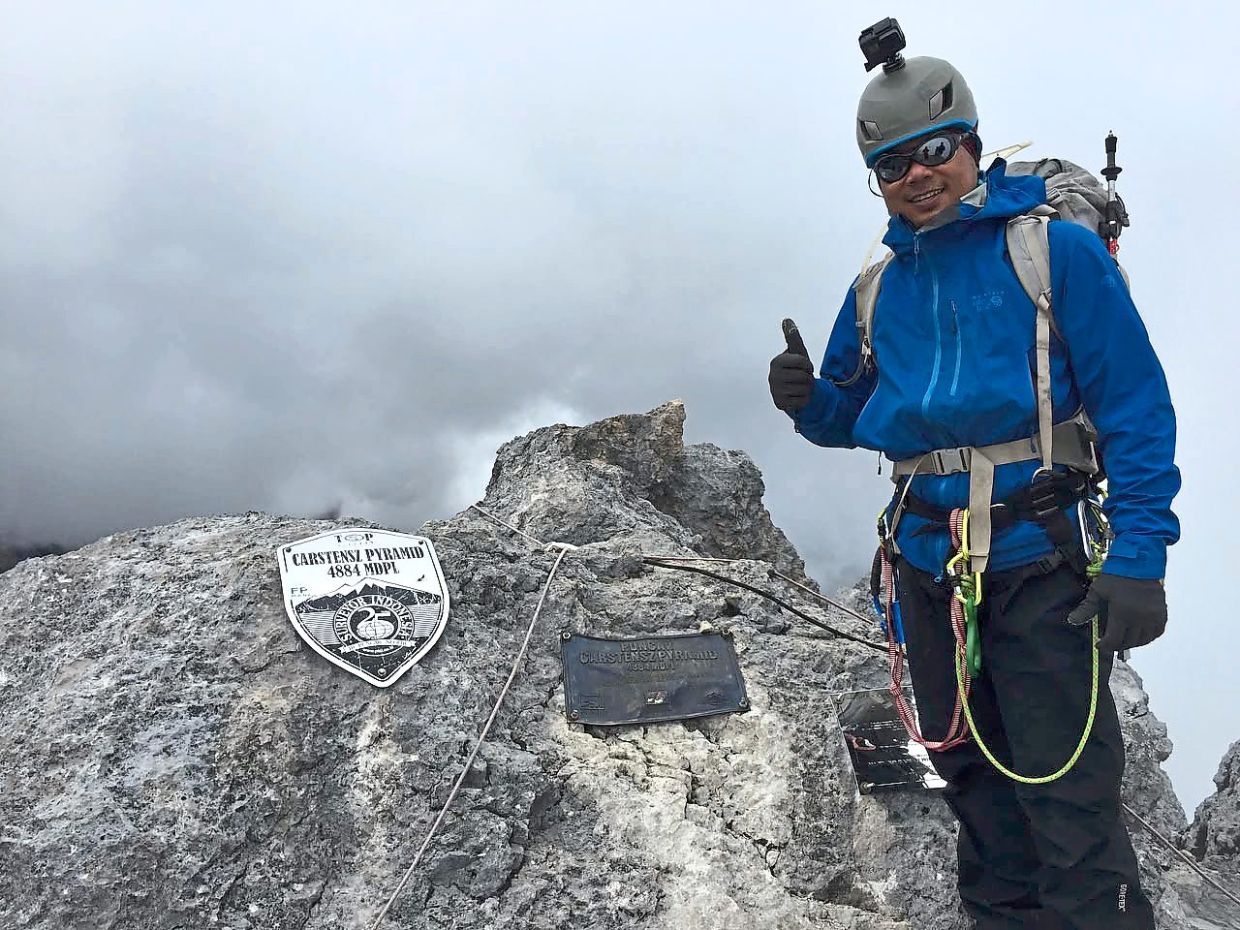
He attempted Carstensz Pyra-mid or Puncak Jaya in Western New Guinea (Papua, Indonesian New Guinea) in 2019. At 4,884m it is said to be one of the toughest mountains to climb.
Carstensz Pyramid was Khafiz’s third peak among the World 7 Summits (seven highest peaks in seven continents). Everest is the fourth.
Khafiz has chronicled his adventures particularly the K2 climb in his book Misi K2: Pendakian Ironman Malaysia Ke Puncak Gunung Paling Berbahaya Di Dunia.
Naturally, he is hoping to climb all the other 11 8,000m+ mountains in the world, saying that age is no reason for slowing down.
The writer is an avid trekker and climber. He succeeded in reaching the 4,130m Annapurna Base Camp at the age of 71 years, 10 months and 14 days on Sept 23, 2025.