
In the 19th century, large numbers of Chinese labourers crossed the Pacific Ocean to the American West. Between 1865 and 1869, more than 10,000 Chinese workers took part in building America’s first transcontinental railroad.
Amid the cliffs and rugged terrain of the Sierra Nevada, they blasted through mountains and carved out a path with their sweat and blood, leaving behind a painful yet significant chapter in the development of railways there.
During the era of the British Empire, large numbers of labourers were recruited across its colonies to build railways, transporting minerals, rubber, tea and spices from the interior to ports, before shipping them to Europe.
It can be said that after waterways, railways became one of the great lifelines of modern society, trade and economic development.
Across the United States, Canada, India, Japan, Australia and Russia, as well as the rest of Europe, railways did far more than carry passengers and freight. They reshaped cities and even gave birth to one new town after another.
China was relatively late in developing its railways. In 1876, the Woosung Railway, built by British merchants, began operating.
Stretching about 14.5km from Shanghai to Woosung, it had been constructed without formal approval from the Qing government and was bought back and dismantled the following year.
It was not until the Tangshan-Xugezhuang Railway was completed in 1881 that China truly started building railways on its own. Then, in 1909, the Beijing-Zhangjiakou Railway, designed and constructed under the leadership of Zhan Tianyou, opened throughout its entire route.
It carried even greater historical significance as an important trunk railway designed and built under Chinese leadership, becoming a milestone in China’s railway history.
After the founding of the People’s Republic of China in 1949, the Chengdu-Chongqing Railway, Baoji-Chengdu Railway and, later, the world-renowned Qinghai-Tibet Railway were completed consecutively.
Railways gradually became the great arteries connecting the country from east to west and north to south.
In those days, the philosophy was simple: as long as you could get there, that was good enough. Comfort? That could wait.
Younger travellers today may find it hard to imagine what long-distance train journeys in China were like just 20 or 30 years ago: the enormous Spring Festival crowds, hard seats and hard sleepers, standing tickets, and carriages crammed with bags and parcels.
During festive seasons, even chickens, ducks and local produce might come aboard.
People – and livestock – were packed together like sardines.
Those journeys may have been tough, but they were also an authentic portrait of that era.
On the eve of the 2008 Beijing Olympics, the Beijing-Tianjin Intercity Railway opened, with trains operating at speeds of 300km to 350km per hour. It marked China’s entry into the high-speed rail era. From the Harmony trains to the Fuxing trains, railway development accelerated rapidly.
By the end of 2025, China’s operational railway network had reached 165,000km, including around 50,000km of high-speed rail, making it the largest high-speed railway network in the world. Once a “follower”, China has, within just a few decades, become a major force on the global railway map.
More interestingly, the role of railways has quietly begun to change.
In the past, we took trains simply to get somewhere. Today, the train itself can become the destination.
Once high-speed rail had solved the question of “speed”, another group of people began asking how travel could be made “slow” again via trains – moving beyond simply carrying passengers and freight towards immersive, experiential and even luxurious rail journeys.
Inside the train are refined dining experiences and comfortable cabins. Outside the window, mountains and rivers unfold like an ever-moving landscape painting.
When it comes to luxury train travel, China is in fact a latecomer. There is much to learn from the Eastern & Oriental Express, which has been operating for more than three decades, before adding distinctly Chinese characteristics of its own.
I remember the late Hong Kong food critic and columnist Chua Lam once telling me about his journey on the E&O train, going from Bangkok to KL to Singapore. He said he could never quite forget the elegance and romance aboard the train, carrying echoes of 19th-century colonial era.
After the pandemic, the E&O continues to be operated by Belmond, which runs several of the world’s finest luxury trains, including in Peru and South Africa. Today, however, E&O’s journeys mainly depart from Singapore, travelling through the culture and natural landscapes of Malaysia before returning to the city-state.
Of course, Japan’s Seven Stars in Kyushu, JR East’s Train Suite Shiki-shima, Australia’s The Ghan, as well as the tourism trains developed in Vietnam and Taiwan in recent years, all also offer valuable examples worth observing and learning from.
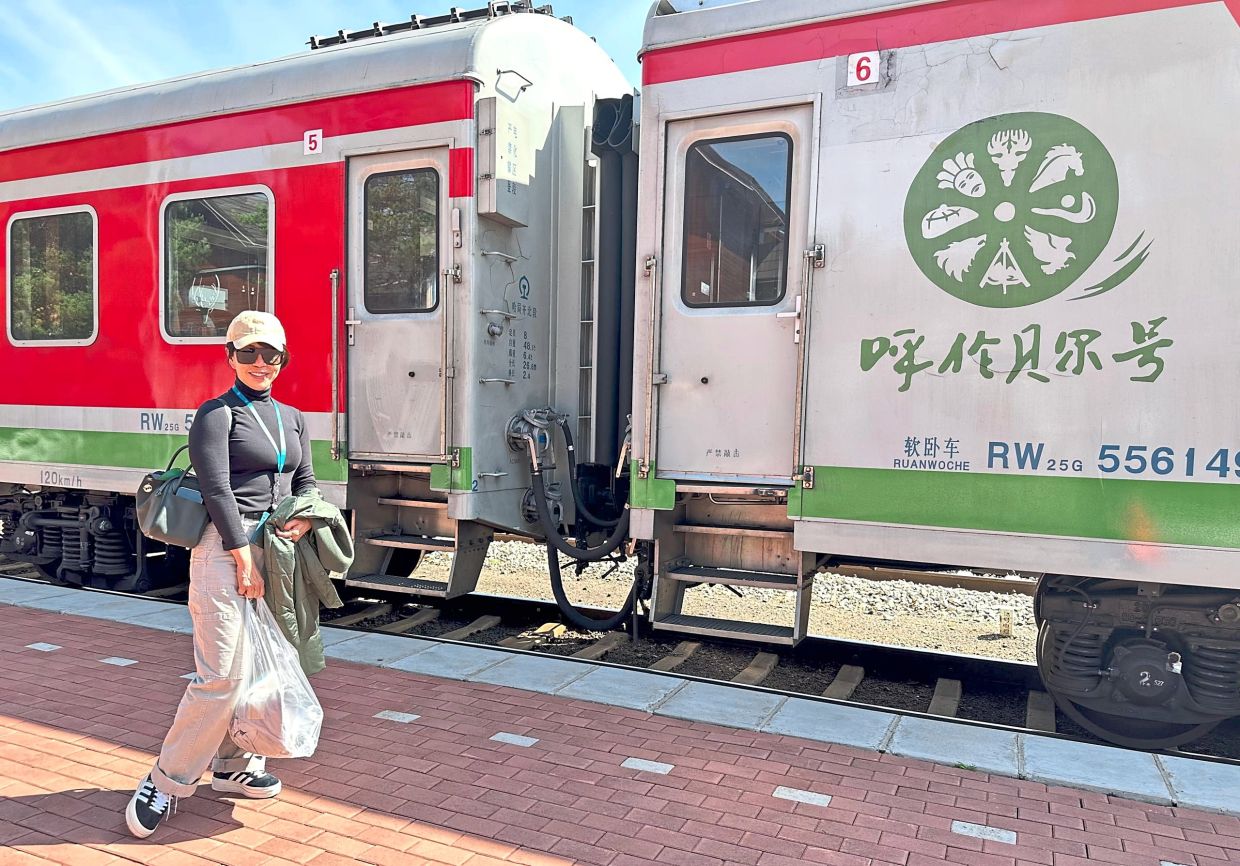
There is no denying that China’s Hulunbuir Express has already achieved a respectable standard in accommodation and dining.
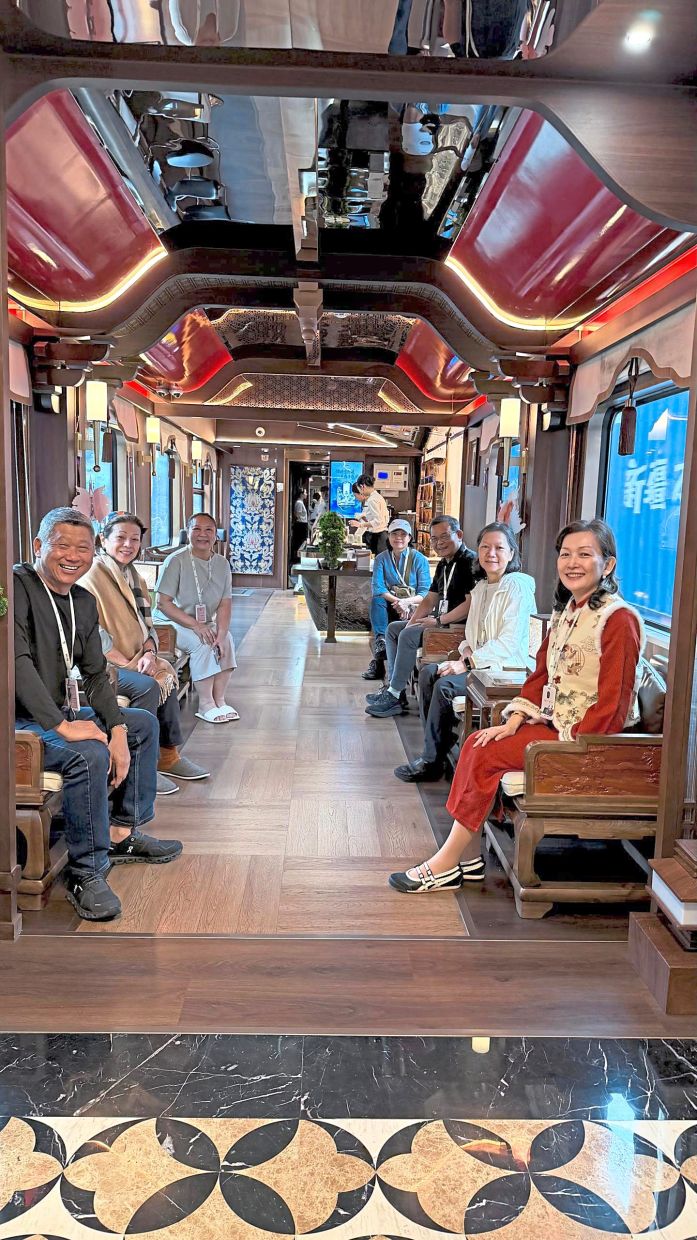
And on this journey, the brand-new Panda Train: Jinxiu Tianfu, which I travelled aboard together with 14 fellow travellers, displayed a convincing touch of luxury and class. We were on that trip in Xinjiang for 16 days and 15 nights.
But beautiful hardware is only the first step.
Compared with the world’s more established luxury and tourism trains, what China truly needs to catch up on may no longer be how luxurious the carriages are or how beautiful the rooms look.
The real challenge lies in the finer details of service, the quality of food and beverage, onboard entertainment, and whether the experiences after stepping off the train can be seamlessly connected into one complete journey.
If China truly wants to reach the standards of the world’s finest tourism trains, reform and upgrading have become increasingly urgent.
That said, while everyone talks about how intensely competitive China’s tourism industry has become, some have already turned their eyes towards a blue ocean.
It is no longer simply about who can travel faster.
The views expressed here are entirely the writer’s own.
Leesan, founder of Apple Vacations and group executive chairman of KITA Tours, has travelled to seven continents and visited 168 countries/territories. He has written seven books, and shares his travel stories, experiences and insights.