
One of my team members, Husain Ahmad, a former executive at Continental Tyre in Petaling Jaya, Selangor, kept reminding me, "If you fail, we will turn back.”
What he meant was that if I faltered, the 12-member climbing team will abandon its mission. So I told myself that I couldn't and wouldn't fail my team!
Annapurna Base Camp or ABC is no walk in the park. I have trekked through tough routes in Nepal before, as well in Indonesia, Britain and Malaysia. But ABC posed challenges I did not encounter previously. Not even the gruelling five-day trek at Langtang Valley, Nepal that I did in 2014 prepared me for this.
I had a fright when we reached Dovan after a five-hour trek from Upper Sinuwa. Dovan is about 2,500m above sea level. It was a grey afternoon when we arrived, and the temperature was plummeting fast. Someone pointed to me that my lips had turned blue; I was cold and actually shivering.
Was it a sign of Acute Mountain Sickness (AMS)? Was I succumbing to the life-threatening case of either pulmonary edema (water in the lungs) or cerebral edema (swelling of the brain) due to the high altitude? I wasn't sure but I spent the entire evening in the warm dining hall of Hotel Destination ABC.
I even slept there at night with the gas burner alight. But I lost my appetite so couldn't really eat.
Luckily I didn’t experience any form of dizziness or nauseousness, heart palpitations, debilitating headaches or breathing difficulties. I kept telling myself that I was ok.
In the morning I had some mushroom soup and two boiled eggs. It probably wasn't enough for me to power through the rest of the journey but I just couldn't swallow any more than that. I couldn't even eat the tasty Gurung bread.
For the next many days I simply lived on water, mushroom soup and eggs.
Nevertheless, my energy level and stamina seemed boundless. I was actually leading the pack. There were three people who were 50 years younger than me in the team - Anas Sazali, Anas Syimer (both of whom were Husain's sons) and Muhammad Syahrulnizam, who were all in their 20s. Husain himself was 63.
Addanan Ghani and veteran climber Mohd Noor Mat Amin were in their late 50s. The rest in the team were in their 30s and 40s.
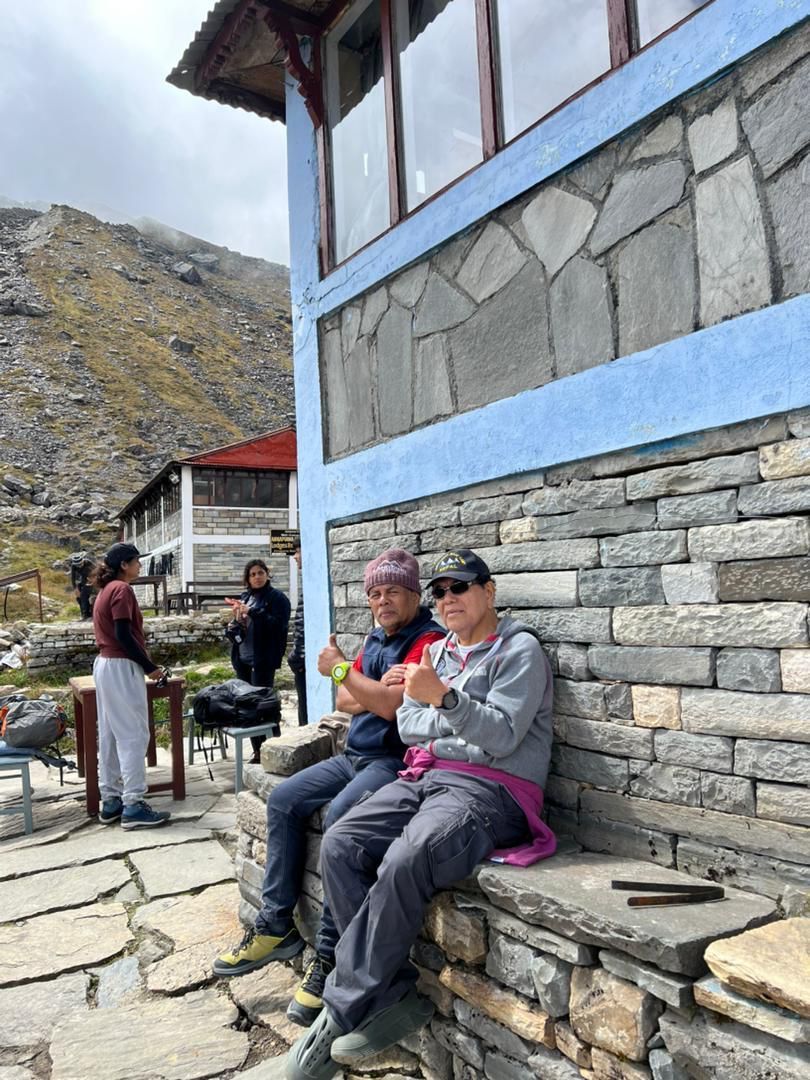
Mohd Noor, his wife Aishah Pun, Addanan and Zamira Mohd Akhir were with me at Langtang Valley in 2024. Three other members were my niece Haida Azreena Hannie and her husband Mohammad Raziz, and a guide from Gunung Ledang, Mohd Firdaus Muhammad.
There were times along the trek where I met exhausted young climbers. A few had given up after a gruelling walk from Dovan to Deurali, or from Deurali to the Machhapuchhre Base Camp. Those were the toughest routes.
I reminded them of how “young” I was, and told them to keep going. Some decided to power through, but others did not.
At ABC, we were housed in the same lodge as some young climbers from Kerala, India. They were astonished to hear someone as old as I was making the trek all the way to 4,130m. I told them that there were other climbers who were much older than I was who successfully conquered Mount Everest.
I was pleased to hear theig ensuing discussion, not so much about me being at ABC, but whether they would be able to do the same thing at 71. Many of them had 40 or 50 years to go to reach my age.
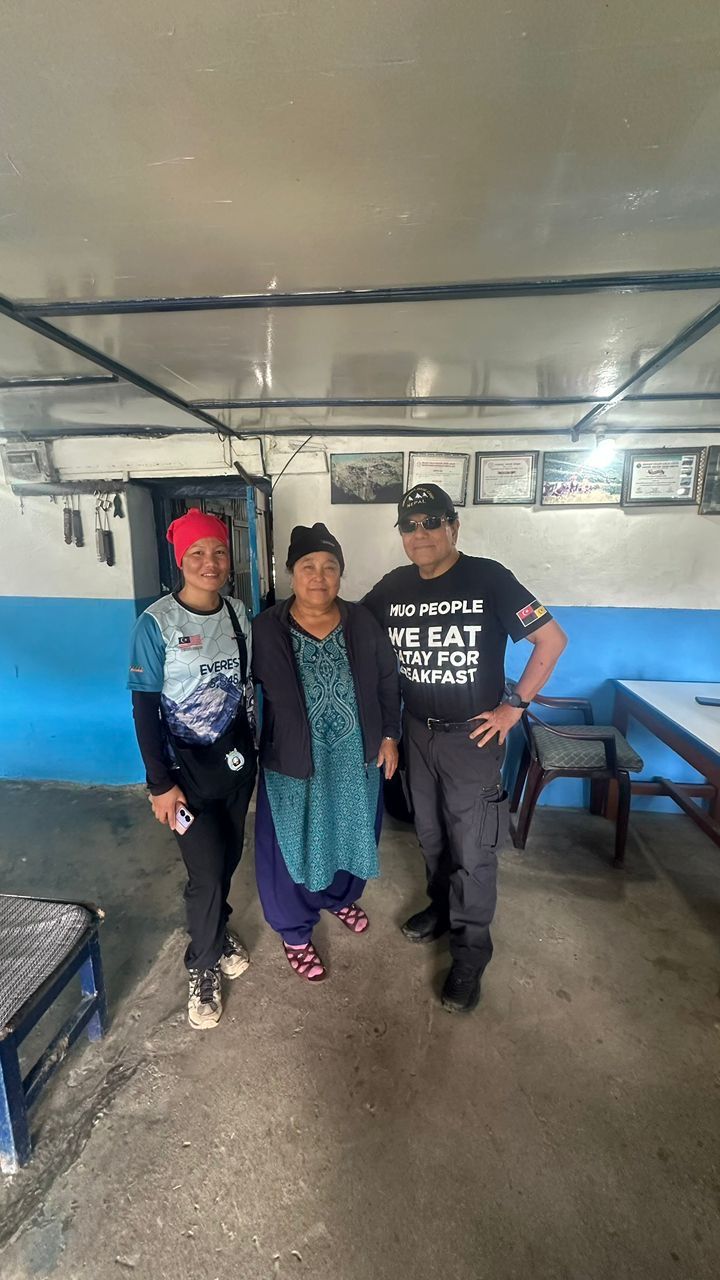
I would be lying if I said that I wasn’t tired. It was not just the physical exertion and fatigue that got to me, but the psychological challenges too.
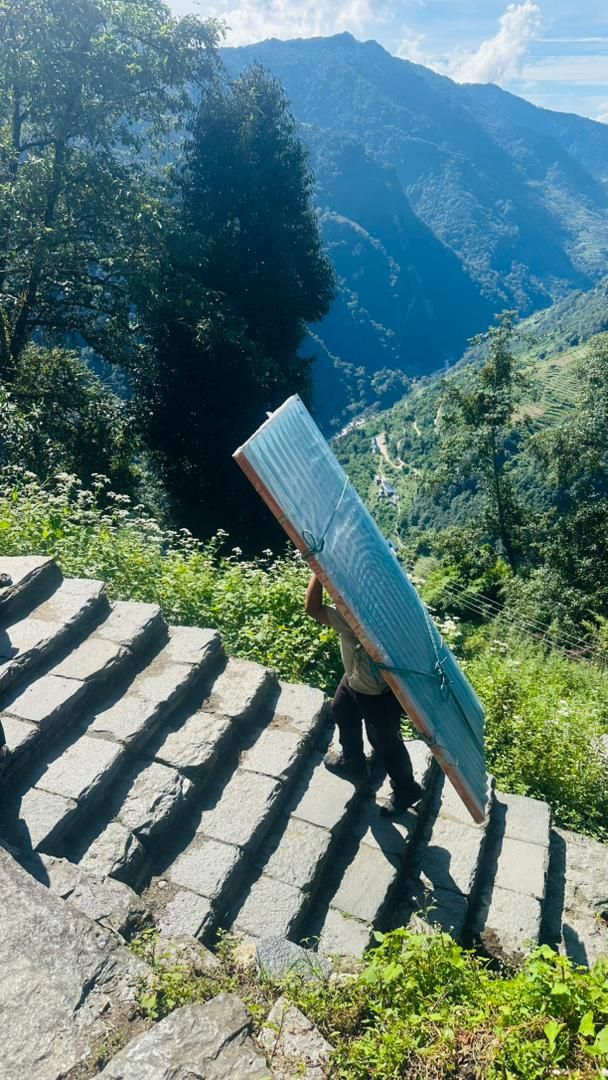
It was easier to walk along natural treks but walking up the over 5,700 man-made steps was psychologically demanding, and an energy-sapping endeavour. Everytime you looked up there'd be another long stretch of steps you need to go through. It felt like a never-ending task.
People say going up ABC was tough, but for me, coming down was equally unforgiving. We took three days to walk down, which was half the time it took us to climb up. But from Chhomrong to Matkyu where the jeeps were waiting for us, we had to walk down as many as 12,000 man-made steps.
We ended up at Jhinnu Danda where there was a suspension bridge, the second longest in Nepal stretching 287m; it was 135m above the Modi Khola River. The scenery was well worth the entire morning's torture, walking down the treacherous steps under a merciless Nepal sun.
Johan Jaaffar is a National Journalism Laureate and an avid trekker. He has trekked in many places, most notably Indonesia, Britain, Nepal, and of course, Malaysia.
This is the second of a four-part series. You can check out the remaining articles online (Lifestyle/Travel) from Feb 16.