After our visit to Hanoi in Vietnam during the New Year break, my father and I decided to return to the country a few weeks later. This time around, we were interested in doing the “trio of cities”: Da Nang, Hue and Hoi An.
Our base was Da Nang, as it was the most accessible city among the three. Our accommodation was not too far from the beach yet not that close to the busy areas. We were there during Tet, the Vietnam New Year, so things were lively and festive, but not wild or uncontrollable.
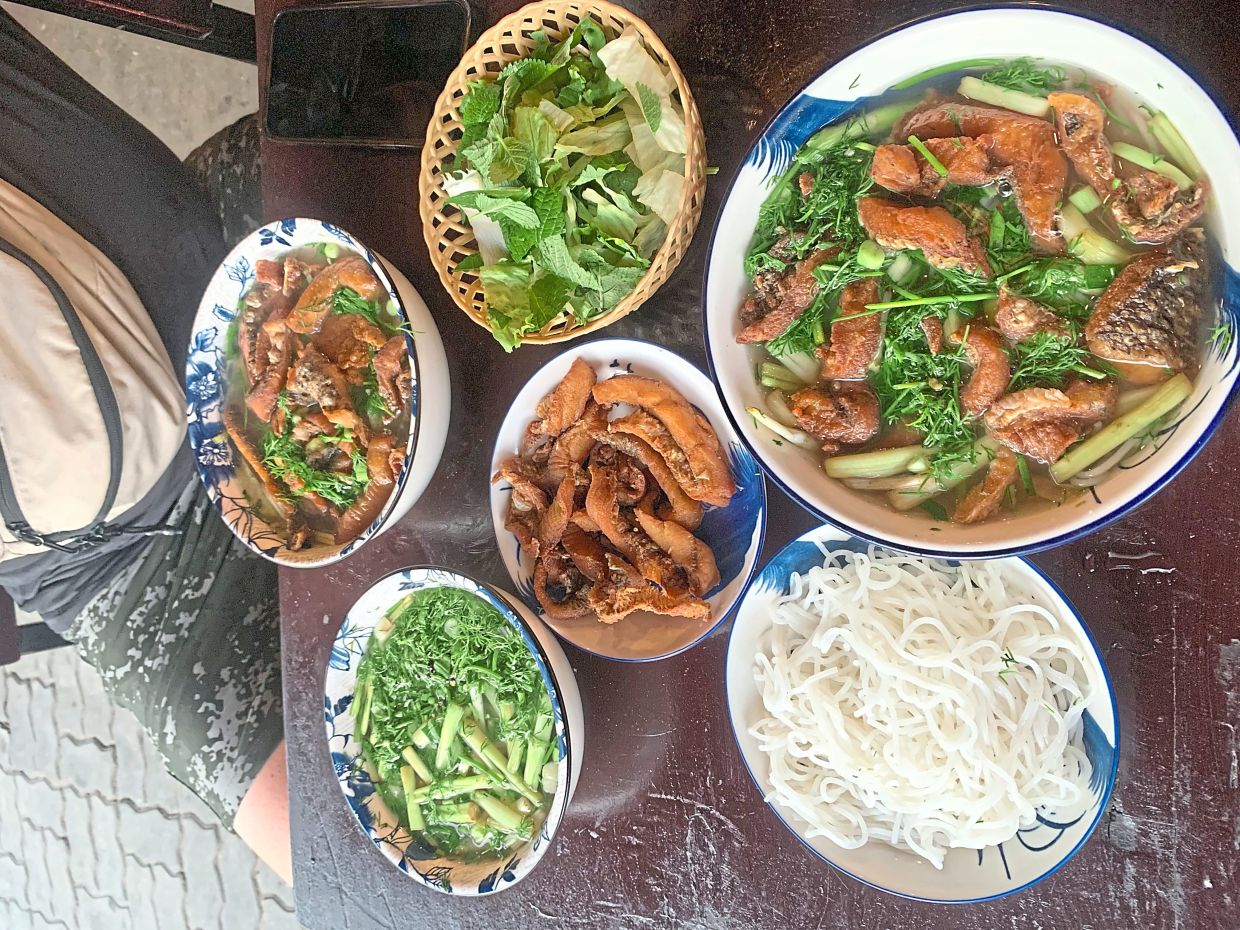
For a few days, we did nothing but explore the place, chill at the beach, and eat local food like banh mi, my favourite.
My dad and I discovered a charming diner that was nothing like the touristy beachfront restaurants which were always packed with people. Instead, this diner was cosy and we had a wonderful dinner here.
A couple of days later, we took a day trip to Hue, the capital of Vietnam during the Nguyen Dynasty (1802-1945). We drove there from Da Nang, and to me it felt like the drive was never-ending even though we stopped at a few places to get some food and to stretch our legs.
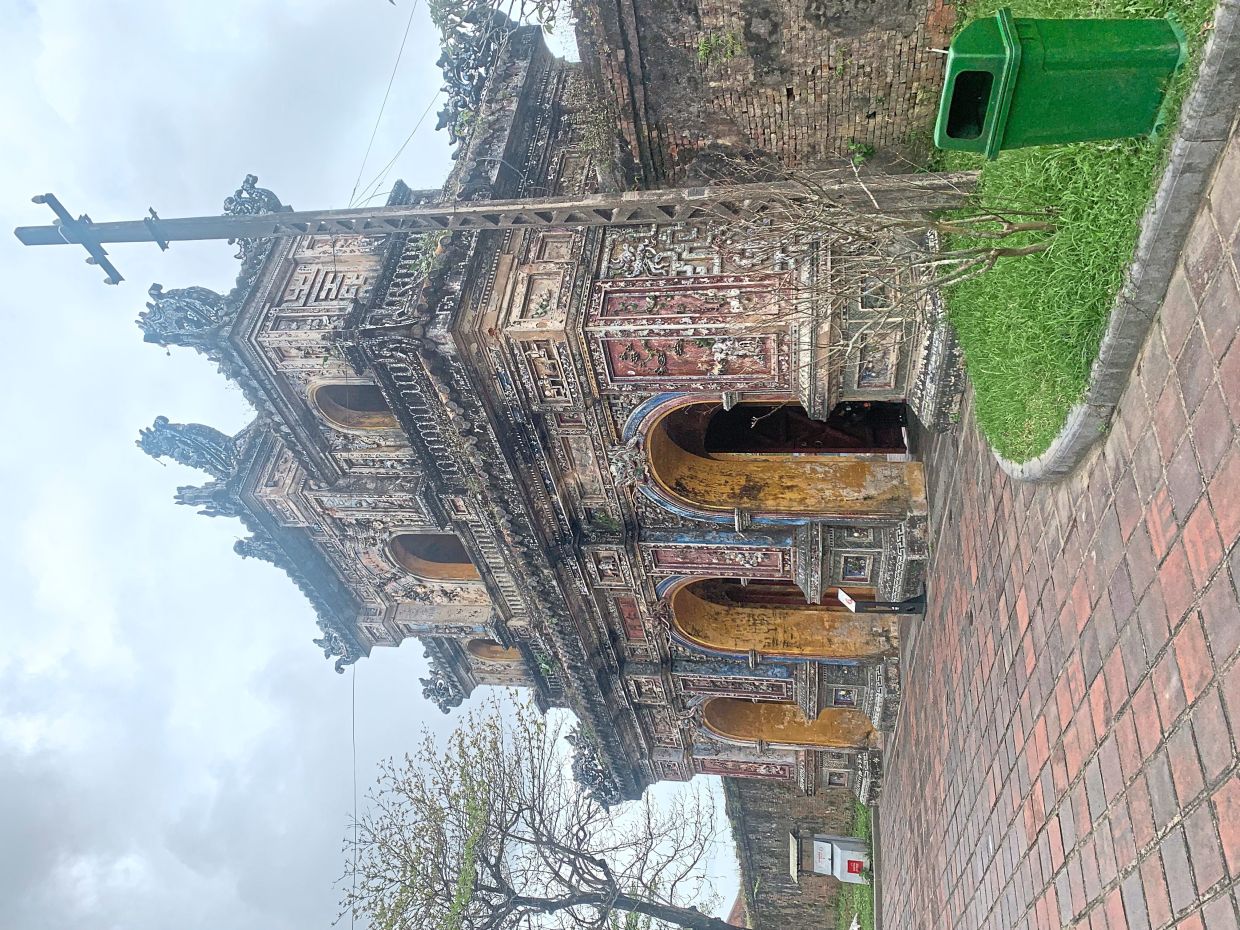
Hue itself is a walled city, and within it lies the Imperial City, a Unesco World Heritage Site. The Thai Hoa Palace, where the imperial family once lived, is part of the Imperial City.
While entry to Hue is free, you would need to get tickets to visit some of the historical buildings and sites.
In the Imperial City, we learned about the history of Hue and Vietnam in general, and admired the architecture, featuring bright colours like red and gold. We saw the seat where the emperors once sat in – I was so fixated by the colours I couldn’t stop staring at it.
We came across the Trieu To Mieu or the Ancestral Temple that was built in 1804 by Emperor Gia Long to honour his ancestors, Lord Nguyen Kim and his wife, who are said to be the founders of the Nguyen Dynasty.
The temple has an interesting architecture with a main hall, three bays and two wings.
We also visited the ancient Complex of the Celestial Lady or Thien Mu, where the seven-storey Phuoc Duyen Pagoda stands.
Apart from the pagoda, there is also a light blue vintage car on display, which is an important historical relic. A monk by the name of Thich Quang Duc drove the car (believed to belong to another devout Buddhist) on June 11, 1963 from Hue to Saigon – Ho Chi Minh today – to protest the persecution of Buddhists by the South Vietnam government via an act of self-immolation.
The rest of the temple complex, considered one of the most revered sites in Hue, was full of chimes, and flowers spouting from pots beautifully decorated with Vietnamese writings and paintings.
On a another day, we went to Hoi An Ancient Town, famous for its scenic Hoai River. The town had traditional Vietnamese buildings and shoplots, as well as houses and rows of markets.
I sat at one of the restaurants lining the streets and just enjoyed the views of the lake, and watched as people from all walks of life walked by.
The views expressed are entirely the writer’s own.