
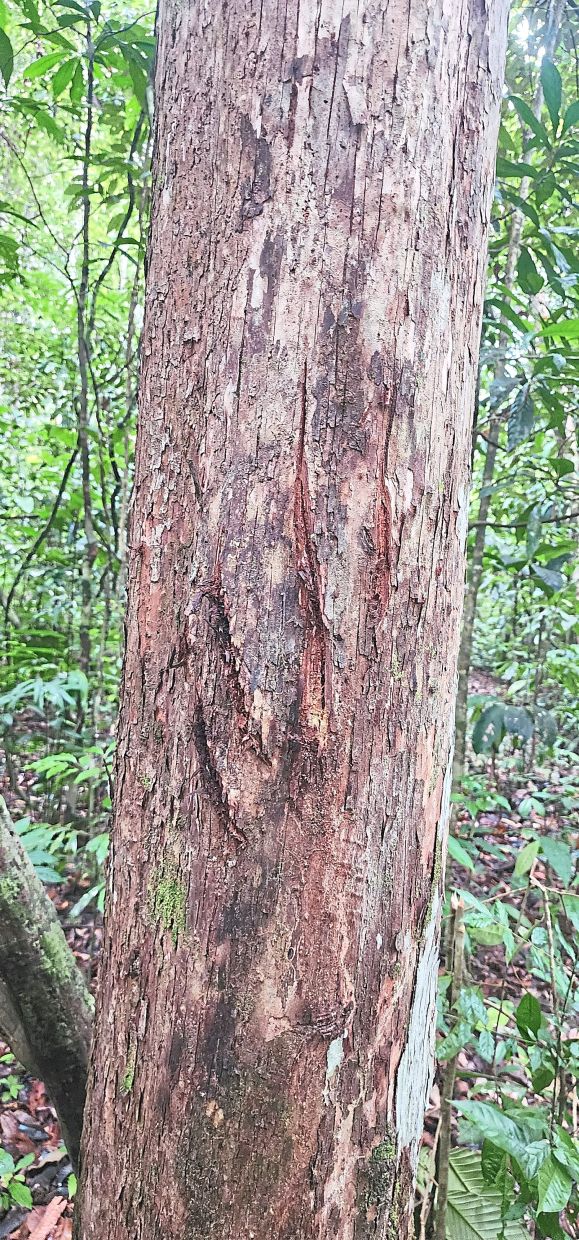
Muhammad, the guide, took a step back on the forest trail and turned to look at me, waiting for me to notice the big tree in front. On the trunk were deep vertical scratches gouged into the bark.
“Sun bear?” I asked.
“No,” said Muhammad, who prefers to be called “Mo”.
“Tiger,” he said beaming.
It was a crisp morning and I was standing in the empty carpark of Taman Negara Sungai Relau in Pahang. With me was a small group of eager hikers led by Naza and Mo – two seasoned Taman Negara guides. Overhead, the forest choir – made up of calls from hornbills, and Siamang hoots – had begun their morning song.
I have been coming to this national park and its surrounding areas for some years, usually on a mission to spread the word on conservation. My familiarity with the place didn’t prepare me for the experience I was about to have, walking to an elephant cave deep in Taman Negara.
Gua Gajah (“elephant cave”) is located some 5km off the main trail and is only accessible when led by certified Taman Negara guides. The trail was created by the Asian elephants who went to the cave for shelter during thunder storms, or to give birth, Naza tells me.
What he didn’t say was that the walk there was actually the highlight of the excursion.
The Gua Gajah trail is quite an easy one to go through, and perfect for beginners, thanks to its frequent use by elephants. This “highway through the woods” is intersected by a network of smaller animal trails that help wildlife navigate through the forest. This busy road system is still in use, making it a boon for those who want to spot wildlife signs left by different woodland pedestrians.
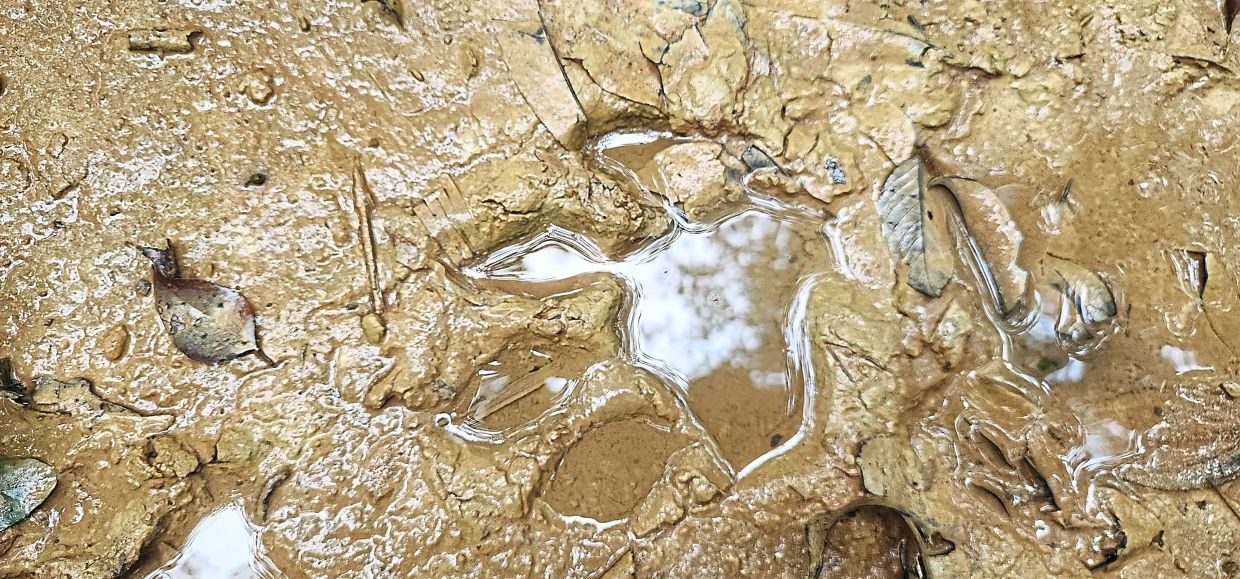
Not long into the walk we spotted traces of the road builders themselves. A series of large circular impressions left in the mud that marked a good stretch of the trail.
Studying these elephant footprints, we could see the imprints of small toes on the edges, which typically indicates the direction the elephant was headed. And they were pointed towards the cave.
Close to 350 Asian elephants call Taman Negara home – a significant number considering that there are only about 1,677 elephants living in Peninsular Malaysia. Rising human-elephant conflict, illegal poaching and the loss of habitat over the years have impacted the population.
I marvelled at the series of footprints, some filled with water from last night’s rain, and imagined their convoy through the forest. I walked gingerly around the footprints, careful not to tread on them.
Further along, Naza pointed out claw marks on a tree trunk belonging to sun bears – our mascot for Visit Malaysia 2026. These scratches punctured the bark all the way to the top of the tree where the sun bear would have built a nest for the night. Identifying scratches on trees can sometimes be tricky, which was why when Mo showed me another tree with scratches, I didn’t realise that these were from the paws of the Malayan tiger. The depth and the position of the marks were distinctions to look for.
The number of Malayan tigers in the wild, according to the Department of Wildlife and National Parks (Perhilitan), is critically low at roughly 150, making it quite rare to see signs of the animal in the forest. Naza believes that it is by a particular tiger that frequents this area.
I was thrilled when further on, we chanced upon tiger pugmarks, left almost perfectly on the soft mud of the trail. The Malayan tiger is safer when it roams within the borders of Taman Negara, as beyond the area tigers are at risk of being snared by illegal poachers – a main reason for their low numbers in the wild.
While it is highly unlikely that we would ever encounter a Malayan tiger walking on this trail, we remain constantly vigilant, which is why having experienced Taman Negara guides leading the way is crucial.
Also, the amount of noise we make when we are walking and talking usually alerts wildlife to stay away.
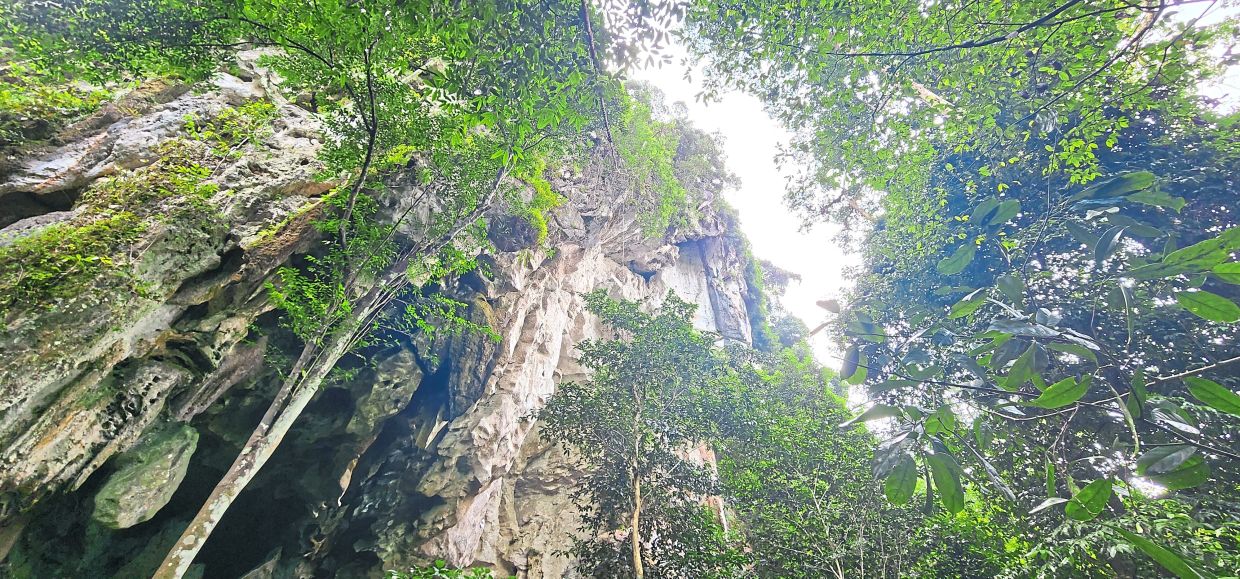
Before long we arrived at the foot of a limestone hill with a cavernous opening. We have reached Gua Gajah. The cave is dark as expected, with elephant dung scattered about. We strapped on our headlamps and followed Mo and Naza through a series of chambers.
I ducked and tried to keep up, my headlamp only illuminated a small section of the cave at a time. As we went on, I heard a distinct swooshing sound. Was it air coming through the cave? I asked and Naza just pointed up.
It took me a second to realise that I was looking at hundreds and hundreds of bats flying through the cavern, the fluttering of their wings was what made that swooshing noise. I wondered if this is what the Batcave would look like in real life.
“Keep your mouth closed,” said Naza. “You don’t want to get guano in your mouth.”
The walk back to the trail head was contemplative for me. I have not come across many trails that so perfectly showcased our local wildlife diversity better than the Gua Gajah trail.
This snapshot truly takes abstraction out of wildlife conservation and protection. It is “more real” when you get to see and touch the wildlife signs, and you begin to feel that the protection of these national treasures is not only important but vital.
For details on the Gua Gajah trail and walk schedules, go to Tales And Trails (@talesandtrailsmy/) on Instagram.