
On my right, Jurassic fern fronds and violet morning glories cascade over a steep cliff. I can hear the crystalline water smashing into the craggy shore hundreds of feet below.
To my left, lime-green succulents cling to a wall of volcanic rock.
“You can see why the Portuguese call this ‘The Garden in the Ocean’,” says Silvia Mota, a Backroads guide for the tour operator’s new walking and hiking trip in Madeira, Portugal.
This lush, 741sq km island – almost three times the size of Martha’s Vineyard in Massachusetts, United States – has inspired a lot of nicknames. The Portuguese isle has been dubbed The Pearl of the Atlantic, a nod to the ocean that surrounds its namesake archipelago.
Madeira’s reputation for comfortable year-round temperatures spawned another dreamy moniker: The Island of Eternal Spring.
The word “madeira” means “wood” in Portuguese. That’s what explorers were met with when they discovered this densely forested, uninhabited island in the 15th century. Six hundred years later, it’s tourists who are discovering this so-called “Hawaii of Europe”.
The island of roughly 260,000 residents welcomed a record-breaking 2.2 million overnight visitors in 2024.
Earlier this year, United Airlines became the first US carrier to fly non-stop from New Jersey’s Newark Airport to Madeira’s Cristiano Ronaldo International Airport, named for the football superstar who hails from the island’s capital city of Funchal.
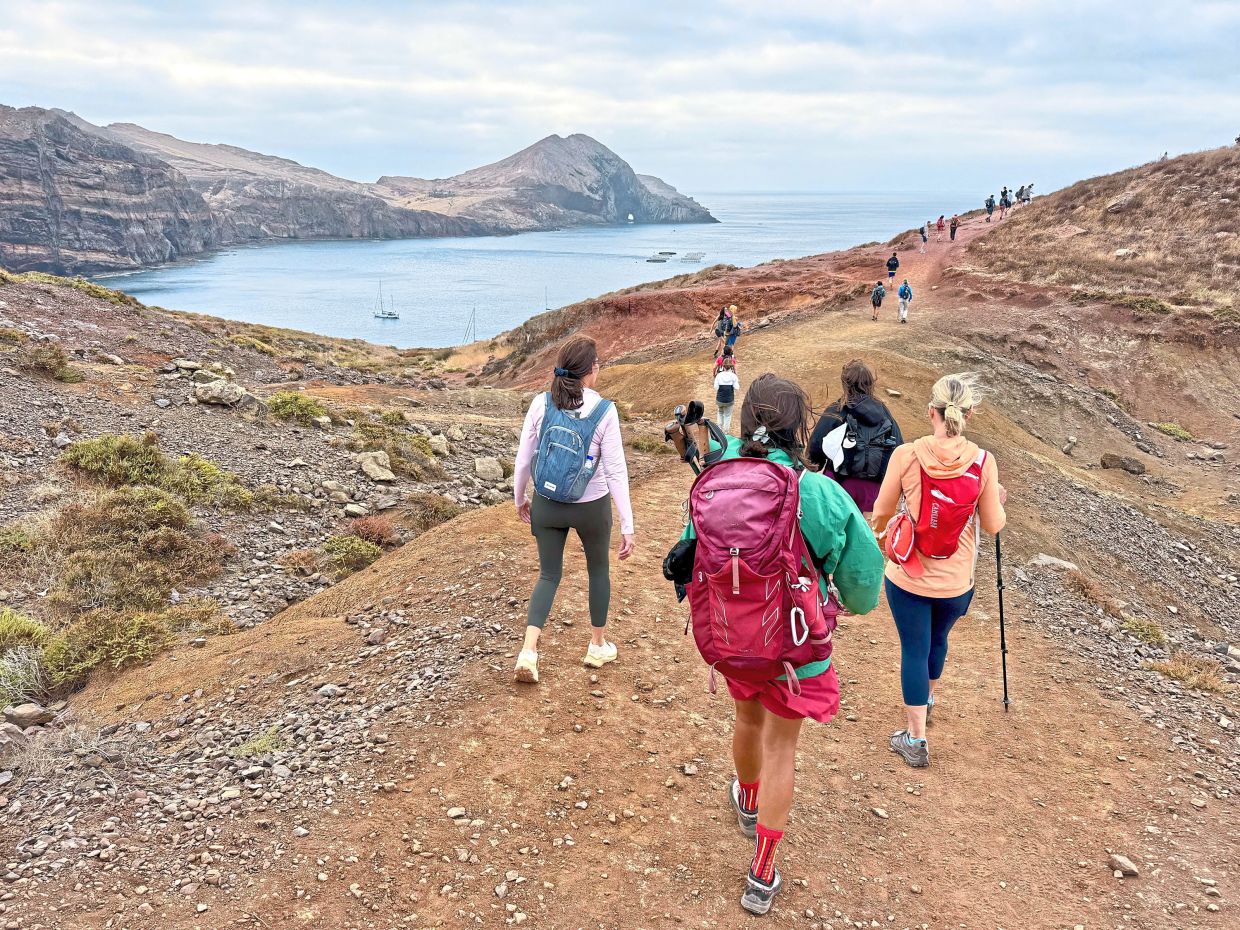
Backroads, an American travel company founded in 1979, added Madeira to its thick portfolio of trips this year. From March through December, the active travel company offers six-day, guided itineraries that take small groups on adventures spanning the coast to the clouds.
Actually, above the clouds.
One trek along a portion of the island’s most famous hike – Stairway to Heaven – had us hovering around 1.8km above sea level, peering down at what looked like a fluffy, white duvet tucked between jagged peaks.
(The majority of this iconic trail remains closed after a 2024 wildfire, but the portion that’s open doesn’t disappoint with its panoramic views.)
Hiking is a huge draw to this natural playground, home to the planet’s largest surviving expanse of laurel forest. This prehistoric type of subtropical vegetation once covered much of southern Europe and North Africa but largely disappeared after the last Ice Age.
An estimated 20% of Madeira is still covered by this evergreen-rich, biodiverse ecosystem that’s now a Unesco World Heritage Site.
Our group of nine headed to Sao Vicente on the north side of the island, where the laurel forest is more concentrated, to check it out. We wandered through nearly 8km of movie set-worthy scenery, a tableau of mossy waterfalls, ancient laurel trees and flowering plants.
Silvia handed out headlamps for us to wear in the dark tunnels that are so prevalent on this mountainous island.
Another highlight of hiking in Madeira is that many footpaths follow a network of irrigation canals called levadas. These narrow channels were built to funnel much-needed water from the northern highlands to the towns and farms in the dry south. The levadas’ origins date back to the 15th century, but this engineering feat is still used today to distribute water – and to guide hikers through the island’s diverse terrain.
Walking next to these slow-moving aqueducts added a calming, peaceful vibe to our hikes, which we typically did in the morning, followed by another trek in the afternoon. In between, we’d stop at a local restaurant or winery for a hearty lunch of fried cornmeal cubes, skewers of beef, fresh-caught tuna and tender scabbardfish.
Seafood was sometimes topped with bananas, which are next-level good when grown in Madeira.
“They’re smaller and sweeter,” says Silvia, as she treats us to a post-hike snack of her homemade banana bread. We wash it down with cups of poncha, a citrusy cocktail made with sugarcane juice.
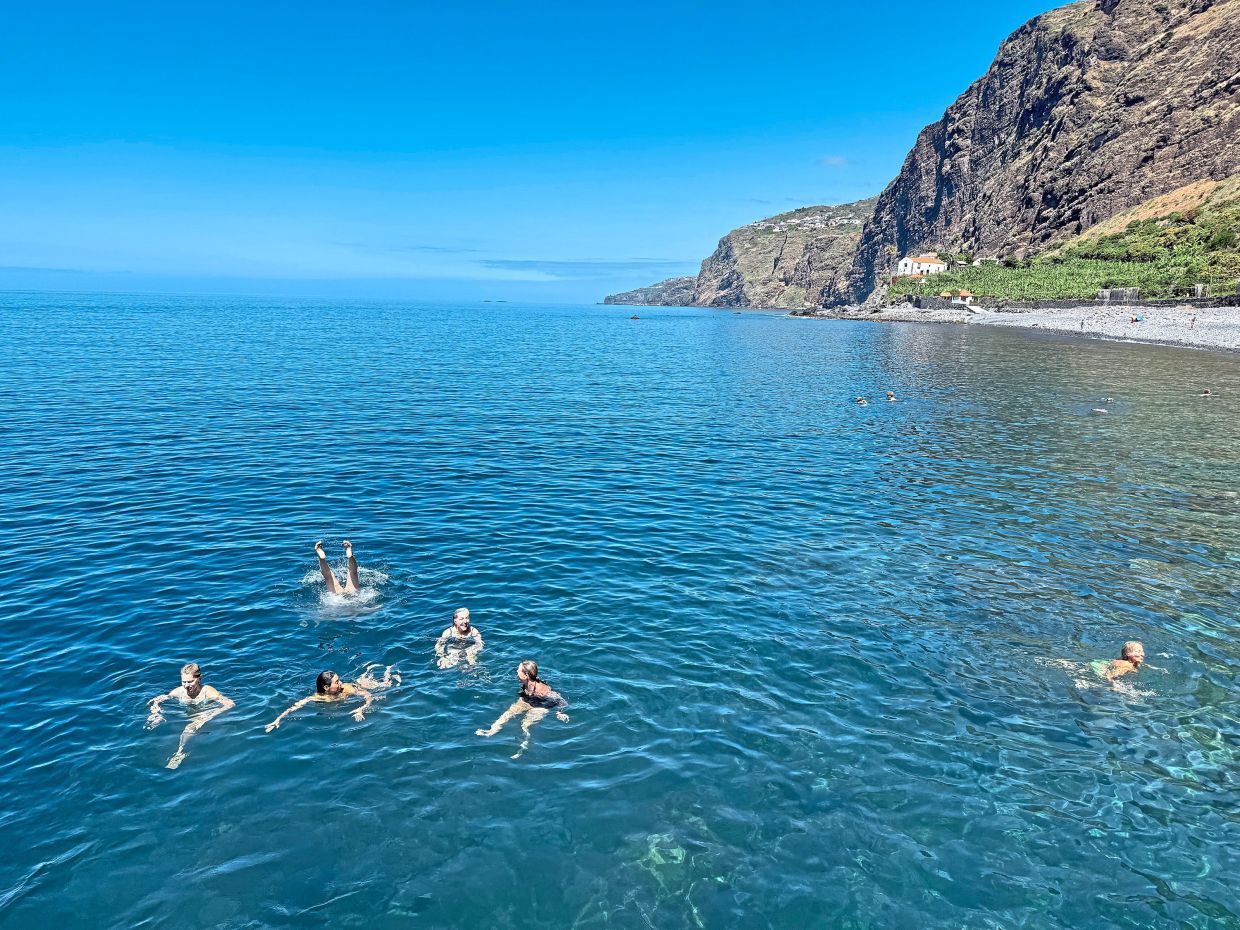
We walked next to hanging clusters of “bananas de Madeira” growing at Faja dos Padres, an organic farm on the coast. It’s only accessible by boat or with a cable car ride down the sheer rock face of a mountain. The cable car dropped us off for a farm tour, lunch and a refreshing dip in the ocean.
Even though it’s billed as a hiking trip, our itinerary had time for us to be in and on the water. We took two rides on inflatable Zodiac boats, including a “sea safari” that had us travelling with a playful pod of Atlantic spotted dolphins, their babies in tow.
Two of the three hotels we stayed in fronted the ocean (and they all had inviting pools), making it easy to go for a swim.
When it came time to fly home, I peered out the plane’s window for a bird’s-eye view of Madeira. The terracotta-tiled roofs slowly disappeared.
Soon, all I could see was a blanket of green surrounded by chalk-white clouds and cobalt blue water, a garden in the ocean. – LORI RACKL/Tribune News Service