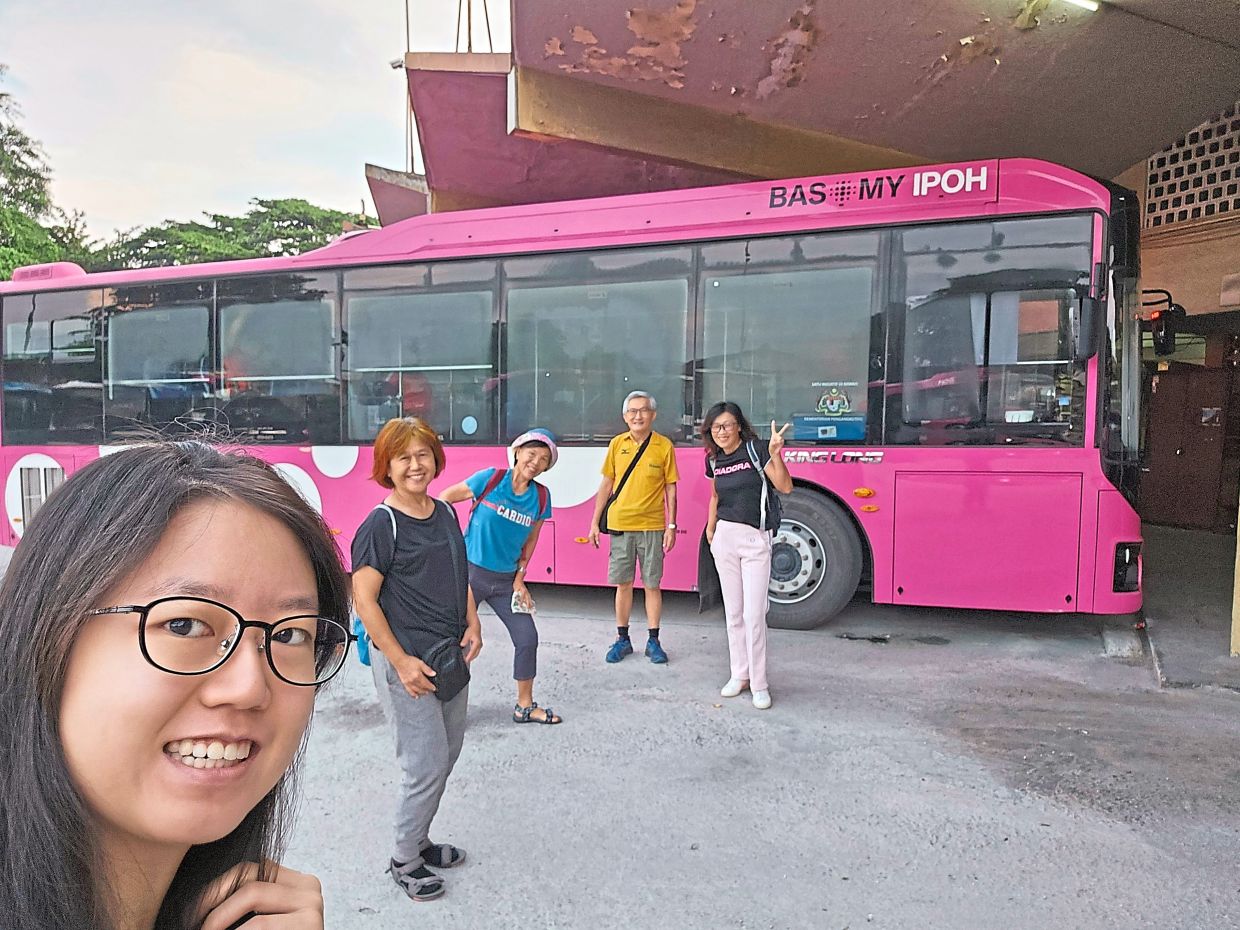
Beaming with smiles and playful poses marked the start of our little adventure at Medan Kidd in Ipoh, Perak recently. The five of us were gathered in front of the pink bus from “Bas.My Ipoh”, ready for adventure.
The crisp morning air added excitement to our journey to Kampar, a historic town just south of Ipoh. Three of us, proudly flashing our Pink Concession Cards (free rides for seniors) hopped aboard with glee while the younger two paid for their fares. The bus was clean and comfortable, and had air conditioning.
We went past villages framed by rolling hills, and at the Gopeng bus terminal, a small group eagerly alighted to begin their travel.
After an hour, we arrived in the old mining town of Kampar. The place has two zones: new town and old town. Our excursion started in the latter.
Kampar is a laid-back place with a lot of character. The wet market was buzzing with energy when we visited, with seafood displayed on icy slabs, fresh produce, and even jungle ferns and lotus seed pods being sold.
We walked to the Kampar Food Centre, an open-air space with an ample selection of local delights. We shared a few dishes among us, sampling a little of everything.
For dessert lovers, there’s a stall that’s famous for its ice-blended creations, while the “iceberg coffee” is rich, fragrant, and served with shaved ice piled high like a frosty mountain.

We took a stroll along the pre-war corridors of Kampar’s main road. The century-old facades commanded admiration, yet it was the weathered arches that captivated me.
Beneath the fading elegance, time seemed to be frozen. Creepers trailed down the walls, potted plants softened the cracks, and rustic stools rest beside heavy wooden doors, whispering tales of stories long forgotten.
Perched on a hillock along this road was a Buddhist temple dedicated to Guan Yin. Built 121 years ago with funds from tin miners, philanthropists, and townsfolk, the temple had stone lions guarding the entrance, red lanterns and intricate carvings gleaming with reverence.
On the sixth month of the Chinese calendar, traditional opera performers fill the space and sing dramatic melodies for all to hear.
Walk a little further and you will start to smell the aromas of Kampar: Curry chicken bread, claypot chicken rice and traditional biscuits.
Just beyond the clocktower, we paused at the lawn of Sacred Heart Church, established in 1908.
Soon, we were hungry again and made our way to Pusat Makanan Gold Wing. We ordered the unusual yet tasty assam laksa with braised pork ribs.
Later, we made our way to the back alley of Jalan Idris to check out murals of tin dredges, kampung life and more, all painted on the walls of old shophouses. There was even one depicting the infamous “Battle of Kampar”.

We took another bus to the Kinta Tin Mining Museum, located in the new town. The museum is privately funded, so a small token is charged for entrance, but being translocated back in the era of our forefathers was certainly worth it.
Dioramas, historic photos, old press clippings, a letterpress gallery, gravel pumps, tin ingots and many more were on display. There was even a dulang washing station where we could pretend to be miners in the old days.
We sort of lost track of time and when we realised this, we sprinted back to the bus stop! The younger ones made their way first, frantically waving their arms at the pink bus. When we finally boarded, we were told that it was actually heading back to the old town and not to Ipoh just yet.
What a hilarious workout to end a perfect day of adventure at Kampar.
The views expressed are entirely the writer’s own.