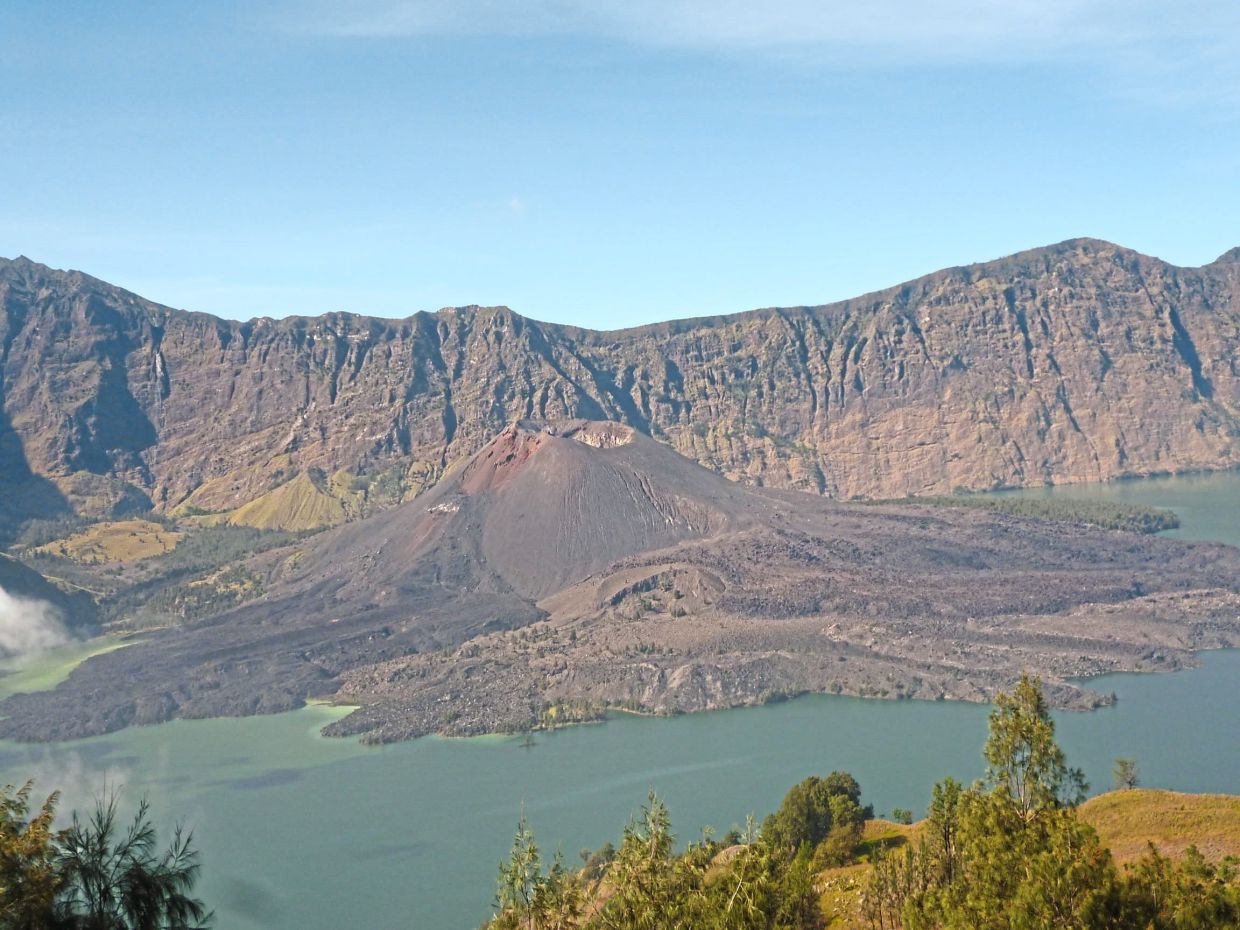
Indonesia's Mount Rinjani in Lombok is regarded as a sacred mountain by locals, and is the second highest – at 3,746m – volcanic mountain in Indonesia.
I had the privilege to climb this mountain almost a decade ago, but my memory of it is still fresh. I was with a group of Malaysian hikers, though we only managed to meet at the airport in Lombok before going on a three-hour drive to Sembalun, the starting point of our trek.
When we got to our chalets, our porters and local guides were already preparing for our three-day trek up Mount Rinjani. They would help us carry our tents, sleeping bags/mats, food and drinking water during the climb.
What’s funny is that the locals only brought along a sarong to keep them warm at night, and trekked with sandals or simple shoes while I was decked out in a wind-proof jacket, wooly winter socks, thermal innerwear and special hiking footwear.
We started our trek at 7.30am on the first day. The cool weather made the first hour of the climb pleasant but from the second hour, the sun was out with a vengeance.
We continued to trek on open grassland right until lunch, where we stopped at a shaded area for about one hour to fuel up and rest for a bit.
Our steep ascent began after that, and by this time the terrain had changed. We were walking on mainly sandy ground with lots of small pebbles. We had to use walking poles to keep ourselves steady – this is something that everyone must be aware of when climbing Mount Rinjani. You need to bring at least one pole with you.
We reached our first campsite at the second crater rim, Pelawangan 2 (2,639m), overlooking the Segara Anak lake after about a seven-hour trek. Some took nearly eight hours to get there, but it was fine because our leader/guide insisted that we kept at our own pace, and not worry about everyone else.
The view at Pelawangan 2 was breathtaking, by the way.
We retired early for the night because we had to get up to start our ascent to the summit at 2am later. We had a really light breakfast and some hot drinks to warm up first.
We left our heavy bags at the campsite and had hoped to reach the summit within four hours – in time for sunrise – which was the average time to get there.
However, our leader made a judgment call based on our performance on the first day – not everyone was at the same fitness level – telling us that everyone had to reach the summit by 9am at the latest. Failure to do so will result in a “turn back”, meaning you will not be able to reach the summit.
This was for safety reasons and we had no choice but to comply.
We started trekking at 2.30am and again, went at our own individual pace. It was dark, but everyone had their head lamps on, so all you needed to do was follow the trail of lights in front of you.
As we prodded on, the leader always made sure that there was one guide walking behind the last hiker, which made everyone feel safe.
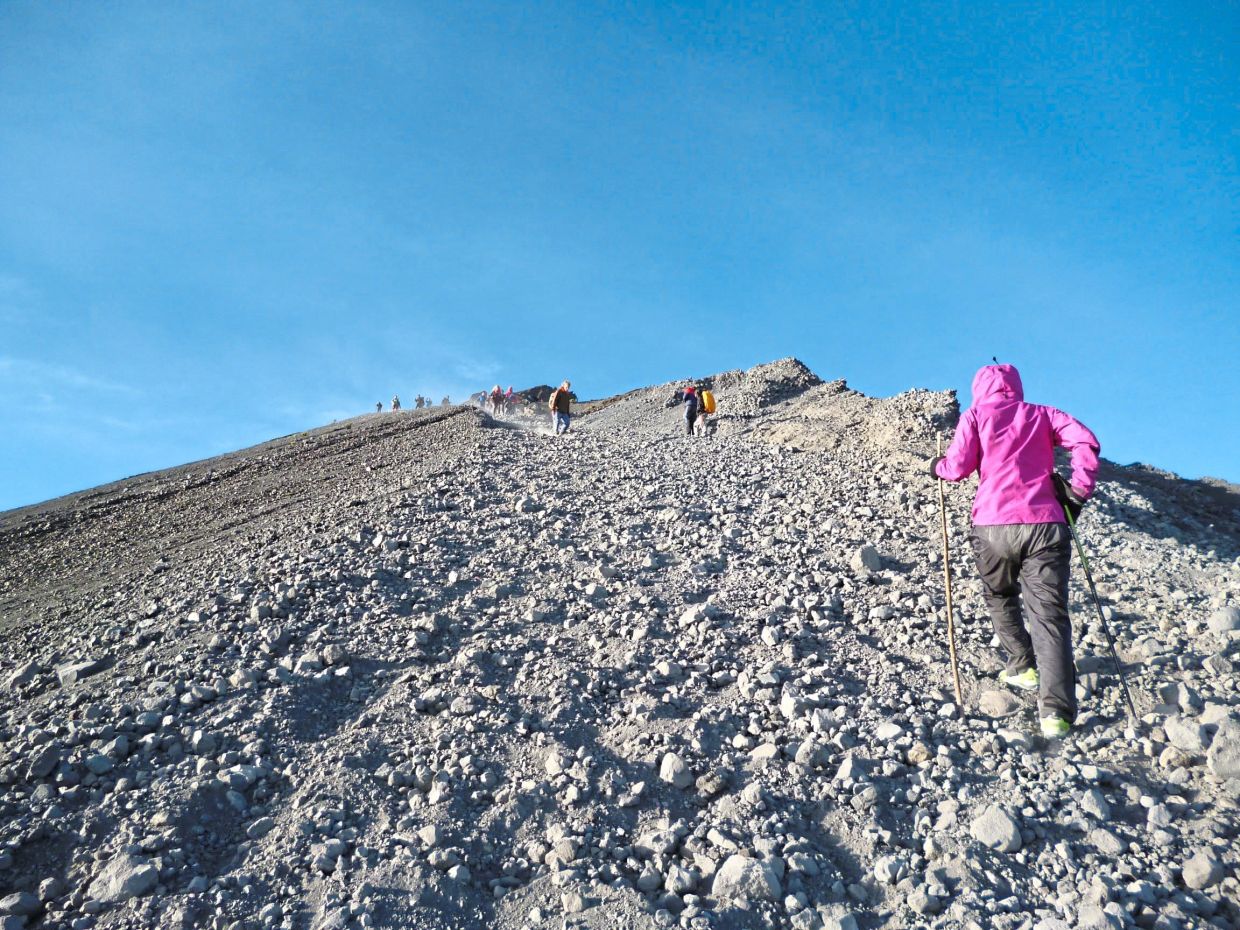
The summit trail is uphill all the way, but the hardest part was the final 100m. The steep ascent, combined with the volcanic sand and loose pebbles made it really difficult to even put one foot after another. I either kept slipping off my foothold, or my feet sank into the sand – at one point I even had to crawl to get ahead.
However, the sight of the summit helped motivate me. When I finally got there, I was ecstatic.
The majority of us in our group took five hours to reach the summit, so it wasn’t too bad. After taking hundreds of pictures and taking in the views of Segara Anak and the Mount Baru volcano that sits right in the lake, we started our descent.
We went along the same route, sliding down at some parts to make things easier (and more fun!). But be sure you get the OK from your guides before doing this of course.
We reached our campsite after descending for two-and-a-half hours. We scarfed down some banana pancakes and got ready for the next round of descent.
This time, it took me about three hours to get down to Lake Camp (2,000m), in which two hours of that session was consistently steep. Again, most parts were slippery so you need to be very careful if you ever decide to climb Mount Rinjani.
After lunch, we made our way to a nearby hot spring and waterfall, where we soaked to our hearts’ content.
Dinner was fried rice with omelette, slices of cucumber, tempeh, and fried kampung chicken – it seems simple but it was really a camping feast!
On our third day, we trekked almost 600m to Pelawangan 1 (2,641m), the last point at the crater rim before losing sight of the Anak Segara lake.
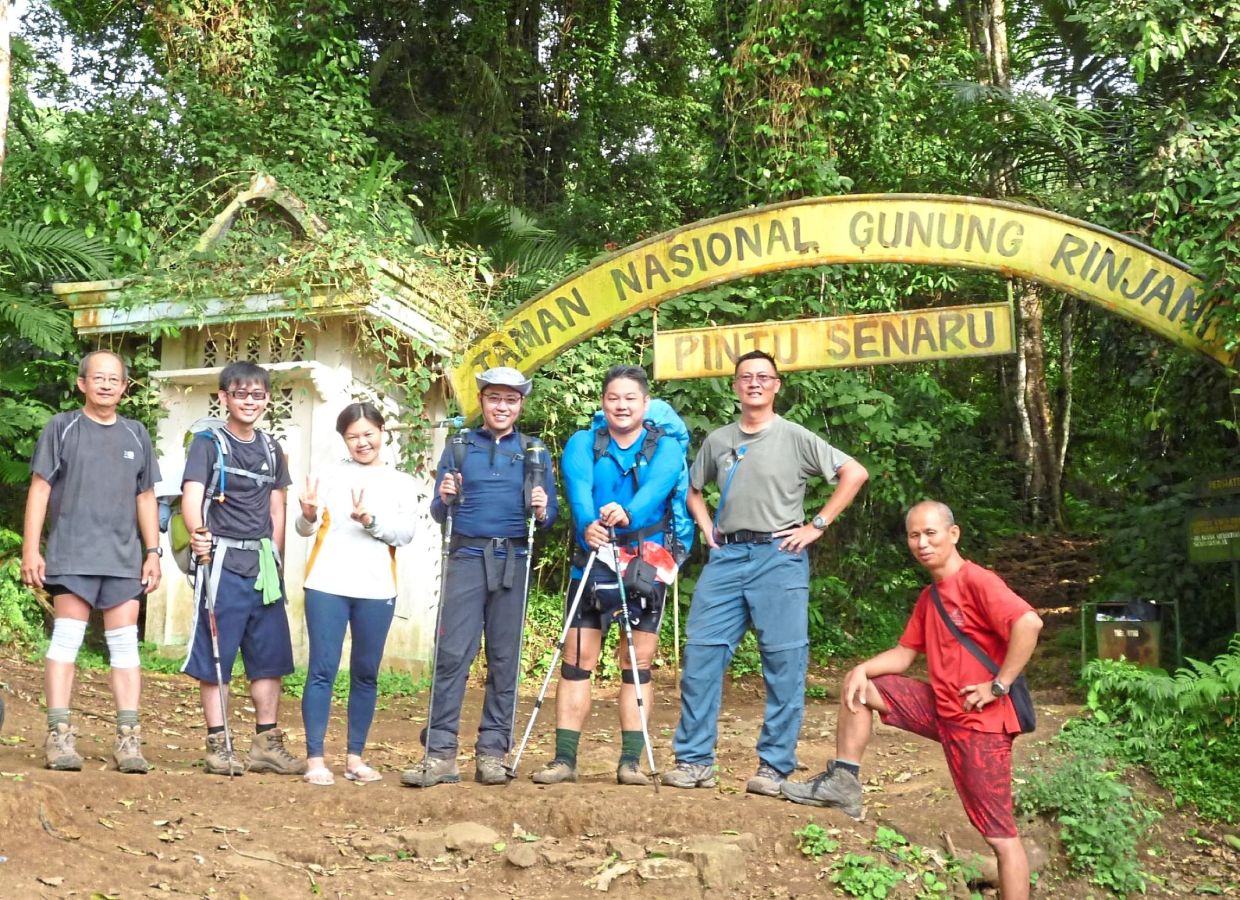
We had a quick lunch at a campsite before heading down further to the Gunung Rinjani National Park entrance at Senaru. We were jubilant and vowed to conquer other peaks in the near future.
The views expressed are entirely the writer’s own.