Regarded as one of the best opening sentences in literature, the first line in J.R.R. Tolkien’s fantasy novel, The Hobbit, immediately transports readers into a magical realm.
“In a hole in the ground there lived a hobbit,” so the line goes, later expanded with “...it was a hobbit-hole, and that means comfort.”
The next paragraph continues to describe the tunnelled interior. Not much different from a standard human dwelling, except for perhaps the fact that it is mostly underground – and that it has round doors and windows.
These circular features are so characteristic of hobbit-holes that real-life recreations of the fictional domiciles would certainly include them (or at least arched doorways and windows).
Chances are, even if you are not part of the Tolkien fandom, you are well aware of “hobbits”.
These diminutive human-like fictional beings are featured prominently in the English author’s aforementioned The Hobbit as well as The Lord Of The Rings, both of which have also been adapted into film trilogies.
The hobbit-hole described in the introduction of Tolkien’s first published novel belongs to Bilbo Baggins, the well-respected titular character who lives there with his nephew, Frodo.
Although born 78 years apart, the two Bagginses share the same birth date: Sept 22.
Hence, the date has been earmarked for International Hobbit Day celebrations by fans, with the American Tolkien Society proclaiming it as an annual celebration in 1978.
You don’t necessarily have to be a fan of the books (or the movies or the characters) to admit that there is a certain whimsy to living in a cosy, round-doored house, underground or not.
The whimsical appearance appeals to a wide audience, young or old, resulting in the construction of various accommodations and attractions that attempt to emulate both the aesthetics and cosiness of a hobbit-hole.
In celebration of this year’s hobbit day that’s just around the corner, let us wander around the world to check out – some you can even check in to – several hobbit-inspired places.
Hobbiton Movie Set (New Zealand)
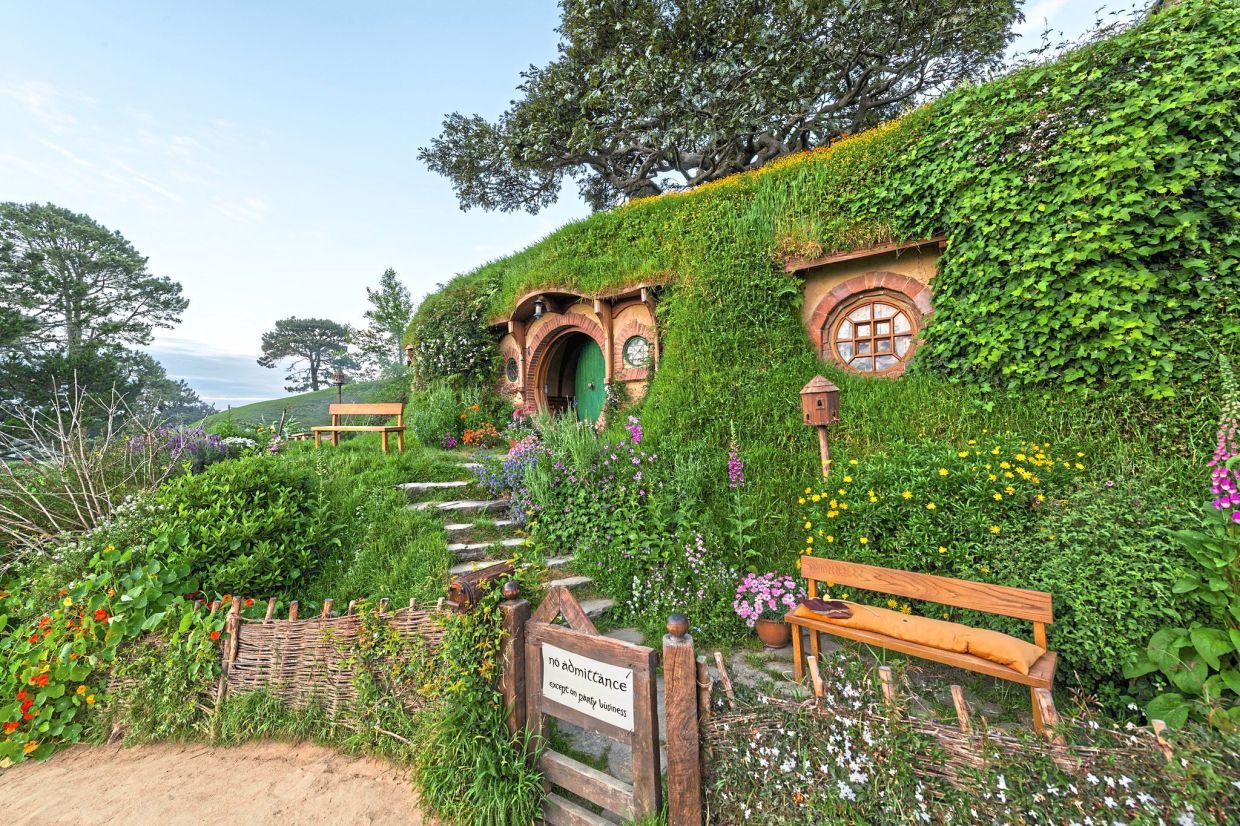
Let’s get the obvious out of the way. A hobbit-hole list wouldn’t be complete without the mention of New Zealand’s Hobbiton.
To call this place “inspired” by the popular fictional dwelling requires absolute audacity, however, because if anything this is the place that inspires all the others on this list.
As its name indicates, the Hobbiton Movie Set was precisely where the trilogies were filmed. To be exact, it was home of the original set that was built for The Lord Of The Rings trilogy, which was taken down once filming ended.
The permanent fixture that fans can visit now is a reconstruction made for the purpose of filming The Hobbit trilogy, which fortunately did not suffer the same fate as the first set.
Located in the remote parts of Matamata, Hobbiton can be visited via guided tours. Bookings can be done through the official website.
Overnight stays are not allowed, but you are guaranteed an immersive visit as you’ll feel like you have stepped into the actual The Shire in the Middle-earth. Even more so now that the tours, as of 2023, include a peek inside an artfully furnished hobbit-hole.
(Still can’t enter the Bagginses’ Bag End, though, as the house built on-set was only for exterior shots. The interior shots of Bag End were all filmed in a studio.)
While Hobbiton hosts several special events, the biggest is of course its International Hobbit Day party. The celebration this year falls on Sept 22 and 23. But don’t fret if you can’t make it just yet, since this is an annual party, you can plan ahead to join next year!
Kresevo Hobbiton (Bosnia)
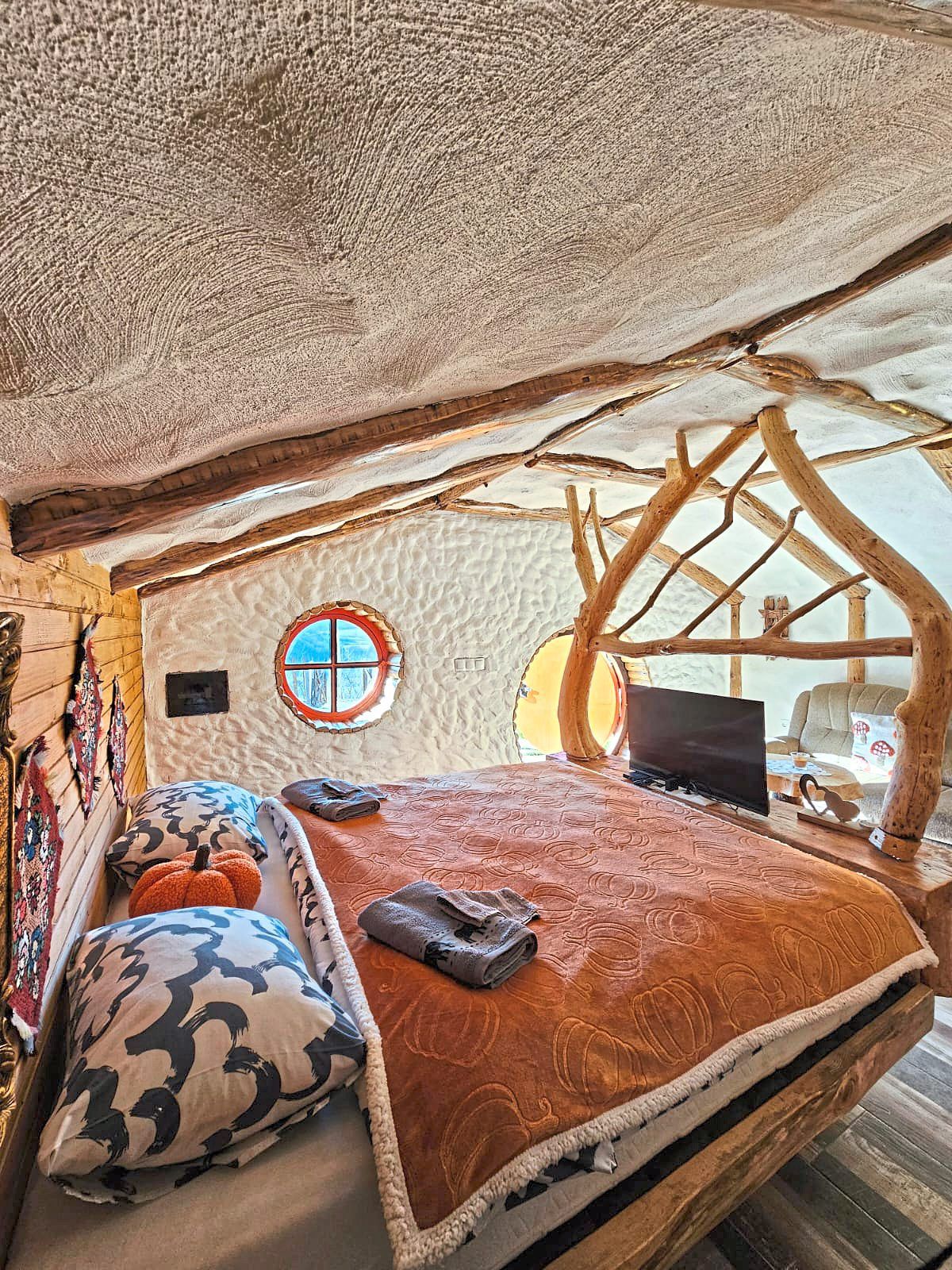
In contrast to New Zealand’s set, the Kresevo Hobbiton in Bosnia and Herzegovina only allows visits if you book a stay at the property.
The brainchild of four enterprising sisters, this “underground village” – as stated on its logo – comprises a few houses bearing their personal touches. Marija, Milijana, Vedrana and Valentina Milicevic draw from their own experiences and Kresevo’s heritage to add further charm to each house.
For example, Milijana names one house Lipa as a nod to the village she spent her childhood in. Bedem, a stone house resembling a small castle, takes inspiration from the fortress once occupied by Bosnia’s last queen.
You can take your pick of the houses by browsing the official website (selokucicapodzemljom.com). It is in Croatian, but Google does a decent job of translating it into English.
If committing to hours-long flights from Kuala Lumpur to Sarajevo, plus a roughly 40km drive from Sarajevo to Kresevo, is not feasible for you at the moment, you can always opt for closer options.
Take a two-hour plus flight to Kota Kinabalu, Sabah instead, then a roughly 93km car ride to Kundasang.
The cooler part of Sabah has a few hobbit-inspired short-term rentals, such as The Shire Sinian and the Humble Hobbit Home. The latter is just one of the hobbit houses offered by B-Inspired Abodes, whose other Middle-earth dwellings include the Sunset Hobbit, Stonewood Hobbit and Aurora Hobbit homes.
Bonus: The Sabah hobbit-holes come with a breathtaking view of Mount Kinabalu.
La Maison du Hobbit (France)
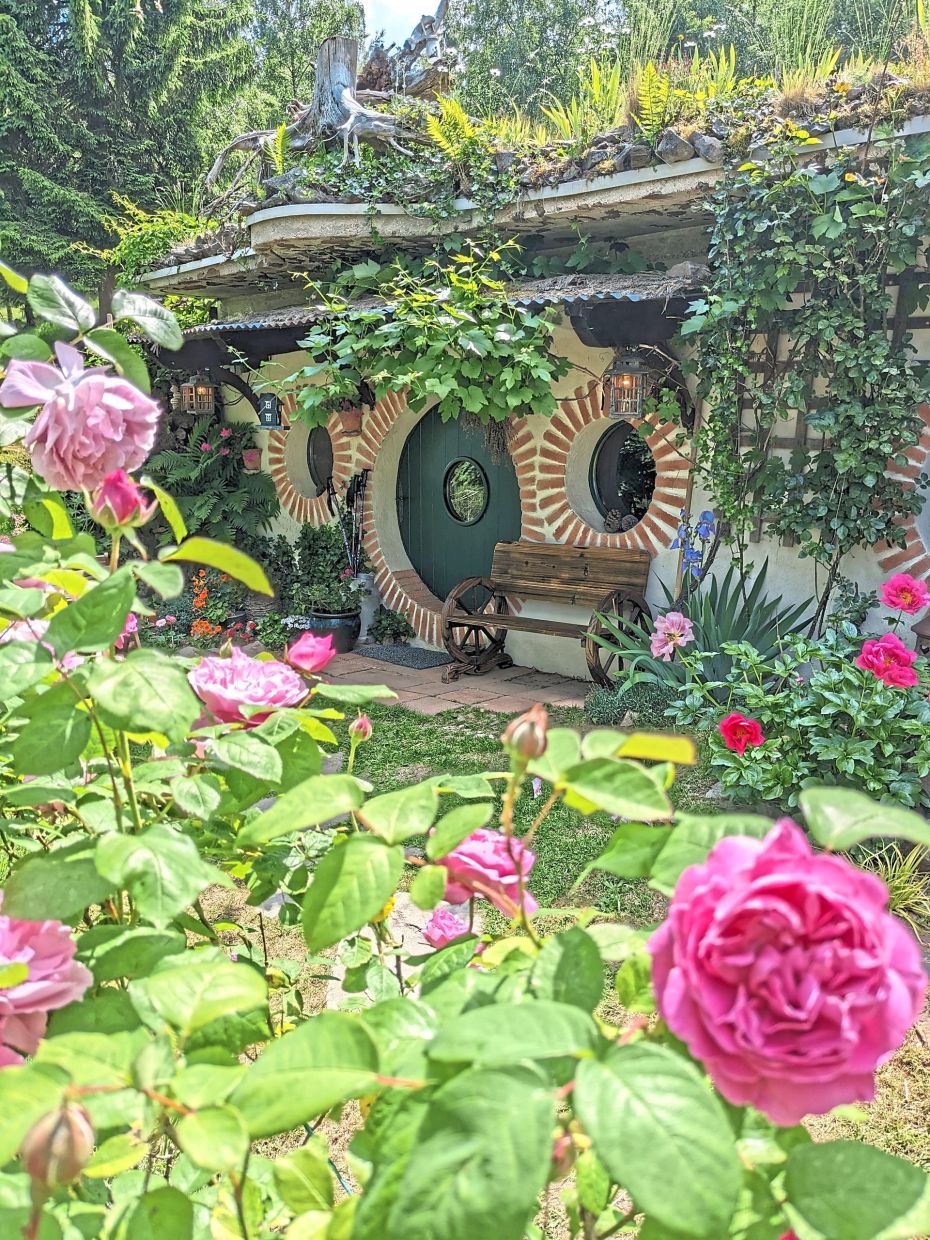
If you’re willing to go farther than Bosnia, a lone hobbit house awaits you in the Vosges department of France.
La Maison du Hobbit, a passion project by the owner Vincent Kern (who runs it with his wife Sophie), is listed as an “unusual accommodation” by Gites de France, an expansive guesthouse network that ensures the quality of holiday rentals across the country.
Its website (www.maisondehobbitvosges.fr) lists a few ways of reaching the remote rental, among them is taking the TGV high-speed rail from Paris to Saint Die des Vosges, the commune located 10km away from the unique house.
The house doesn’t just blend right into the verdant landscape with its au naturel looks, it also incorporates nature into its offerings. A stay here means you get to go on hikes in the area, observe wildlife such as birds and deer, or go trout fishing.
Kern, being an avid fan of Tolkien’s work, unsurprisingly has built his hobbit house near a century-old tree – christened Sylvebarbe, of course. Here, you can partake in sylvotherapy (forest bathing).
La Terre du Milieu (France)
Another Gites de France-certified hobbit accommodation is the La Terre du Milieu in the Moselle department.
Run by Martial and Monique Bousch, it promises “charming hotel rooms”. And the rooms are charming indeed, each one decorated accordingly with a The Lord Of The Rings theme. There is, of course, “The Shire, a hobbit hole”. This one stays true to its description in the books. That means unless you are hobbit-sized, aka only 0.5m to 1m tall, you’ll need to bend to enter this dwelling.
You can also take your pick from “Lorien, kingdom of Elves”, the enchanting Elves’ room with a soft and bright ambience; “Gondor, land of Men”, a room described as grey and refined; and “Fangorn, domain of the Ents”, which has a more rustic aesthetic with its wood and stone build.
For a truly relaxing stay, the accommodation offers sauna and spa sessions, though additional payments are required, as stated on the official website (laterredumilieu.com/en). You can also enjoy a dip in the outdoor swimming pool.
Hobbitowa (Poland)
One of the beauties of hobbit houses – with their organic shapes and natural building materials – is their ability to blend into their surroundings.
Why compete with nature when you can be one with it instead? Built with this philosophy, it is easy to see their appeal to nature-lovers. Bogdan Pekalski is one such nature-lover, as well as a skilled builder who highly values his (and his guests’) privacy.
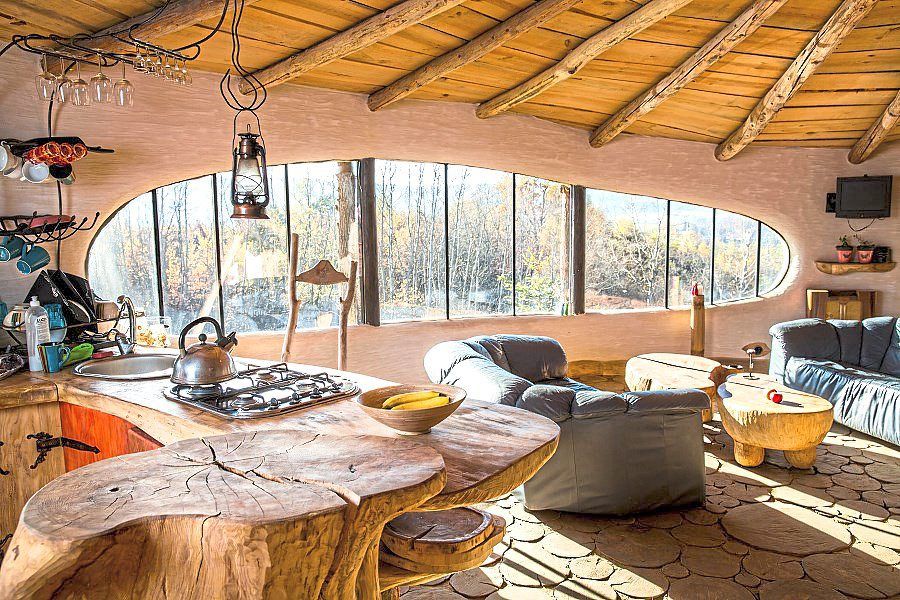
Hobbitowa in Krzywcza, Poland is the result of Pekalski’s years of hard work constructing a house that wouldn’t look out of place at the hillside it’s set in. Using mostly wood, stones and clay, he built a warm and cosy house with huge glass windows that offer stunning views of the forest around it.
It comes with a traditional clay kitchen, where you can cook up a meal which you can then enjoy in the garden, surrounded by nature.
So secluded is the house that once booking is done, only then will you get the instruction on its exact location and how to reach it.
Hobbitoon Village (Perak, Malaysia)
Aside from the Sabah hobbit houses, there are a few other places in Malaysia that take inspiration from Tolkien’s fantasy world.
These ones are not habitable structures, however, so you can’t dream of spending your nights here. That said, they’re still worth a visit for the photo opportunities they offer.
Take for example the Hobbitoon Village in Simpang Pulai, Perak. Since opening its doors on Jan 1, 2024, the village has been a hidden gem of sorts for visitors en route to/from Ipoh (just a 40-minute car ride away) and Cameron Highlands (30 minutes).
The lush greenery and quaint village setting evoke the idyllic tranquillity of The Shire. From round doors to thatched roofs, you’ll be spoilt for choice when it comes to choosing the perfect backdrops for your photos.
When you’re done traipsing around the village, visiting each hobbit house, you can refuel at the Hobbitoon Cafe. Try the signature drinks: Dwarven Draught (non-alcoholic, but served in tavern-style beer mugs) and Ogre Crush (an Oreo-based concoction).
Admission fees are set at RM40 (adults) and RM20 (children aged five to 12).
Hobbitoon’s proximity to Cameron Highlands might cause confusion with another hobbit house, namely the one at Cameron Highlands Flora Park. Called the Luxury Flora Hobbiton House, you can enjoy high tea here while surrounded by beautiful blooms.
Penang Tropical Fruit Farm (Penang, Malaysia)
If you prefer being surrounded by fruits rather than flowers, head to Penang Tropical Fruit Farm.
Located in Penang island’s Teluk Bahang, the orchard features houses so whimsical that you wouldn’t bat an eye if actual hobbits walked out the round doors.
Set in the photo zone, these houses are clearly meant for you to take tons of photos with – so snap away.
You’ll want to make multiple visits, because the next time you drop by, you might have new houses to pose next to. Expansion of the hobbit village is on the cards as the orchard is planning to build more adorable abodes.
These hilltop hobbit houses are not to be confused with the newer city-based ones located closer to Penang Airport in Bayan Lepas.
About 10 minutes away from the airport, at Food Bayana Food Court, is a cluster of hobbit houses with bright accents (think bright front doors and colourful windows). You can join the locals for an evening stroll, meandering among the houses and even enter some of them. Just for photos though, don’t feast on your char kuey teow in there.
Taman Hobbit Putrajaya (Putrajaya, Malaysia)
Residents of Klang Valley don’t even have to venture far to visit a hobbit house – there’s one located right in Putrajaya!
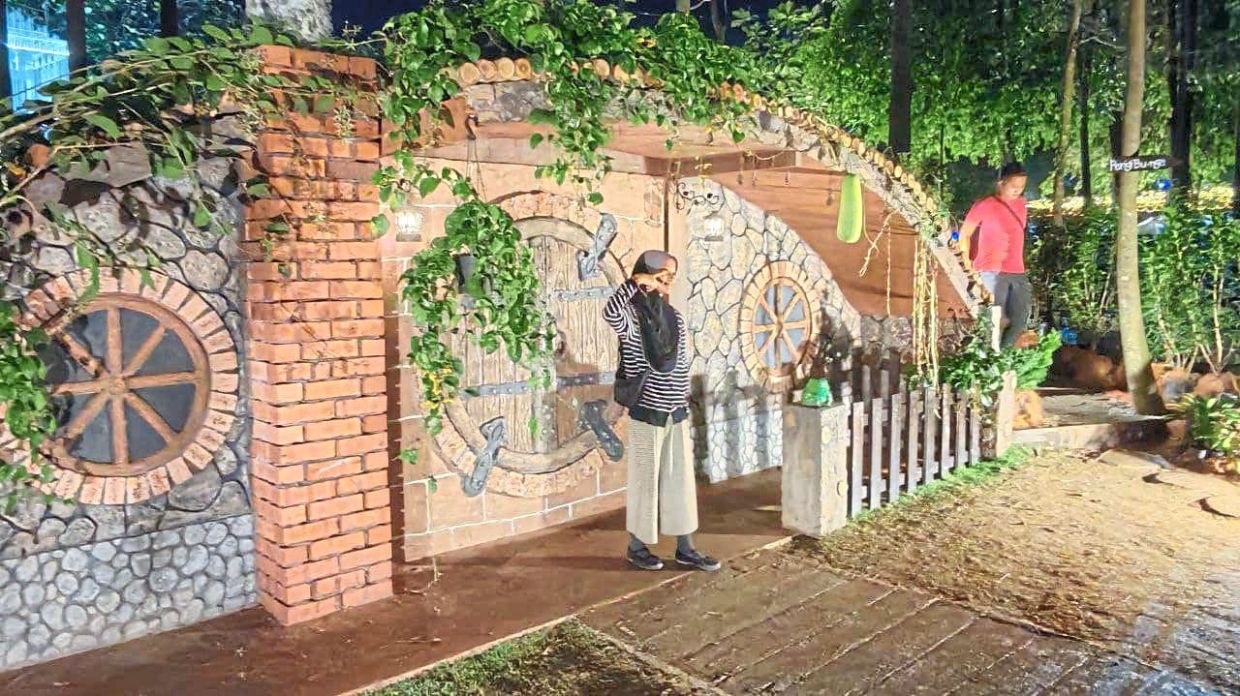
Taman Hobbit Putrajaya was unveiled at last year’s Royal Floria Putrajaya, the biggest flower festival in Malaysia. It’s now a permanent tourist attraction in Presint 2, near the Millennium Monument.
The small park features a hobbit house, well, swing and rest area, as well as an activities deck, a kitchen garden and kelulut logs.
While some disappointed visitors may lament the park’s small size, you might still appreciate how it’s just the appropriate amount of land for a hobbit. You might also appreciate the bigger vision behind this seemingly insignificant space.
Look closer at the “Hobbit Putrajaya” signage and you will see “Placemaking LA21” below the name. Placemaking LA21 (which stands for “Local Agenda 21”) is a placemaking initiative by Putrajaya Corporation.
In cooperation with members of the Community Garden in Presint 14 and 16, Persatuan Orang Kurang Upaya Putrajaya, and Majlis Belia Putrajaya, the house was built using upcycled and recycled materials.
The park is also meant to promote kitchen gardens, hence the planting of various produce such as water spinach, pumpkin and potatoes.
The initiative encourages visitors to practise sustainability and to be more mindful of nature – traits that hobbits would highly approve of.