The act of recycling has often come with the challenge of convenience rather than a complete lack of awareness and willingness.
With the government’s recent mandate making it compulsory for shopping malls nationwide to provide recycling facilities, consumers are hopeful that bringing recycling into spaces they visit frequently could turn recycling into a habit easier to adopt and maintain.
The move has been well-received as a good step towards fostering more responsible waste management, especially in urban areas where shopping malls are abundant.
For software engineer S. Jiven, 31, the new policy addresses a frustration he has felt for a long time.
Despite making recycling a regular part of his lifestyle, he often has to travel some distance to the nearest recycling facility he trusts to handle his waste.
Having these facilities in malls, which his family goes to several times a week, would significantly ease the process.
“It will be much more convenient because families can bring their items when they visit malls – it’s like feeding two birds with one seed. It will increase the likelihood of a person doing it when the government provides easy access to the facilities,” he notes.
Marketing executive Della Foong shares a similar belief, adding that mall-based facilities can encourage shoppers to think more carefully about what happens to the items they end up discarding.
“It’s a good initiative because when you shop, you will end up getting receipts or when you buy a beverage you will need to throw away the empty cup and straw. Usually, people would just throw them away in the regular bins without thinking much about it.
“With recycling facilities in the mall, they will be more likely to recycle them. No matter how small the item may be, it will slowly but surely change their habits,” the 25-year-old explains.
Lowering the barrier
Even if the existence of these facilities do not transform behaviours overnight, Foong says they can increase awareness and motivate people to adopt and normalise those practices in public, and hopefully, at home.

Accessibility is also highlighted by festival director and sustainability advocate Evangeline Lim, 39, who noted that reducing barriers to participation is important in building sustainable habits.
“For many, these facilities can be integrated into errands and shopping trips they are already making. This will not only make recycling more convenient but can also help reduce unnecessary travel (thus also lowering carbon emissions), particularly for those already with dedicated trips to recycling centres,” she says.
While Jiven, Foong and Lim all welcome the initiative, they also stressed that simply placing recycling bins inside malls is far from enough when it comes to guaranteeing success.
Education turns out to be a major concern, with Jiven calling for clear instructions and information to help those new to recycling understand how to properly prepare and sort their waste.
“Having the infrastructure itself is not enough, there needs to be education and teaching on how to use them as well,” he says.
“Especially for first-timers, if they come with their items and don’t know what to do and what not to do, they will feel discouraged and just end up throwing their items into regular trash bins.”
Foong recommends more innovative solutions might be needed to help users sort waste correctly, especially for those who might not be able to read and understand the signages properly.
“To accommodate this, I hope they can come up with automated bins where it can detect if it’s the correct type of waste. If it’s incorrect, then it will reject the items and recommend the correct bin category,” she suggests.
She also adds the need for special parking bays for those who would only like to drop off their recyclables to make it easier for them.
What comes after
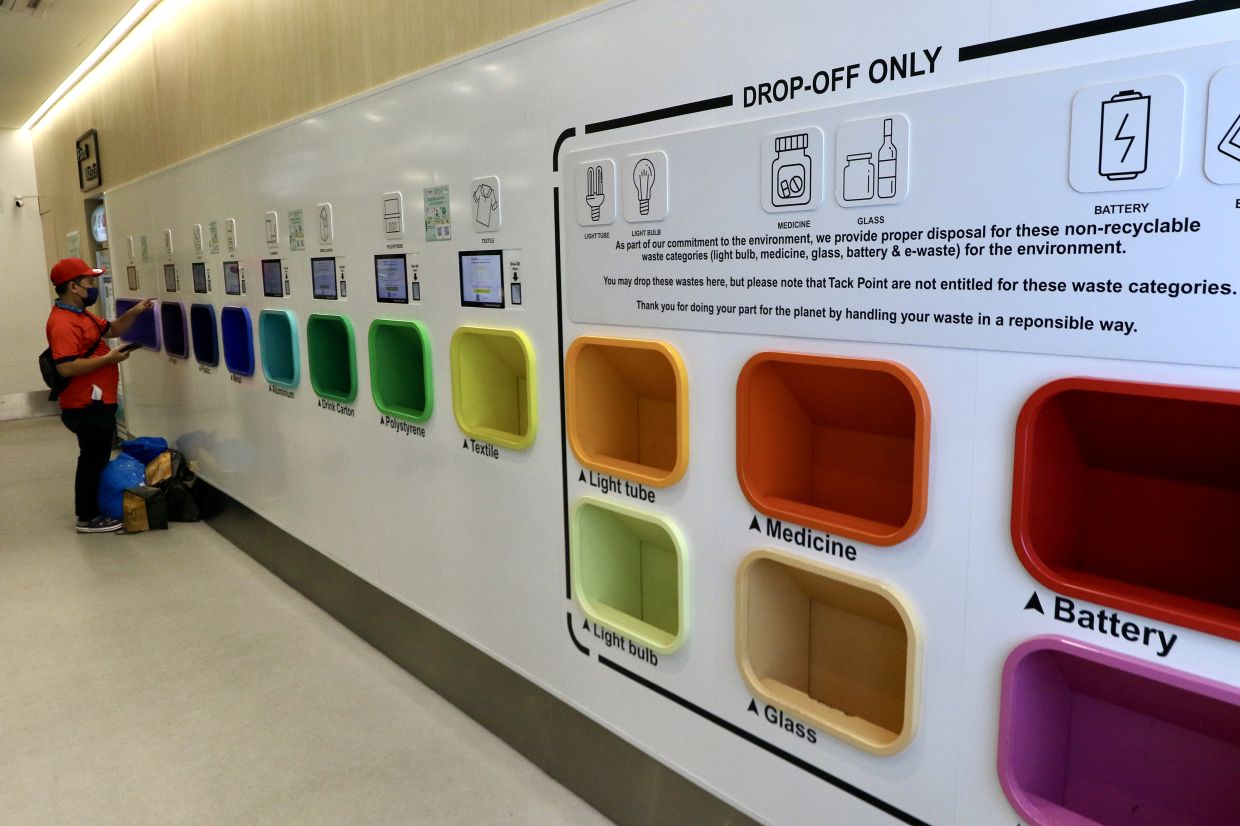
Meanwhile, Lim hopes the rollout is accompanied by standardised guidelines across malls, noting that different facilities often accept different categories of recyclables, which can be confusing.
“Having a baseline set of accepted materials across all mandated facilities, together with clear signage and educational materials, would create a much more seamless experience.
“Ideally, categories such as glass and e-waste should also be included, as these are common household items that people often struggle to dispose of responsibly.”
She also believes it would be a good opportunity for businesses to integrate any existing take-back programmes (where they collect and recycle end-of-life products from customers) with these facilities to create a more comprehensive ecosystem benefiting consumers, brands and mall operators.
Another concern Jiven has is what happens to the waste after the collection process.
“It’s worth questioning where the waste goes at the end of the day. Are they actually being properly managed until the end of the recycling process or not?
“It’s important for malls to be transparent with where the waste goes so we know the impact we’re making.”
For him, public confidence depends on knowing that the involved parties follow through on the entire process and ensure the materials are genuinely recycled.
Although the mandate is seen as a promising step towards a more sustainable society, its long-term success depends on what comes after the facilities are implemented.
“Ultimately, accessibility is important, but consistency, clarity and well-integrated systems is key to making this initiative truly effective,” concludes Lim.