Just a few years ago, Firdaus Ahmad, 29, was selling nasi lemak by the roadside in Jitra, Kedah.
In 2018, he graduated with a diploma in film production from Universiti Teknologi MARA (UiTM) in Shah Alam and dreamed of working behind the camera.
But when the pandemic hit, jobs in the industry were hard to come by in his hometown of Alor Setar.
“Many film production companies are in bigger towns and it was difficult to gain employment, especially during Covid-19. To make ends meet, I also worked as a cashier at a supermarket and pharmacy near my home.
“I didn’t really know where I was heading after graduation. I was worried and felt lost,” he recalls.
In 2024, he got a job as a studio assistant at a craft centre in Alor Setar. Part of his job involved hands-on clay shaping, followed by painting simple ceramic pieces.
“At that time, I didn’t know anything about pottery. I just needed a job to help my parents with their finances,” says Firdaus, the son of a paddy farmer from Kampung Kuar Jawa in Alor Janggus.
What started as a job soon became a passion.
His eyes light up when he talks about the different types of clay, their textures, behaviours and the many possibilities they offer.
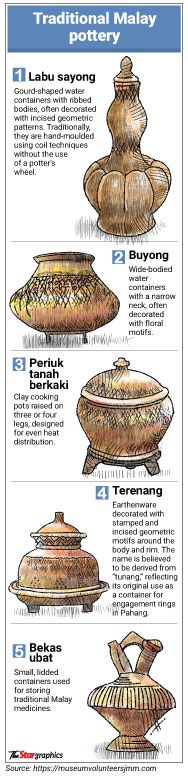
“Clay is fascinating. You can keep shaping it until it becomes what you imagine. I have tried using clay from Kuala Kangsar, Perak, which is known for its fine texture and strong workability for making the traditional labu sayong (a handcrafted clay water jar), and I also experimented with clay from my father’s paddy field,” he says. “The more I researched clay, the more I fell in love with it.”
A brighter future
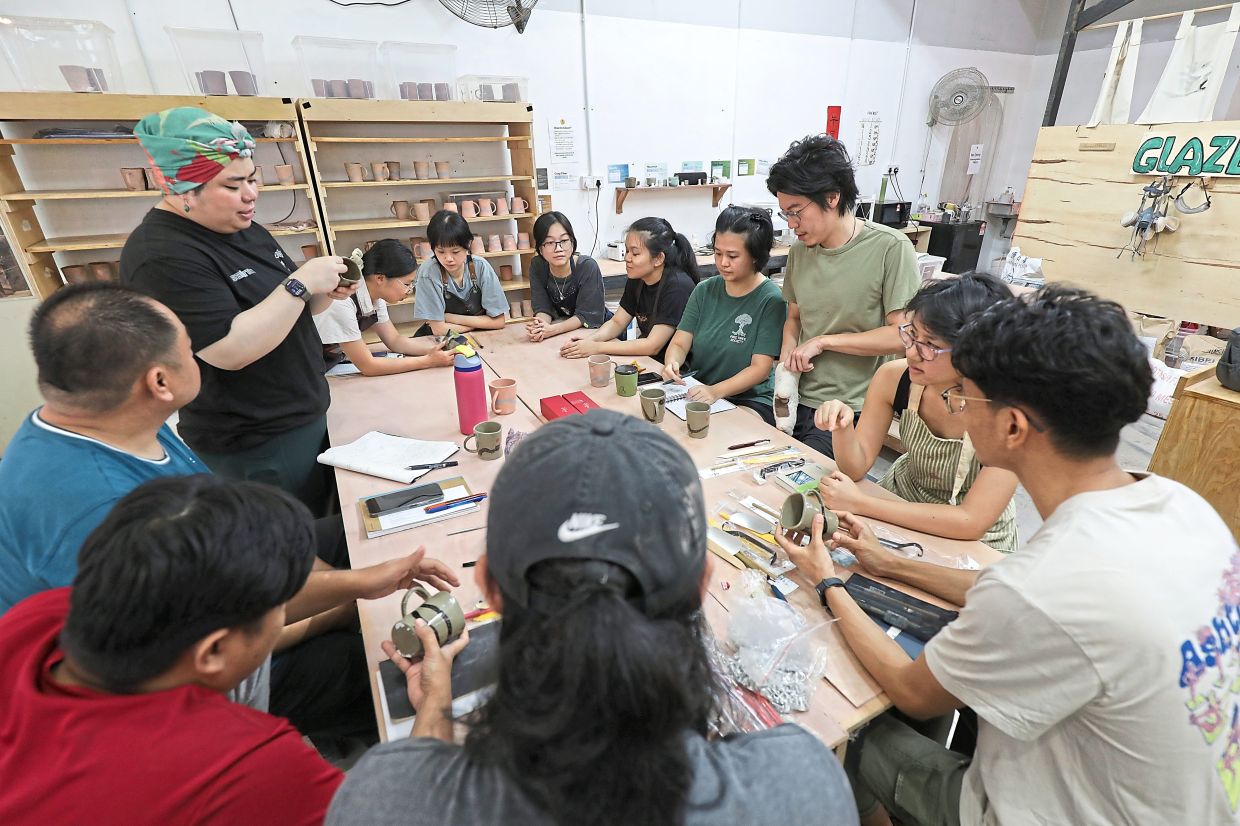
Currently, Firdaus is among 10 participants selected for the inaugural pottery apprenticeship programme by Friends Craft Cooperative (FCC), a non-profit organisation in Petaling Jaya, Selangor. The three-month programme uses pottery training as a tool for social empowerment.
They are from lower-income households and diverse backgrounds, including a barista, a graphic designer, a live sales host and unemployed individuals.
These aspiring potters are equipping themselves with technical and practical ceramics skills to build a better future.
FCC is among several non-profit organisations offering upskilling programmes to help B40 individuals improve their earning potential.
These include the government-linked Program Latihan Madani (PLM), aimed at empowering underserved communities, and the SOLS Foundation, which provides training such as rooftop solar installation, free online education and TVET programmes for youth.
By providing practical skills and career pathways, these organisations help underprivileged communities gain a firmer footing in life and move towards greater financial independence.
A 2024 research paper, “Interplay of poverty, unemployment, education and technology: Insights from Malaysia’s economic development strategies,” states that reducing poverty and unemployment is essential for social stability and economic prosperity.
Published in the Journal Of Infrastructure, Policy And Development, it also highlights that improving education builds a skilled workforce, while technological advancement boosts productivity, drives innovation and helps bridge urban–rural gaps.
FCC co-founder Teoh Jia Chern, 28, understands the importance of skills training in improving employability, confidence and access to opportunity, especially for those facing barriers to traditional employment.
Teoh said his earlier experiences in social work – where he worked at a DUN (state legislative assembly) office in PJ and with UNHCR during the pandemic – shaped his decision to move beyond short-term aid and focus on more sustainable, skills-based solutions for the community.
He said the programme is designed to help individuals generate a livelihood through employment or their own ceramic businesses.
“Most are at a point where they are looking to transition into a career with more mobility and potential,” he said.
“The purpose of this programme is to develop career opportunities in pottery and ceramics. The skills provided prepare them to become production potters, studio managers, kiln technicians, social media marketers and pottery instructors.”
Teoh added that selection was not based solely on academic results or interview performance.
“Normally, recruitment is about picking the strongest candidates on paper. But for this programme, it wasn’t that straightforward,” he said.
“Some may not present themselves well in resumes or interviews, but they still have potential.”
The programme received about 50 applicants, all of whom were called for further assessment. The team also spoke to candidates about their backgrounds and motivations, Teoh shares.
“A key criterion was financial eligibility under the B40 group. The final group of selected participants are aged between 20 and 40,” he says, adding that the initiative, which costs about RM12,000 per participant, is funded primarily by the CIMB Foundation.
“At the end of the programme, participants will have the opportunity to collaborate with restaurants in Kuala Lumpur to co-design tableware.
A graduation showcase will also be held where their works will be exhibited and sold.”
Learning something new
Since the programme started in April, Firdaus has been bunking at a friend’s place in Subang Jaya, Selangor and travels by public transport to FCC on weekdays.
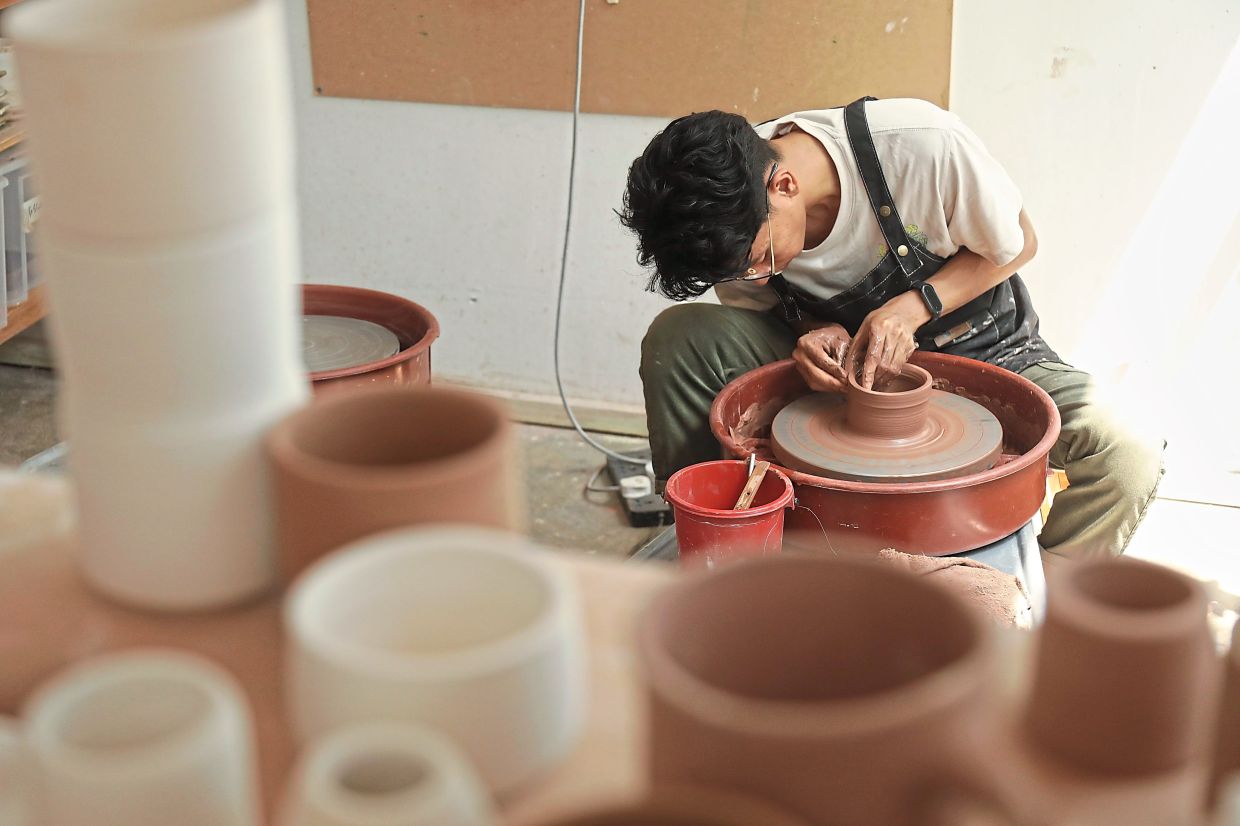
There, he learns wheel throwing, glazing and kiln operation.
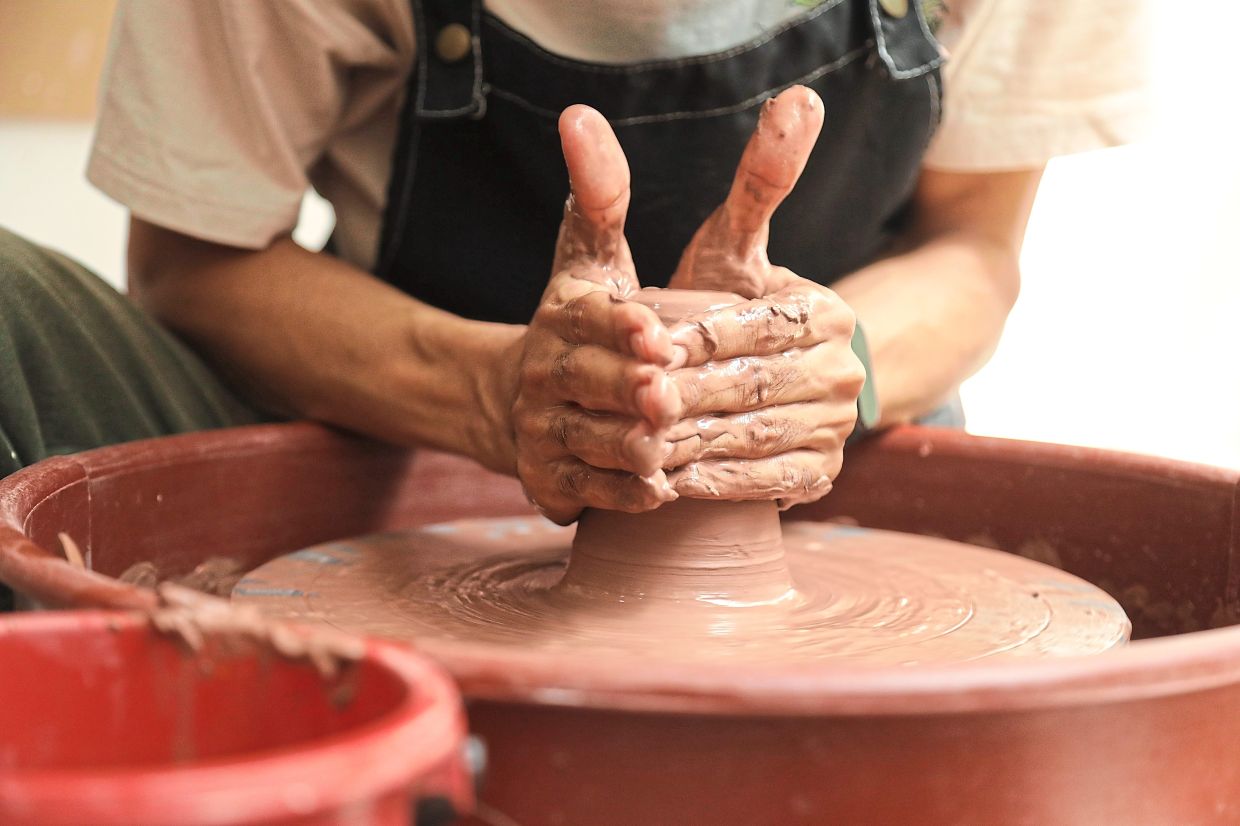
“One of my favourite sessions is wheel throwing, where soft clay is shaped on a spinning wheel. It’s fun... like in the movie, Ghost,” he quips.
Through hands-on exploration, he also learns about kaolin, porcelain, earthenware and the firing process.
Beyond technical skills, the programme also prepares apprentices for future careers through resume workshops, mock interviews, photography sessions and studio visits.
“The programme has been very helpful, and I hope it will support my future career,” says Firdaus, who hopes to open a pottery business in Alor Setar specialising in self-watering planter pots and traditional ware.
Pottery may not have been part of his university education, but Firdaus says his journey has taught him that setbacks can sometimes lead to unexpected opportunities.
“I’ve learned that it’s okay to try new things and start over when needed. Don’t give up too easily – every new skill you pick up can open another door for you.
“My father was initially very worried about my future... Now that I’ve moved into ceramics, he feels more at ease because I’m learning a new craft and finally have a clearer direction in life.”
A crafting a better future
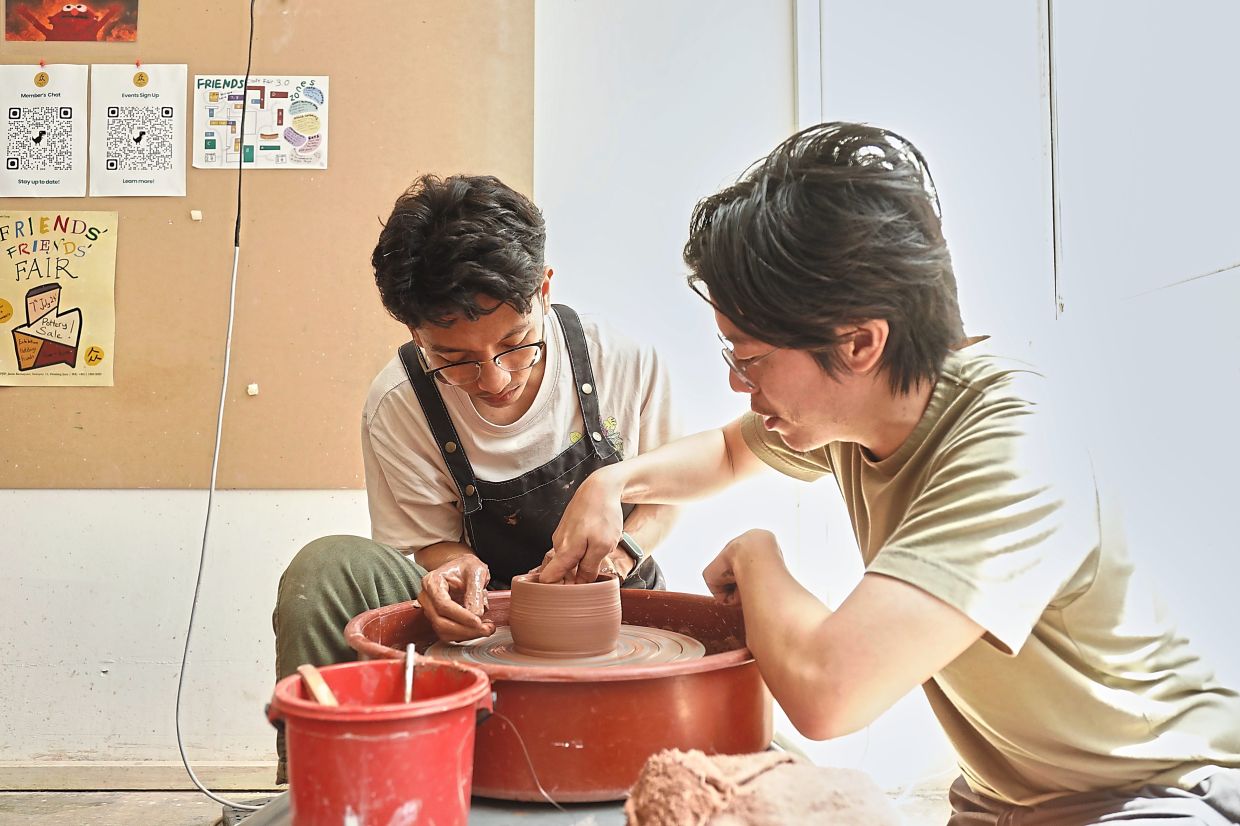
Firdaus (left) learns how to shape clay on the potter’s wheel under Teoh’s guidance. Photos: The Star/Yap Chee Hong
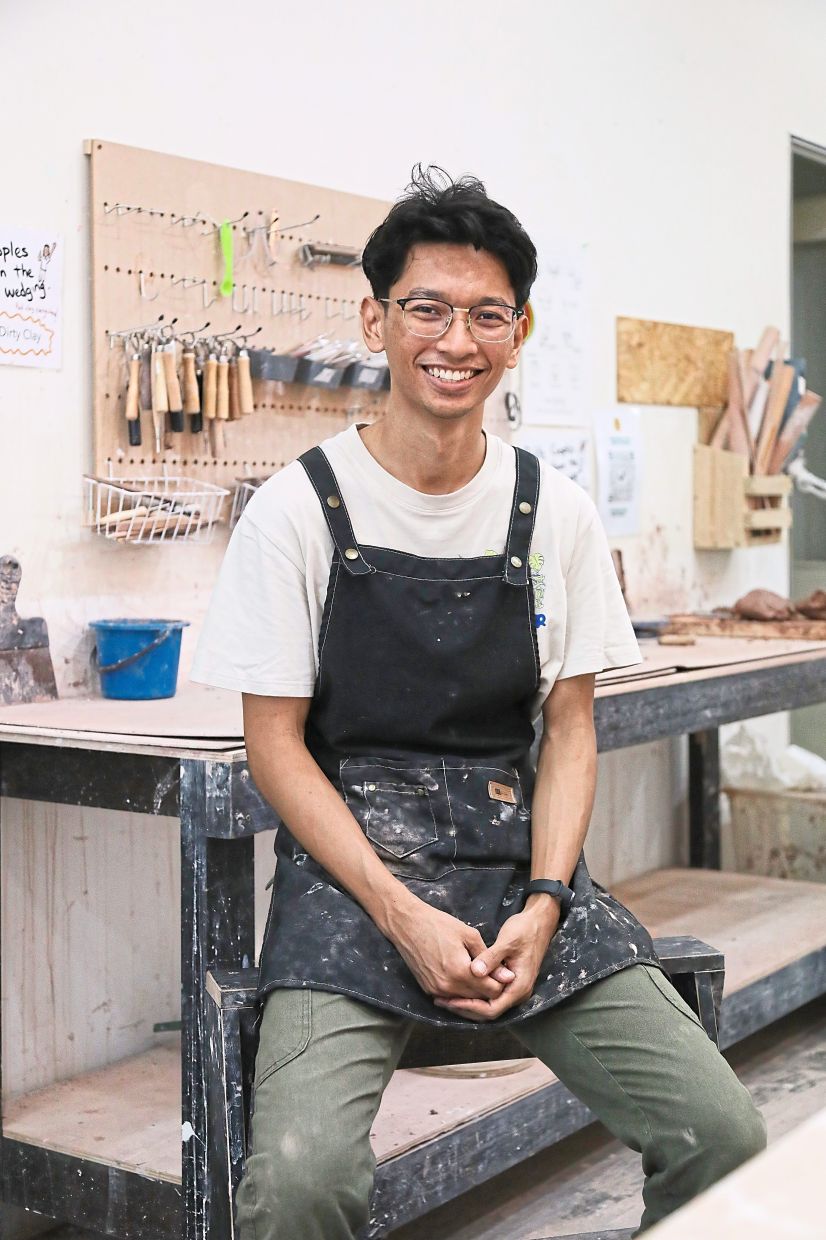
Firdaus says the more he works with clay, the deeper his appreciation for the craft.
Photo: The Star/Yap Chee Hong
Students learn clay crafting skills during a hands-on training session at Friends Craft Cooperative.
Photo: The Star/Yap Chee Hong
Clay is fascinating because it responds to every touch and always carries traces of the maker’s hands.
Photo: The Star/Yap Chee Hong
Firdaus came to Friends Craft Cooperative to learn a skill to improve his livelihood.
Photo: The Star/Yap Chee Hong
Clay products from Malaysia.