
Homemaker Noraini Abu, 53, is never too shy to collect empty soy sauce bottles and used glass jars from her neighbours and relatives. They might seem like rubbish to some, but to Noraini, they are valuable.
The crafter from Puchong, Selangor knows they can be given a second life as home decorative items.
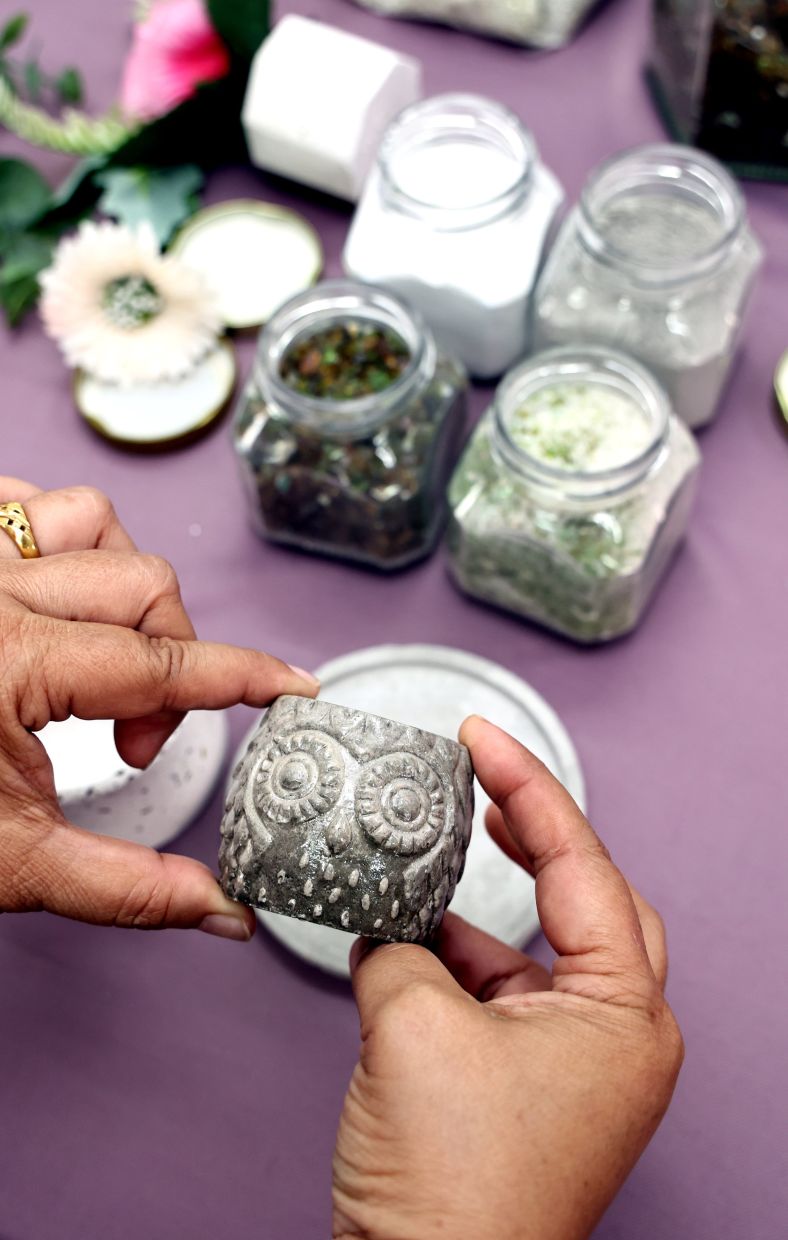
The grandmother of one wants to make a difference by upcycling used bottles. This way, she says, she can do her part to reduce the burden of landfills while earning some cash.
She is among 20 homemakers from Muslimah Lotus Craft (MLC), a community initiative based at Lotus Apartment, Taman Puchong Prima in Puchong that creates items using repurposed materials.
They include soap produced from recycled cooking oil, food covers made of unwanted hijab fabric and flower bouquets made from discarded egg trays.
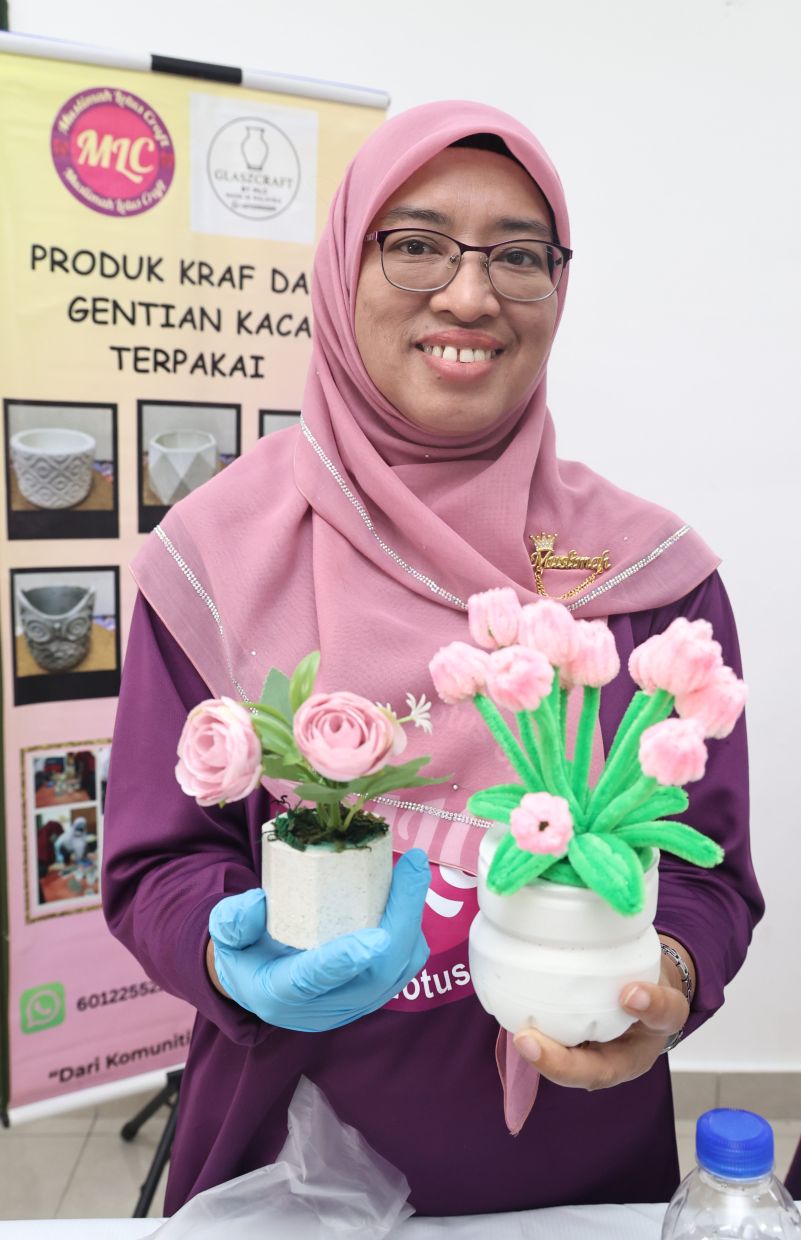
With five other women from MLC, Noraini uses crushed glass from used bottles to make coasters, pen holders and cute owl figurines. These items are then sold at bazaars and community events. On average, they can earn from RM100-RM400 a month.
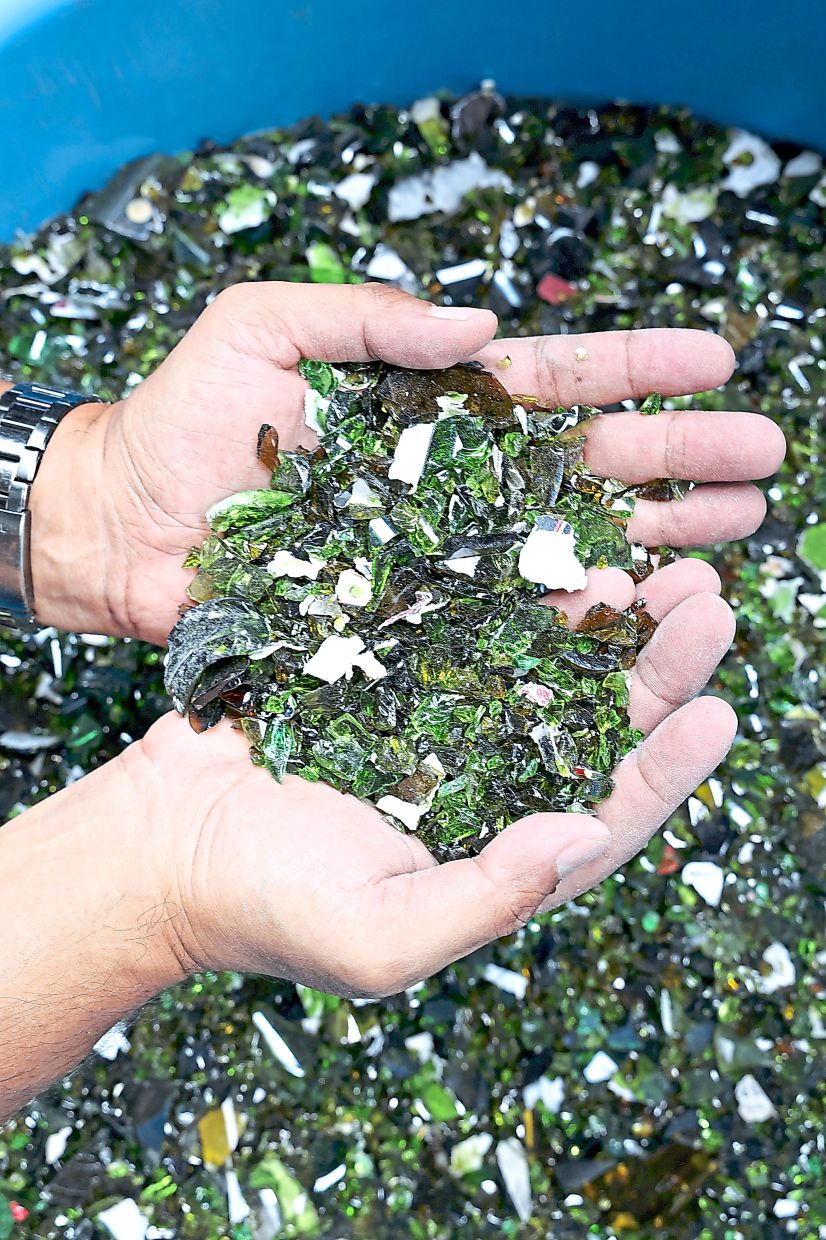
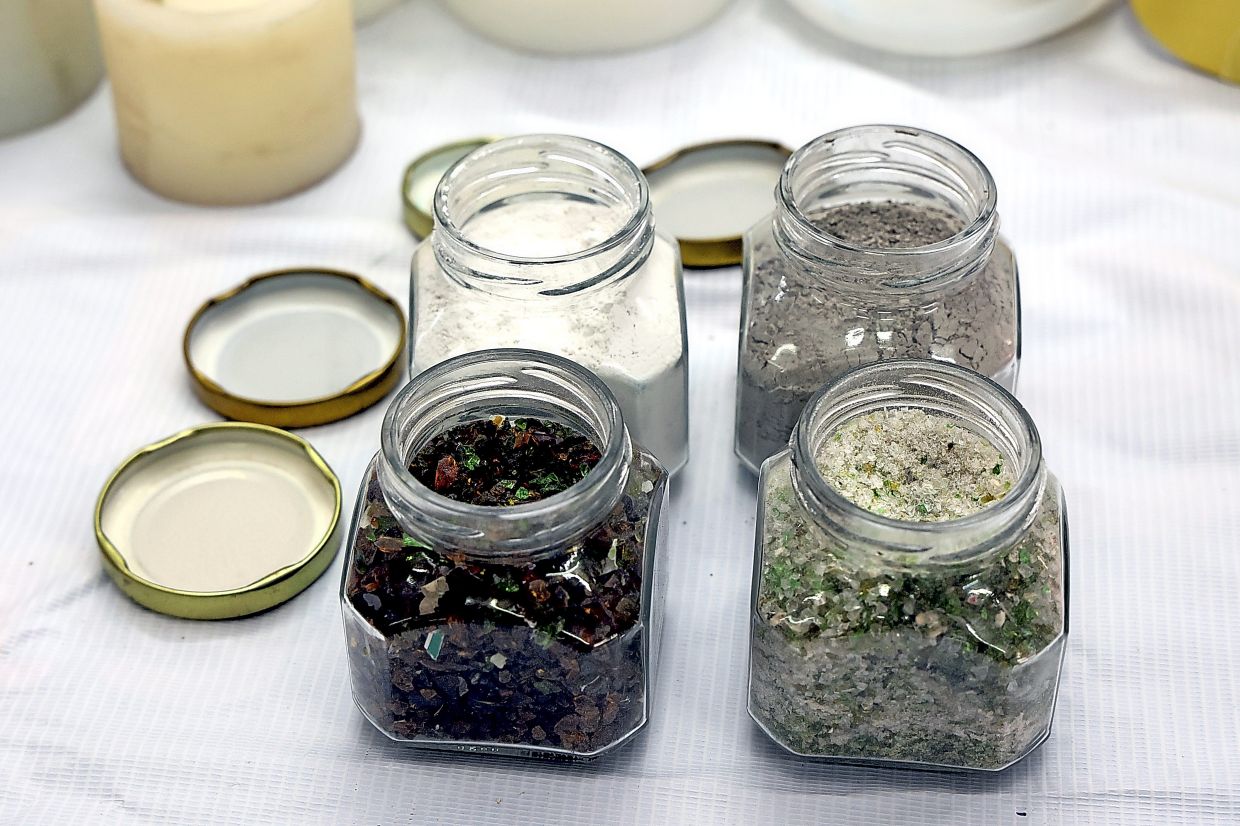
“Bottles come mainly in three colours – clear, green and brown. They are washed and sorted according to colour and sent to PJ Eco Recycling Plaza in Petaling Jaya, Selangor where they are crushed into fine glass.
Crushed glass is then mixed with cement and water before it is made into handicraft items,” shares Noraini, who has three children.
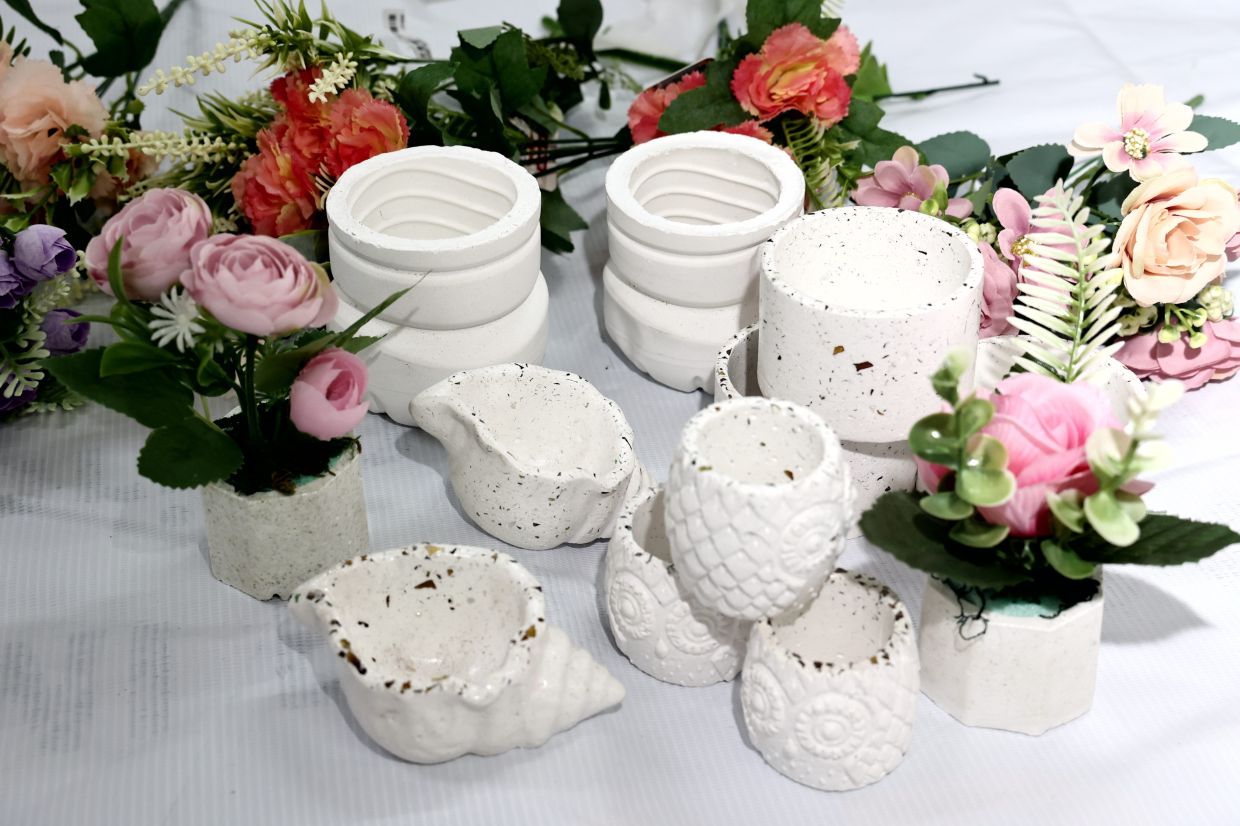
At the centre, award-winning social enterprise Impactlution addresses plastic and glass waste by using discarded materials, including crushed glass, to make “green concrete” products such as planters and soap holders.
The organisation also conducts glass upcycling workshops for the community, like the one attended by MLC members.
Noraini and other MLC members understand the importance of recycling and how it can make a positive impact on the environment.
Through social media, she has watched countless videos highlighting plastic pollution, the impact of fast fashion and the negative effects of climate change. She worries about the kind of world her grandson will inherit.
“Many people don’t realise that if we don’t recycle or reuse things, there will be more waste around us. A lot of the things we throw away can actually be reused and turned into something useful,” explains Noraini, who left her job as a factory operator in Puchong in 2022 to care for her newborn grandson.
She joined MLC that same year, hoping to keep herself occupied while earning some income.
A tall order
Recycling glass remains a challenge in Malaysia. Glass accounts for only about 2.7% of the 39,078 tonnes of solid waste generated in Malaysia daily.
That works out to roughly 385,000 tonnes of glass being sent to landfills every year, according to Switch-Asia, a European Union (EU)-funded programme to promote sustainable consumption and production (SCP) in the region.
Because glass makes up only a relatively small proportion of the country’s waste, dedicated collection points and recycling facilities remain limited.
Unlike paper, plastic and metal, glass is often overlooked in household recycling efforts, with many bottles ending up in landfills instead of being recycled or repurposed.
The possibilities of discarded glass, however, extend far beyond the handcrafted products made by Noraini and her group.
It can also be made into wall art, terrazzo-style tabletops, even fashion accessories.
Crushed glass is also being explored as a sustainable alternative to sand in cement mixes for permeable pavements. Upcycled crushed glass has even been used to resurface OKU parking bays at Kuala Lumpur’s Taman Tasik Titiwangsa.
Its potential extends to the construction industry as well. A 2024 study, “The Review of Potential Application of Recycled Glass Powder as Partial Replacement of Sand in Concrete,” found that crushed glass could support more sustainable construction.
A research, published in Recent Trends In Civil Engineering And Built Environment, a journal by Universiti Tun Hussein Onn Malaysia (UTHM) in Johor, found that glass powder could make the construction industry more sustainable.
Sand, a key ingredient in concrete, is often obtained through mining activities that can harm rivers and beaches. Replacing some of the sand with recycled glass powder could reduce waste while lowering the demand for natural sand.
Thriving community
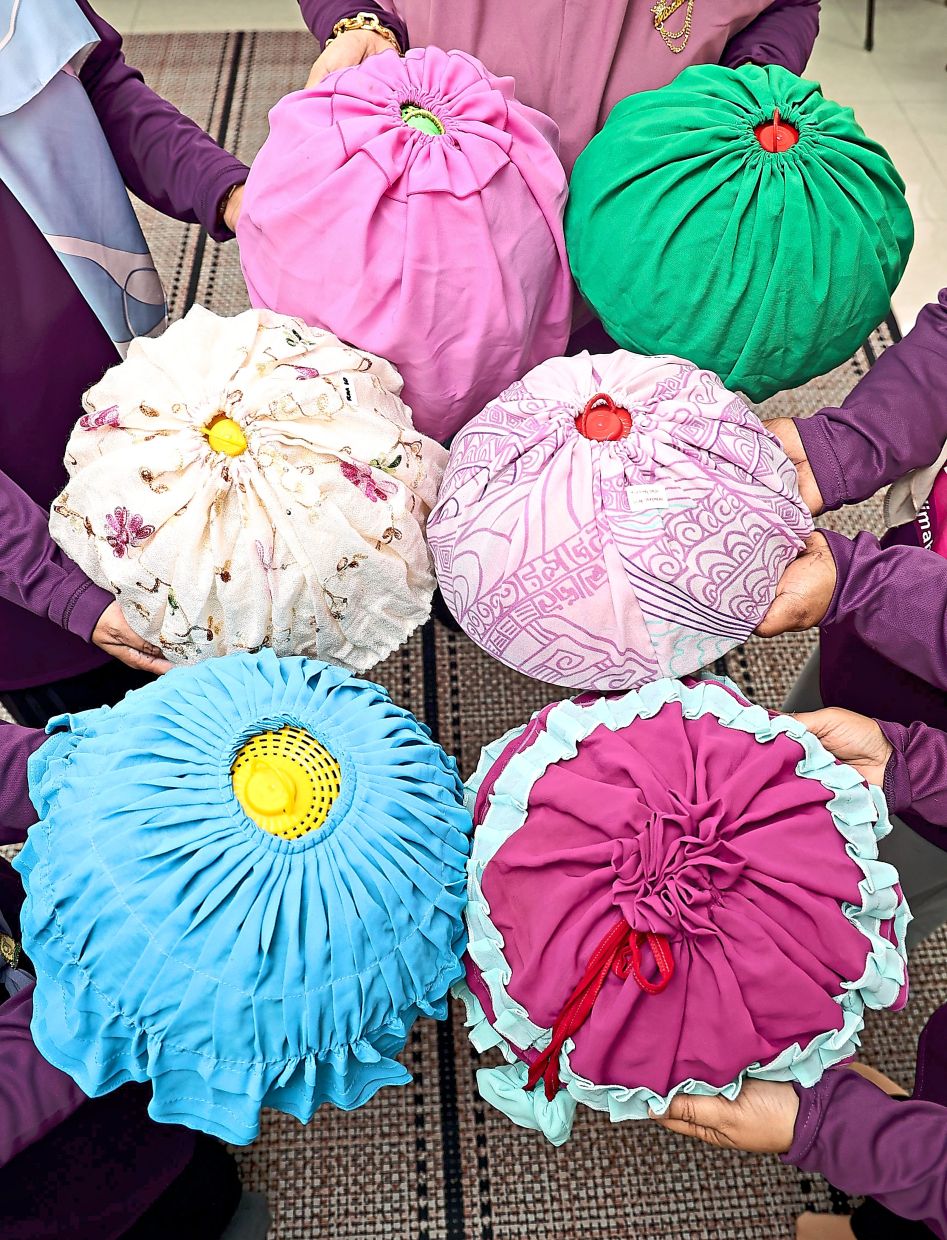
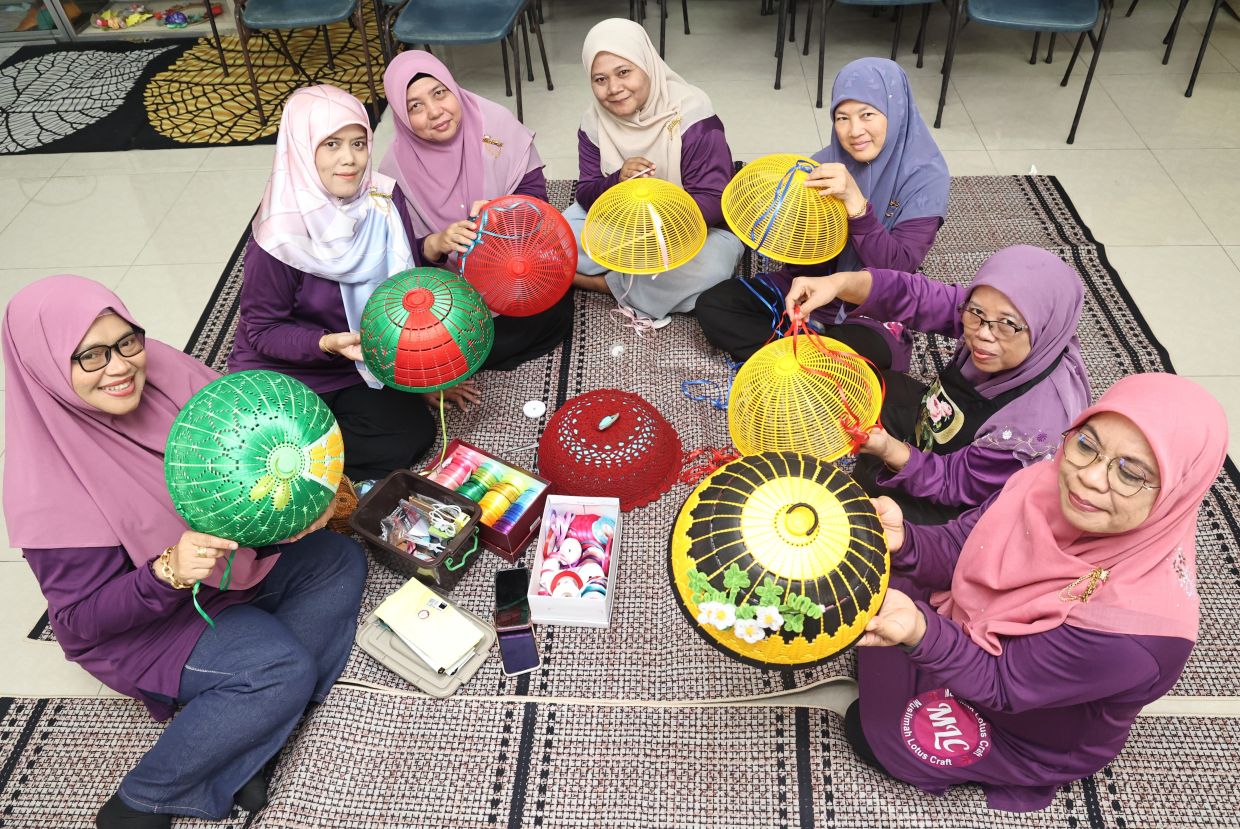
The women are split into groups. Some shape decorative items using crushed glass while others weave traditional food covers. They all sit together on mats spread across the floor.
Between crafting sessions, they enjoy light refreshments prepared by the members, creating a warm and welcoming atmosphere.
More than just a weekly craft session, the gatherings have become a space where the women share ideas, encourage one another and build lasting friendships. The group also practises peer learning, with members sharing techniques and helping one another improve.
“We are one big happy family. We laugh, chat and have grown so close that we are more like sisters now,” says Noraini, who also teaches glass upcycling to others at workshops at community events.
MLC was founded in 2019 by Salsabila Salim, 49, who runs a home-based hantaran (Malay wedding gift tray) business. She started the community initiative to help women in Lotus Apartment learn new skills and create opportunities to supplement their household income.
“Before this, the women would only meet during prayers, festive celebrations or potluck gatherings. Parti Keadilan Rakyat Puchong women’s wing chief, Yusni Mat Yusof, encouraged me to teach them handicraft skills so they could earn some money,” Salsabila says.
“Crafting is a skill that can help women support themselves financially. At first, it was difficult to get people to be interested, but once they started learning, they became more confident,” says the former human resource executive, who left her job in 2016 to care for her ailing mother before starting her home-based craft business.
Yusni, 49, says the initiative is more than just about making handicraft items. She hopes the women will learn skills that can give them financial security should they ever need it.
“Women need to be independent because we don’t know what the future holds. Even if they don’t use these skills today, they may need them later in life,” says Yusni, who introduced MLC to social enterprise Impactlution, paving the way for the group’s glass upcycling programme.
Today, the women sell their handmade products at events organised by Wanita Berdaya Selangor, a state government initiative that supports women’s empowerment through skills development, entrepreneurship and community programmes.
Some of Noraini’s crushed glass creations have also been supplied to hospitals and local community groups around the Klang Valley.
“Before throwing away that soy sauce bottle, think twice. It may have another life waiting for it,” Noraini concludes.
These women are crushing it
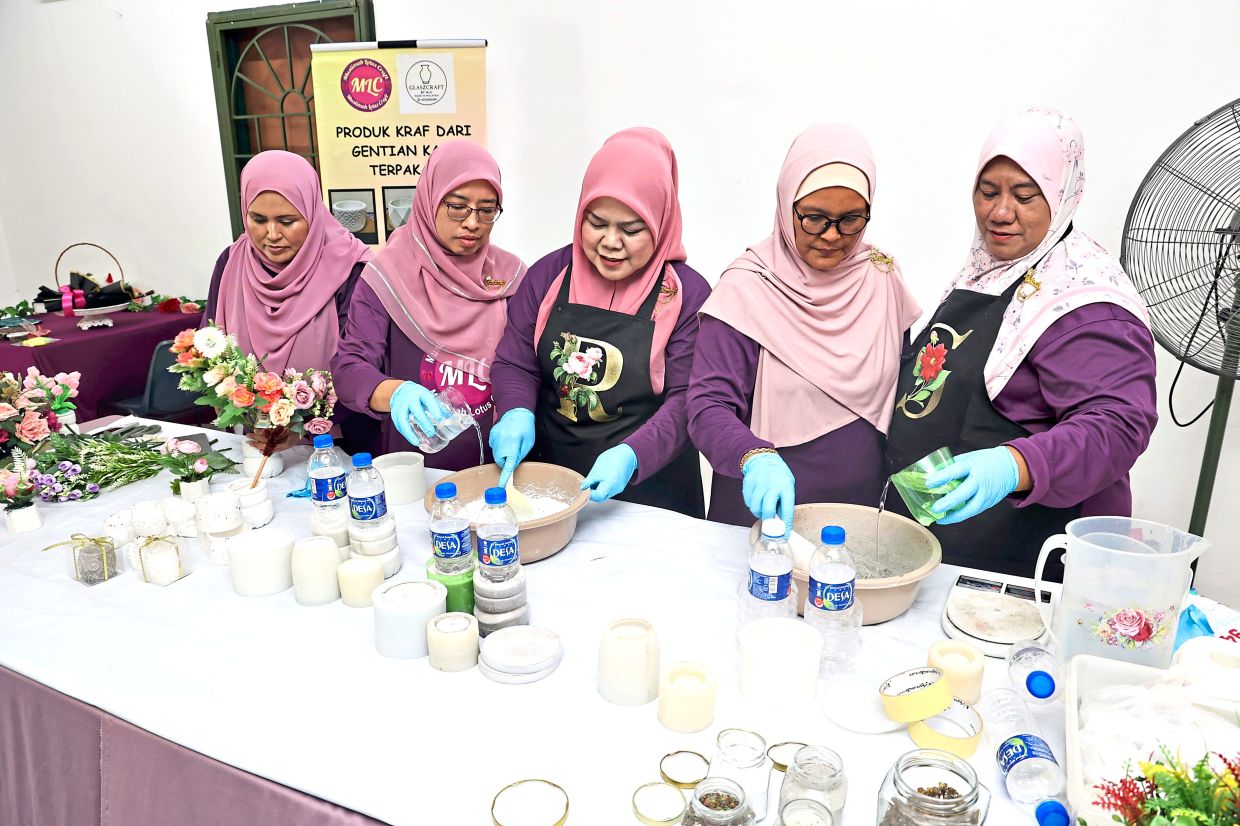
Noraini (right) works with fellow crafters to make glass products. Photos: The Star/Art Chen
Noraini is breaking new ground with glass.
Photo: The Star/Art Chen
Used glass bottles are cleaned, sorted and crushed before being crafted into handmade items.
Photo: The Star/Art Chen
Crushed glass is mixed with cement to create home decoration.
Photo: The Star/Art Chen
Discarded glass, crushed into particles.
Photo: The Star/Art Chen
Old scarves are given a new purpose as food covers.
Photo: The Star/Art Chen
Yusni hopes the women will gain skills that can provide financial security should they ever need them.
Photo: The Star/Art Chen
Salsabila (second from left) teaches fellow crafters how to decorate food covers with ribbons.
Photo: The Star/Art Chen