Most people would still be asleep at four in the morning, squeezing in their last hour or two of rest before the day begins.
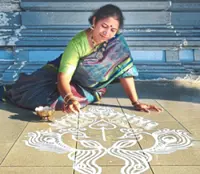
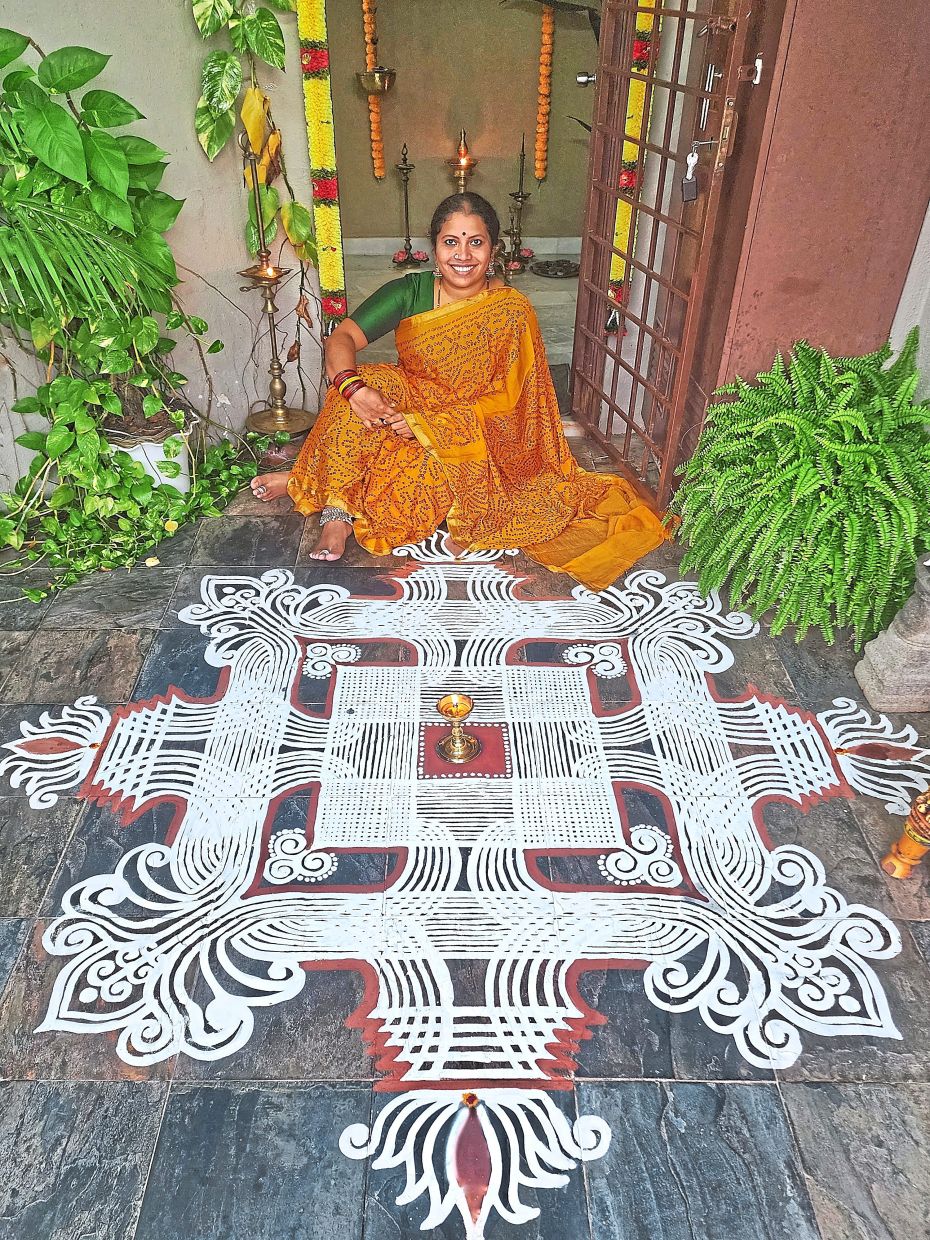
But for Dr Kasturi Bhai Venkatramanan Pillai, her day starts much earlier and by 4.30am, she is outside her front gate, drawing a kolam in front of her gated and guarded community home in Puchong, Selangor. It is a steadfast practice she has embraced since 2017.
“Drawing the kolam is very much a form of meditation for me. At that hour, the surroundings are still and peaceful. The cool air and calm environment create a sense of clarity and focus.
“Due to the nature of my work-life balance and having to navigate Klang Valley’s busy pace and traffic, this morning practice is something I deeply value and look forward to each day,” says Dr Kasturi, 43, during an interview in Bandar Kinrara, Puchong recently.
“After that, I perform short prayers at home, prepare breakfast, send my two children to school, and then head to work,” shares the medical officer attached to Putrajaya Hospital’s Occupational, Safety and Health Department.
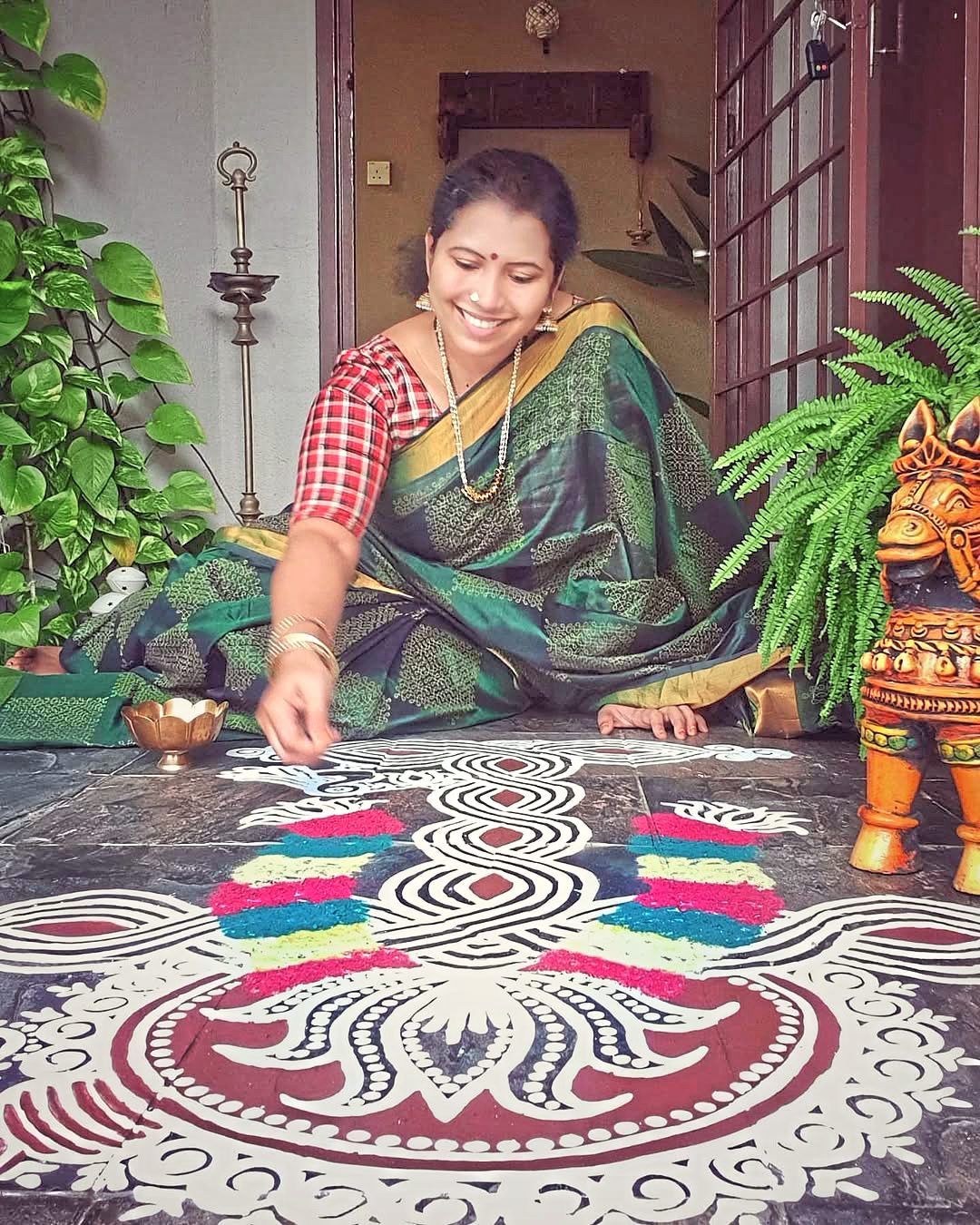
Kolam is a traditional South Indian art form originating from Tamil Nadu featuring intricate patterns designed on the ground, typically at the entrance of homes.
Created using rice flour, grains or coloured powders, kolams are made to welcome guests and deities, symbolising prosperity, harmony and positive energy.
Dr Kasturi began drawing kolam when she was 12, driven by curiousity and personal interest.
“Growing up, I would closely observe my mother as she created kolams for major Tamil festivals at home, and this gradually inspired me to learn and practise the art myself,” recalls Dr Kasturi, who was born and raised in Kajang, Selangor.
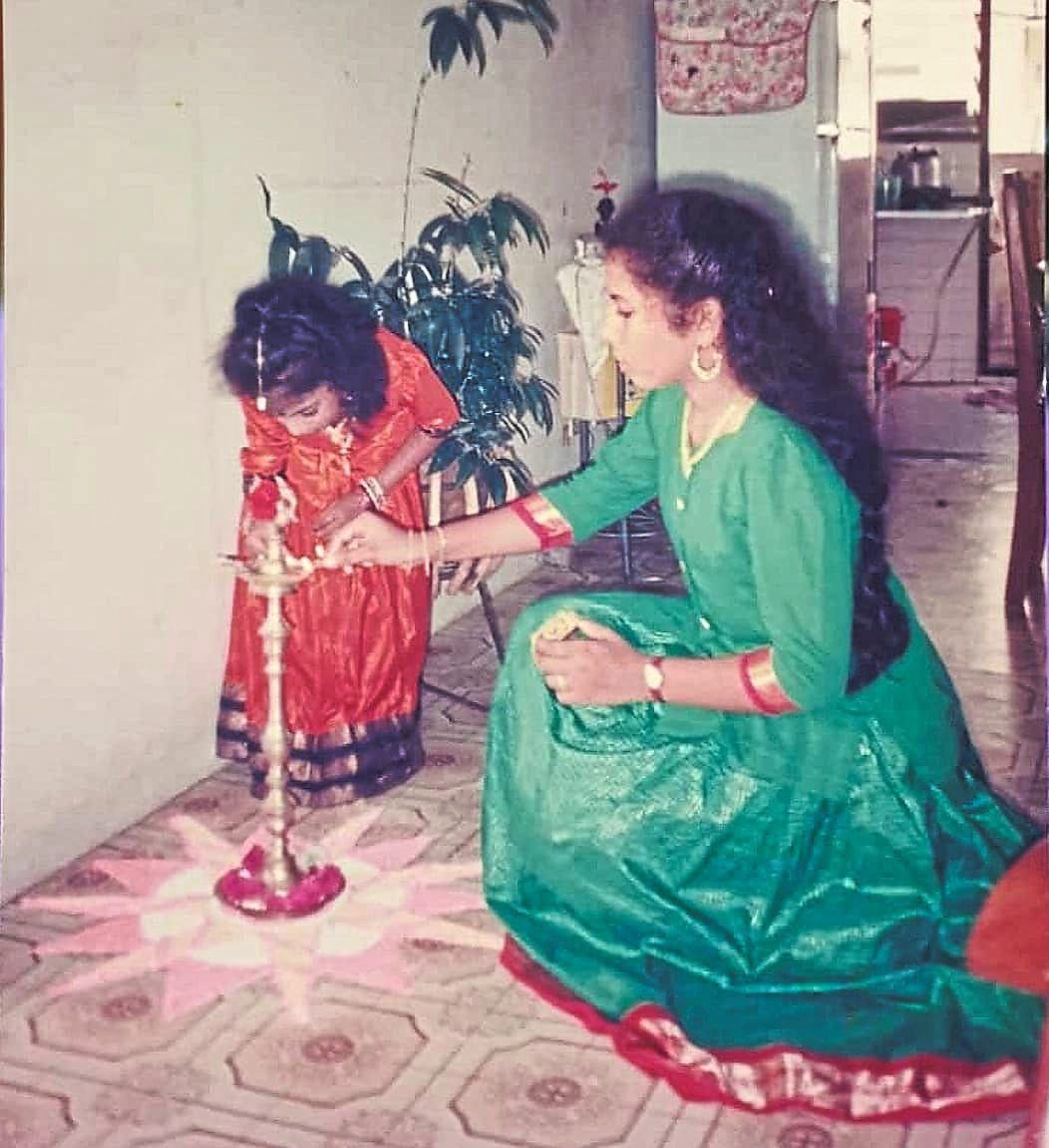
And what began nine years ago as a simple effort to set a good example for her two sons, now aged 12 and 13, has since grown into something far more meaningful.
“Living in a home where my mother-in-law also practises kolam daily further nurtured this interest, encouraging me to be more consistent and mindful in my approach.”
In her Bandar Kinrara neighbourhood, she is likely one of the few – if not the only – resident who continues to decorate the space in front of her home with kolam each day.
“I live in a predominantly Chinese neighbourhood, and many residents go for their morning walks around the same time (as I draw the kolams). What began as simple greetings has grown into genuine interest. Some even stop to observe or ask about the day’s kolam.”
On days when she is unwell or unable to draw, her absence does not go unnoticed.
“My neighbour would ask, ‘Amoi, ini hari takda lukis kah? (Girl, aren’t you drawing today?)” she says with a chuckle. “I find that both thoughtful and encouraging.”
The appreciation extends beyond her immediate neighbourhood. Vendors who pass through the area – including an ice-cream seller and an idiyappam seller – have taken an interest in her work too.
“Some of them, especially those from Tamil Nadu, take photos of my kolams and send them back to their families. They often say it’s meaningful to see this tradition being continued here in Malaysia,” adds Dr Kasturi, who posts photos of her artwork on Instagram (@kasturi_venkat), which boasts over 230,000 followers.
Keeping traditions alive
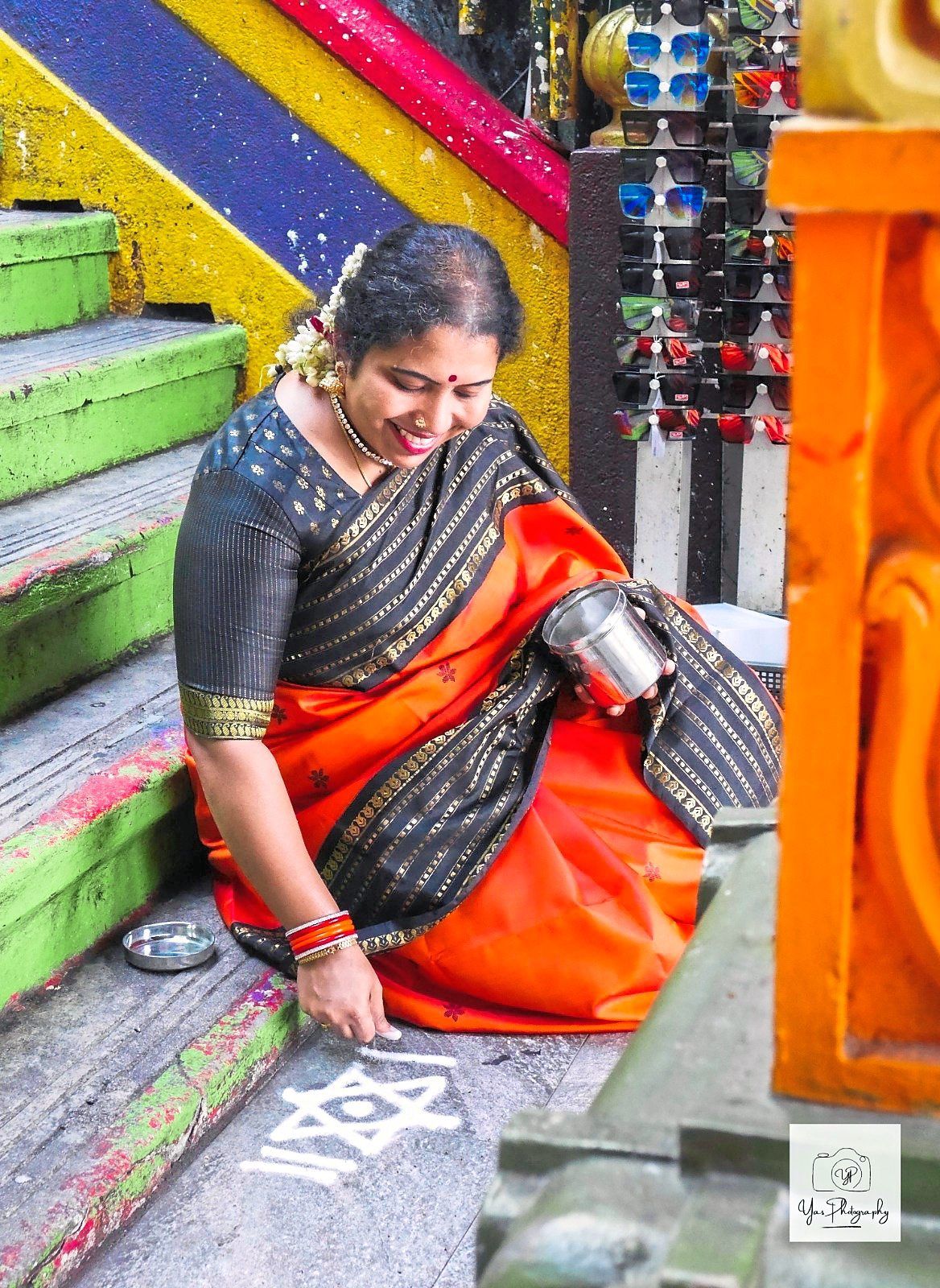
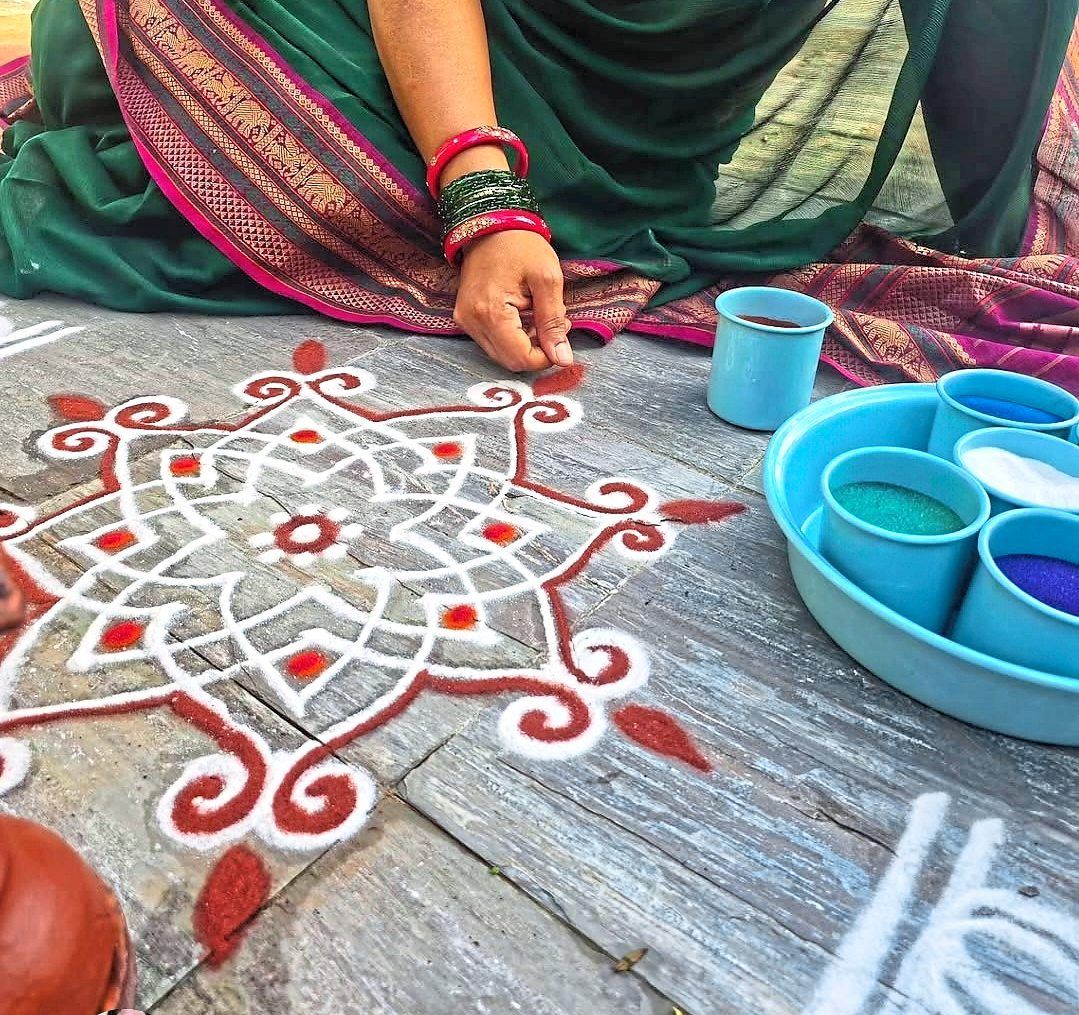
Depending on the complexity of the design, each kolam takes between five minutes and two hours to complete. Many of her designs feature styles like sikku kolam (traditional Tamil designs showcasing lines with colours), padi kolam (consisting of geometrical designs) and pookalam (decorations made from colourful flower petals).
“I am naturally inclined towards traditional patterns and have a strong appreciation for pazhamai (old, time-honoured designs). While I do admire and occasionally feel inspired by contemporary interpretations, my personal style remains rooted in tradition,” she says.
Dr Kasturi is proud of her Tamil heritage and is passionate about preserving and promoting South Indian culture, from kolam and sarees, to cuisine and cultural practices.
She believes staying connected to one’s roots is essential, and for her, kolam is a meaningful way of keeping tradition alive. She hopes younger generations will embrace the art, even in small ways.
“Just start, even if it’s small and imperfect. You don’t need to know everything about kolam to begin – the interest will grow naturally with practice,” she says.
At the same time, she encourages a deeper understanding of its significance.
“Take a moment to understand its roots – the meaning, the discipline, and the thought behind it. When you connect with that, it becomes more than just a design on the floor.”
For Dr Kasturi, the continuity of tradition lies in everyday practice.
“Traditions don’t fade because they are old,” she adds. “They fade only when we stop practising them,” says Dr Kasturi, who also draws kolams at temples as an offering.
The practice has also shaped her perspective on life in profound ways.
“Over time, drawing kolam has taught me humility and a deep understanding of how everything in life is constantly changing. As a doctor, I witness the transient nature of life every day, and kolam, in its own way, reinforces that perspective by teaching me the art of letting go,” she says.
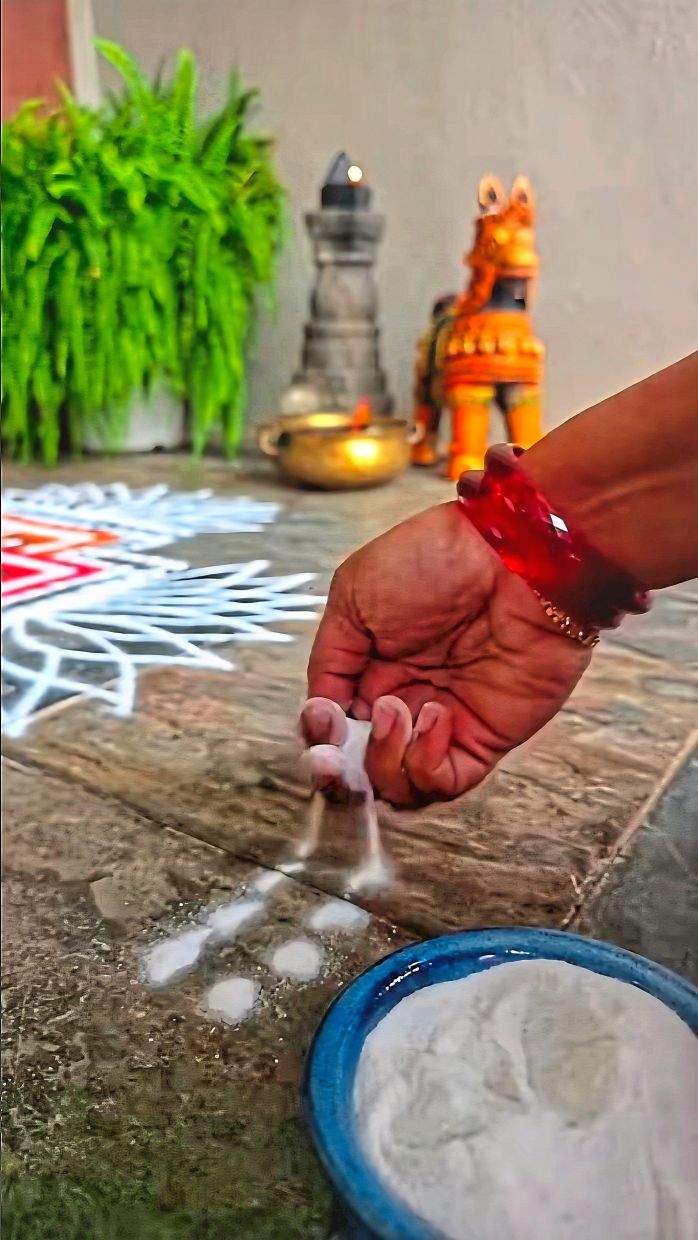
Kolam, Dr Kasturi explains, is an inherently ephemeral art form. The intricate designs created at the threshold of a home are inevitably stepped on, smudged or erased as the day unfolds.
“That impermanence is a gentle reminder that nothing is meant to last forever,” she adds.
A grounding ritual
Beyond its visual beauty, kolam also holds a spiritual meaning for Dr Kasturi. It is a dharmic practice – an expression of gratitude to Bhooma Devi (Mother Earth), a way of inviting positivity into the home, and a grounding ritual to begin the day.
“The process itself brings a sense of calm and discipline, engaging both the mind and body. What began as a simple routine has grown into something I feel deeply connected to, and it continues to draw me back each day,” she says.
Dr Kasturi finds inspiration from a variety of sources, including traditional motifs passed down through generations such as lotus flowers, peacocks, fish, leaves and geometric patterns. The drawings are done freehand or by using a kola kuzhal, a traditional pipe-shaped instrument used for drawing parallel-line borders.
“I also draw inspiration from patterns shared online, sometimes recreating them or adapting them to my own style,” she adds.
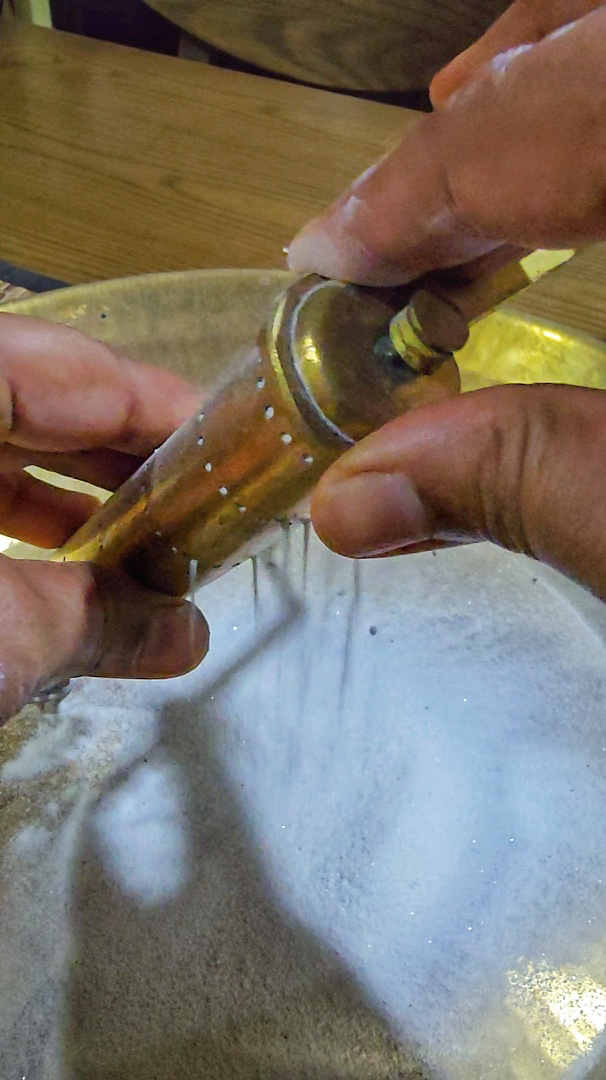
Dr Kasturi prefers using traditional rice flour, which she considers the most authentic and dharma-appropriate medium.
Unlike rangoli – a similar floor art form from Maharashtra, India – kolam, in its purest form, is typically created in white. In Tamil tradition, it is often bordered with kaavi podi (red ochre powder), which holds symbolic meaning.
“The use of rice flour is not merely for aesthetic purposes. It serves as an offering of food to small living beings such as ants, insects and birds, reflecting a practice known as bhuta yajna – an act of selfless giving and ecological awareness.”
Borders with kaavi podi is believed to offer protection, symbolically safeguarding the home and its occupants, she adds.
“On certain occasions, I do incorporate a small amount of commercial kolam powder, usually mixed with home-ground rice flour, to achieve better definition. However, most of the time, I continue to use rice flour as my primary medium,” she says.
There’s no doubt that Dr Kasturi finds joy and meaning in her daily ritual. For her, it’s a reminder that even in the rush of modern life, there is always space to stay rooted, reflect and begin each day with intention.