
War has left people hungry in western Myanmar, but conflict-displaced chefs preserve the local flavours of its delicate noodles and briny broth far from a region where conflict blights harvests.
"Seeing my customers enjoy the food until the plate is empty brings me so much joy that nothing else can compare," said Yee Yee Kyaw, who evacuated her restaurant business from Rakhine state to Yangon in 2024.
"Watching from the kitchen, I've even felt it wouldn't even matter if they left without paying," the 27-year-old told AFP.
In Myanmar's civil war, triggered by a 2021 military coup, Rakhine has become a locus of particular suffering.
Bordering Bangladesh and hemmed by mountains and the Bay of Bengal, it has been captured almost completely by ethnic minority rebels, but still sees fierce fighting and has been blockaded by the military along its border.
More than one-third of households in the state suffer food insecurity, and the cost of an average grocery basket has spiked 31 percent due to the Middle East war, according to the United Nations' World Food Programme (WFP).
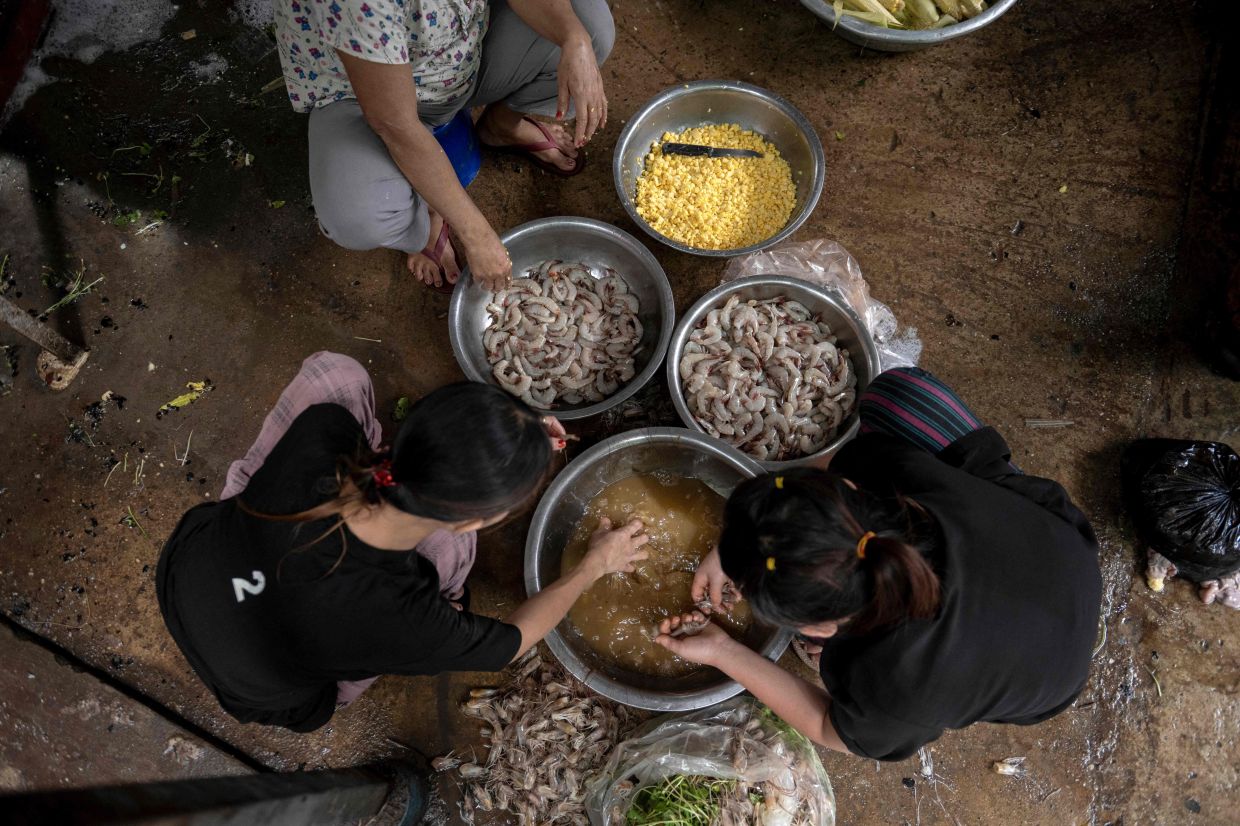
Paddy agriculture has withered and fishing along the plentiful coastline has been curbed by amphibious warfare.
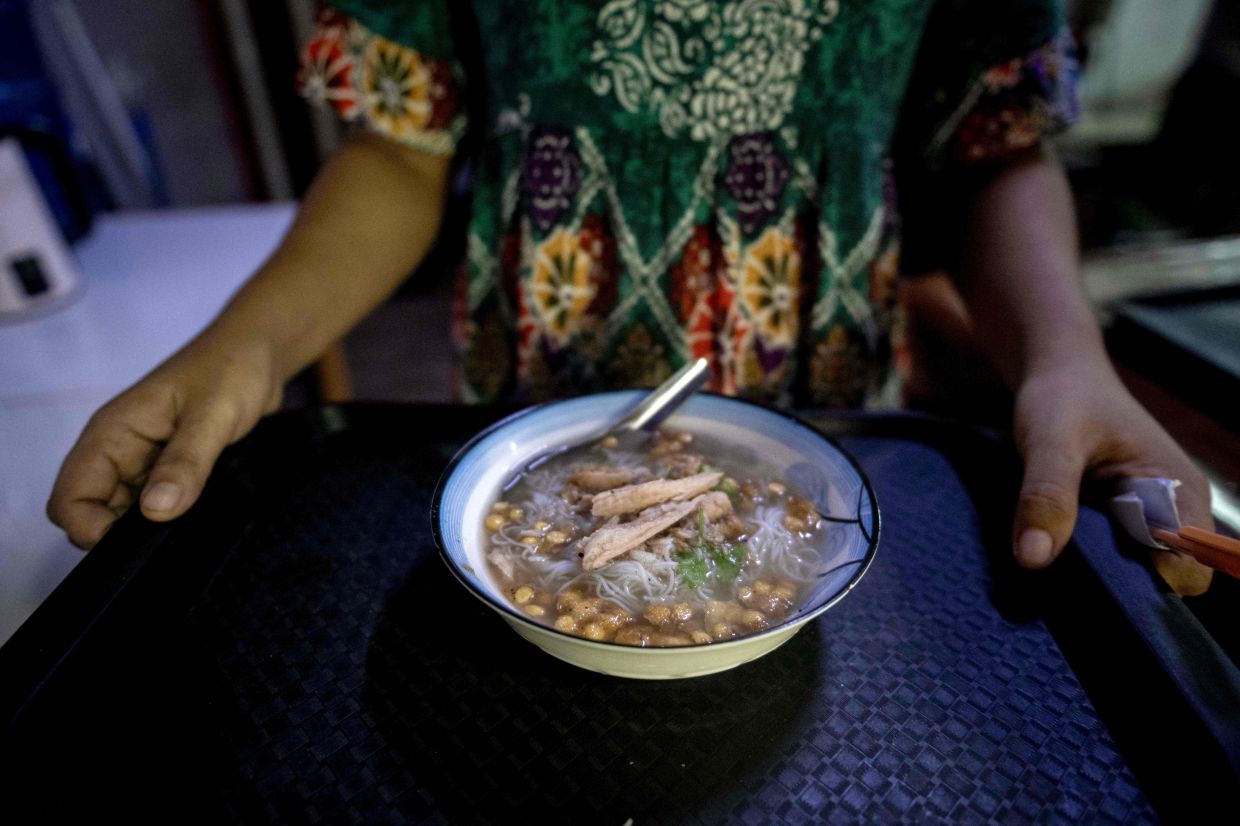
Rice noodles and conger eel are principal ingredients of Rakhine's specialty noodle dish, "mont di", which Yee Yee Kyaw serves in abundance, swirled together in an umami concoction of tamarind, garlic and chilli.
But back in Rakhine – which the WFP has called "the most acute hotspot for hunger in Myanmar" – traditional cooking is secondary to the scramble for daily sustenance.
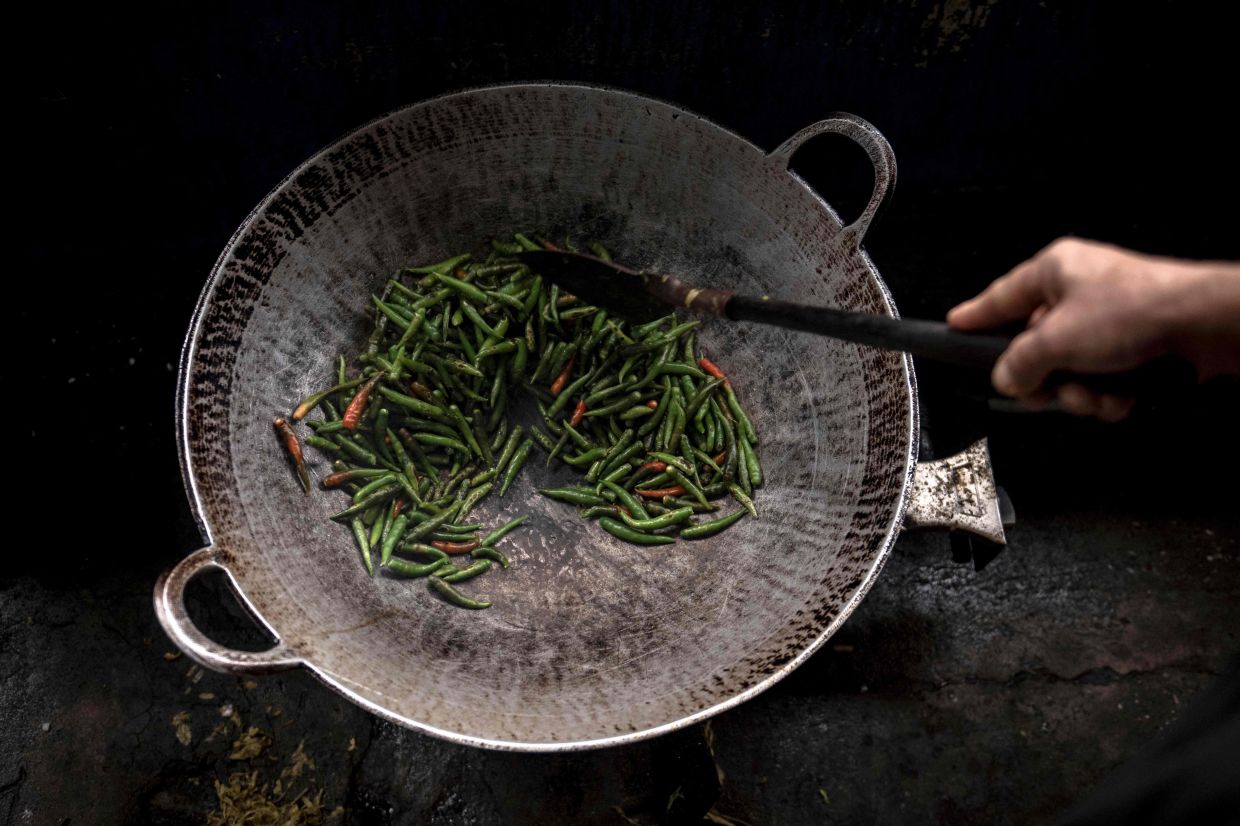
In Rakhine's Mrauk-U town, housewife May Pu Chay raved about her local gastronomy laced with pungent fish paste and mashed chilli.
"Rakhine food is the best. I would like it to spread," said the 51-year-old. "I want everyone to taste Rakhine food."
Her enthusiasm is dulled only by the realities of hardship in Rakhine – when supplies from her kitchen garden aren't sufficient.
"We have to struggle hard," she said. "If there's nothing to cook, we don't cook. If there is, then we do."
Hunger for home
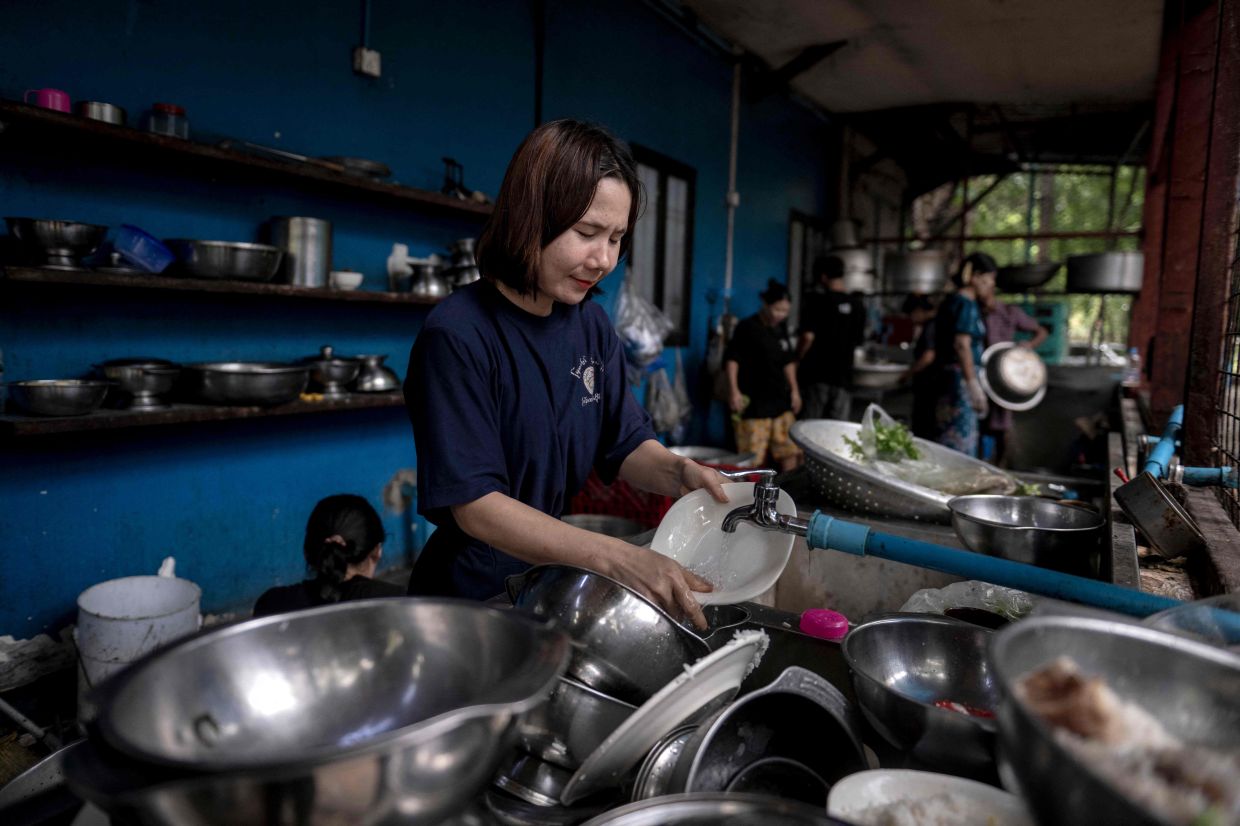
In Yangon, however, Yee Yee Kyaw dispenses about 200 bowls of mont di daily – either as a dry salad with peppery fish soup on the side, or altogether in a steaming conglomeration.
Shutting her two restaurants in coastal Sittwe has allowed her to continue cooking in the Rakhine tradition, from a single 34-seat eatery inside a former beauty spa in Myanmar's largest city.
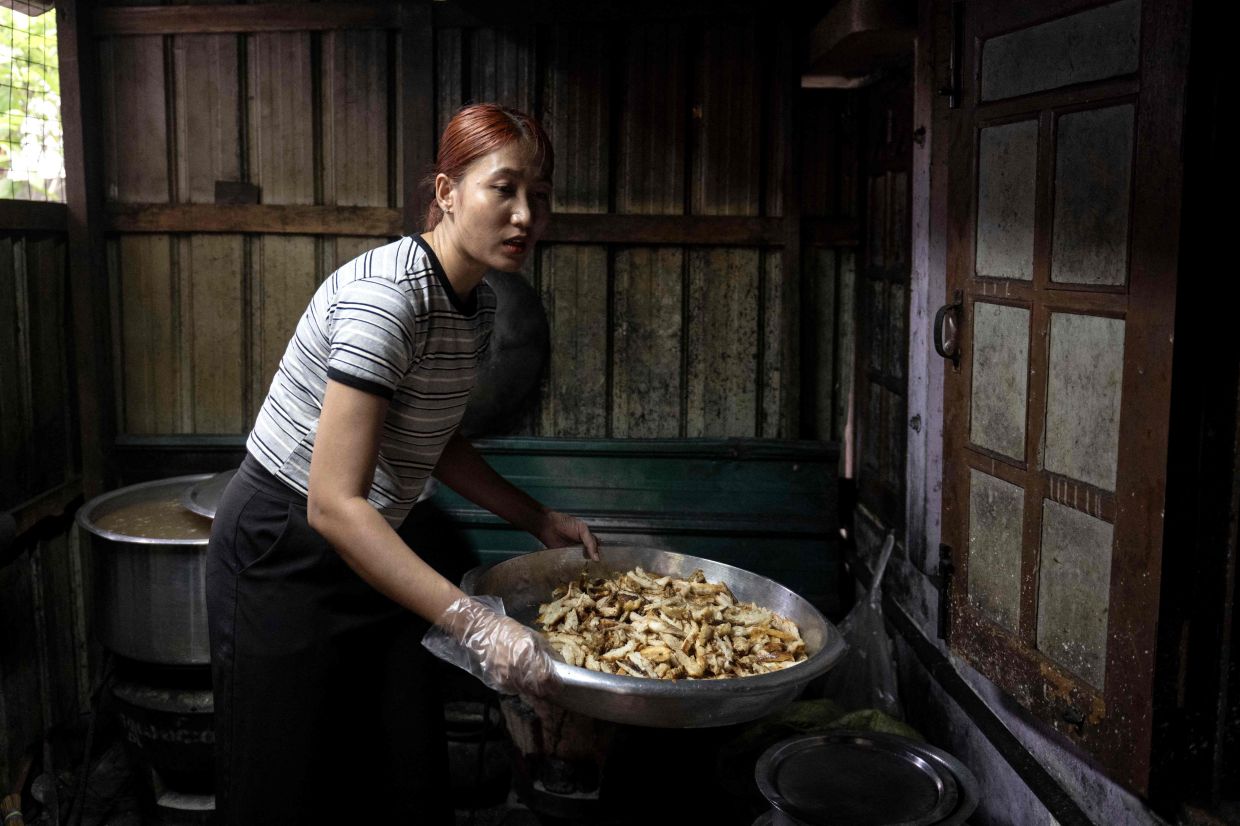
Spice levels range from a tickle on the tongue to a slap in the face, and a serving costs up to 3,500 kyat ($0.84) depending on your choice of protein: fried beans, pork or fish cake.
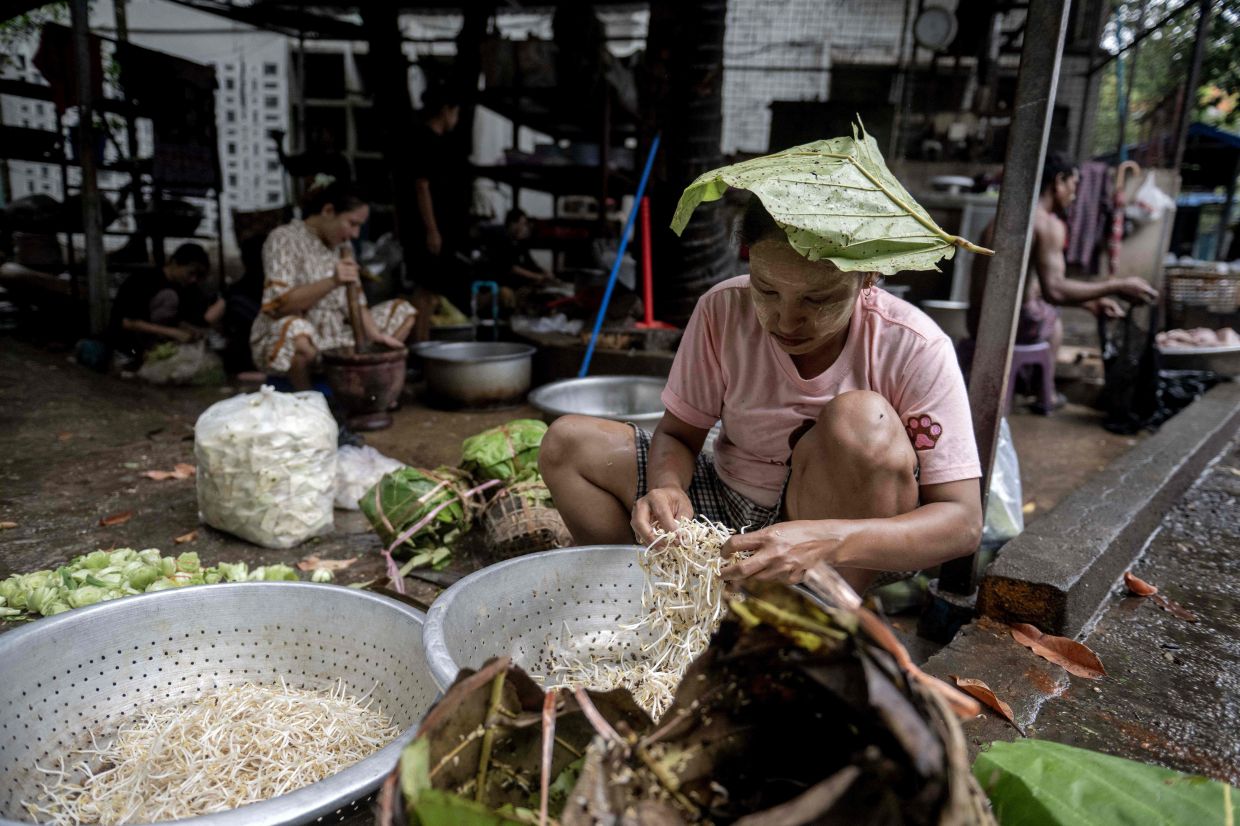
Reaching for the authentic flavours of Rakhine made the shop a loss-making enterprise for the first year.
"We tried not to change the taste we had back in Sittwe, but being in a new place, everything is different," she said, recounting the trials of finding ingredients in Yangon markets 500 kilometres (310 miles) from home.
"We are trying hard to preserve the original flavours," Yee Yee Kyaw said.
She has now established a reputation for hand-crafted vermicelli – extruding the rice noodles through a giant wooden hand pump directly into water kept on a roiling boil.
Rakhine's conflict and humanitarian crisis have left nearly half a million people internally displaced, according to UN statistics.
Many have come to the commercial hub Yangon, with visits back home nearly impossible.
"I believe that eating our noodles helps ease homesickness," said Yee Yee Kyaw, estimating the majority of her customers hail from Rakhine.
Elsewhere in the city, chef Ni Ni Aung presides over a clamouring canteen also shifted from Rakhine two years ago, serving steamed banana dessert, stingray salad and a snail medley.
Her most popular dish caters to the tastes of the Yangon-bred – a crowd-pleasing vat of fatty pork cuts lurking under a sheen of amber spiced oil.
But it is the Rakhine dishes that pique her pride.
"Local cuisine is a heritage we must continue to preserve," said the 46-year-old, who prefers cooking for others to eating.
"I am proud to be able to bring the flavours of Rakhine all the way to Yangon." – AFP