In Klang Valley dining circles, Chipta11a has continuously gained traction over the years for chef-owner Jack Weldie’s progressive Japanese fare imbued with a hint of his Bornean roots.
This was a formula that worked well for Weldie and his wife and co-owner, Diane Ong, for years. And yet, the call to acknowledge where he came from more substantively and pay tribute to the upcoming Harvest Festival (Kaamatan in Sabah on May 30 and 31, and Hari Gawai in Sarawak on June 1 and 2) – has led to the formation of a new menu called Borneo Traces.
Borneo Traces is priced at RM480++ and will run for dinner at Chipta11a from now until June 30. This more ambitious endeavour also sees a few collaborative pairings including product support from beauty brand Aesop, as well as visual artistry, courtesy of renowned Sarawak-born floral artist Joshua Tan of Za Huo Hang.
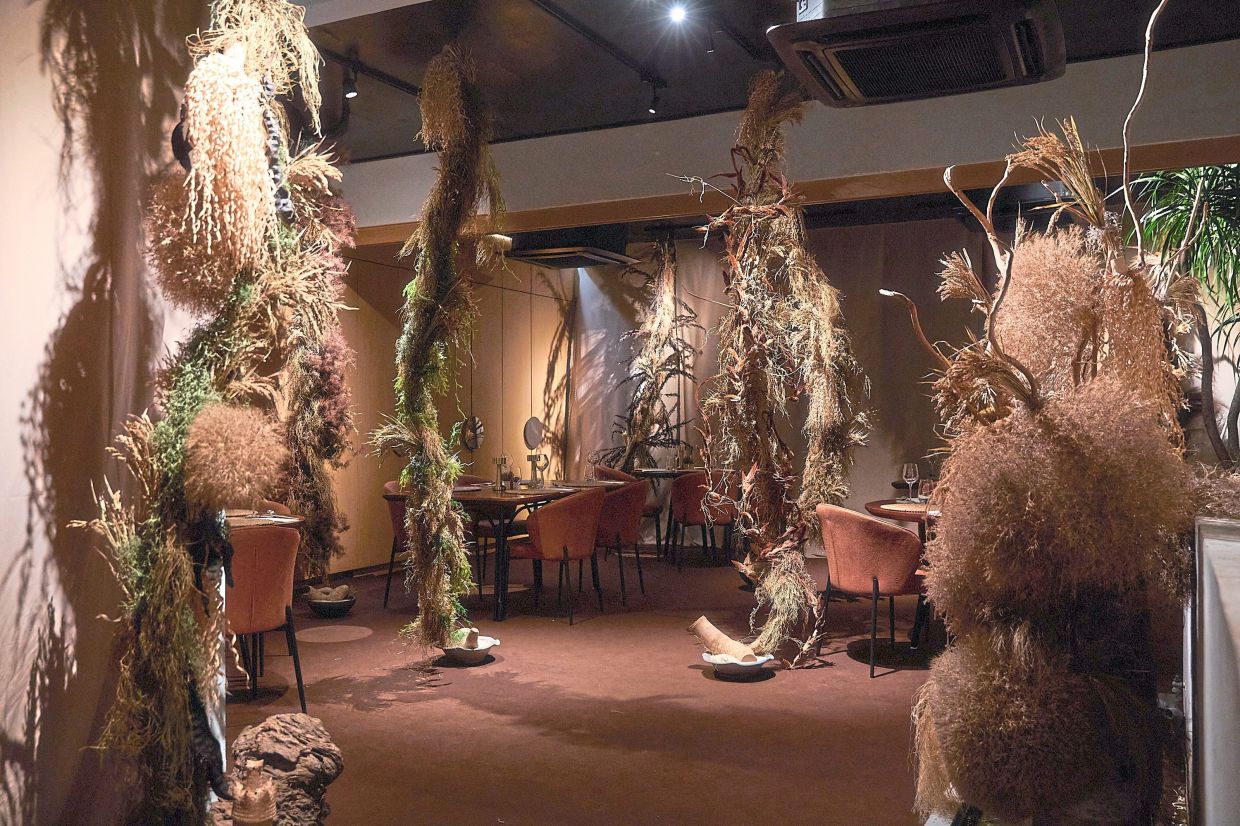
Tan worked relentlessly to create floral imagery to depict the Harvest Festival, ultimately birthing hauntingly beautiful tree-like structures that represent padi fields, the fertility of the soil and the ways in which nature restores and replenishes. The towering trunks also symbolise reaching for the heavens in gratitude for what Mother Nature has provided.
The menu itself alludes to Weldie’s formative years in Sabah, which helped sculpt and mould him as a person, as well as develop his culinary pedagogy of Borneo.
“I am Dusun and I grew up in the Tuaran district in a small town called Tamparuli. We had a very simple life.
“My father used to have a lot of land in the hills and mountains, so we never bought rice; we grew our own, and we had fruit trees and rubber trees. We also grew our own vegetables and cultivated fish in a pond.
“When I was six or seven years old, I started following my parents to the hills to collect rubber tree sap. We would also collect whatever we found in the wild – like bambangan and cendawan kukur (split-gill mushrooms),” says Weldie, one of seven siblings.
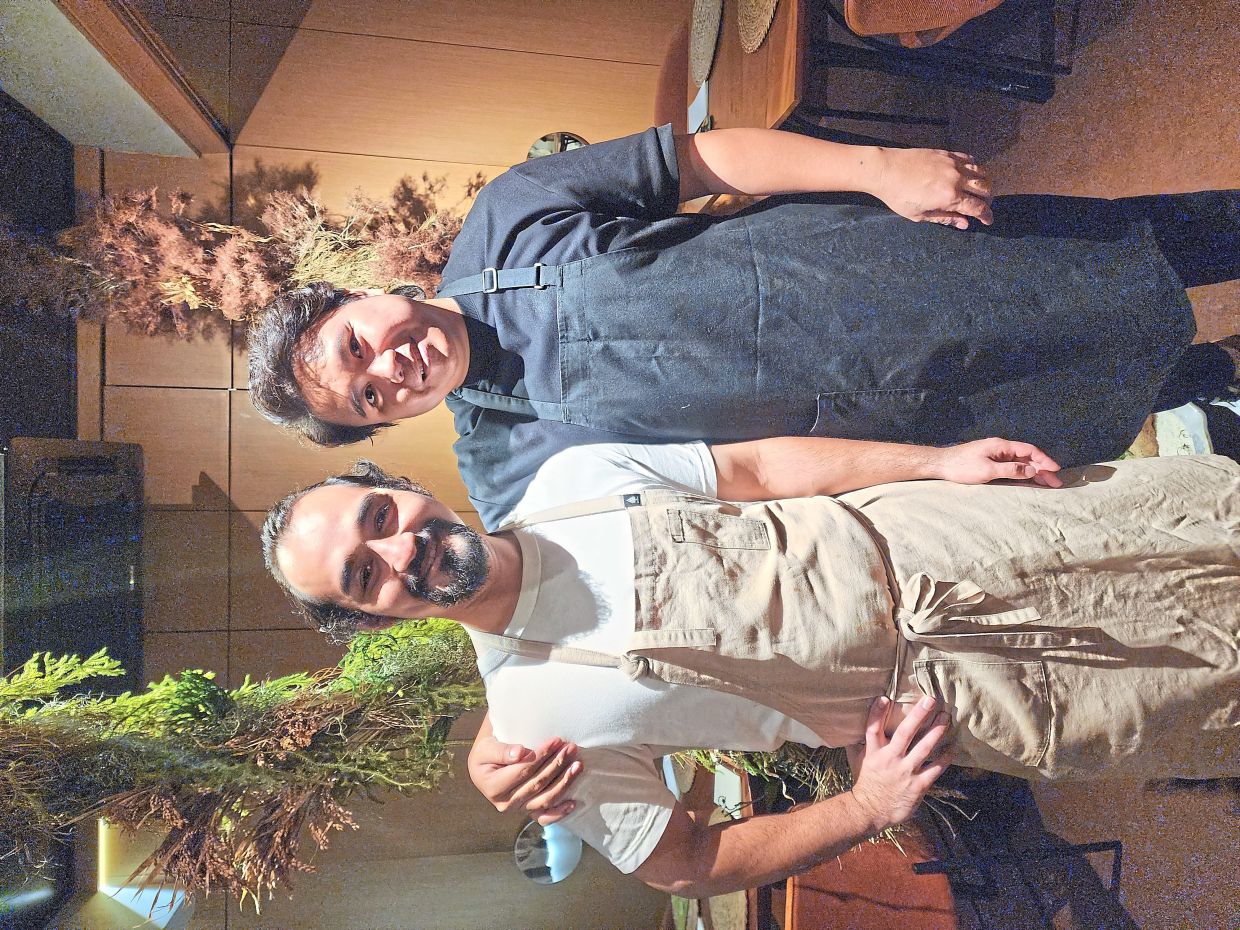
Those memories of a pastoral, bucolic childhood spent wandering through the wilds of Sabah and eating home-cooked fare that his late mother put together, were instrumental in helping him develop the menu, with the help of the restaurant’s operations manager, Michael Yee.
Weldie says the menu also pays tribute to the various ingredients like temu pauh (mango ginger) and asam kandis (a citrusy jungle fruit), and the cooking styles that abound during Kaamatan. In his town, the festival was marked by home-cooked fare brought to the village hall for everyone to share.
“During this period, there is always a lot of different ways of cooking in different households, so it inspired me to a create a modern version of it that is more technique-driven, and share this experience from my hometown with people in Peninsular Malaysia,” says Weldie.
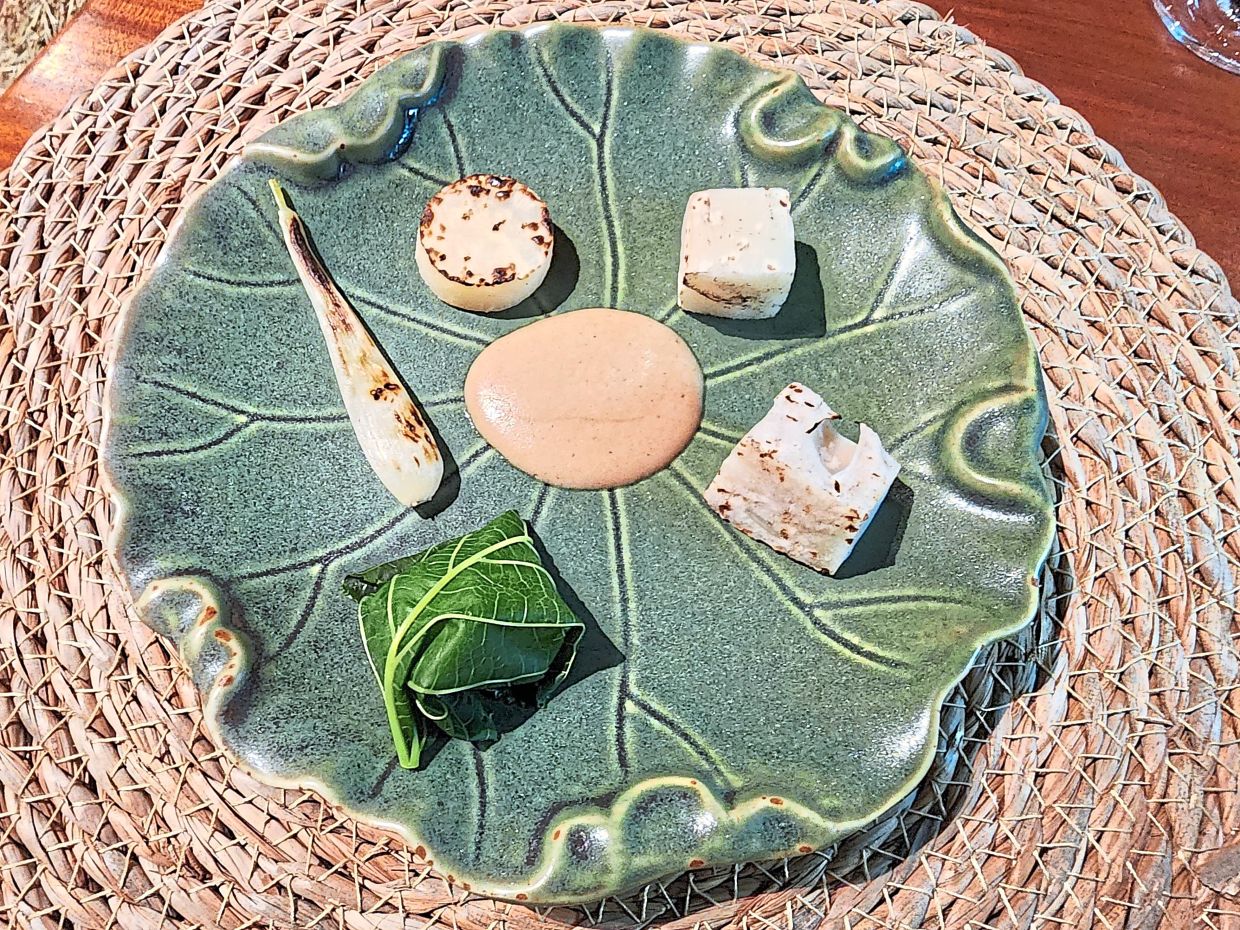
Highlights from the menu include the Pickles course, featuring vegetables that have been lightly pickled and grilled, like sengkuang, palm heart, young soursop, sprouted coconut wrapped in mulberry leaves and losun, a wild spring onion native to Sabah.
This is paired with a fermented daikon and buah keluak (a nut often called the “truffle of the East”) emulsion.
According to Lee, the idea is to enjoy each vegetable in its unvarnished state, which ultimately proves to be a pageant round-up of natural beauties. One of the most surprising hits in this constellation is the young soursop, which is sweet, and has the texture of yam.
The losun is smoky with a slightly fibrous quality and flavours and textures that are a little like the quirky love child of a leek and a spring onion.
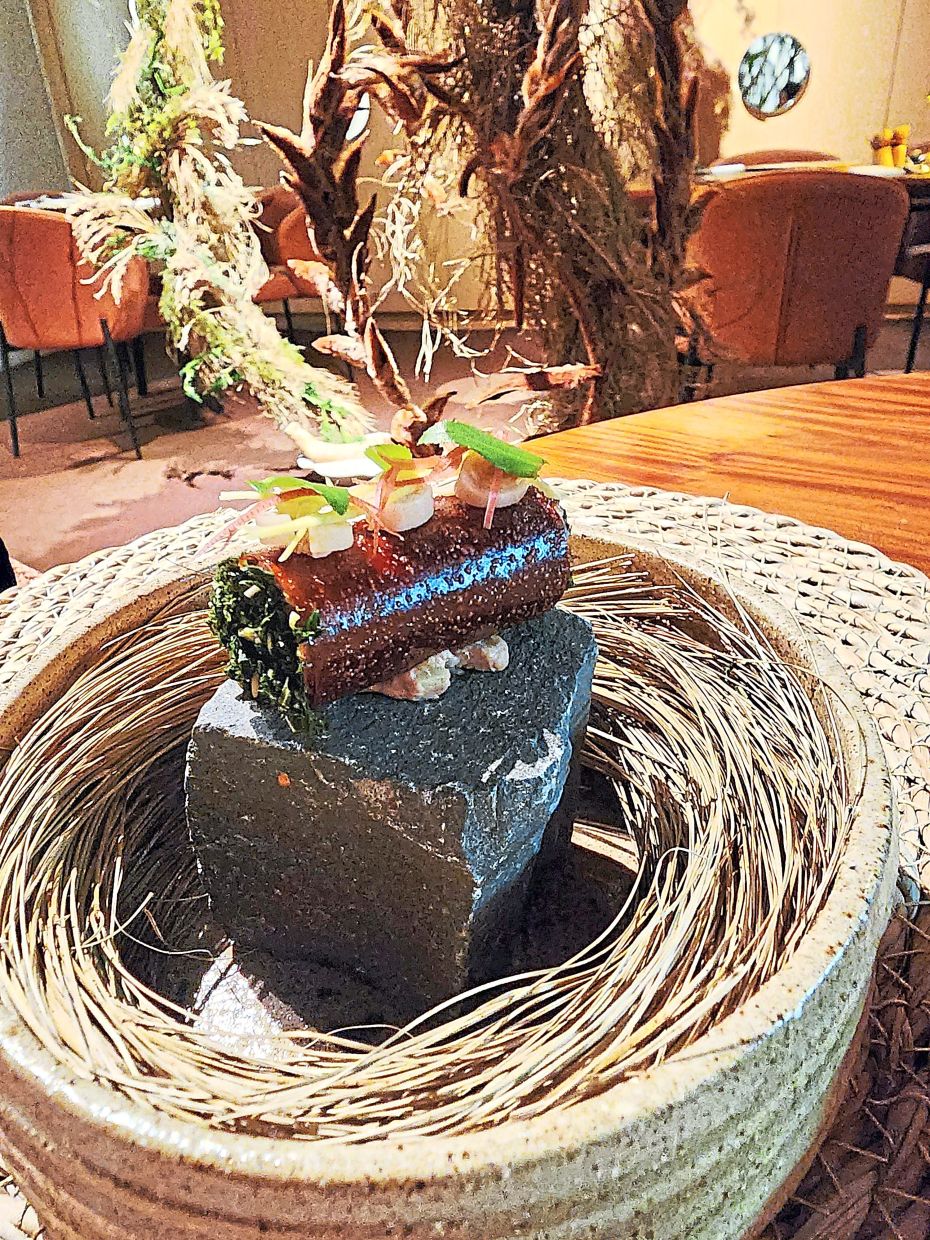
The Pansuh course meanwhile is a tribute to the Sarawakian dish of ayam masak pansuh, which is chicken cooked in bamboo.
In this iteration, a crisp tuile represents the bamboo, and this is filled with chicken liver pate, bamboo shoots, tuhau (wild ginger), pickled bunga kantan (torch ginger flower), mustard seeds and salted cassava leaf.
The result is a wild, riotous explosion of flavours, starting with the richly hedonistic umami notes of the chicken liver pate, rounded out by the sharpness of the tuhau and culminating in a floral, fragrant burst of flavour from the bunga kantan. This may be a one-bite wonder but it’s impact will be felt long after the meal is over.
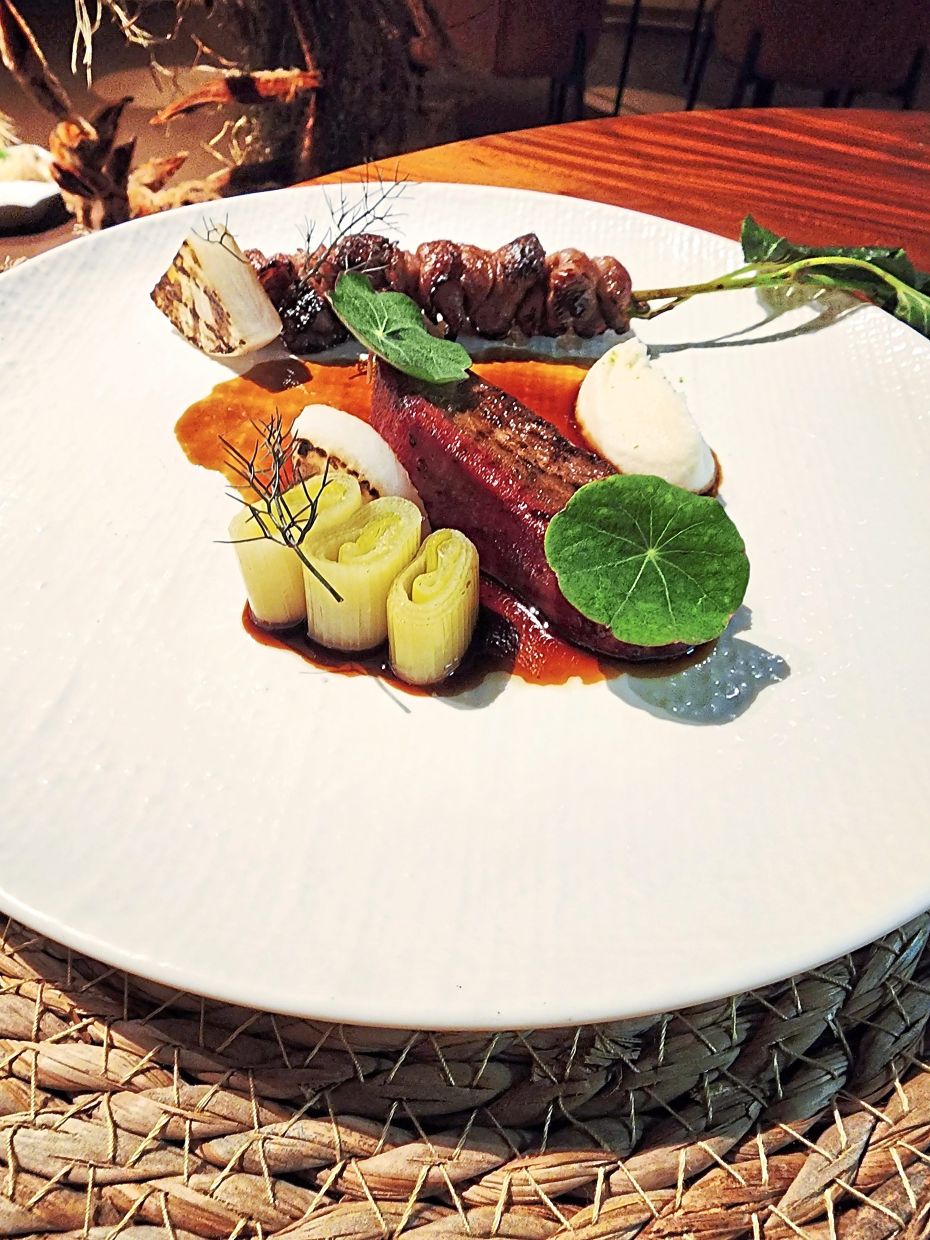
From the Land course, there is the A5 wagyu skewer as well as grilled beef tongue paired with a jus made from beef bosou (traditional preservation method), heart of palm puree, daikon and charred leeks. This is the part of the meal where things get really, really good.
The skewer features beef that retains bounce, spring and just enough pliancy to retain your interest while still remaining succulent at its core. The beef tongue meanwhile is sublime – a masterclass in how to take a notoriously tough piece of meat and turn it into a submissively docile animal that still retains a seductive edge.
The jus meanwhile has been reduced to a syrupy science that has a lightly tangy underbelly while the leeks are fabulous – still crunchy yet lightly wilted with a charred, blistered surface that provokes rapturous exclamations of pleasure.
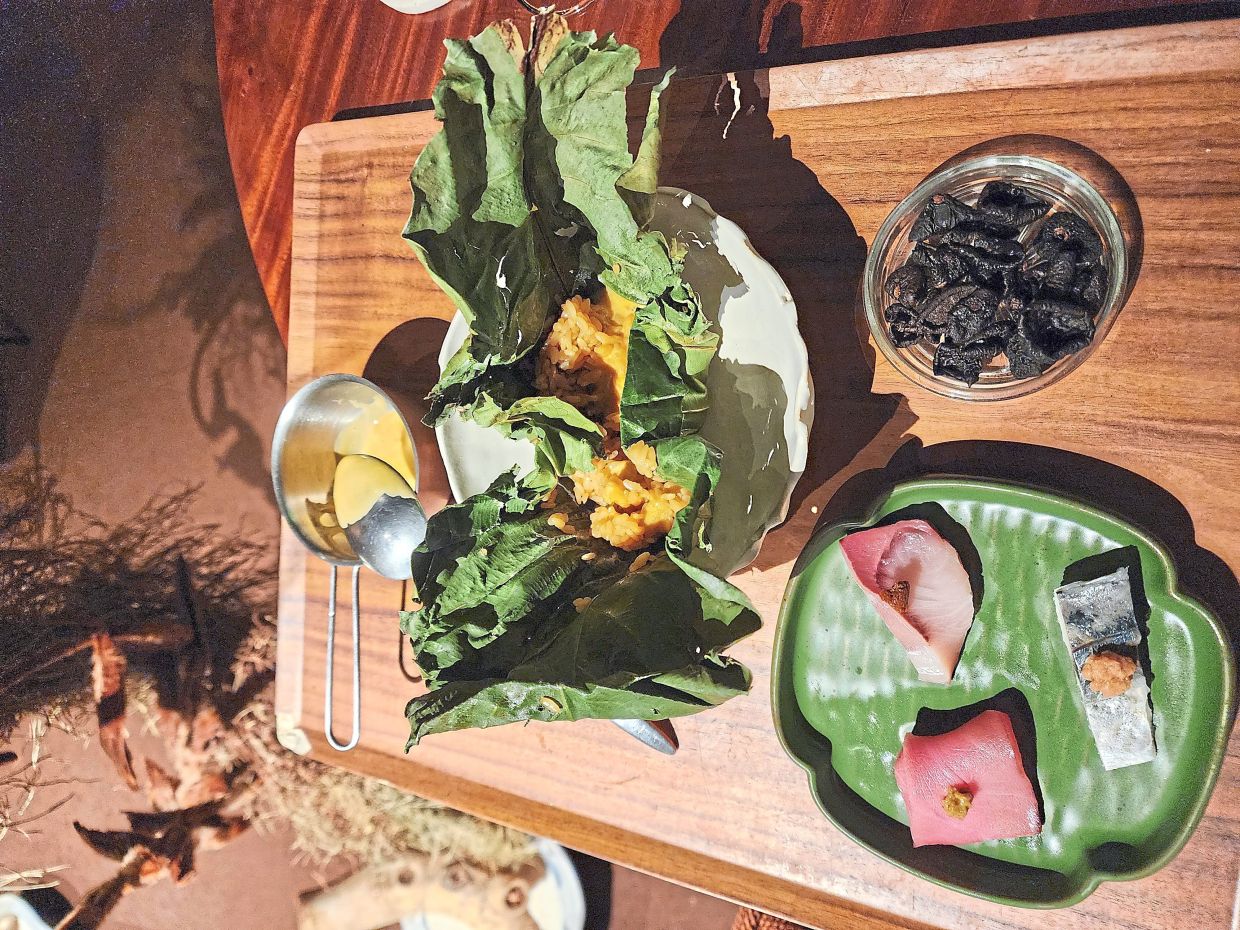
Up next is probably one of the best things to come out of Chipta11a – Weldie’s famed asam jawa rice which is typically used to lace the sushi at the restaurant. In this current menu, the rice is a stand-alone feature, as befitting the nostalgic memories that are wound around it.
“My mother often made pinarasakan – a Kadazandusun dish of fish slow-cooked with tamarind juice, turmeric, chillies and spices. But as a child, I liked going out to play. So by the time I got back, it would be around 8pm and all my six siblings would have finished nearly everything.
“There would be no more fish left in the pot, but the broth would have reduced until the juices of the fish and the tamarind came out. It was so intense and I used to pour it over my rice. So that is how the idea of this rice came about,” he says.
The rice is sensationally good – buttery with an unctuous richness and the tangy, tart notes of tamarind giving it a hefty lift to the pinnacle of the culinary universe.
The dry-aged fish served on the side alludes to Chipta’s genesis and show-stoppers include the mackerel with tuhau – a contrast of rich aquatic qualities juxtaposed against a sharp, gingery underlay. The medium-fatty tuna belly with green chilli paste is another smooth, silken winner with a hint of heat lacing its pores.
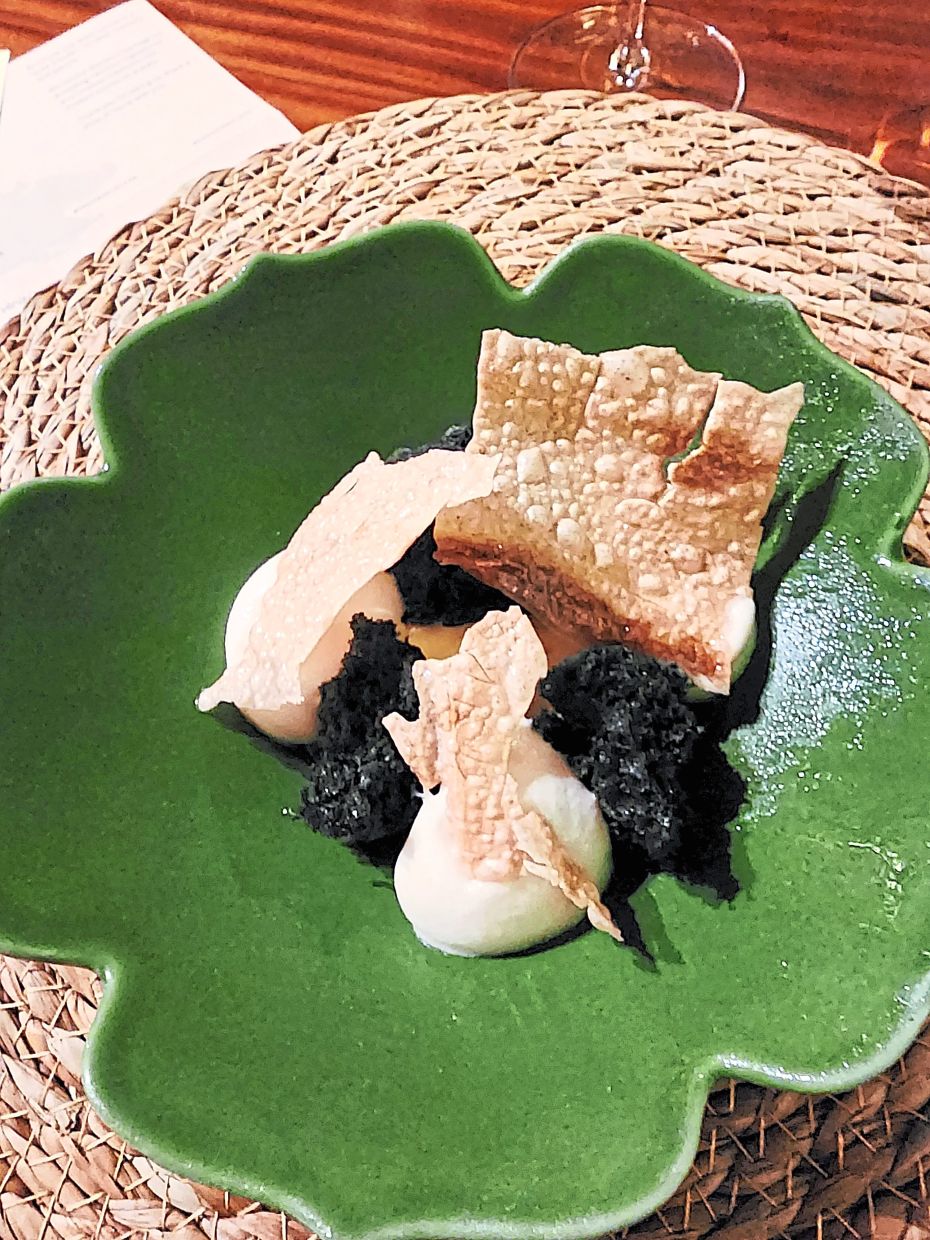
To finish the meal, there is Memory Lane, essentially a dessert featuring smoked kelulut (stingless bee) ice-cream, coconut foam, baked sweet potato, kelulut black cardamom and a taro cracker, made in tribute to Weldie’s late father who only made one dish: bubur cha cha.
Weldie’s interpretation is bolstered by the sweet, slightly tangy qualities of the ice-cream, the tropical hints from the coconut and the loaded, starchy connotations of the sweet potato. It all works together in a symbiotic, harmonious entanglement that engenders a wonderfully delicious experience.
Weldie’s Borneo Traces menu highlights the many culinary facets and ingredients of Borneo that folks in Peninsular Malaysia know nothing about – told through the lens of a son of the land.
The stories behind these dishes are heartfelt and compelling, which means the meal ceases to be a purely gustatory experience and takes on a far more deeply personal nuance.
Which is why in so many ways, this feels like Weldie’s homecoming menu.