Kuala Lumpur is not a city that is generally beloved. There’s too much traffic, too few shared spaces, and too much chaos to make sense of what to do between destinations.
It is, nevertheless the city I more or less live in (my house is technically a few hundred metres from the city’s border), and there’s still plenty to explore. Last weekend, for instance, I strolled into Bangunan Sultan Abdul Samad to see how it had changed since being renovated and reopened.
The first thing worth highlighting is that this is not a restoration back to what it used to be. My wife and mother both once worked in that building, and they can testify that many details are different.
The wooden floors upstairs are now tiled, and the rooms are no longer cramped with partitions. The “prisoner’s tunnel” has been refurbished and now caters to guided tour groups. But my wife still felt the hairs rise on the back of her neck as she remembered what the place used to smell like.
Of course, it was not always a courthouse attached to holding cells. It was once known as the Secretariat and served as one of the earliest major government administrative buildings for the British, before later becoming the government offices for Selangor.
It has witnessed parades and air raids, fires and floods. Now it is replete with neat cafés and snazzy technological exhibitions.
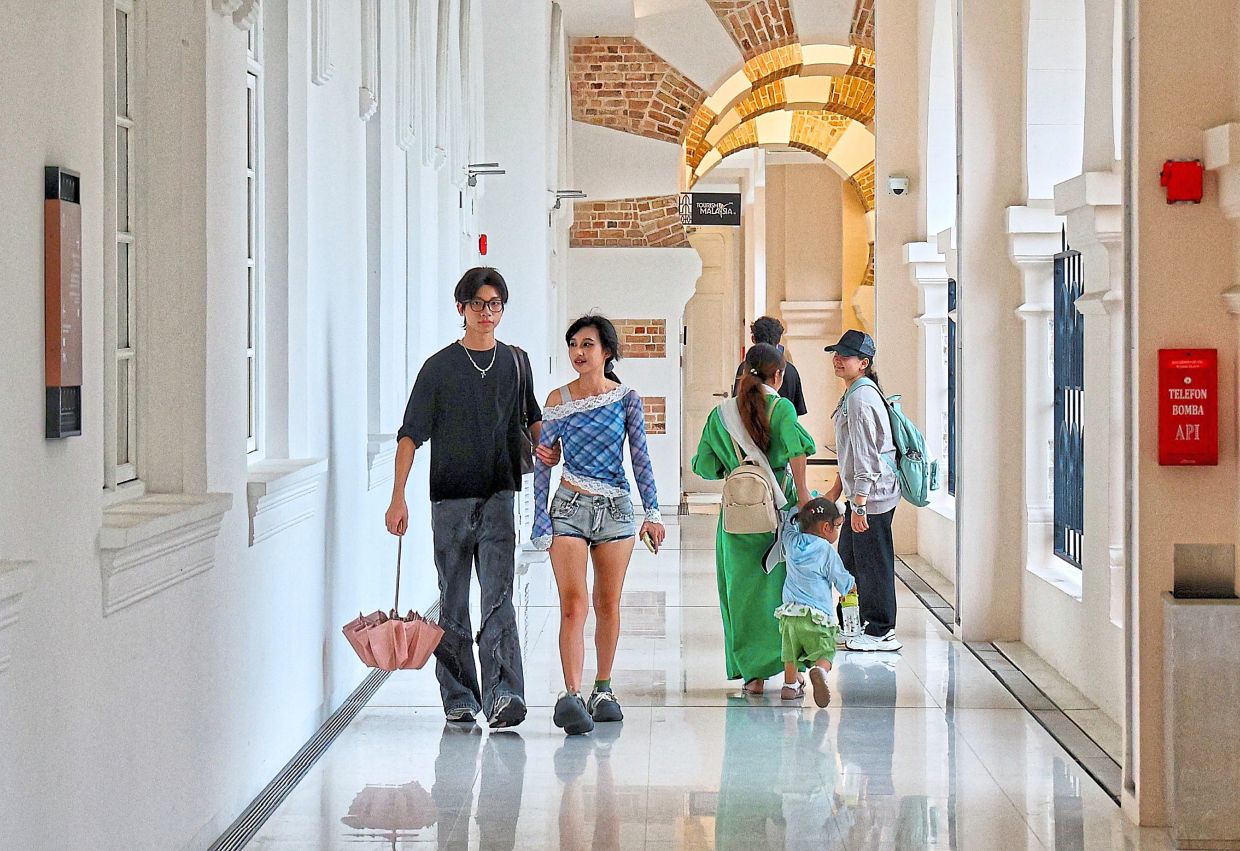
One current highlight for me is an exhibit titled A City Of Dreams: Kuala Lumpur 1820s-1974. It should come as no surprise that the history of KL itself resembles the building at its centre: a series of accidents, improvisations, and plans rewritten according to necessity.
Even the history of the name “Kuala Lumpur” is a mishmash of truth, myth, and conjecture. Was it named after the confluence of what used to be the Lumpoor River? Or was it once called Pangkalan Lumpur, before becoming Kalan Lumpur, only to be reinterpreted by some helpful British administrator as the more familiar “Kuala”?
Part of the reason for the confusion lies in the sheer diversity of people who came to KL and made it home. Local Malays, Mandailing settlers, and Chinese miners all arrived in search of tin, under concessions and patronage of the Selangor royal court.
The river became too shallow as it approached the mines in Ampang, forcing travellers to disembark and continue overland. That muddy confluence evolved into a transfer point and trading settlement, functioning as both a supply hub for the mines and an export point for the ore flowing back out.
Given the riches that tin mining could produce, wasn’t it inevitable that KL would grow into the metropolis it is today? Personally, I think not necessarily. The earliest settlements were repeatedly ravaged by fires and battles, courtesy of the Selangor Civil War.
Then, when the war ended, tin prices collapsed and there was barely an economy left to speak of, and Kapitan Yap Ah Loy himself reportedly came close to bankruptcy. But suddenly, in 1879, tin prices rebounded dramatically, nearly doubling within a short period.
With that influx of wealth, KL was rebuilt once again, except this time in brick and tile instead of flammable wood and attap.
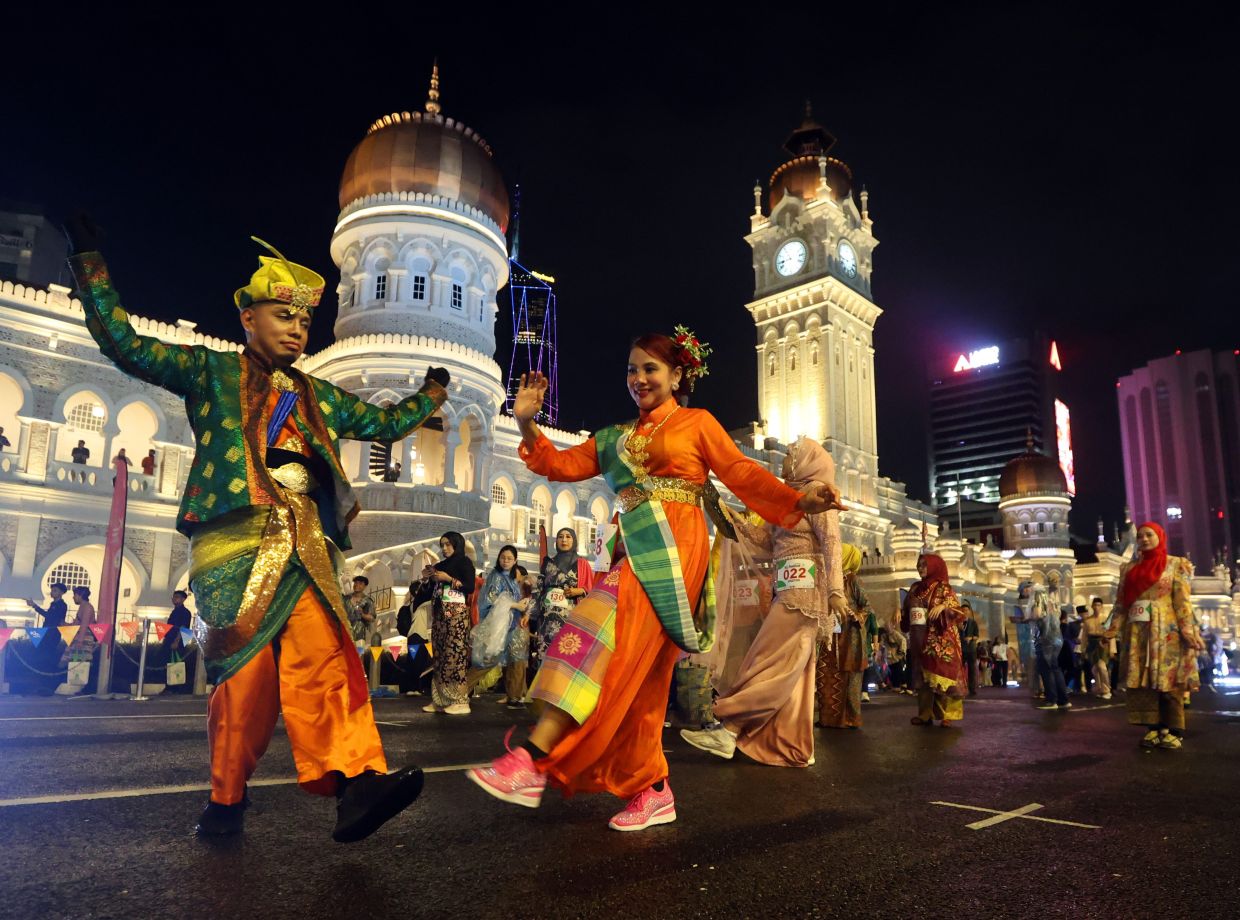
While the buildings became more enduring, the city remained in constant flux. This was something alluded to in a self-guided tour I accessed as part of this year’s KL Festival. In fact, the festival itself serves as a surprisingly good source of insight into both the city’s past and how its current residents imagine KL today.
(I personally plan to join the group walk later this month searching for otters in the Klang River. The festival is on until May 31; details at klfestival.com.my.)
One festival offering is a specially designed walking route where stories unfold as you move through central KL. It was enjoyable enough, although I found myself spending more time trying to match destinations on the map to the actual streets around me.
There is a huge difference between being guided from junction to junction and wandering the city on a semi-random walk.
For one thing, when your phone tells you to “walk there”, your attention keeps flicking between phone and pavement as you try to head in the right direction without bumping into a car.
But when you’re wandering with no particular destination, I find you take time to be led by the present.
You see a tailor’s shop specialising in alterations, with every surface draped in various materials. Or a large pot of assam laksa balanced in a narrow walkway and customers tessellated in a scarcely larger dining area. Or a streetside cafe lined with old LP records serving lattes and Aussie pies. Or a money changer with a crowd of immigrant workers fanning out a queue pointing at a solitary worker behind a security grill.
It’s a bit chaotic, but there is sense in it all. Each shop has a place and purpose. The diversity of people passing through means you get an equally diverse ecosystem of services, even if the whole arrangement can appear random to an outsider.
I would argue this is preferable to the modern KL shopping mall, where every restaurant and shop is a familiar franchise copy of another. Or how Putrajaya feels so meticulously planned that there is barely any room left for improvisation, adaptation, or surprise.
So I am grateful that the history of Kuala Lumpur is messy and open-ended. It is not a perfect city, but it remains a city with space and a place for almost anyone who comes by. And honestly, that is probably the best a city can hope to be.
Logic is the antithesis of emotion but mathematician-turned-scriptwriter Dzof Azmi’s theory is that people need both to make sense of life’s vagaries and contradictions. Write to Dzof at lifestyle@thestar.com.my. The views expressed here are entirely the writer’s own.