We have all heard the rage around reusable cups and metal straws, especially over recent years.
Sustainable living – making active choices to live an environmentally-conscious lifestyle and reduce environmental impact – has become one of the most popular lifestyle trends today.
But while many may embrace and adopt the idea of sustainability in their daily lives, not everyone is willing to go beyond the convenience of just tossing a metal straw into their handbag in hopes that they remember to use it when they’re out.
As of 2023, Malaysians discard approximately 39,000 tonnes of solid waste daily, as reported by Solid Waste Management and Public Cleansing Corporation (SWCorp). To put into perspective, it is equivalent to filling up almost 4,000 residential-sized garbage trucks every day.
Yet, only about 38% of this discarded waste is properly managed and recycled, which goes to show that the challenge lies in turning awareness into consistent action among Malaysians.
In a culture which has the habit of “use and throw” so deeply ingrained, shifting toward sustainable living is far from effortless. In fact, it requires intention, action and consistency.
But no matter how small the first step may be, it has the potential to spark lasting change and collectively, it can produce a large impact that will bring us one step closer to better, greener days.

Building lasting habits
For some Malaysians, sustainable living has developed into something far bigger than just a passing trend.
One of them is festival director and sustainability advocate Evangeline Lim, who has been environmentally conscious since young.
The 38 year-old grew up with habits such as reusing water from washing rice to water the garden, composting eggshells and vegetable scraps as well as sorting waste to be recycled long before recycling facilities were widely available.
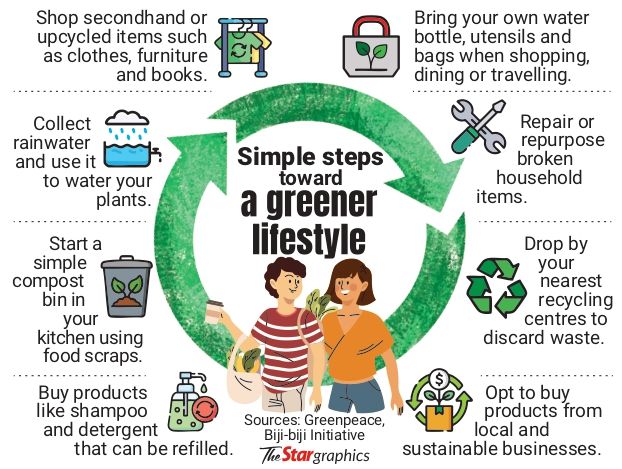
Today, she makes sure to implement a framework in her lifestyle that she calls the “10Rs”: rethink, refuse, reduce, reuse, repair, refurbish, repurpose, regift, recycle and rot.
Whether it’s by planning her meals to minimise food waste, choosing clothes swap over buying new ones or sourcing items for free-gifting communities, Lim tries to ensure that everything she does serves a purpose.
Recycling is a big part of her routine, too. Living close to a recycling centre, she drops off her sorted recyclables once or twice every week.
What motivates her to keep coming back to recycling centres is more than just the convenience, it is also about the trust that she has.
“I prefer channels I can trust to handle each category of waste responsibly, and a well-organised and well-maintained facility gives me confidence that items are actually being recycled, not redirected to landfills,” she says.
Her routine shows how sustainable habits are formed, which is through small steps repeated over time until they naturally become woven together with everyday life.
“I believe each of us plays a role in the world we will inherit tomorrow. Positive change or environmental deterioration does not happen overnight – it accumulates over time,” says Lim.
“This is why I strive to be conscious in the way I live, and recycling is one simple yet practical way anyone can contribute," she adds.
"Whether it's recycling or repurposing old items, consistency will find a natural rhythm into our routine. In the long run, these actions may help reduce pollution and conserve natural resources."
Taking the first step
When it comes to making that switch in your lifestyle to contribute to a greener planet, recycling is always a good and easy place to start.
Of course, not everyone will become a dedicated recycler overnight, but with the existence of convenient and accessible facilities, it will no doubt make that first step a breeze.
Facilities such as the Recycling and Buy-Back Centre (RBBC) located in IPC Shopping Centre, Petaling Jaya, offer a convenient and reliable spot for people to drop off their waste materials such as paper, textile, plastic and e-waste.
“We’re not hoping to completely switch everyone to recycling – it is far from being possible. But by having these convenient recycling facilities, we can definitely encourage more people to drop by and easily practise the habit of recycling,” says IPC Shopping Centre general manager Karyn Lim.
Her point aligns with findings from a 2022 Malaysian study, which highlighted how the presence of accessible recycling facilities is able to push people into participating in the act of recycling.
Lim also recognises that many Malaysians who do want to recycle may not be knowledgeable about what is accepted or how items should be prepared before recycling.
However, she states that clear guidelines, easy-to-reach locations and well-maintained facilities will drive Malaysians to incorporate this habit into their lifestyle better.
“When the process feels seamless, people – including myself – are far more likely to keep showing up and doing it regularly.”
After all, who wouldn’t want to be known as the person who continues to do something good for the planet and make everyday life feel a little more purposeful?
A little truly does go a long way when it comes to building a circular economy and shaping lifelong habits for a greener future.