
Wildlife biologist Chrishen R. Gomez grew up in a world of traffic lights, coffee shops and concrete in Kuala Lumpur.
Nature was something distant, but that changed one night under the star-strewn sky of a primary rainforest in Borneo.
“It was my first night camping in a primary forest,” he recalls. “The sky was blanketed by stars, and the air pulsed with the sounds of insects and nocturnal mammals. All that awakened a deep sense of existence that I find myself chasing whenever I’m in the city.”
That awakening has since guided his career as research manager at the Wildlife Conservation Research Unit (WildCRU)’s Bornean Carnivore Programme, where he leads a team of scientists studying 24 species of carnivores – from civets to the Sunda clouded leopard – across Sabah’s rainforests.
Dubbed Borneo’s “ghost cat”, the Sunda clouded leopard is as elusive as it is breathtaking – rarely seen or photographed, yet vital to the island’s ecological balance.
“We know hardly anything about them,” says Gomez. “They are to Borneo what lions are to Africa – the apex predator that keeps the forest in balance. Studying them is like tracking pulsars in a faraway galaxy: every data point we get revolutionises our understanding of tropical ecosystems.”
Catching one for research took his team nearly a year of preparation, setting up a vast network of camera traps and monitoring the terrain on foot.
“When we finally caught and fitted our first one with a GPS collar, it was emotional,” he admits. “For four months, we could track its movements from space – it was a treasure trove of data.”
A graduate in Resource Biotechnology, Gomez’s early fascination with cells and DNA evolved into a passion for applying science to conservation.
His research focuses on conservation genetics, using DNA to trace how land-use changes – like deforestation – affect animal populations.

We study the animals to understand how to better preserve and conserve our tropical rainforests, he explains.
“DNA carries history. It tells us how species have adapted, migrated or been cut off by human development. With just a few molecules, we can see if populations are shrinking, inbreeding or losing their ability to disperse.”
His pioneering work earned him the Merdeka Award Grant for International Attachment (2019), allowing him to conduct research at Brown University in Rhode Island, the United States, under conservation geneticist Dr Tyler Kartzinel.
Despite the onset of the pandemic then, he continued his studies – remotely – an experience that prepared him for his next academic leap: a PhD at Oxford University on the genomics of Sunda clouded leopards.
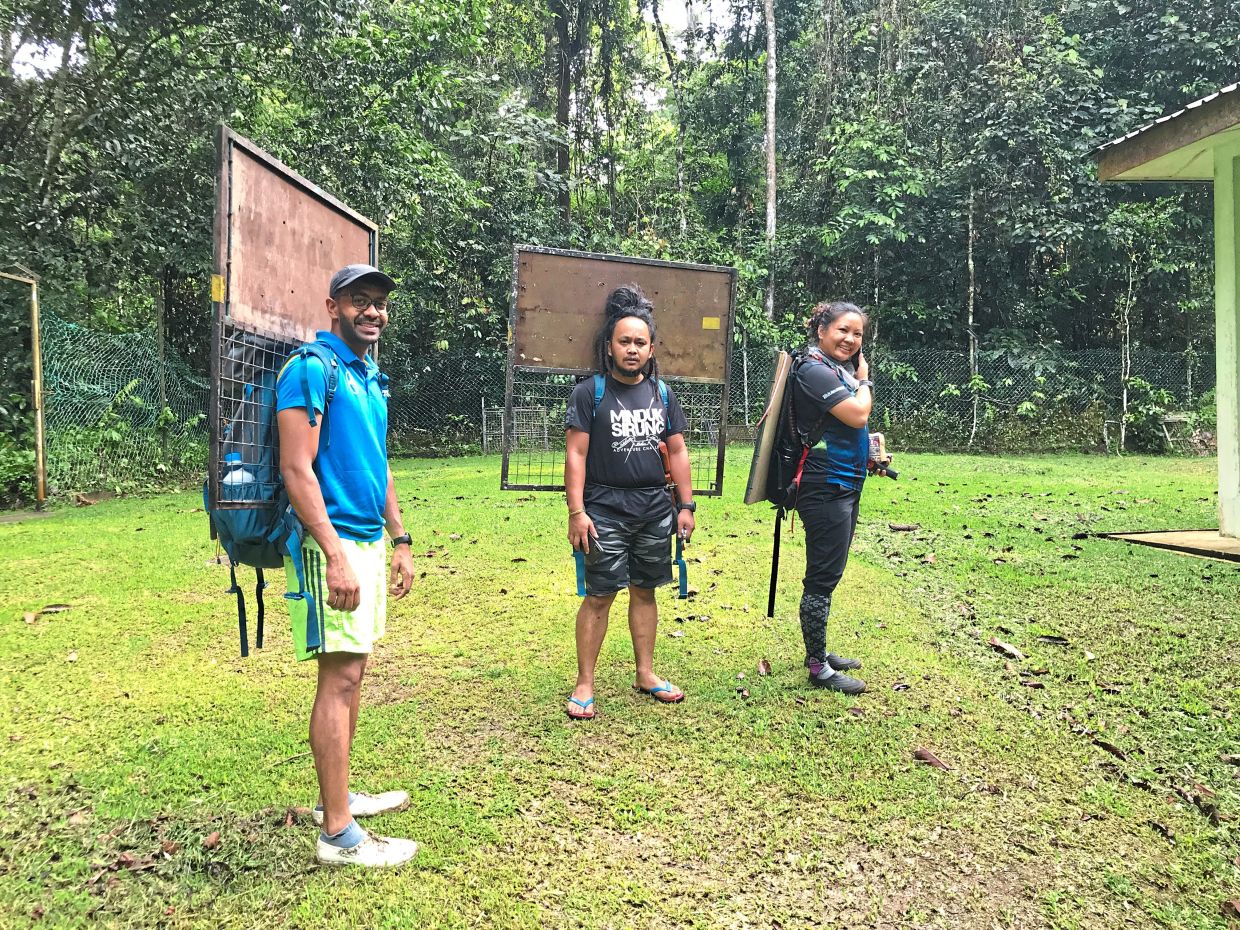
But beyond the scientific achievements, Gomez describes conservation as a humbling, often gruelling pursuit.
“It’s not glamorous,” he laughs. “It can be messy, tiring and full of setbacks. The jungle has a way of upturning your best-laid plans. It’s like an arranged marriage – you grow to love it.”
Still, every dawn in the forest brings renewed purpose.
“Our days begin at sunrise with gibbon calls echoing through the trees. After coffee, we set out to maintain our grid of camera traps – sometimes hiking all day through leech-infested streams. It’s exhausting, but deeply fulfilling.”
The solitude, however, is one of the biggest challenges.
“I’m an extrovert and fieldwork can be isolating,” he admits. “My dream is to build a conservation community – a network of young Malaysians working together to protect our wild heritage.
“Conservation isn’t only about volunteers who love animals or nature,” he says. “It extends to economists, engineers, policymakers and artists. It’s about how we manage land, commodities and development.”

Gomez works closely with local communities and plantation owners in Sabah, promoting coexistence between conservation and development.
“Those who work the land understand its complexity,” he says. “The problem often lies with executives who’ve never stepped foot on it.”
He believes Malaysia’s forests are “a gift that keeps on giving”.
Each river, waterfall and canopy trail, he says, offers something new every time.
“You can never ‘finish’ exploring a forest. There’s always more wonder waiting.”
When asked what young Malaysians can do to help, his advice is simple yet profound: start by exploring.
“Go hiking, snorkel, camp or dive. Fall in love with the wild first – then protecting it becomes instinctive,” he says.
Looking ahead, Gomez dreams of a Malaysia where green spaces are part of everyday life.
“I’d love to see families spending weekends hiking instead of in shopping malls,” he smiles.
To him, the wild isn’t just a workplace – it’s a home, a teacher and a lifelong love.
“Our forests are classrooms, temples and sanctuaries. And conservation is about connection. Once you’ve heard a gibbon’s song at dawn or watched the forest wake up, you'd never see the world the same way again,” he concludes.