Walking up the driveway to the home, you might feel like you’re in West London rather than the heart of Kuala Lumpur.
This double-storey terrace house – aptly called London Townhouse – reflects the time its owners spent living and studying abroad in England.
From the moment the front door opens, the house reveals its character: a vestibule reminiscent of classic British homes, dark-toned interiors, a faux fireplace that anchors the living room, and layers of vintage decor that tell stories of travel and family.
But beyond the visual references to London, the house represents something far more personal.
Designed by architect and designer Katrine Cheong, the residence is the lived-in expression of a young Malaysian couple – who only wanted to be known as Max and Mimi – who returned home after years abroad and wanted their house to echo the places, memories and experiences that shaped them.
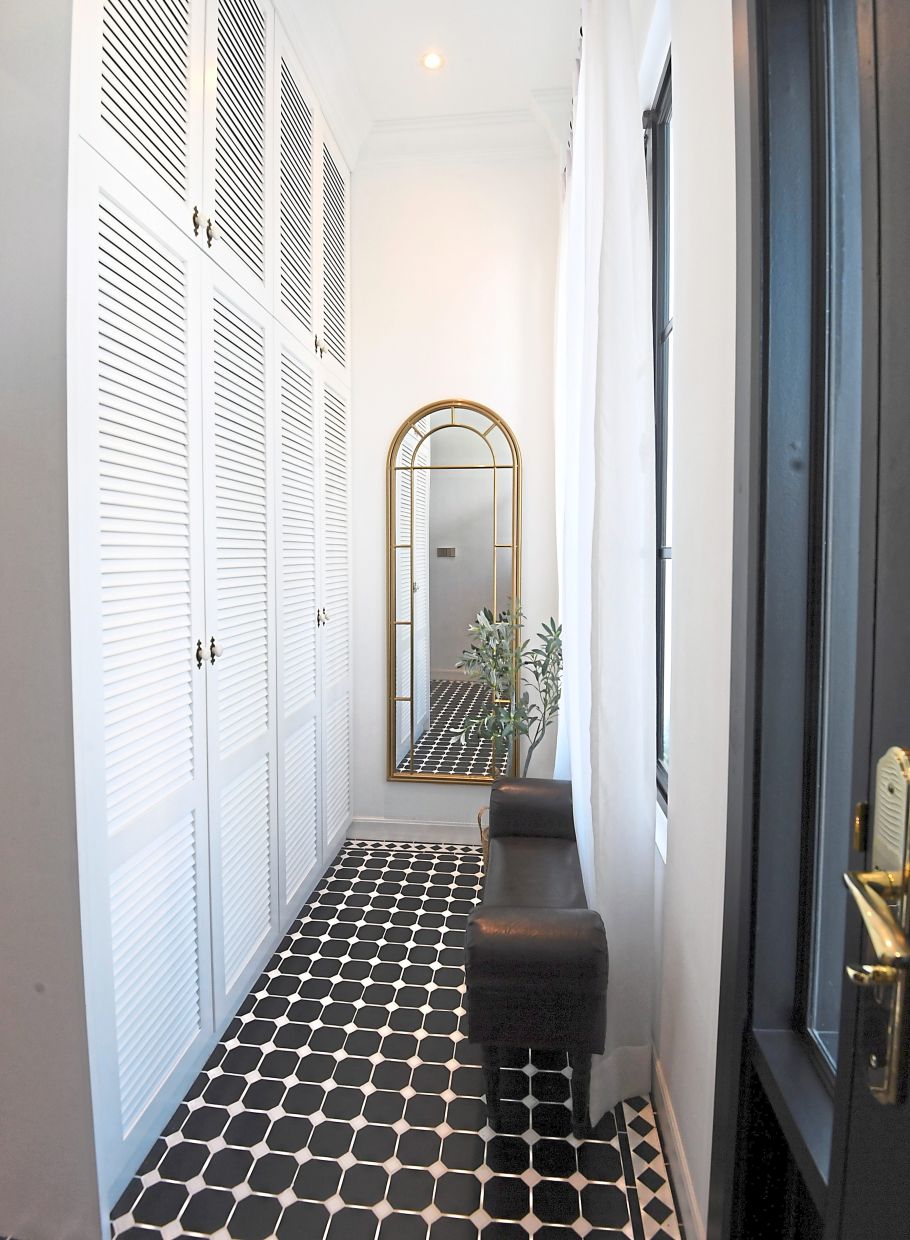
“Our home is like my character – I’m quite eccentric,” he says with a laugh. “It has a British feel because I studied there. One of the things I always liked was English houses with a vestibule.”
Historically common in Victorian homes, a vestibule is a small transitional space between the front door and the interior.
In colder climates, it acts as a buffer zone that prevents winter air from entering the house. It also provides a place to remove coats, shoes and umbrellas before stepping further inside.
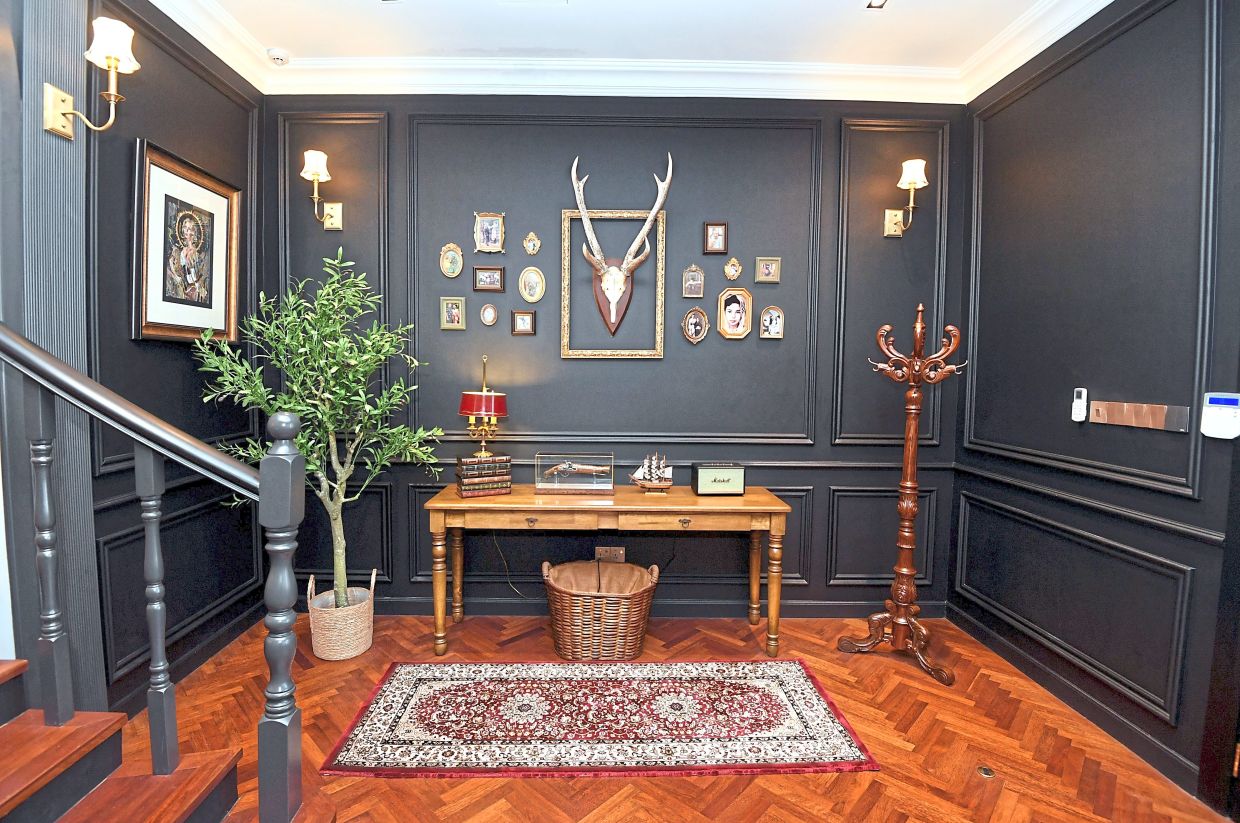
While Kuala Lumpur hardly has London’s winter chill, the feature sets the tone for the home. With its mouldings, monochrome palette and carefully chosen flooring, the vestibule feels like a deliberate step into another world.
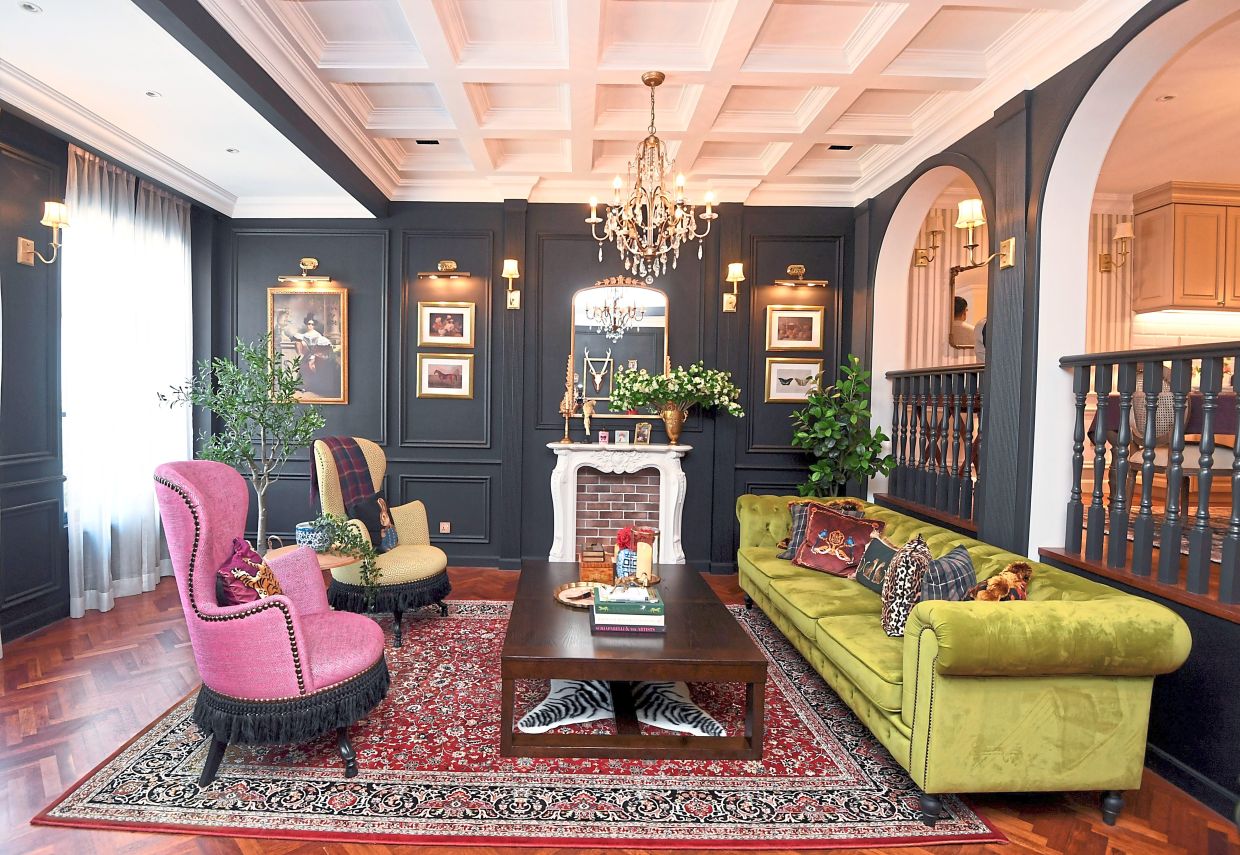
Perhaps the most striking room in the house is the living area, where deep, dark walls create an atmosphere rarely seen in Malaysian homes.
“I’ve always wanted black walls,” says Max. “Most homes here use lighter colours like white or beige, but I wanted something more European, more English – almost Victorian or even Dark Academian.”
The bold choice meant that furnishings had to be curated carefully. Sofas, rugs, chairs and decorative pieces were chosen to balance the dark backdrop while maintaining warmth and texture.
At the centre of the room stands a fireplace – another unmistakably British element.
Of course, in tropical Malaysia, the fireplace is purely decorative.
“It’s the focal point of the family hall,” explains Cheong. “We use battery-operated candles so it gives the warmth and ambience without heat or fire risk.”
The result is a living space that feels intimate and cosy, much like the drawing rooms of old European homes.
“For us, the important thing was that when you come in, you immediately feel warm and at home,” Mimi says.
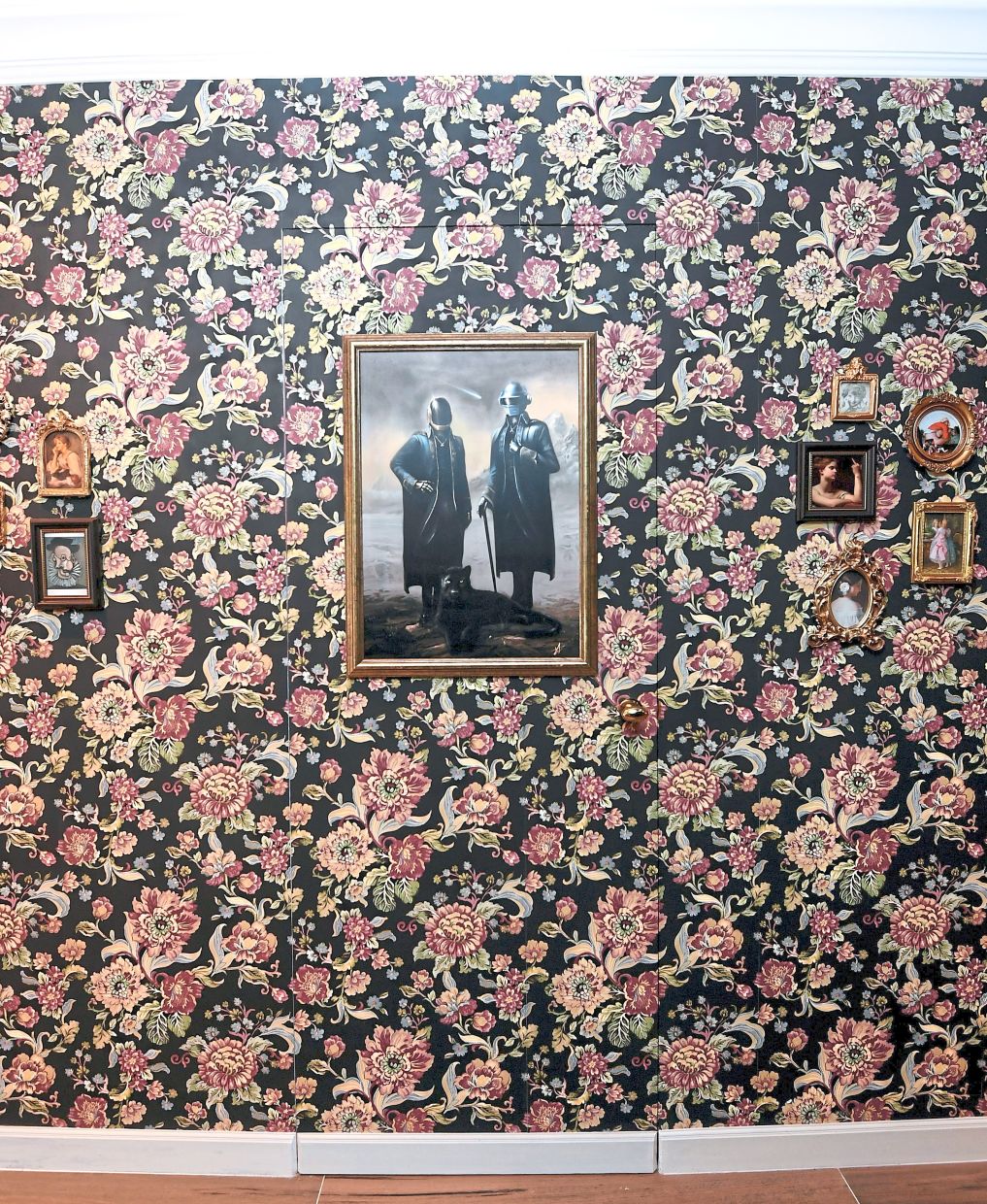
One of the most delightful features of the house is hidden behind a wallpapered wall near the kitchen.
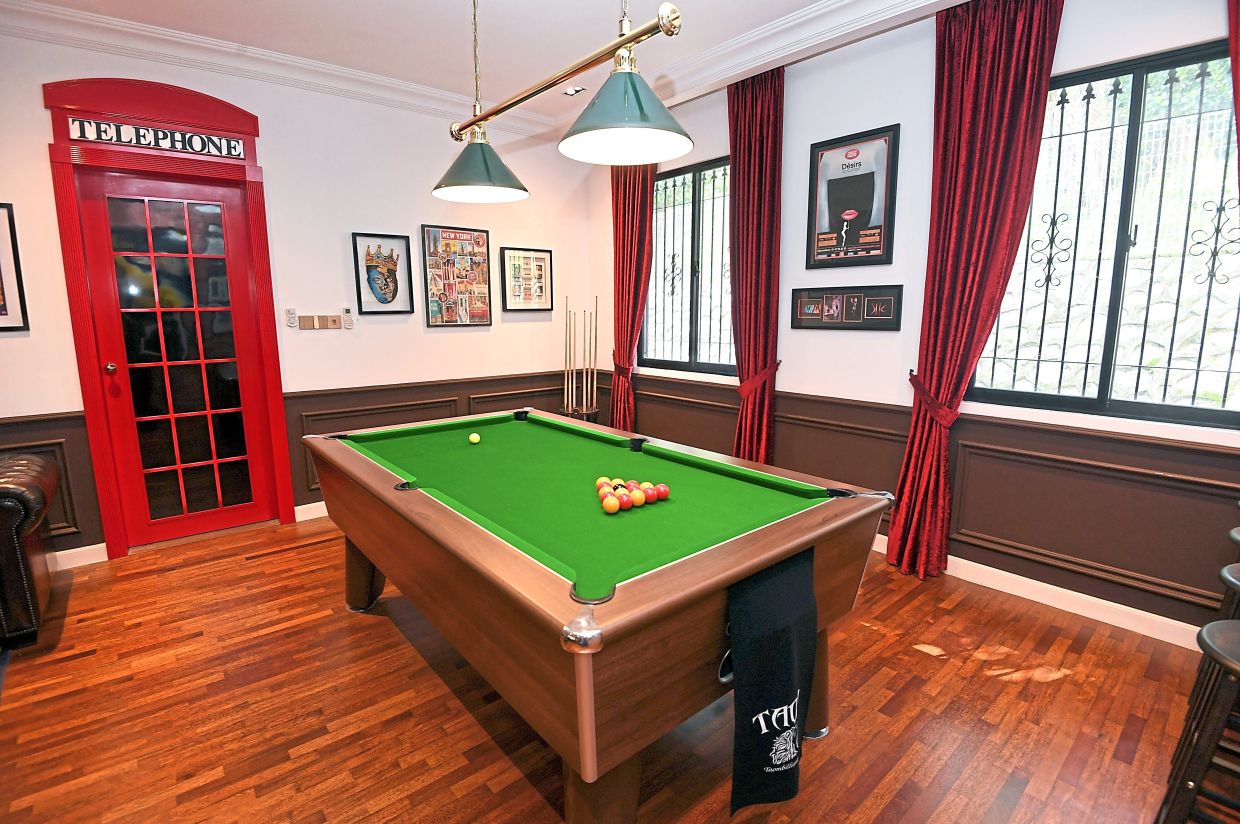
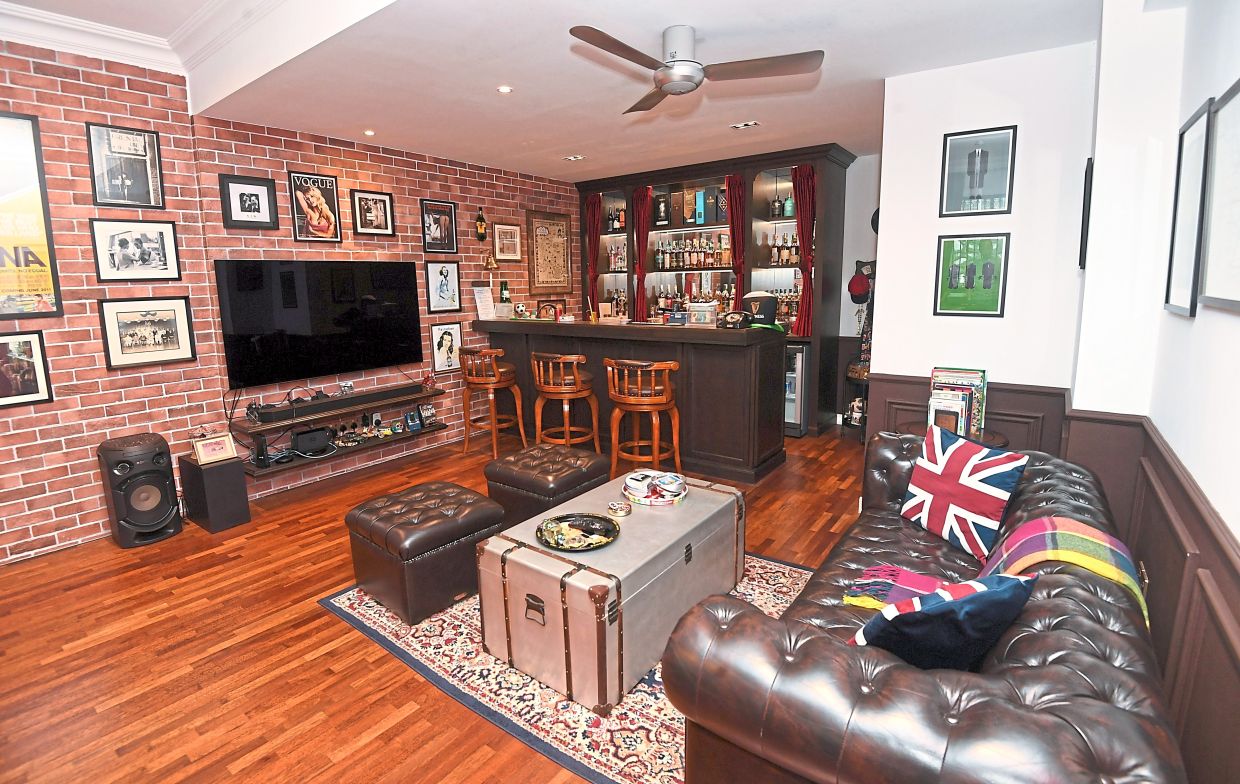
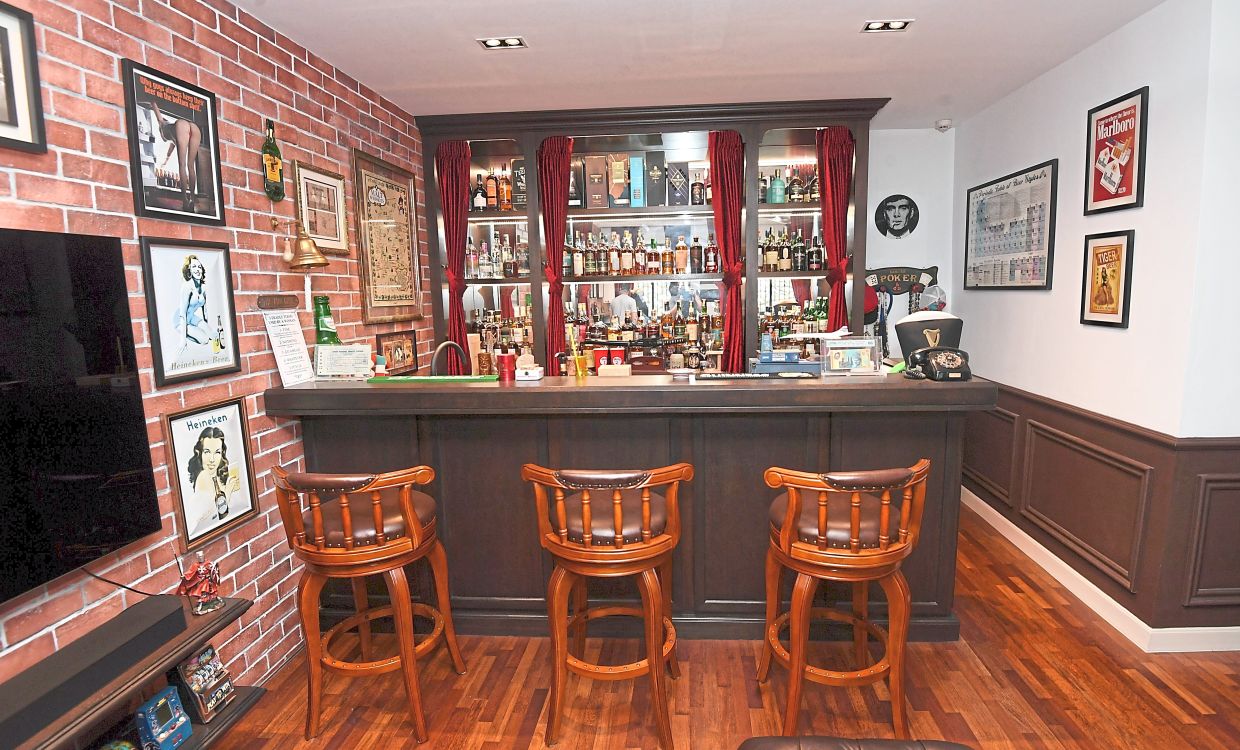
Disguised within the forest- green wallpaper is a concealed door leading to Max’s “man cave” – a British-style pub complete with a bar, pool table, a large-screen television and other paraphernalia.
The design is inspired by speakeasy bars – hidden drinking establishments that originated during the American Prohibition era and have since inspired modern bars with secret entrances and intimate atmospheres.
Adding to the theatrics, the back of the concealed door resembles a classic red British telephone booth.
The result is playful, immersive and unmistakably English.
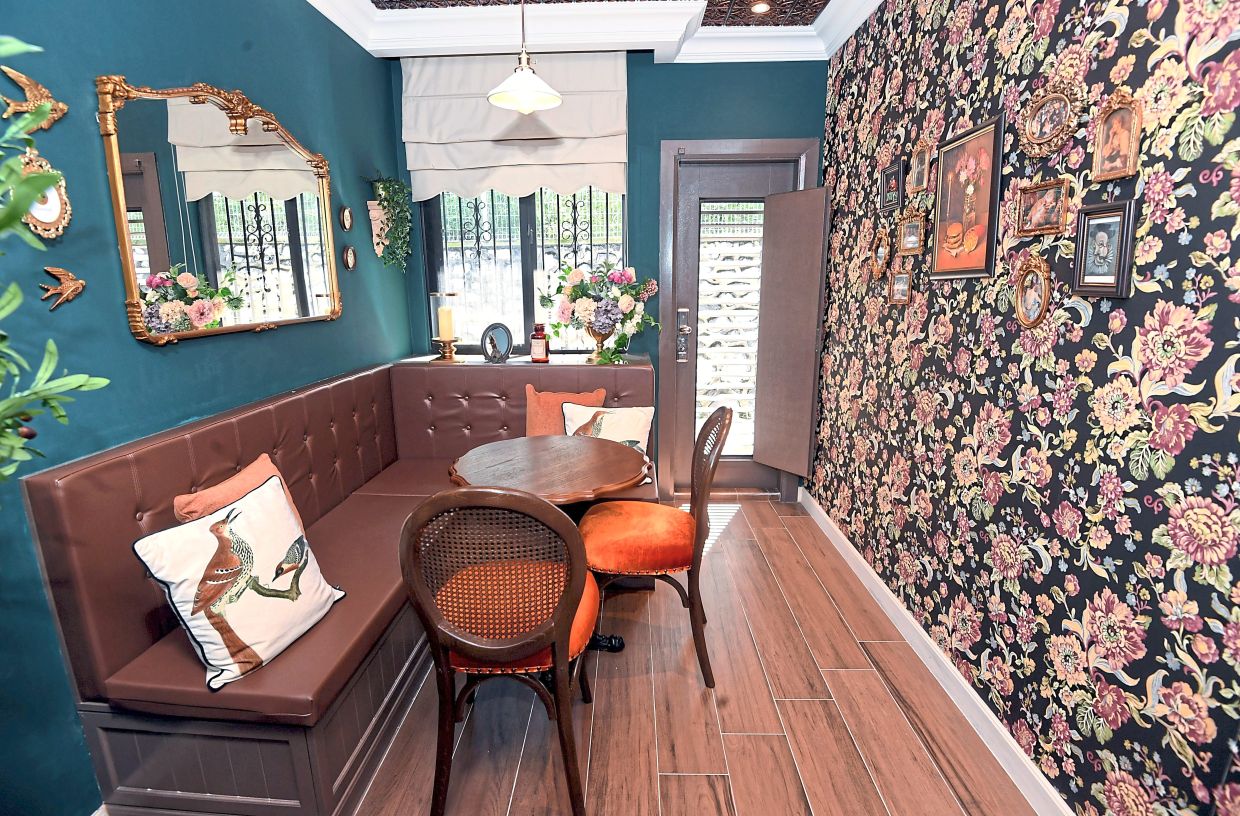
Behind the kitchen lies another favourite corner of the house – a cosy nook designed as a cafe-like space.
Here, friends and family gather for tea or coffee, surrounded by a collection of photographs on the walls.
Some images show relatives, while others capture historical moments – including a photograph of Max’s mother studying in Wales alongside a young Prince Charles.
“This is where our nephews, nieces and friends usually like to hang out,” Mimi says, adding that the space reinforces their home’s central philosophy that design should bring people together.
For Cheong, the success of the home came down to a key ingredient: the relationship between designer and homeowner.
“It’s always the chemistry between the designer and the owners that makes the design come together,” she says.
“When we’re on the same wavelength, moving toward the same goal, the process becomes very enjoyable.”
Her approach is to first understand the couple’s aesthetic instincts. Through mood boards and visual references, she helped translate their preferences into a cohesive design.
But this project was not a typical one.
Many of the furnishings were vintage-style pieces inspired by Victorian or European interiors, which meant sourcing them was often more challenging than buying contemporary decor.
“It became a bit like a treasure hunt,” Cheong says. “There’s excitement when you finally find a piece that fits perfectly.”
If the architecture provides the framework, the objects within the house give it soul.
Unlike homes where decor is purchased all at once, nearly every piece in the London Townhouse has a story behind it.
Some come from overseas travels – a lamp discovered in a Paris flea market, posters collected during trips to Las Vegas and Europe, a hat stand sourced from France.
Others are deeply personal. The antlers mounted in the home once belonged to Max’s late grandmother.
Vintage photographs on the walls feature family members – parents, grandparents and relatives from both sides of the family.
An artwork along the staircase was painted by Max’s niece, who won a prize in a competition for the piece.
“It’s really a collection of memories,” Max says. “Things from our travels, items passed down from family members, and stuff we found online.”
Indeed, not everything was sourced abroad.
Mimi laughs when she admits that some pieces came from online marketplaces. Yet when placed alongside heirlooms and vintage finds, they blend seamlessly into the home’s layered aesthetic.
Although the home is called London Townhouse, its design cannot be confined to a single style.
“We would say it’s predominantly British, but it’s also eclectic,” Max explains.
In the living room, tartan and gingham patterns evoke the look of Ralph Lauren interiors – a style associated with layered textures, classic silhouettes and deep colours.
Elsewhere in the house, influences shift.
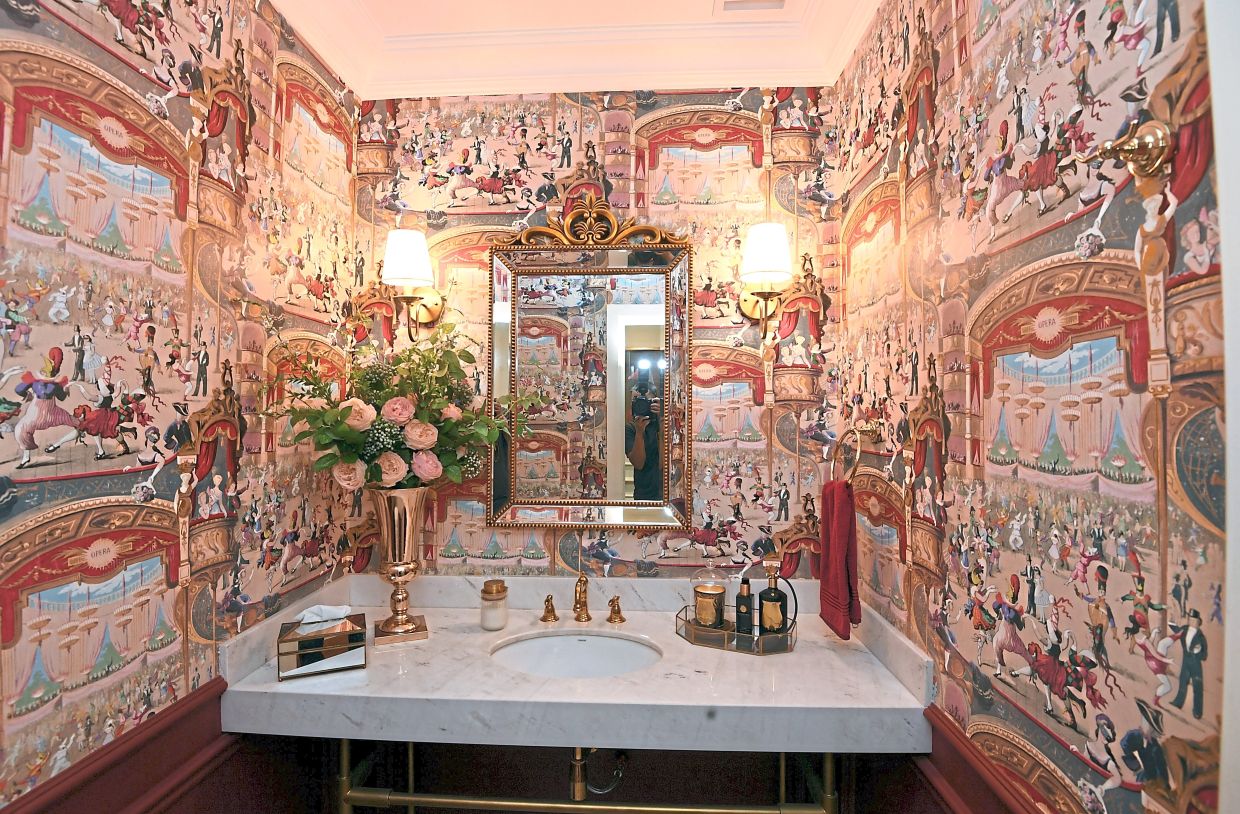
The powder room, for instance, takes inspiration from French Renaissance design, with ornate wallpaper, burgundy tones and brass fixtures creating a glamorous, almost Parisian feel.
“It’s the only place where we could go all out,” Mimi says with a smile, adding that it’s a popular selfie spot for their visitors.
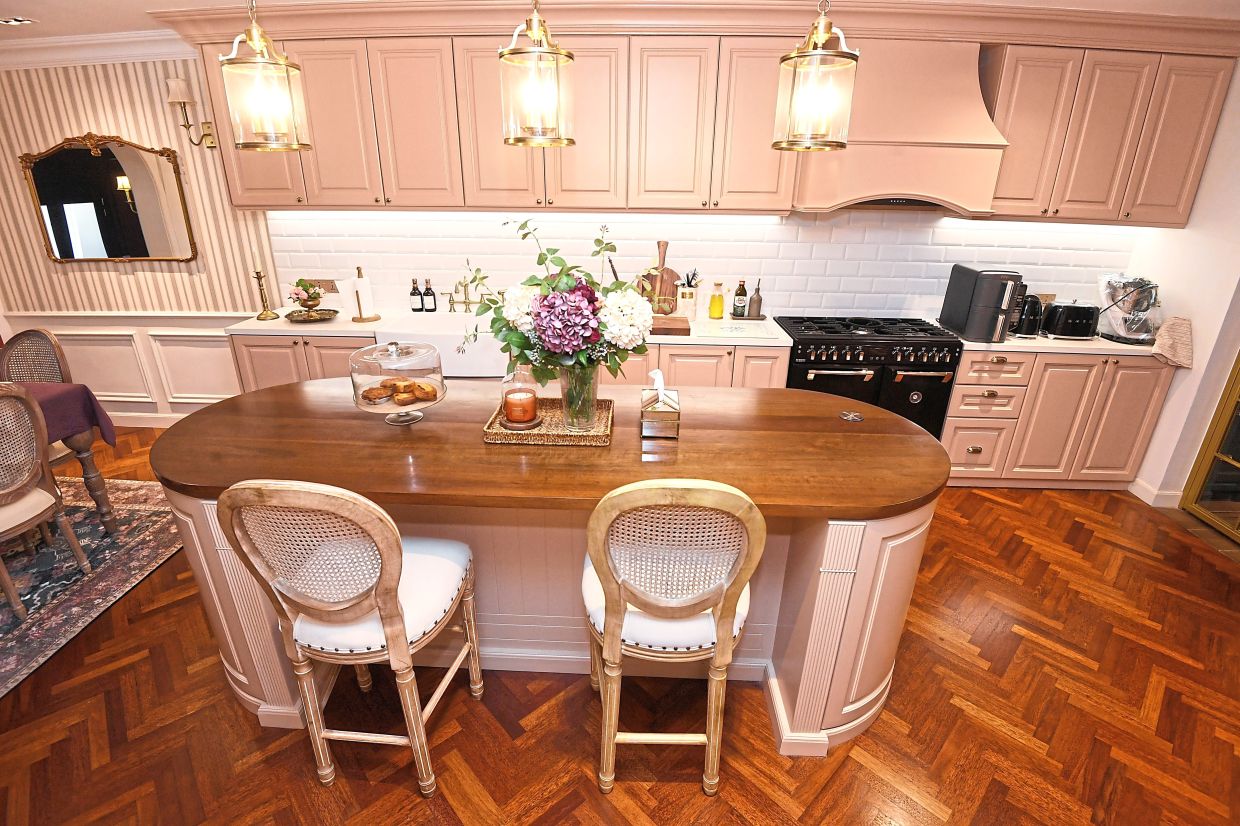
The kitchen, by contrast, is lighter and more relaxed. Pale salmon-coloured cabinets soften the palette, ensuring that the room feels distinct from the darker living areas while still harmonising with the rest of the house.
“We wanted each room to have its own character,” Mimi explains.
The couple drew inspiration from the philosophy of Ralph Lauren interiors – that design styles can be mixed freely to create something personal rather than strictly adhering to one aesthetic.
Interestingly, their idea for the London Townhouse emerged during the Covid-19 pandemic.
At a time when international travel was impossible, the couple wanted their home to evoke the feeling of being far away in some exotic destination.
“We wanted to build something that makes us feel like we’re travelling,” Mimi recalls.
“During lockdown, even when you’re at home, you’d feel like you’re on holiday.”
It was the same with their previous home, a condominium in Petaling Jaya which they called “New York Loft”.
Max now jokes with friends that he is permanently on staycation.
“When my friends say they’re going for a staycation, I tell them I’m already on one at home,” he laughs.
Despite the many dramatic elements, Cheong emphasises that balance was essential throughout the design process.
At one point, the team considered painting the ceiling black to match the living room walls.
“But that would have been too much,” she recalls. “So we kept the ceiling white to balance the dark walls and colourful furnishings.”
This interplay between boldness and restraint ensures the house feels inviting rather than overwhelming.
Perhaps the most distinctive quality of the London Townhouse is that it is still growing with its owners.
Each new journey the couple takes may bring home another item: a vintage object from a European market, a decorative piece discovered closer to home, or even something unexpected from Kuala Lumpur’s own flea markets.
“It reflects who the homeowners are,” Cheong says. “And it can keep evolving as they travel and collect new memories.”
Though technically a terrace house, the extended layout makes it feel far more spacious – almost like a bungalow in length.
Friends who visit often remark that the home feels colonial, reminiscent of historic hotels such as The Majestic.
For Max and Mimi, however, the house is more than a design showcase:
It is a place of comfort, nostalgia and emotional grounding – a sanctuary where the influences of London, Paris, New York and Kuala Lumpur coexist under one roof.
In a way, the London Townhouse is less about recreating a place and more about capturing a feeling: the warmth of returning home after a journey, and the quiet joy of knowing that every object around them holds a special memory.
A London Townhouse in KL
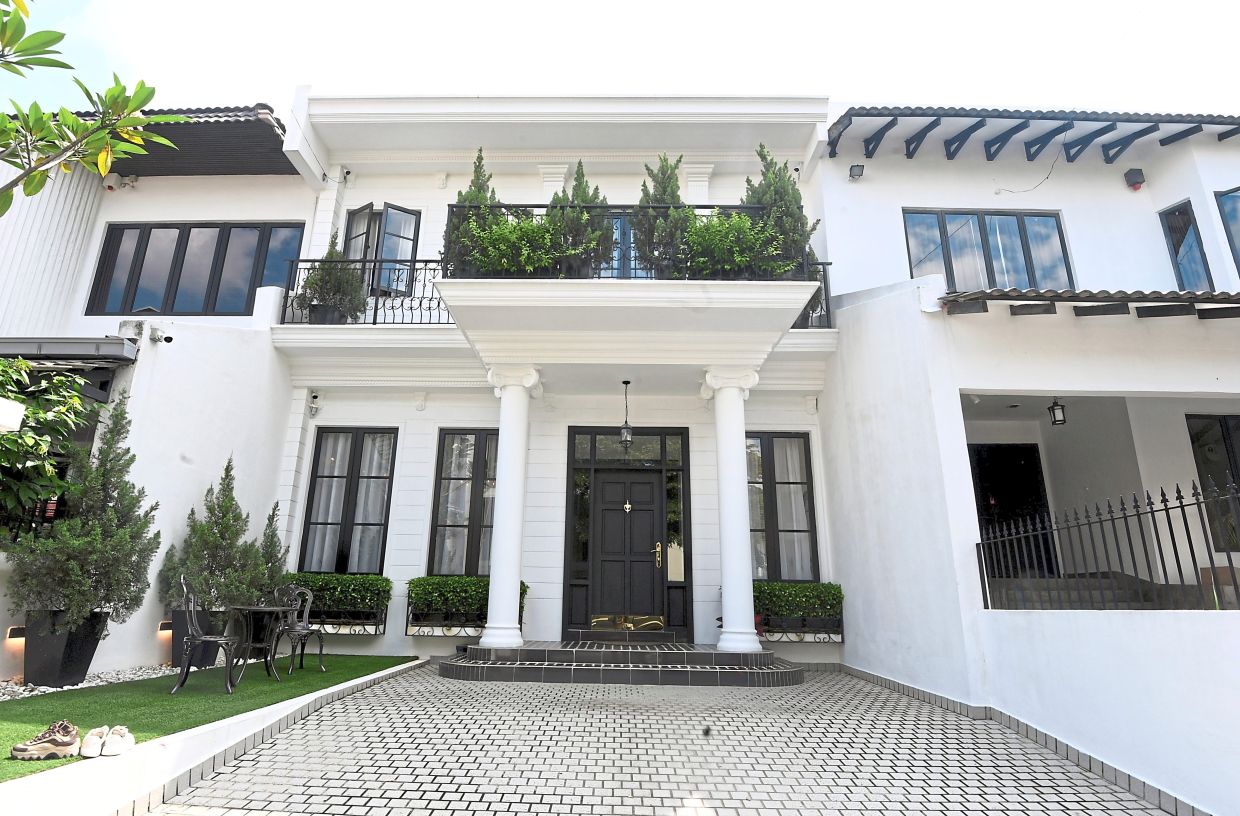
The London Townhouse reflects the time its owners spent living and studying abroad in England. Photos: The Star/Azhar Mahfof
Inside the man cave, which is designed like an English pub.
Often seen as a British cultural icon, the red phone booth is the inner side of the hidden door to the man cave.
Common in English residences, the vestibule sets the tone for the house.
The kitchen’s salmon-toned cabinets complement the darker, stronger colours of the living room.
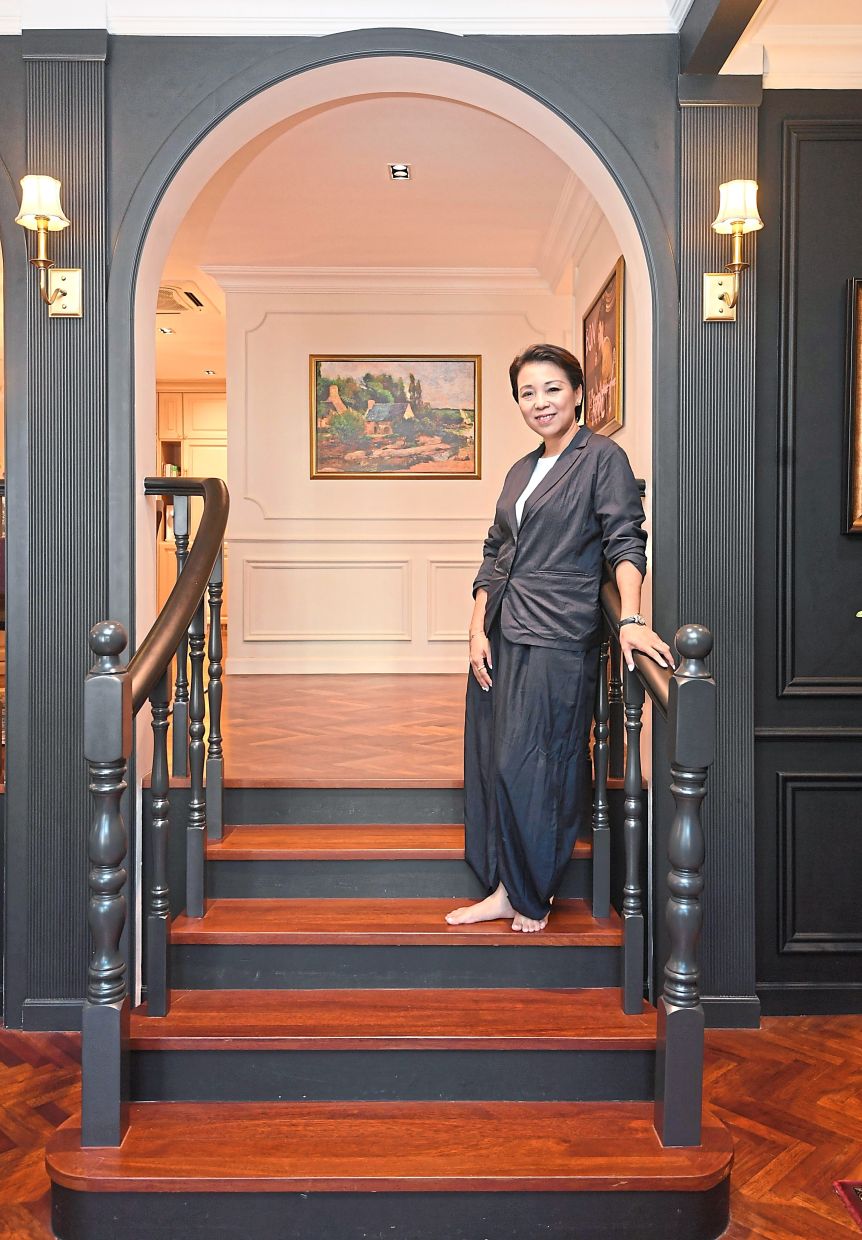
Cheong says it’s the chemistry between the designer and the owners that makes the design come together.
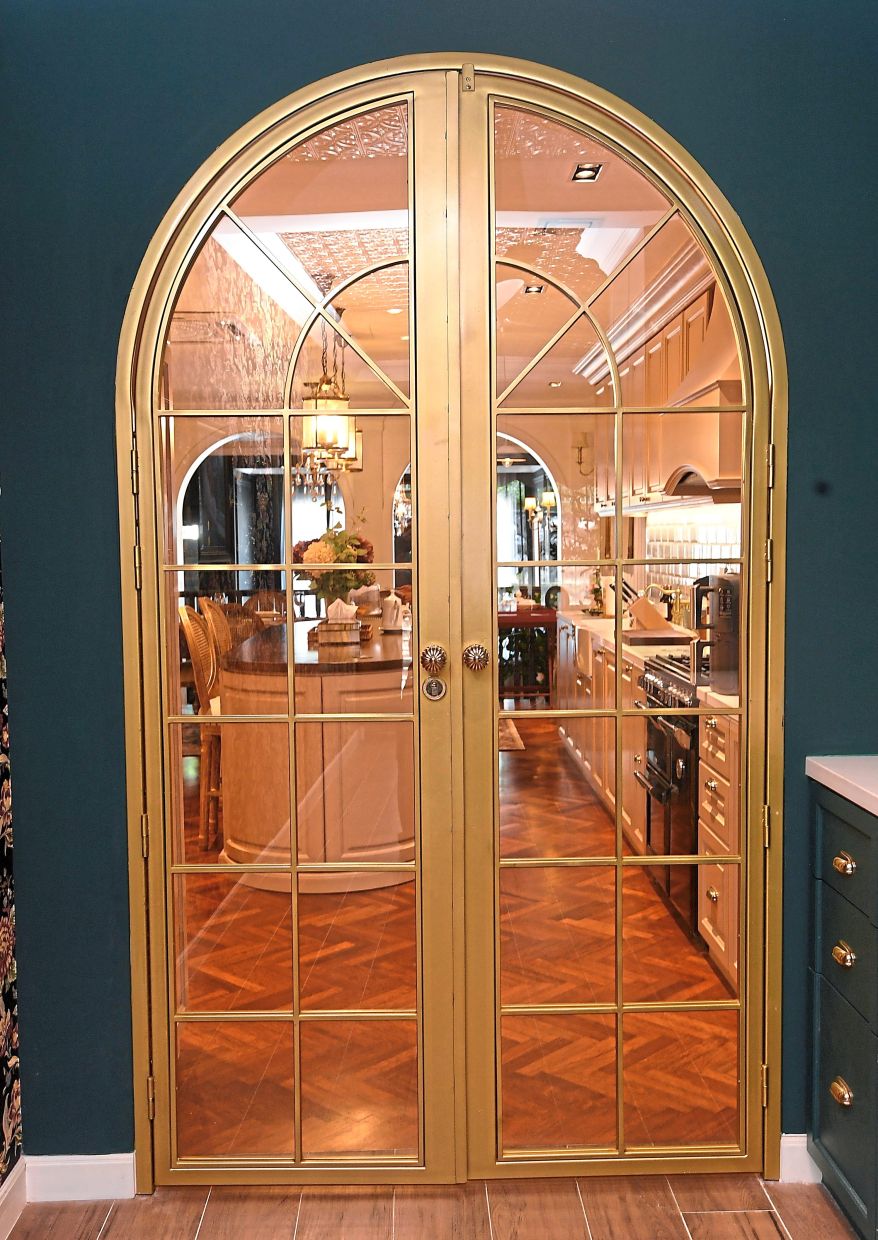
The door separating the kitchen from a breakfast nook at the back of the house.
The hidden door to the man cave resembles that of a hidden speakeasy bar.
A popular selfie spot for visitors, the powder room is done up in French Renaissance style.
The man cave is designed like an English pub or hidden speakeasy bar.
Family photos and heirlooms decorate the wall of the foyer.
The cosy ‘cafe-style’ nook is next to the wallpapered hidden door to the man cave.
The living room – with its bold black walls and strong, vibrant colours, faux fireplace and ornate decor – is reminiscent of an English Old Money style.