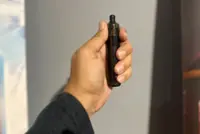
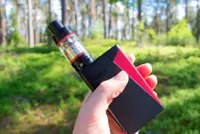
The vaping, or electronic cigarette (e-cigarette), industry is a thriving one with an estimated retail value of RM2.27 billion per year, according to the Study on the Malaysian Vaping Industry published earlier this year (2021).
The same study reported that 57% of those who vape chose to do so as a means to quit smoking.
This statistic could be taken to mean that the remaining 43% are choosing to vape for recreational purposes.
This brings up an interesting conundrum when you consider the following two facts.
One, that it is illegal for anyone other than a licensed pharmacist or a registered medical, dental or veterinary practitioner, to sell any form of preparation containing nicotine ~ which would include vaporiser (vape) liquids ~ under the Poisons Act 1952.
And even these healthcare and animal care professionals are only allowed to prescribe such preparations as part of a medical treatment.
Two, that vape liquids containing nicotine make up about 97% of vape liquid retail sales in Malaysia, according to the Malaysian Vape Chamber of Commerce, which also commissioned the above study.
According to Health Minister Khairy Jamaluddin, the Health Ministry is in the process of drafting amendments to the Poisons Act 1952 to bring it up-to-date with current needs.
He said that this includes increasing the schedule of punishments for offences related to poisons in his written reply in Parliament to a question by Hulu Langat Member of Parliament (MP) Hasanuddin Mohd Yunus on whether fines under the Poisons Act would be increased for the possession and sale of e-cigarette liquids containing nicotine.
A new act that controls and regulates both tobacco and non-tobacco smoking products has also been in the works since a Cabinet decision on the matter in 2016.
This act is meant to replace the current Control of Tobacco Product Regulations 2004 under the Food Act 1983, which does not cover newer smoking products like e-cigarettes, vape liquids, and associated devices.
Initially planned to be tabled in Parliament last year (2019), Khairy said in a separate written reply to Sri Gading MP Shahruddin Md Salley, that the ministry is currently aiming to table the new legislation during the first Dewan Rakyat meeting next year (2022).
How the laws will be formulated is likely to depend on the basic assumption about the purpose of vaping – in particular, with relation to nicotine, which is an addictive substance.
For pleasure or cessation?

Says National Cancer Society Malaysia (NCSM) president Datuk Dr Saunthari Somasundaram: “We’ve never had clarity from the government on their stand in terms of vaping.
“Is vaping recreational? Or is it like in other countries, where it is as an alternative to smoking, as a smoking cessation tool?”
She adds: “If it is a smoking cessation tool, then it should be regulated just like any other smoking cessation tool.
“So it goes through pharmacists, it goes through doctors – you get prescriptions, you get a vaping device, etc.”
Her colleague, NCSM managing director Dr M. Murallitharan, agrees, pointing out that the Budget 2022 announcement of the introduction of an excise duty on nicotine-based gel or liquid products for vapes and e-cigarettes, confuses the matter further.
“On one side, you are not telling us whether it is okay for vape to be used recreationally or not.
“But by legitimising the fact that you can now sell recreational vape with nicotine inside, you’re giving a very clear signal that ‘it’s absolutely fine, you can use it recreationally’.
“But the messaging you are giving is that you’re doing this to help people quit smoking.”
However, if it is the latter, then vaping needs to be strictly regulated, just like other countries, he says.
For the Federation of Private Medical Practitioners Associations Malaysia (FPMPAM), e-cigarettes containing nicotine should be considered as part of the arsenal for tobacco harm reduction (THR).
In their position statement on THR, issued on Oct 10, the organisation noted that while nicotine is indeed the addictive substance in cigarettes, it is the tar and other toxins produced by the burning of tobacco that are the main cause of harm from cigarette smoke.
“As an option in reducing the health risks associated with smoking cigarettes, current smokers should be counselled to switch to less harmful nicotine alternatives, rather than having them continue cigarettes,” it said.
However, it did add that the uncontrolled use of nicotine is linked to an increased risk of cardiovascular, respiratory and gastrointestinal disorders; lowered immune response; cancer; and reproductive health problems, meaning therefore, that no one should be encouraged to start using any nicotine products in the first place.
According to the statement, “FPMPAM is of the position that the use of nicotine in THR requires strict regulations and should be under the supervision of trained medical experts.
“It is not a decision that should be taken lightly.”
Dr Murallitharan does point out, however, that vaping liquids and gels do contain other substances that can be potentially harmful to health.
He notes that health problems, such as heart attacks, strokes and cancers, that are due to long-term exposure to vaping substances are now being seen in the first generation of vapers, i.e. those who have been vaping for a decade.
Indeed, Wan Azrin Izani Wan Mohd Zain from the Health Ministry’s Health Education Division, emphasises that “There is no such thing as zero harm.”
Says the division’s Community Mobilisation Branch’s Anti-Smoking and Patient Education Sector chief assistant director: “Once you take a harmful substance, it is going to be in your body and it will affect your health.
“And if you don’t kick the habit as soon as possible, it will linger in your body and contaminate your health.”
Attracting the young

One main concern about the widespread availability of vape devices and products is that it can serve as a gateway to smoking traditional cigarettes, particularly among younger users.
Wan Azrin notes that a 2015 study published in the medical journal JAMA, found that American high (secondary) school students who vaped were 2.7 times more likely to start smoking, compared to those who had never vaped before.
He points out that the interesting packaging of vape products, the nice smell of the smoke (which comes in an assortment of flavours), and the intrinsic attraction of electronic gadgets like vape devices, are all factors that work to draw the attention of potential vapers, especially adolescents and young adults.
Vaping devices and products are also widely accessible from speciality shops, and even convenience stores.
“So it is easily available in attractive packaging, with the notion that this is a way where you can enjoy a healthier lifestyle without being addicted to cigarette smoking,” he says.
However, as the JAMA study shows, this is not true.
With the vast majority of vape liquids being sold containing nicotine, Wan Azrin points out that addiction is a serious issue to contend with.
“Once you’re confirmed to have an addiction, it is tied to your brain, your neurons.
“So when you have the craving, you won’t be satisfied with the e-cigarette, you will initiate smoking, because you want a bigger ‘kick’,” he says.
Indeed, Dr Murallitharan points out that data from other countries indicates that rather than helping more people quit smoking, one of three things are happening instead.
“First, people are actually becoming dual users.
“So, instead of stopping one or the other, they are continuing to use both – and this seems to be the largest percentage.
“The second is that you start seeing new users, who otherwise might never have started on conventional tobacco by smoking cigarettes, are now starting vaping.
“And this also is a significantly large new set of people.
“And only third – and this is a very, very small number, and the data is very clear on this – that you actually get people who have genuinely stopped smoking and switched to vape, and only use vape, and from there, progress on to completely stop using nicotine,” he says.
In fact, the Malaysian Council for Tobacco Control has been calling for a complete ban on vaping in the country for the last six years due to the lack of evidence that vaping helps people quit smoking, and indeed, causes further harm.
Considering the entrenched state of the industry in Malaysia though, this seems unlikely to happen.
However, clear laws and regulations, which even the vaping industry itself is calling for, are much needed and anticipated, especially in terms of safeguarding our health and preventing further socioeconomic burdens from nicotine addiction.
Tan Shiow Chin is a 2021 Asia Pacific Cities Alliance for Tobacco Control and NCDs Prevention (APCAT) Media Fellow.
Already a subscriber? Log in
Get 20% OFF The Star Digital Access
Cancel anytime. Ad-free. Unlimited access with perks.