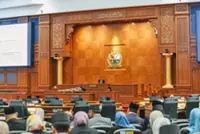
General or state elections are periods when politicians are the most anxious.
Some of our local ones must have struggled with the anxiety of wondering if they would be nominated to contest the upcoming (2026) state elections in Johor and Negri Sembilan.
For those who have passed that stage, there might be that “what if” feeling, fearing the prospect of not being elected, especially for incumbents or well-established leaders.
For some, it could be a real fear of losing everything, including losing face, not to mention jeopardising long-term political ambitions.
Adding to this emotional roller-coaster ride are poor sleep, fatigue and irritability, particularly during the campaign period.
Every now and then, social media is likely to rear its ugly head with juicy, but often unverified, stories to vilify candidates, only adding to the psychological distress faced by them.
Despite these challenges, politicians have generally proven to be a special breed, as many of them can get going when the going gets tough, giving it their best shot even when the cards are stacked against them.
Impact on voters
For the rest of us too, the upcoming state elections and the general elections rumoured to be not too far away are likely to increase our stress, regardless of who gets our vote.
Constant media coverage and debates in our homes, workplaces and on social platforms, along with concerns about how the election results will affect our lives and society, can negatively impact our well-being.
With an increased number of political parties in the ring, often with confusing permutations, and newfound alliances and strategies among the contesting groups, voters already disturbed by the current political climate must think carefully before casting their ballots.
When ideology and identity become increasingly tied to political groups, it leads to greater animosity and situations in which political differences can feel like personal attacks.
People may get more worried and feel insecure if their party does not win.
Bitterness and pervasive negativity during the campaign period, amplified by news channels and social media, can create a level of stress and resentment that intrudes into our relationships with those around us.
We can become more reactive, irritable or withdrawn.
Fortunately, in our country, this hurtfulness and viciousness generally disappears once votes are cast, with smiles returning all around, even among political arch-rivals and their followers.
Increased anxiety
It is likely that this “election anxiety” that is going to grip certain states until voting day will be just like other forms of stress and anxiety, having the potential to impact our physical and mental health.
Such anxiety can trigger our autonomic nervous system, leading to a spike in the release of adrenaline and cortisol, also known as stress hormones.
Too much adrenaline can increase the risk of heart attack and stroke.
Increased cortisol levels can affect our health in numerous ways, including increasing blood sugar levels, suppressing the immune system and constricting blood vessels.
Stress and anxiety also impact a pair of almond-sized structures in our brain, called the amygdala.
These structures, or nuclei, which govern our senses, memories, decisions and moods, can respond in an irrational or disproportionate manner during periods of increased stress in our lives.
The upcoming elections could be such a period for some of us.
While we do not have robust studies on election anxiety in Malaysia, there are examples of it in other countries.
One study by British Association for Counselling and Psychotherapy found that during the 2019 general elections in Britain, one in three people reported a negative effect on their mental well-being due to the perceived uncertainty over potential government policy change post-election.
Similarly, a survey in the United States done a year before the last (2024) presidential elections, showed that 56% of American adults reported the elections was a “significant stressor” in their lives.
Indeed, elections and stress seem to go hand in hand no matter where we are in the world.
Voter behaviour
In addition to the effects of election anxiety, our personality types and cumulative experience of the past may also shape our mental inclination and voting behaviour during elections.
A majority of registered voters are likely to be eager to cast their ballot on voting day.
They are probably guided by emotions like gratitude and civic consciousness.
They may have strong opinions about why they are inclined to vote for a particular candidate, perhaps after spending several months wrestling with policies, politics and ideologies.
These eager voters strongly believe that every vote counts, even though they know their vote is only one among thousands.
The apathetic, however, may be undecided about voting because they feel that their one vote will not make a difference.
This is likely to be more prominent among teenage voters, who may feel that politics is the business of adults.
The lack of political interest and the absence of a solid indication of personal benefit if their candidate wins makes this group apathetic and detached from political developments.
Other apathetic voters would need issues concerning their immediate needs to be addressed in order to be motivated to vote.
On the other hand, there are those who are cynical about the entire election process and refuse to cast their vote at all.
In reality, they may be argumentative and opinionated about political developments, but somehow rationalise their abstinence in voting.
Their justification is that lining up to vote is a waste of their time and not worth their effort or resources.
They may also declare that the political system is untrustworthy.
Paradoxically, it is this group that often espouses the strongest political views.
The analysis of this behaviour, known as Downs’ paradox, has been used by political strategists in the past to catapult underdogs to victory in many landmark elections globally.
Dealing with election anxiety
It might be useful to limit the time we spend doomscrolling on social media or being obsessed over the news.
We also need to be cautious when processing news, especially from unbiased sources.
During these exciting times, it is better to surround ourselves with positive resources, like friends or family we can talk to, rather than spending time with toxic individuals.
We also need to respect others who may have a different political ideology.
Tensions can run high and we may need to work hard to ensure that our relationships remain intact during and after the elections.
Therefore, it is good to limit the time spent with those we find difficult to engage with politically.
However, this might also be an occasion to have meaningful conversations with those who have different political views from us, as long as it is a respectful dialogue.
We can all channel our concerns to make a positive difference on issues we care about, even without personally contesting an election.
Therefore, regardless of the election outcome, we need to maintain a balanced perspective.
Voting in an election is one of our fundamental rights to make our voices heard.
Having this opportunity should make us feel positive, empowered and confident.
So, with the upcoming state elections and the whispered general elections just around the corner, we should consider how to manage election anxiety to protect our mental health during this time of great tension, while still engaging in this vital process of exercising our franchise.
Datuk Dr Andrew Mohanraj is a consultant psychiatrist and the Malaysian Mental Health Association president. For more information, email starhealth@thestar.com.my. The information provided is for educational and communication purposes only, and it should not be construed as personal medical advice. The Star does not give any warranty on accuracy, completeness, functionality, usefulness or other assurances as to the content appearing in this column. The Star disclaims all responsibility for any losses, damage to property or personal injury suffered directly or indirectly from reliance on such information.