Doctors, please treat the woman, not just her cancer


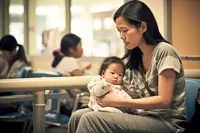
Modern breast implants are made of cohesive silicone gel and are designed to be durable, with an expected lifespan of 15 to 20 years. — Photos: AZLINA ABDULLAH/The Star

Not all breast cancers are the same, and neither are the treatments used to fight them.

In the past, treatment decisions were mostly guided by disease stage with women diagnosed at the same stage often receiving similar treatment plans.

Today, advances in precision medicine and oncoplastic surgery are transforming breast cancer care, allowing doctors to tailor treatment according to the biology of each tumour, a patient’s overall health and quality-of-life considerations.

According to consultant clinical oncologist Dr Christina Lai Nye Bin, treatment is no longer determined solely by how far the cancer has spread.

“Breast cancers are now divided into different subtypes, and clinicians examine additional characteristics of the tumour before recommending treatment,” she says.

“By understanding the biology of the cancer, we can determine which forms of treatment are most appropriate for each patient.

“We no longer take a standardised, one-size-fits-all approach to treating every breast cancer patient.”

Tailoring treatment to the tumour

Many people assume that all patients with stage four breast cancer require chemotherapy.

However, Dr Lai says treatment decisions today are guided largely by the tumour’s biological characteristics.

When planning treatment, oncologists consider both disease-related and patient-related factors.

Tumour samples obtained during a biopsy undergo detailed testing to assess key biomarkers, including the oestrogen receptor (ER), progesterone receptor (PR), human epidermal growth factor receptor 2 (HER2) and Antigen Kiel 67 (Ki-67), a marker of how quickly cancer cells are growing.

These biomarkers help classify breast cancers into different subtypes, such as hormone receptor-positive, HER2-positive and triple-negative disease, and guide treatment decisions.

“For patients with hormone receptor-positive breast cancer, we can offer hormone therapy or targeted therapy instead of chemotherapy,” she says.

“In this sense, treatment can be tailored more specifically to the patient’s cancer, reducing unnecessary treatment and the side effects associated with chemotherapy.”

Patient factors are equally important.

According to Dr Lai, they also consider a patient’s age, overall fitness and other medical conditions.

“For example, a patient with severe heart disease or poorly controlled diabetes may not be an ideal candidate for certain treatments.

“Likewise, an older patient who remains physically active and otherwise healthy may still be suitable for more intensive therapies.”

Beyond biomarker testing, doctors can also perform genomic testing to analyse the activity of specific genes within cancer cells.

The cancer cells are sent to a specialised laboratory in the United States (US) for analysis.

The test generates a risk score that helps predict how a tumour is likely to behave and whether a patient is likely to benefit from chemotherapy.

“Some patients, including those with stage two breast cancer and lymph node involvement, may not necessarily require chemotherapy,” points out Dr Lai.

“If testing shows the cancer is low risk and the potential benefit of chemotherapy is minimal, patients may be able to avoid the treatment altogether.”

Although genomic testing was once costly and available only in countries such as the US, it is becoming increasingly accessible to Malaysian patients, with some tests now covered by insurance plans.

Dr Lai (standing) and Dr Harjit discussing treatment options for a breast cancer patient.

Personalisation in the operating theatre

While oncologists tailor treatment according to tumour biology, breast surgeons are also taking a more personalised approach in the operating theatre.

When deciding whether a patient is suitable for breast-conserving surgery or requires an extensive procedure, oncoplastic surgeons consider several factors.

“The decision depends a lot on the size of the cancer and the size of the patient’s breast,” says consultant oncoplastic breast and endocrine surgeon Dr Harjit Kaur.

“It’s a ratio between the tumour size and the breast size.”

The number and location of tumours also play an important role.

Patients with a single tumour may be suitable candidates for breast-conserving surgery, known as a lumpectomy, while those with multiple tumours in different areas of the breast may require a mastectomy i.e. removing one or two breasts.

Tumour biology is another key consideration.

Factors such as tumour grade, hormone receptor status and aggressiveness help doctors determine what additional treatment may be required after surgery.

“When we know a cancer has an aggressive biology, we know that the patient is likely to require more treatment, such as chemotherapy and radiation therapy,” she says.

“In such cases, cancer treatment may take priority over reconstruction.”

Genetic factors and the patient’s overall health are also taken into account.

Patients who carry inherited mutations associated with a higher risk of breast cancer may be advised to consider risk-reducing surgery, including the removal of both breasts followed by immediate reconstruction.

Besides that, conditions such as diabetes and smoking can increase the risk of complications following reconstructive surgery, including infection and poor wound healing.

“We look at all these factors and then discuss the available options with the patient before making a shared decision,” says Dr Harjit.

Preserving the breast

When given a choice, most women prefer to preserve their breasts whenever possible.

“As much as they can save the breast, they want to save the breast,” says Dr Harjit.

“Traditionally, breast cancer surgery focused primarily on removing the tumour.

“Nobody thought about the appearance of the breast afterwards or how the woman would feel.

“The main priority was simply to get the cancer out.”

Today, surgeons aim not only to remove the cancer but also to preserve quality of life.

She says: “We’re not only making sure the cancer is treated properly, but at the same time we are trying to give the patient a semblance of normalcy.”

This has made oncoplastic techniques increasingly important, as surgeons must also consider the breast’s appearance after the tumour has been removed.

Removing a large tumour can leave a significant defect, potentially causing deformity, shrinkage or asymmetry as the tissue heals.

“It’s not like just going in and cutting out the tumour,” Dr Harjit explains.

“After you’ve removed the tumour, you have to look at the condition of the breast and the remaining volume.”

To minimise these changes, surgeons often rearrange and reposition the remaining breast tissue to fill the defect and maintain the breast’s shape.

“You cannot just take out one big lump and leave an empty space in the breast,” she says.

“When the patient heals, the breast tissues can contract and shrink because there is nothing there.”

Reconstruction options

While many women can undergo breast-conserving surgery, others may require reconstruction following a mastectomy.

According to Dr Harjit, several reconstruction options are available.

One of the simplest is implant-based reconstruction, in which an implant is used to recreate the breast shape.

Implant-based reconstruction is generally less complex and can often be performed during the same operation as the cancer surgery.

If complications occur, the implant can be removed and alternative reconstructive options considered later.

Another approach uses the patient’s own tissue, taken from areas such as the back muscle, abdominal fat or a combination of both, to create a new breast.

“If a patient has enough abdominal fat, that tissue can be mobilised to create a new breast,” she says.

Known as autologous reconstruction, this option may be suitable for women who do not want implants or are not ideal candidates for them.

For instance, patients with certain autoimmune conditions, such as systemic lupus erythematosus (SLE), may be advised against implants because foreign materials can potentially trigger immune responses.

Another technique is fat transfer, also known as lipofilling, which involves removing fat from one part of the body through liposuction and injecting it into the breast.

Because only a limited amount of fat can be transferred at one time, multiple procedures may be needed to achieve the desired result.

As a result, lipofilling is more commonly used to correct contour irregularities and is suitable for patients who undergo lumpectomy.

“When we first started doing reconstruction, many women were hesitant because they felt they shouldn’t be worried about reconstructing their breasts and should only be worried about their cancer,” says Dr Harjit.

“Today, however, breast reconstruction is increasingly viewed as an integral part of breast cancer care rather than an optional cosmetic procedure.”

Women who undergo reconstruction often report greater self-confidence, improved emotional well-being, and better intimacy with their partners, all of which can contribute positively to their overall recovery, she adds.

Follow us on our official WhatsApp channel for breaking news alerts and key updates!
Breast Cancer , Oncoplastic Surgery

Next In Health

Rabies reemerges in Europe due to disruptions in wildlife vaccinations
Pack these essentials when you're working out outdoors
Faking an illness to gain sympathy
Why we need to create a blood donation culture
Sleep habits and genes linked to early Alzheimer's
AI-driven hormone tracker to help women recognise something is wrong
How to handle the joys and sorrows of World Cup 2026
Growing number of weekend athletes in urban areas triggers rise in injuries
We have to rethink how to care for our ageing populaton
I'm postmenopausal so why is my urine test positive?

Others Also Read