Why we need to create a blood donation culture


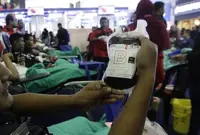
Dr Nor Nazahah showing how red blood cells are stored in temperatures between 2°C and 6°C for up to 42 days. — Photos: AZLINA ABDULLAH/The Star

While hospitals play an important role in healthcare, blood banks are equally crucial as they provide essential blood products for surgeries, emergency treatment and chronic disease management.

They significantly contribute to the national economy by preventing premature loss of life and reducing morbidity and mortality rates.

Blood is indispensable for survival, hence the need for regular blood donors.

Our blood supply reaches hospitals across the country through a centralised, nationwide network primarily managed by the Health Ministry (MOH) via the National Blood Centre (also known by its Malay acronym PDN) in Kuala Lumpur.

PDN maintains a strategic inventory system to ensure the national blood supply is balanced.

“Our vision is to ensure the adequacy of blood supply for the nation and to look at the efficacy and the safety part because quantity doesn’t guarantee safety.

“We govern the standards and oversee policies in all blood bank services under MOH,” says Dr Nor Nazahah Mahmud, who assumed the role of PDN director in April.

PDN also sets the guidelines for all blood banking services – including private hospitals.

There are 117 blood collection sites at MOH hospitals nationwide; PDN is responsible for 98% of Malaysia’s total blood collection while the remaining 2% comes from university and private hospitals.

“Every state has its own plan to ensure a consistent supply and if they fall short, they seek help from neighbouring states, or PDN will facilitate the collection.

“We practise a borderless system,” she says.

Having served in PDN for almost nine years, Dr Nor Nazahah has loads of experience in assisting in the screening of blood components, blood products, managing requests for rare blood types from hospitals, etc.

The challenge in her new position: she has to oversee everything.

The transfusion medicine specialist says: “We have to ensure that our stock is always at the minimum level to supply to all the hospitals but sometimes, we have an issue during festive seasons, school holidays and long holidays.

“This is when it is difficult to get donors as it’s all voluntary.

“The regular donors are already making the commitment by coming in every three months.”

Aiming for 3% donors

Donated blood is carefully spun in centrifuges to separate it into red blood cells, plasma and platelets.

PDN also uses advanced techniques like apheresis whereby specific blood components such as plasma and platelets are extracted using a machine while the remaining blood is safely returned to the body.

Apheresis yields a much larger quantity of specific components but takes longer than whole blood donation.

At present, blood collection in Klang Valley is between 500 and 700 units daily while the weekly collection outside the Klang Valley hovers around 3,000 to 5,000 units.

Blood usage, due to an increase in the number of both public and private hospitals, is around 2,200-2,400 units daily for routine medical procedures, surgeries and emergencies.

However, annually, only 2.3% (roughly 1.2 million) of Malaysians donate blood and PDN’s goal is to achieve 3% by 2030, for an optimal, sustainable blood supply.

This constant need stems from the fact that blood products expire and cannot be stockpiled indefinitely.

Usually, blood is optimally used and is seldom discarded.

“Our expiration rate of red blood cells is at 2% and so far we have not gone beyond that figure, which is good.

“If it goes beyond that number, then we have to do something about it because it means our plan or the forecast of collection and usage is not balanced,” says Dr Nor Nazahah.

A PDN staff wheeling specific blood products into a special refrigerator.

Stringent health checks

As per World Health Organisation’s recommendation, blood donors are screened through a strict two-step process: donor suitability assessment (evaluating medical history and risk factors) and laboratory testing (mandatory screening of all donated blood for four transfusion-transmissible infections prior to use i.e. HIV, hepatitis B, hepatitis C and syphilis).

Only donors meeting all health criteria are accepted to ensure both donor and patient safety.

One of Dr Nor Nazahah list of priorities is to make blood donation a culture here.

“It is a continuing effort,” she says.

“With artificial intelligence, the information is all out there but plenty of myths still persist.

“People don’t come forward because sometimes they have a fear of needles, or they believe in myths such as the tendency to put on weight after donating blood or that the blood will not be replaced, etc.

“Donors have to be altruistic and blood donation should be a social obligation – you have to help others.”

Many are unaware that by donating blood, they are also helping themselves.

Dr Nor Nazahah adds: “There are health benefits from donating blood – you can burn around 500 to 600 calories per unit.

“It’s also good for your heart as many studies have shown that in the long run, donating blood can lower iron stores and maintain them at a safe level in the body and improve blood flow.”

Excess iron can be harmful to the heart, potentially causing heart muscle damage, arrhythmias and heart failure.

On top of heart protection, donors get their blood checked and if any irregularities are detected, they are notified with a phone call.

“Even before donating, we screen your haemoglobin levels (via a finger prick) and if you regularly come every three months, you will be able to monitor your iron levels.

“If it’s low, we will ask you to take iron supplements and return at a later date, and if it is still low, we will refer you to a hospital.

“Not many people take the initiative to go for health assessments, so in a way, by donating blood you get your haemoglobin level and blood pressure automatically monitored.

“So yes, you get a sort of health check,” points out Dr Nor Nazahah.

Regular donors are truly the lifeline of PDN, especially since only about 2.3% of the Malaysian population donates blood annually.

Make it a lifestyle habit

Blood donation should be included as part of people’s healthy, physical activities, similar to cycling, hiking or running.

She says: “We have to instil the passion in them to make a commitment, just like how avid exercisers won’t skip their activities.

“At the moment, new donors only show up when they see or hear a plea for donation in the media.

“Social media works faster so for example, if there is a low level of a certain blood group, we can see a surge of donors coming but that’s not the right way.

“If we have consistent, healthy donors, we will have adequate supply all the time.”

Even those with diabetes can donate blood if their condition is well controlled and they meet standard donor requirements.

Common blood types in Malaysia are A, B and O positive.

With rare blood types such as Duffy, Bombay, Rh-null, AB negative, among others, PDN identifies these “special” donors and keeps them in its registry.

“Sometimes, we keep their blood frozen (after screening and processing) for 10 years – then, we do a quality check and if it is still okay, we continue freezing as the quality of blood is of utmost importance.

“When we have an emergency and we need these rare types immediately, we thaw the frozen ones and use them.

“Freezing is quite costly so if clinicians find inpatients with a rare blood type, they will alert us.

“If it is non-emergency, we will try to arrange for them and their family members or friends with the same type to donate – this is a beautiful arrangement,” explains Dr Nor Nazahah.

Stored in PDN’s freezers are a few hundred units of rare blood types.

Should a blood type not be obtainable and the patient is in need of an elective surgery, PDN seeks help from other countries to ship it over.

Collected blood must be stored at proper temperatures or it will lead to bacterial infection after it is transfused.

She says: “This is something we want to avoid so working in a blood bank is very much like a factory – everything has to be in order.”

Females make up 30% of our donors while the rest are males.

“For regular donors who make up 68%, we don’t focus much on the gender, but on the regularity.

“I’m thankful to them and my team who made this possible but now, we have to get the new donors to make a commitment.

“We need them to keep the ecosystem functioning,” she concludes.

Follow us on our official WhatsApp channel for breaking news alerts and key updates!
Pusat Darah Negara , Blood , Apheresis

Next In Health

Sleep habits and genes linked to early Alzheimer's
AI-driven hormone tracker to help women recognise something is wrong
How to handle the joys and sorrows of World Cup 2026
Growing number of weekend athletes in urban areas triggers rise in injuries
We have to rethink how to care for our ageing populaton
I'm postmenopausal so why is my urine test positive?
Get healthy: China pushes its weight management plan
Dangerous spike in severe heat stress worldwide
Socioeconomic effects on young brains
New treatment being explored for lupus

Others Also Read