Malaysia is entering a demographic moment that deserves careful thought.
In mid-October 2025, the Department of Statistics Malaysia’s data highlighted a long-running trend that has been building for years.
The country recorded 414,918 live births in 2024, the lowest figure since 1980, marking a 9% decline from the previous year.
Over the same period, the total fertility rate fell from 1.7 to 1.6 children per woman aged 15 to 49.
This shift coincides with a generational turning point.
Generation X (born 1965-1980) has begun entering their 60s, having grown up and lived through a period when families were already becoming smaller.
For members of the Silent Generation (born 1928-1945) and many Baby Boomers (born 1946-1964), ageing often unfolded within larger family networks, where adult children were commonly present and involved.
That contrast is now surfacing in how people approach midlife and later-life planning, with younger generations following close behind.
Why does this matter, now?
These figures matter because the number of Malaysians entering later life without children will continue to rise, affecting housing choices, care arrangements and community expectations in ways that remain under-anticipated.
Family patterns, over time, have changed.
Smaller households have become common, and a growing share of the population now reaches older age without children.
This reality has begun to surface in ordinary settings where older adults seek help, guidance and practical support, often revealing a mismatch between lived situations and inherited assumptions.
The deeper issue lies in how later-life support continues to be imagined.
Systems organised around family participation as a primary reference point encounter difficulty accommodating varied life courses.
Responsibility then settles onto institutions, service providers and community organisations, often through informal adjustment with limited planning.
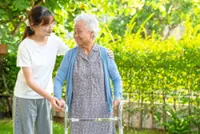
This realisation struck me on a personal level while working on my study published in the journal Urban Studies, where I explored how childless Baby Boomers find their place in senior living facilities still fundamentally designed for traditional families.
When a participant used the word “oldphans”, it immediately drew a heartbreaking parallel with orphans.
The term stayed with me, giving to a reality that is often hidden in plain sight: growing older without the “safety net” of adult children, in a system that still expects them to be there.
Perhaps it is worth pausing on a quieter reality about adult life.
People move through life with different hopes and expectations.
Plans unfold unevenly.
Some hope for children but life moves in another direction.
Others choose a different path altogether.
These realities grow out of health, relationships, timing and circumstance.
They form part of ordinary adult life and sit alongside many other routes into later years.
Those closing in on later life without children remain active members of society, planning carefully, staying connected and contributing in meaningful ways.
Institutional arrangements, however, often struggle to align with lives organised around different support structures.
Access to care, responsibility- sharing and decision-making take on a different texture when family involvement no longer serves as the default reference point.
Many arrangements around ageing in Malaysia still continue to assume the involvement of adult children.
These assumptions appear in routine, expected ways.
Forms request a family contact.
Conversations turn instinctively towards sons or daughters.
Procedures follow a familiar family picture influenced by earlier generations.
As family sizes continue to narrow, these expectations carry greater weight for those whose lives fall outside that frame.
Math of care
This pressure already shows up in everyday care settings with a growing gap between the number of older adults and available caregivers.
What if one caregiver can only meaningfully support a limited number of people at any one time?
If that gap grows, care risks becoming more procedural and less responsive, even with the best intentions.
Older adults, with children or without, remain part of society and merit systems designed with their lived realities in view.
Are we as unprepared as we fear, or do we already have strengths to draw on?
Family remains central for many people, grounded in long-standing traditions of care and responsibility.
What is needed now is greater flexibility within systems and governance, allowing long-standing traditions to sit alongside changing life paths.
If ageing without children is rising, are systems ready for it?
Dr Ellie Chee Shi Yin is a member of the Active Ageing Impact Lab at Taylor’s University and a senior lecturer at the School of Hospitality, Tourism and Events.