At 92, Cheong Moi Chai still has work to do.
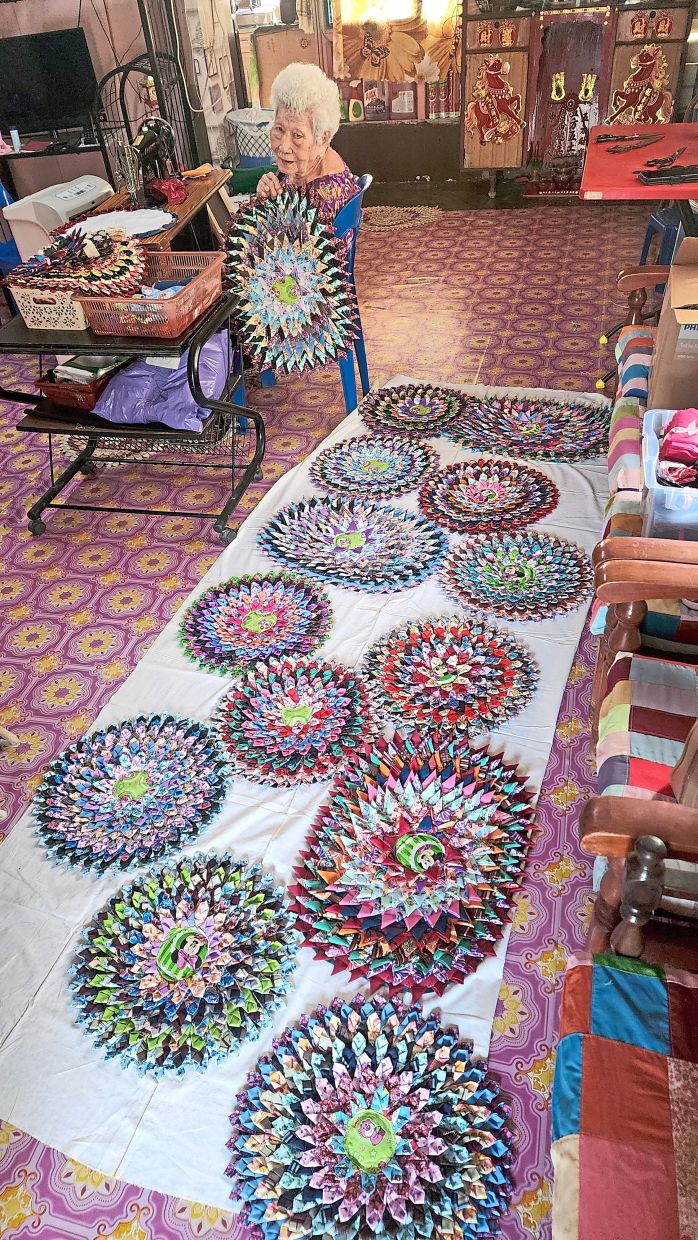
For the great-grandmother of six, sewing is more than a pastime to fill the hours.
It is a skill she has relied on for nearly 80 years – first to help put food on the table and raise three daughters, and now to earn some pocket money while giving unwanted fabric a second life.
“I like this because it keeps me busy. Some days, I can sew two floor mats. It takes me about four hours to sew two pieces,” says Cheong.
Her nearly 70-year-old sewing machine remains a fixture in the spacious hall of her home at Jalan Triang Estate.
Around it are bags and boxes filled with fabrics, mostly salvaged from friends, family and others who would have otherwise thrown them away.
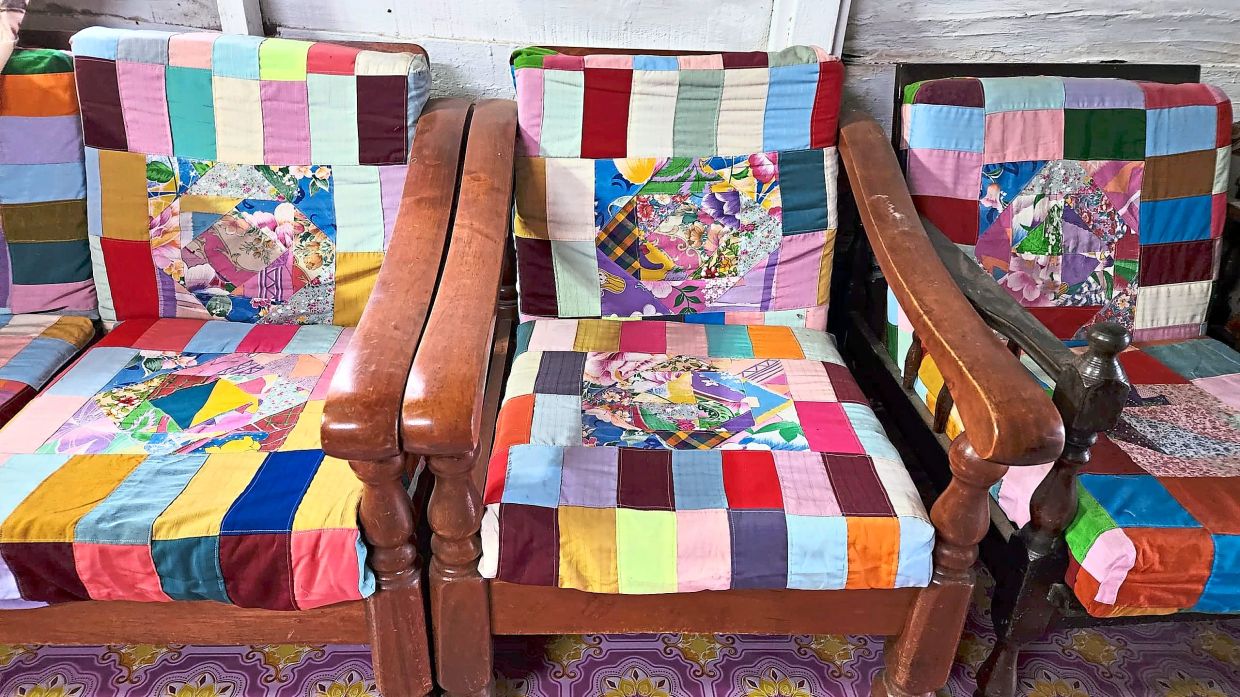
Even the wooden chairs in her home are dressed in colourful, handstitched patchwork covers.
The floor mats she makes sell for between RM10 and RM15 each.
Over nearly five decades, she has made and sold hundreds of them.
“I save the money for my grandchildren’s angpow and a little bit of groceries,” she says, speaking in a mix of Tamil and Bahasa Malaysia.
It is a modest income, but one that means a lot to Cheong.
In 1990, United Nations established The International Day of Older Persons, celebrated on Oct 1 to honour senior citizens and address issues affecting older adults.
Cheong is an excellent example of someone who is ageing well, possessing the functional ability that enables well-being in older age.
Making do, making a living
Cheong began sewing when she was a young woman growing up in an estate in Benta, Pahang. It was also there that she picked up Tamil from her neighbours.
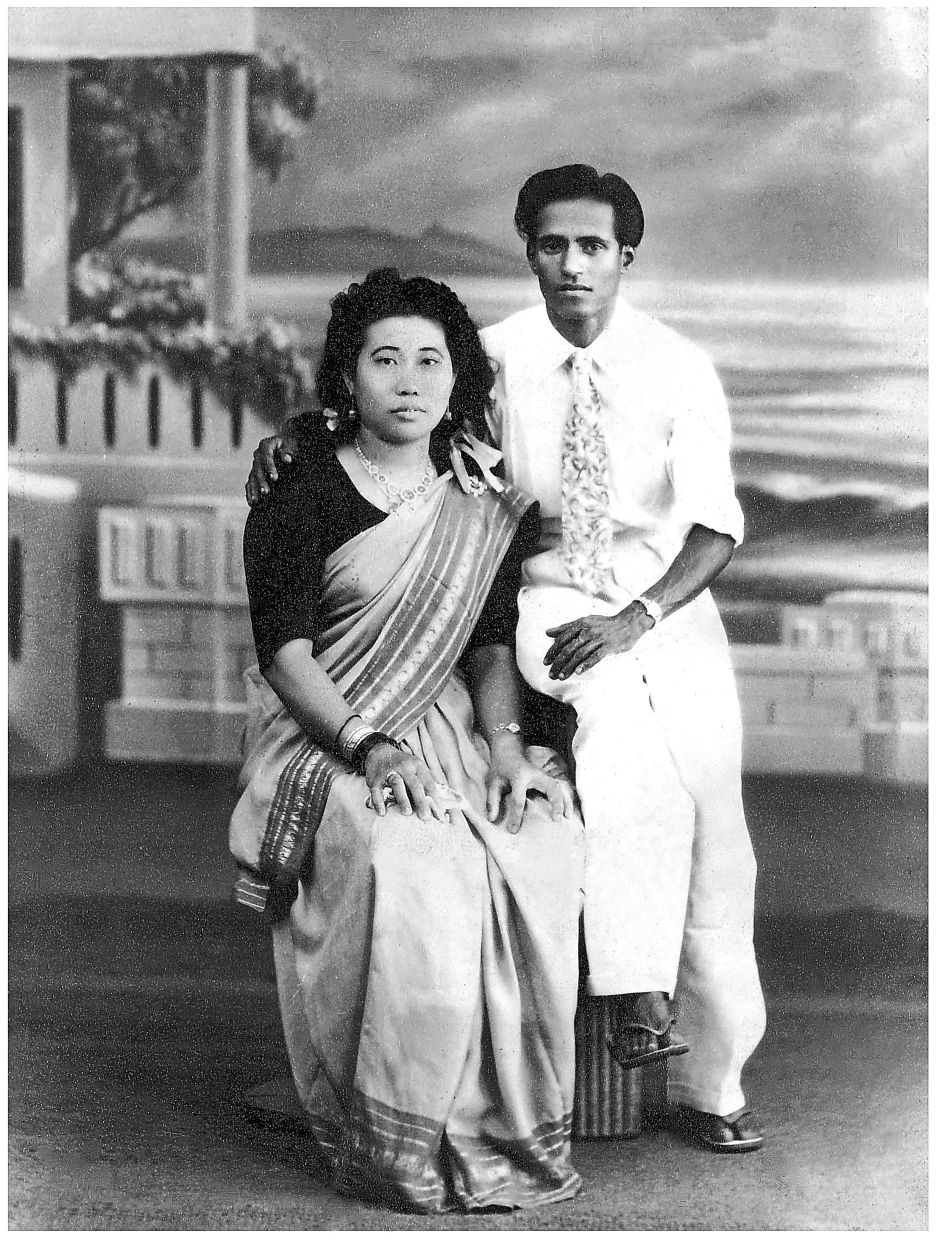
When her husband D. Elumalai died from an illness in 1972, Cheong became the family’s sole breadwinner.
With three young daughters to raise and little money to spare, she took on sewing jobs and made food and snacks to sell.
Her daughter, retiree Sautthiary Elumalai, 62, remembers the hardships they endured to make ends meet.
“Amma would make homemade food and snacks, such as pisang goreng (banana fritters), mee bungkus (fried noodles) and muruku. Each day, my elder sister and I would cycle to the train station in Benta to sell them,” recalls Sautthiary, who now lives in Selayang, Selangor.
Money was often tight. Sometimes, the family survived on simple meals of black coffee and biscuits. Rice was eaten with Chinese sausages, canned sardines, baked beans or eggs.
Cheong also grew vegetables and tubers like sweet potatoes and tapioca to supplement what the family had. Kind neighbours would sometimes share vegetables and food when times were particularly difficult.
But Cheong had one skill she could always fall back on – sewing.
“To earn extra money, Amma worked as a seamstress doing alterations around the village. Scraps and leftover material were stitched together to make skirts and tops for us. Amma would unpick old, water- resistant umbrella fabric and transform it into skirts for us.
“She always made use of whatever she had. That resourcefulness has stayed with her over the years,” says Sautthiary, adding her mother remarried a KTM staff member at Benta train station in 1976.
Nothing goes to waste
Much of the material Cheong uses today comes from friends and family.
Sautthiary and her sisters, Tanaletchmay, 64, and Thevi, 60, help source fabric from friends and buy some materials online.
Thevi and her sisters help cut and prepare the fabric, leaving Cheong to do what she enjoys most – sitting at her machine and stitching the pieces together.
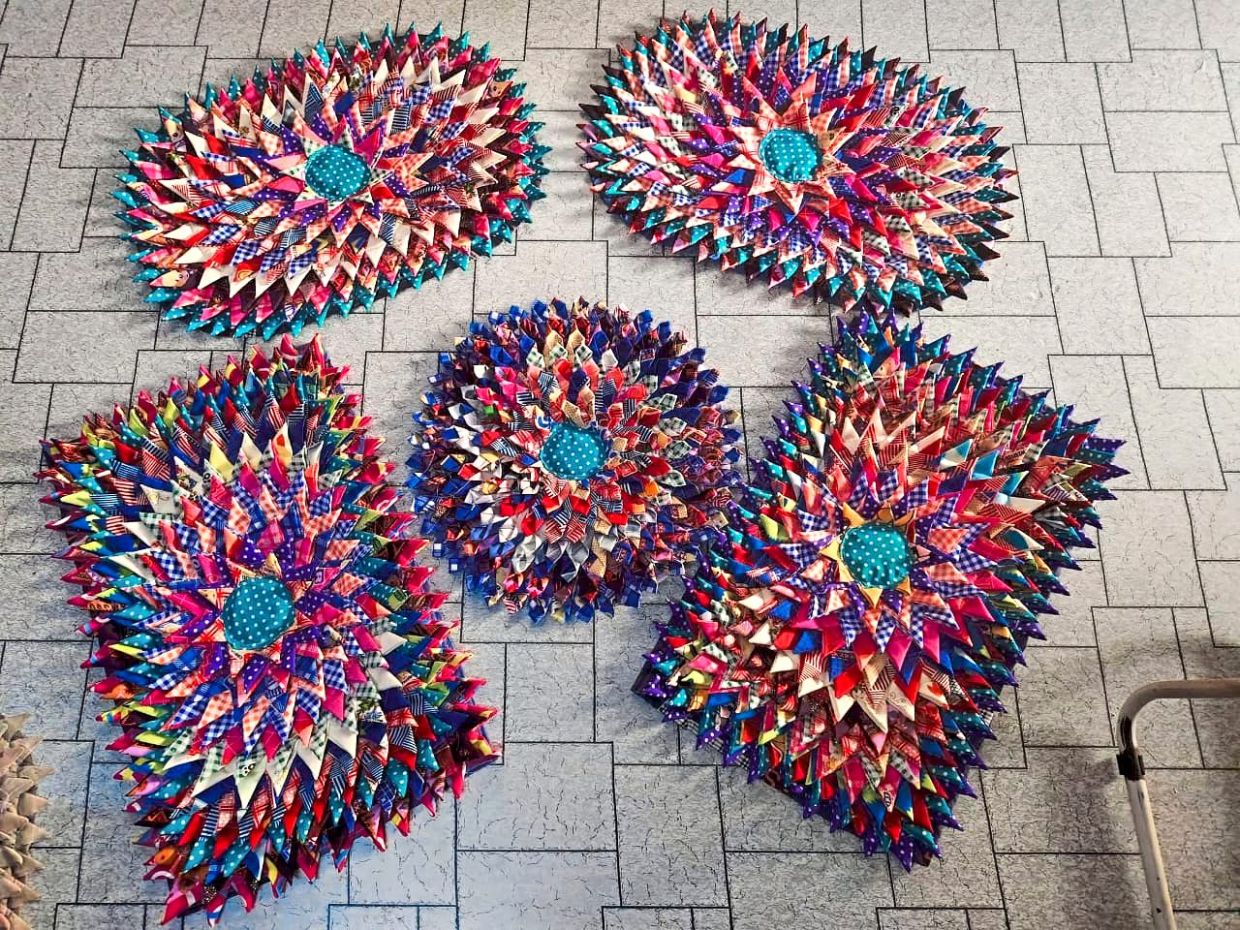
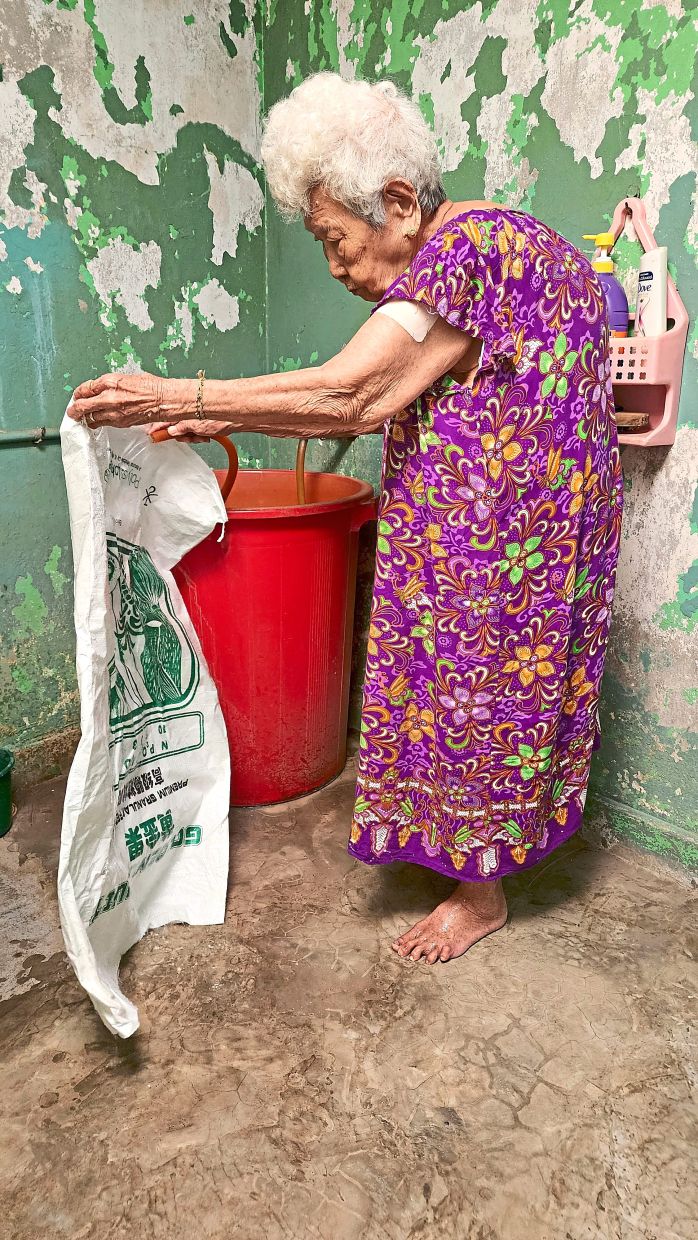
For the floor mats, Cheong uses sturdy polypropylene woven plastic bags sourced by Thevi from hardware shops.
After the bags are washed and dried, Cheong uses a stencil to mark out the size of each mat.
The fabric is then cut into small squares, folded into triangles and stitched in neat rows onto the base.
The result is a colourful, functional mat made from materials that might otherwise have ended up in the bin.
It is a simple form of upcycling, but one that comes naturally to Cheong.
A 2026 study, “Upcycling textile using tie-and-dye in achieving zero waste Malaysia”, reported that 195,300 tonnes of fabric waste were discarded in a single year.
The study, published in the Journal Of Advanced Research In Social And Behavioural Sciences shows that Malaysia’s upcycling challenge is partly driven by fast fashion and low reuse capacity, causing household textile waste to end up in landfills.
Keeping busy
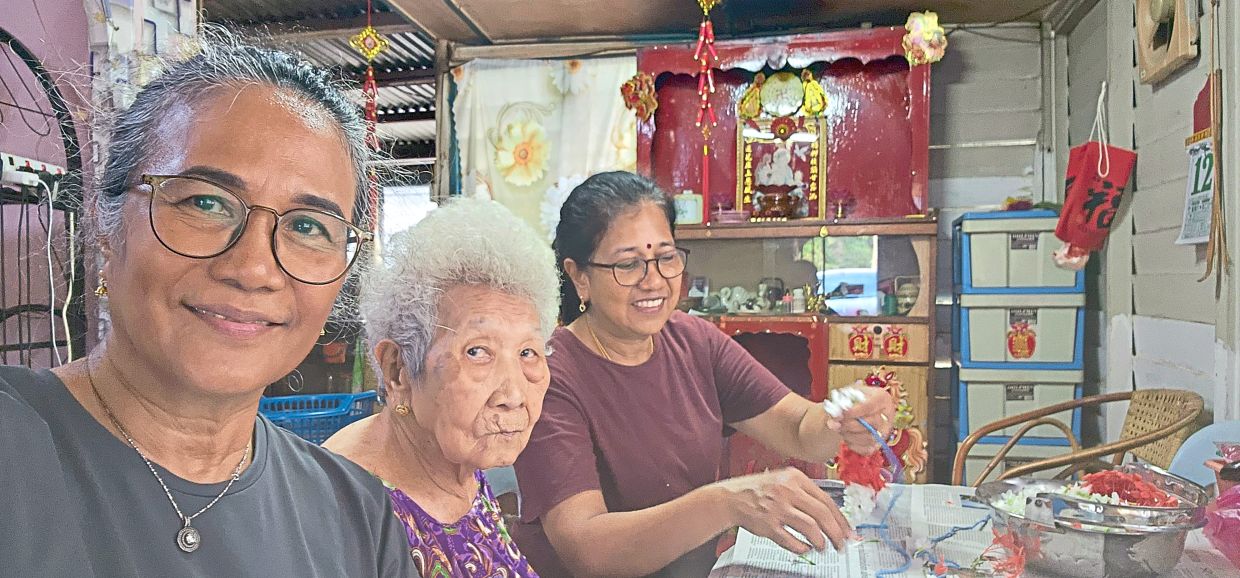
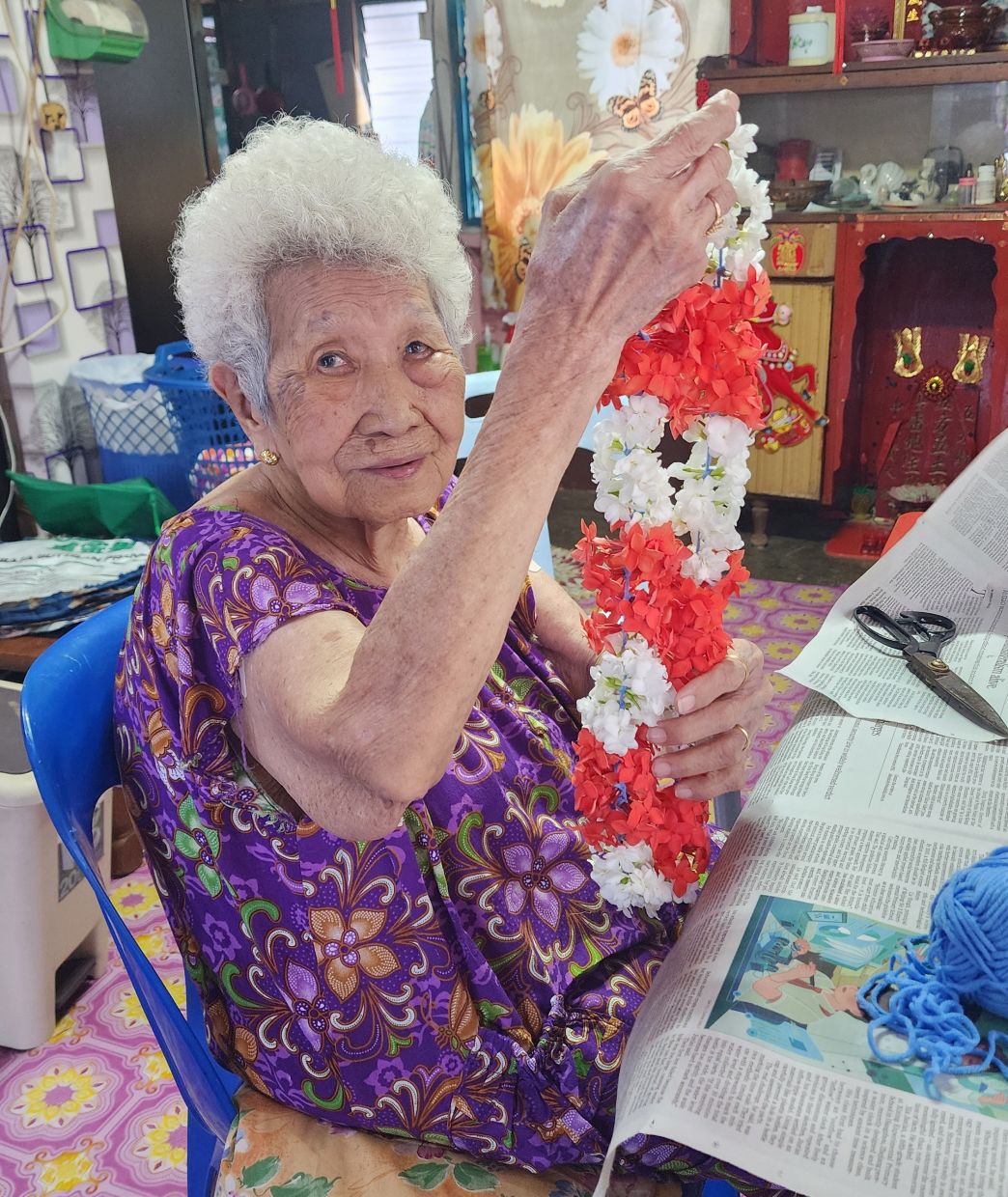
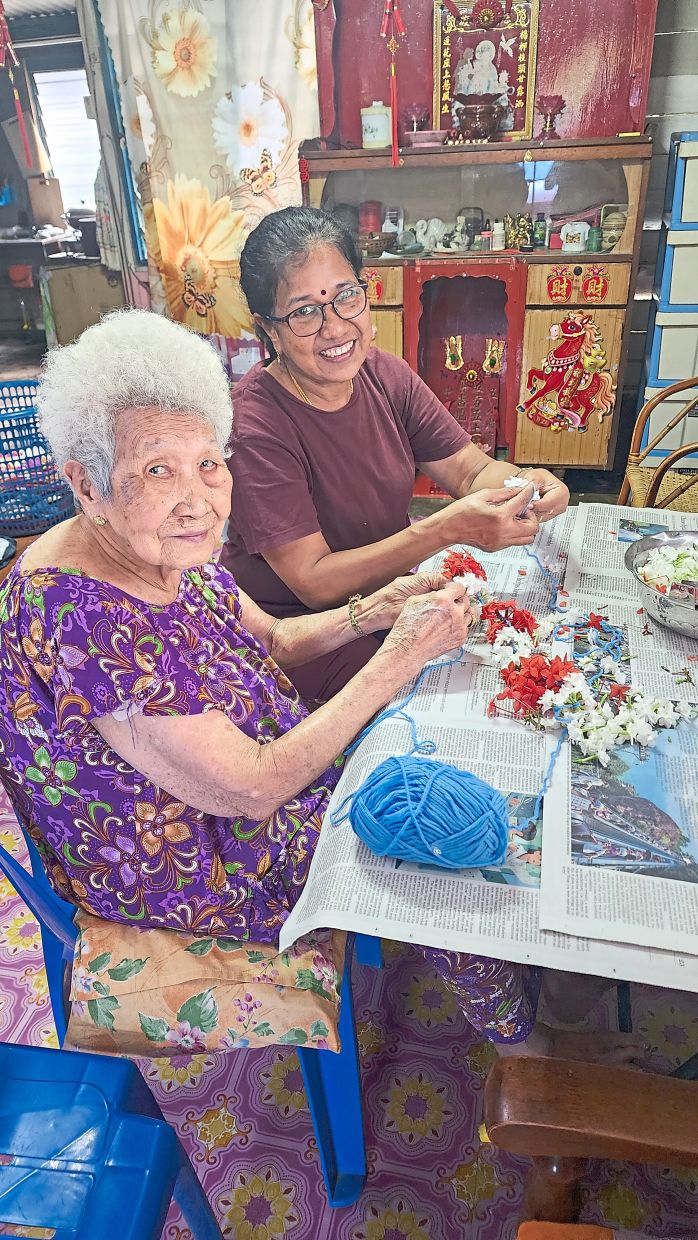
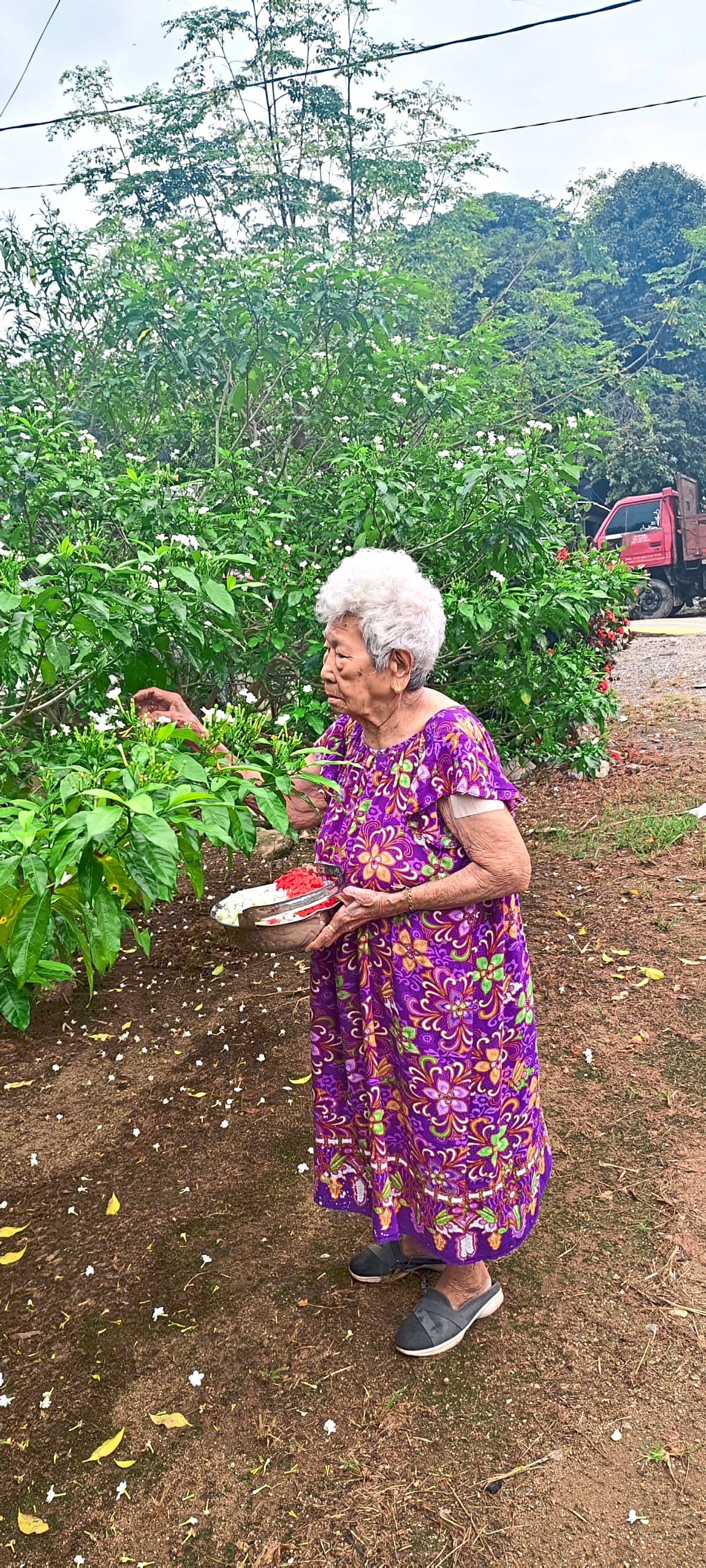
Sewing is not Cheong’s only daily activity. She still does basic household chores, prepares simple meals and picks flowers to string into garlands for the nearby Hindu temple.
“My eyesight is okay, so I can sew. I have new lenses,” she says, referring to the lenses implanted during her cataract operation years ago.
Cheong lives alone, with a helper who sees to her daily needs. Her daughters keep a close eye on her, checking in regularly.
She believes staying active helps keep the mind occupied.
“I want to stay active so I won’t be senile,” she says with a laugh.
But the attention has not changed Cheong’s routine.
She still sits at her old sewing machine, surrounded by fabric scraps while watching her favourite Tamil dramas on TV.
The money earned isn’t much, but it keeps her going.
And whenever Sautthiary returns to Triang, Cheong insists on paying for her meals.
“Amma says, ‘You are not working and you don’t have money. I’m still earning money,’” quips Sautthiary.
Cheong’s daughters are happy that she has found a way to keep doing something she loves while earning a little money along the way.
“Sewing keeps Amma busy and gives her a reason to get up every day. She enjoys making the patchwork, and as long as she is happy and active, we are happy too,” Sautthiary concludes.
Making every scrap count
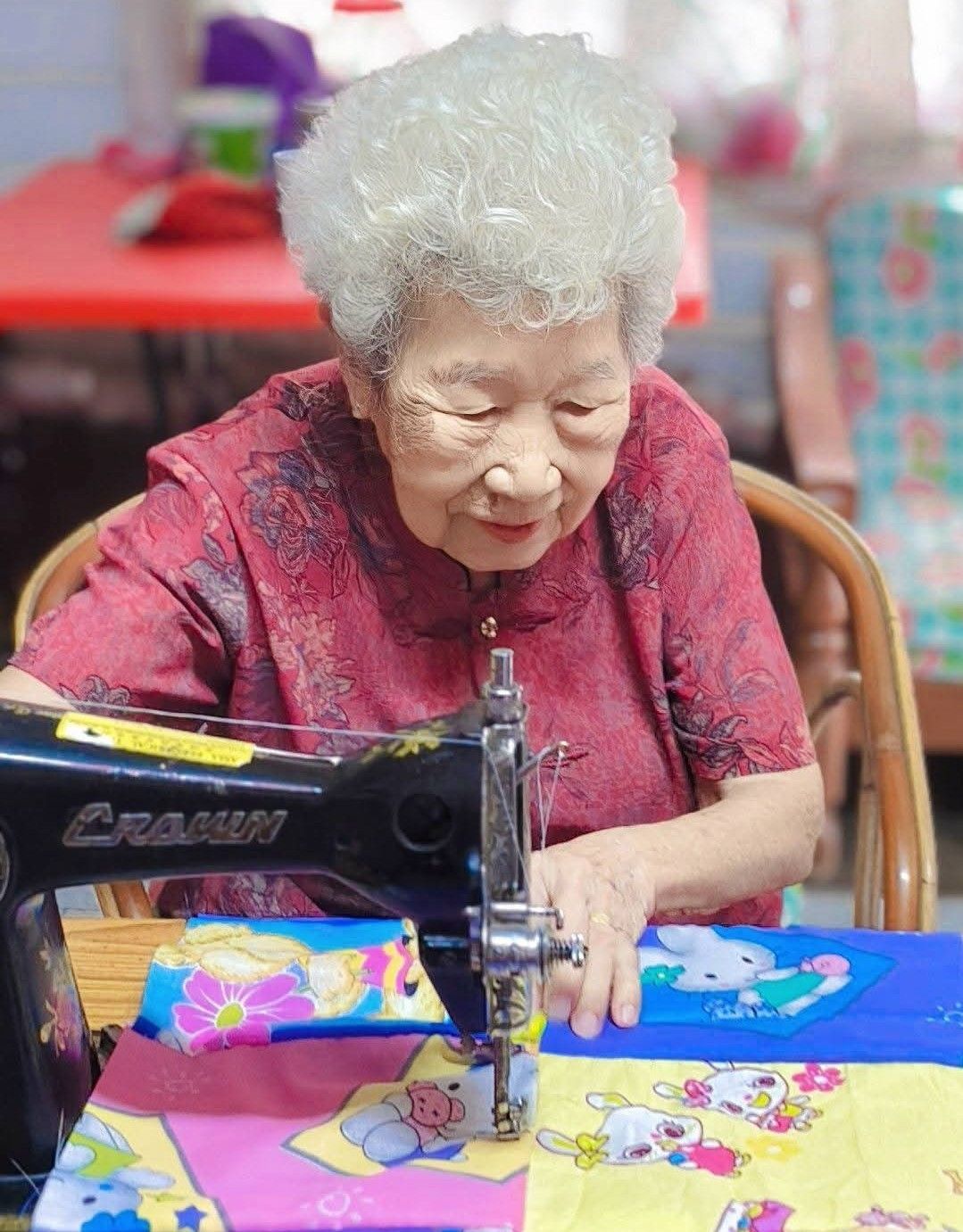
As International Day of Older Persons was celebrated yesterday (Oct 1), Cheong Moi Chai, 92, shows that age is no reason to slow down – especially when there is a sewing machine waiting. Photo: Thevi Elumalai
Cheong turns discarded fabric into colourful, practical floor mats. Photo: Thevi Elumalai
Cheong still enjoys simple daily rituals, including stringing flowers into garlands with Thevi.
Photo: Sautthiary Elumalai
A young Cheong with her late husband D. Elumalai in the 1970s. Photo: Cheong Moi Chai
Cheong washes discarded woven plastic bags before turning them into sturdy bases for her hand-stitched floor mats.
Photo: Sautthiary Elumalai
Cheong picks flowers from around her garden and strings them into garlands.
Photo: Sautthiary Elumalai
Cheong (centre) with daughters Sautthiary (left) and Thevi, who continue to support their mother’s hobbies.
Photo: Sautthiary Elumalai
Fabric scraps find a new lease of life in Cheong’s colourful patchwork.
Photo: Sautthiary Elumalai
Cheong’s retro patchwork cushion covers.
Photo: Sautthiary Elumalai
For Cheong, purpose can be found in the simplest thing, like a handful of flowers carefully strung into a temple garland.
Photo: Sautthiary Elumalai