Since 2014, humanitarian organisation World Vision Malaysia (WVM) has been working alongside rural residents in Sabah’s Mukim Tulid and Tatalaan. Its long-term goal? To create communities capable of sustaining development long after external support has stepped away.
After more than a decade, that transition is now starting to take shape. In Tulid, where the programme concluded in September 2025, and in Tatalaan, where it is set to complete later this year, residents are taking on roles that were once overseen by outside facilitators.
More than 120 community members have participated in summits to identify local challenges and develop solutions, while volunteer-led groups and committees handle initiatives ranging from family welfare to water management.
"The goal was never to stay indefinitely. It was to ensure that when we stepped back, communities were confident enough to step forward and lead their own progress," says WVM Sabah community development programme lead Joseph Lai.
"Our role has been to support and build capacity. That is what sustainable development should look like."
The clearest impact in families can mostly be seen in the younger generation.
More than 500 children have taken part in clubs designed to nurture leadership, confidence and life skills.
Today, these programmes are increasingly being facilitated by trained youth leaders and community members themselves, creating opportunities for children to learn and grow in safe and supportive spaces.
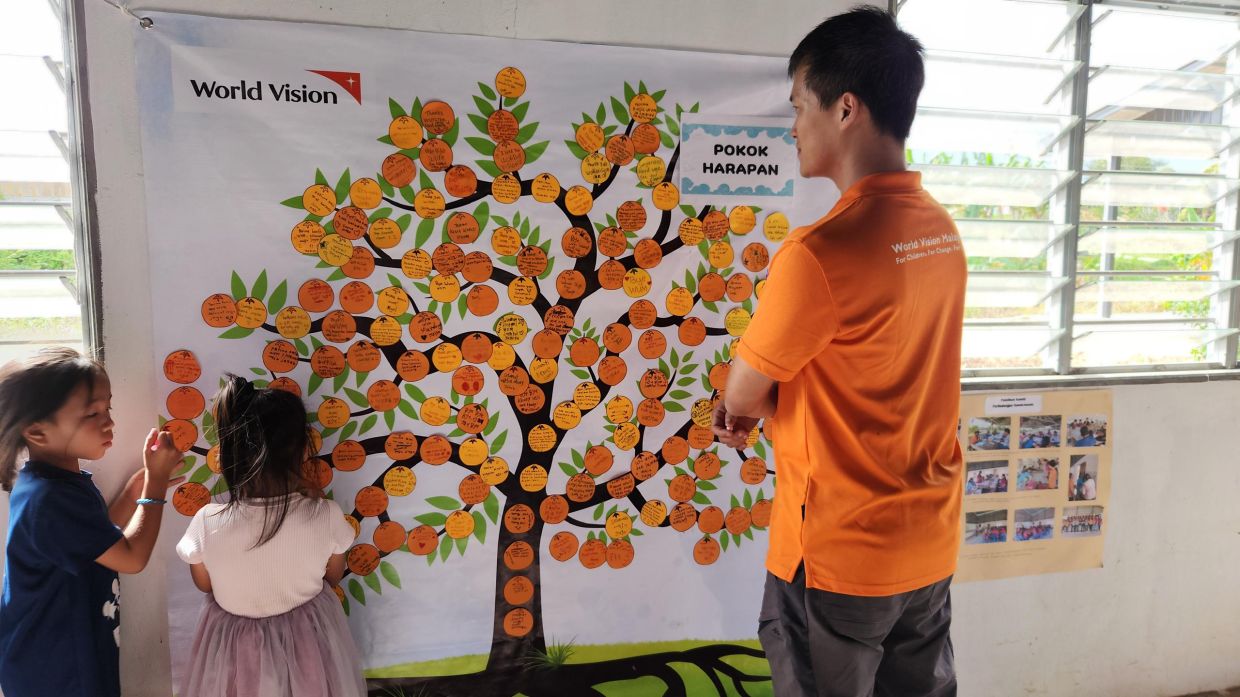
Community involvement
Parents have also become more involved through parenting and child protection efforts, helping to strengthen support systems within the home and community.
When it comes to health and nutrition, families are adopting healthier hygiene and eating practices, reducing rates of child stunting and undernutrition.
Access to clean water has also improved through upgraded gravity-fed systems that are now managed by locally trained committees.
The approach reflects a wider belief that infrastructure alone is not sufficient. Proper knowledge and ownership within the community to maintain it is equally necessary.
Economic resilience, done through farming and livelihood initiatives, are another important piece of the puzzle. Families explore new crops, generate income and reinvest in their communities – a way to move past subsistence living, a lifestyle defined by producing and gathering just enough resources and income to survive, with no surplus to save.
A true milestone is marked by the ability for communities to thrive and sustain on their own, without intervention from external parties and reliance on short-term aid.
"When livelihoods improve, everything else follows – children stay in school, families eat better and communities become more resilient. That’s how local progress connects to national development goals," explains Lai.