
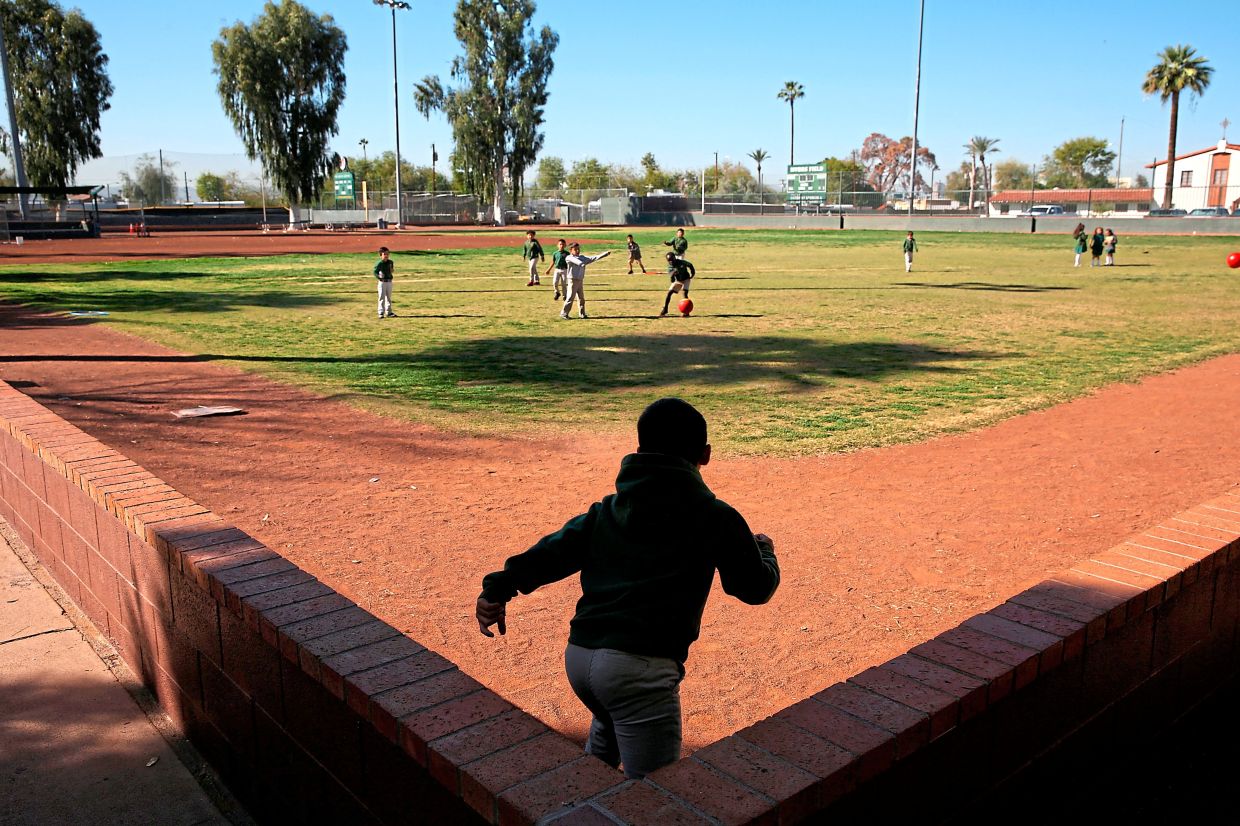
Recess isn’t just a fun break for grade schoolers. It’s crucial to good health and good grades for kids of all ages.
That’s the message from a leading paediatricians group , which just released the first new guidance in 13 years about this unstructured time at school and how it needs to be protected.
The updated policy statement by the American Academy of Pediatrics comes after years of shrinking recesses and worsening children’s health .
The group “has always supported play – free play for kids – but it’s been increasingly threatened over time,” partly by the drive for higher test scores, said Dr Robert Murray, a lead author. “It has a very powerful benefit if it’s used to the fullest.”
The new guidance, published recently in the journal Pediatrics, is similar to the previous policy statement but cites the latest research on why these breaks are essential for kids’ academic success and mental, physical, social and emotional growth.
For example, new evidence shows that kids need pauses between concentrated bouts of learning so the brain can hold and store the information.
Researchers also say recess gives kids a chance to navigate relationships and build confidence, which is just as important for older kids as younger ones.
Murray and his colleagues also stressed the importance of physical activity in preventing obesity, a condition that now affects about one in five United States children and teens.
Given these benefits, they recommend that recess be protected and never withheld for academic or punitive reasons, as sometimes happens in schools.
“If the child is disruptive or rude and disrespectful, recess is one of the things that teachers use to punish kids,” Murray said, adding that students struggling with behavioural issues or grades are often the ones who need recess most.
Kids are losing out
But those students aren’t the only ones losing out. Recess has been waning for all kids. Since the mid-2000s, up to 40% of school districts nationally have reduced or eliminated recess, according to data from the group Springboard to Active Schools in collaboration with the US Centers for Disease Control and Prevention.
Today, the duration of recess varies widely across US schools, ranging from less than 10 minutes to more than an hour a day, the paediatrics group said. Older kids generally get less time than younger ones.
Ideally, studies show, kids should get a minimum of 20 minutes a day and multiple breaks. In other countries such as Denmark, Japan and Britain, students get breaks after every 45 minutes to 50 minutes of classroom instruction.
“They should get a long enough period of time where they can de-stress and blow off steam and prepare for the next class,” Murray said.
Dr Lauren Fiechtner, a childhood obesity expert at Mass General Brigham for Children in Boston, said she’s glad about the updated recess recommendations. She’s seen the importance of recess as both a doctor and mother of two. She recalled how her eight-year-old son learned how to play basketball at recess and now loves the game.
Fiechtner, who wasn’t involved in creating the guidance, agrees with the recommendation that middle and high school students need recess, too.
“As kids get older, they’re more on their screens. So it’s really helpful, I think, for outdoor activity and recess to be happening,” she said. “Recess is great. We all kind of need recess.” – AP