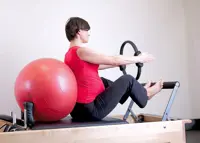
Regular exercise benefits both expectant mothers and their babies.
Women who are physically active and get pregnant need not stop doing sports. Pregnancy and physical activities are not mutually exclusive. But it is best to temporarily halt some sports.
It’s a question of striking the right balance and listening to your body. We talked to two specialists about the benefits of sport for expectant mothers plus options, limits and risks.
What positive effects does exercise during pregnancy have on a mother and her child?
Quite a few, studies show. For one thing, exercise is good for the mother, says Klaus Doubek, a specialist in gynaecology and obstetrics
“Exercise improves stamina, strengthens muscles and the circulatory system, and can alleviate typical complaints such as back pain or water retention.”
Exercise also reduces the risk of gestational diabetes or high blood pressure. And it creates the right conditions for the baby bump to shrink back to normal after the birth, he says.
Sport also brings psychological benefits. “Pregnant women who exercise experience fewer mood swings,” says psychologist Marion Sulprizio from the German Sport University Cologne. Not least because they cope better with physical changes such as reduced mobility or water retention.
Exercising also boosts a woman’s confidence in her ability to make a difference through her own actions.
Even the baby in the womb benefits from the mother’s exercise. “Studies show that exercise during pregnancy can lead to improved blood flow to the placenta and measurable improvements in the unborn child’s heart and circulatory function,” says Dr Doubek, who is the president of the Professional Association of Gynaecologists.
Sulprizio says exercise during pregnancy reduces both the risk of giving birth to a very heavy baby and the risk of the child becoming overweight later in life.
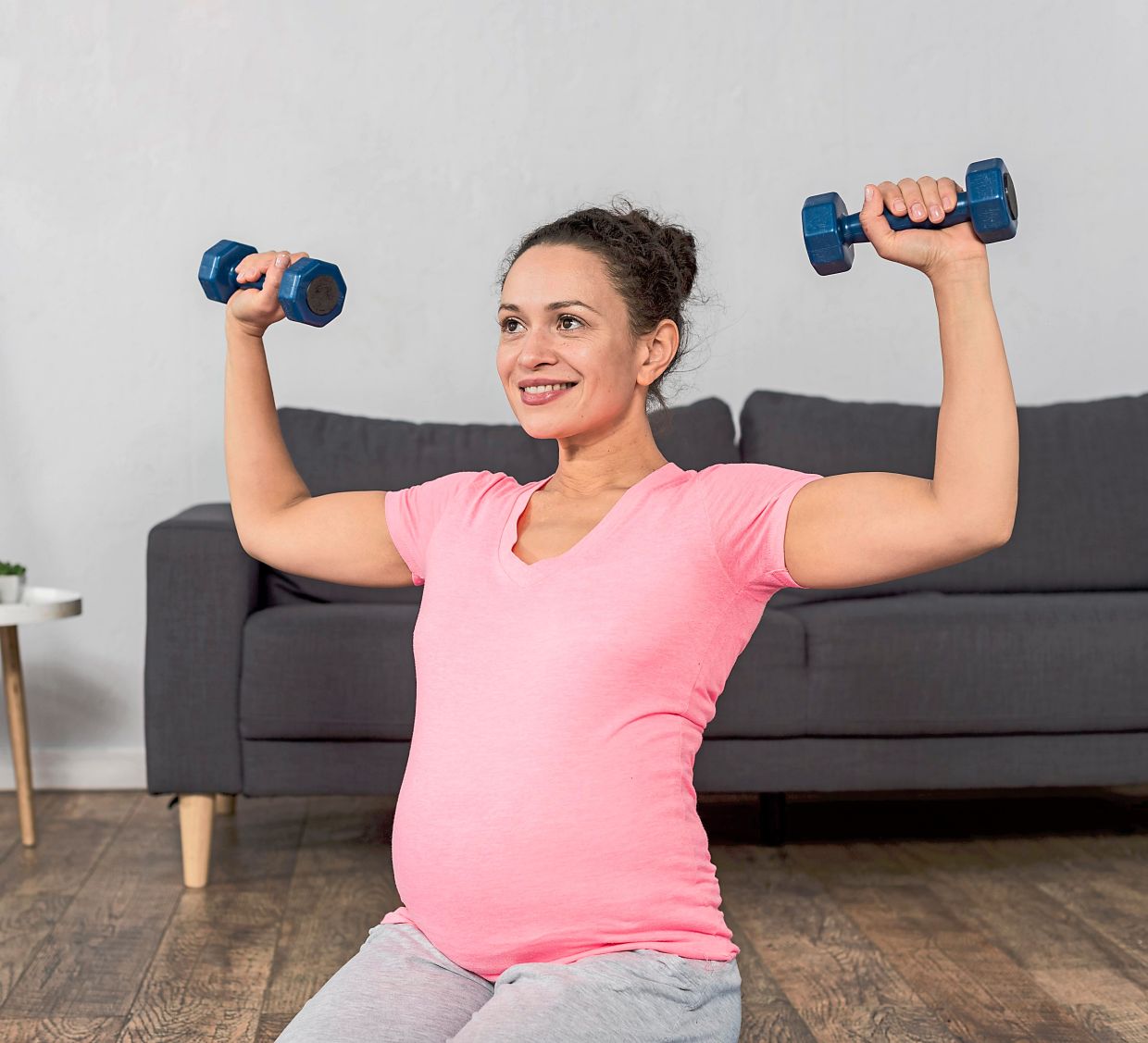
Which sports are suitable during pregnancy? And which are not at all?
If women only take up exercise during pregnancy, gentle sports are recommended, mainly swimming, yoga or gymnastics.
Special classes for pregnant women are often offered for these or similar sports, and in some places, health insurance funds may contribute towards the costs if certain criteria are met.
Whether it’s jogging, light strength training or cycling, if a woman was already exercising before her pregnancy, she can usually continue with her training.
“It is important that the intensity is adjusted to suit the individual’s well-being as the pregnancy progresses,” says Dr Doubek.
However, some sports are not particularly compatible with pregnancy. “You should avoid all activities with an increased risk of falling or injury, such as horse riding, skiing, snowboarding and squash,” he says. Sports involving physical contact or potential impacts to the abdomen, such as football or martial arts, are also risky.
“Intense strength training involving forced breathing should also be avoided to prevent strain on the circulatory system and increased pressure in the abdominal cavity,” says Dr Doubek.
Pregnant women should avoid isolated exercises targeting the rectus abdominis muscles, but they can certainly exercise them gently. “Instead of doing crunches or sit-ups, you can, for example, get down on all fours and pull your navel inwards,” says Sulprizio.
If a pregnant woman is heading to high altitudes whilst exercising, she should avoid altitudes above 2,500m. “The lack of oxygen becomes too severe above a certain altitude,” she says. The same applies to depth – for example, when diving. “Snorkelling, on the other hand, is fine.”
How intense can the exercise be?
There’s no one-size-fits-all answer; it depends on various factors: how old is the woman, how fit is she, and did she exercise before pregnancy or not?
“According to current recommendations, younger pregnant women can certainly reach a heart rate of up to 155 whilst exercising,” says Marion Sulprizio by way of example. “Women aged over 40 should ideally stay below 140.”
International guidelines recommend that pregnant women aim for at least 150 minutes of moderate exercise per week, says Doubek. It’s best to split this time into daily sessions of 20 to 30 minutes.
“‘Moderate’ means you should still be able to hold a conversation whilst exercising without getting out of breath,” he says. “This so-called ‘talk test’ is a good indicator."

What is still safe to do right up until the birth?
Generally speaking, exercise is recommended right up until the birth in the case of an uncomplicated pregnancy. Over time, however, the growing bump inevitably imposes increasing physical limitations.
From the fourth month onwards, pregnant women should, if possible, avoid exercising whilst lying on their backs. This is because, in this position, the weight of the uterus can easily compress important blood vessels.
“This means less blood returns to the heart, which can lead to circulatory problems and temporarily restrict blood flow to the womb,” says Dr Doubek. However, many exercises can be adapted by sitting up slightly, lying on your side, sitting down or standing up.
In the final trimester, exercise should also be significantly less intense. “Your own body awareness is an important guide during pregnancy,” he says. Ultimately, it depends on how the pregnant woman feels whilst exercising. If it becomes too strenuous, she should take it easier.
In the final weeks of pregnancy, exercises that focus on breathing techniques, posture, mobility and the pelvic floor – such as yoga – can be particularly beneficial. “Swimming or aqua aerobics are ideal right up until the end,” he says. “Symmetrical movements are good, and the buoyancy of the water makes you feel your weight less.”
What are the warning signs that you should stop exercising?
The doctor cites severe pain, shortness of breath, dizziness, circulatory problems or severe exhaustion as warning signs of overexertion. “If any of these symptoms occur, you should stop exercising immediately and seek a gynaecological assessment,” he says. Gynaecologists will also advise you to stop exercising if, for example, you have a shortened cervix.
Every woman and every pregnancy is different. If a pregnant woman is therefore unsure about what is and isn’t safe, she should ask her gynaecologist for advice. “We always advise pregnant women who exercise to make sure they attend all their check-ups with their gynaecologist,” says Sulprizio. “And not to ignore their advice.” – dpa