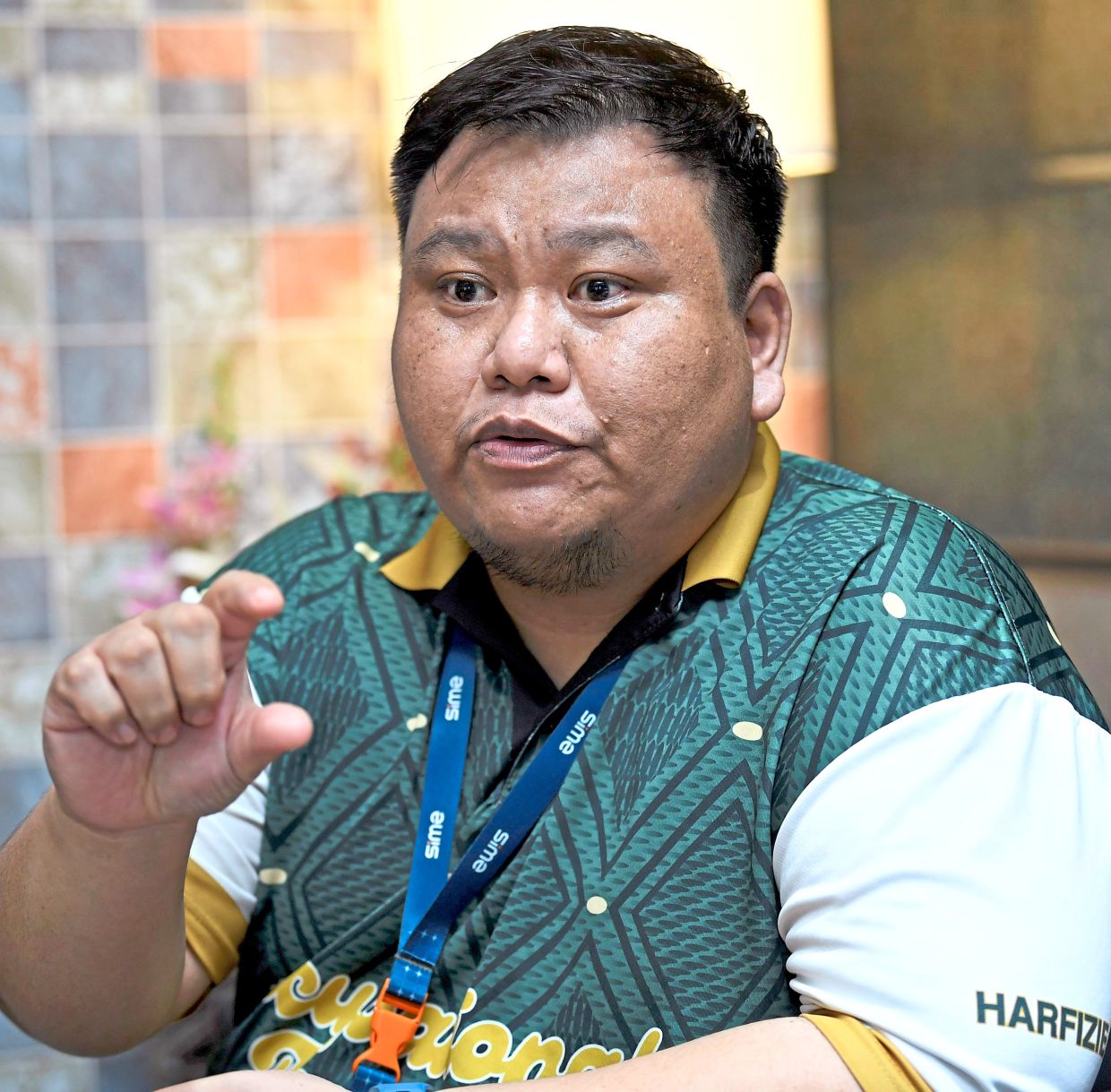
In his 15 years as an occupational therapist, Mohd Harfizie Hassan, 38, has met hundreds of amputees, each facing different emotional challenges in coming to terms with the loss of a limb.
Some battle depression and low self-esteem, while others have even voiced suicidal thoughts. The rehabilitation professional at Hospital Rehabilitasi Cheras (HRC) in Kuala Lumpur says acceptance is often the biggest hurdle as patients adjust to life after amputation.
"Amputee patients at HRC go through a period of denial, when they struggle to accept that they have lost a limb. Each patient is different, so we have to understand their struggles and find ways to motivate them.
"Many think they will never be able to do the things they used to, but they are still capable of doing them, just in a different way," he says during an interview at the hospital in Bandar Tun Razak, Cheras, recently.
The emotional challenges faced by amputees are also reflected in a 2018 cross-sectional study titled, "Depression and Its Associated Risk Factors Among Lower Limb Amputees at Hospital Kuala Lumpur and Hospital Sultanah Bahiyah."
The study, published in Universiti Teknologi Mara (UiTM) Institutional Repository, found that depression was associated with a younger age, being single and low educational background, in terms of socio-demographic factors.
When it came to clinical factors, depression was found to be associated with conditions such as bilateral amputation, trauma as a reason for amputation, and absence of prosthesis as a type of walking aid.
At HRC, rehabilitation goes beyond helping patients cope with the emotional impact of losing a limb. Mohd Harfizie and his colleagues, comprising doctors, nurses and physiotherapists, adopt a holistic approach to help amputees rebuild their confidence, regain independence and return to their communities.
Through occupational therapy and physiotherapy, patients learn everyday skills and undergo exercises to help them adapt to life after amputation.
"The aim is to equip them with the confidence and ability to manage daily tasks, move around independently and, where possible, return to work and the activities they enjoy," says Mohd Harfizie, whose team conducts about 500 rehabilitation sessions a month for 20 patients, averaging 25 sessions per patient.
Group activities also form part of the rehabilitation programme. Every Thursday, patients participate in games and sports such as netball, handball, football, badminton, volleyball and hockey.
The activities are rotated to encourage interaction, teamwork and camaraderie.
"Sometimes, patients become discouraged because rehabilitation involves repetitive exercises. Group activities give them something to look forward to. They get to enjoy themselves, make friends and see what they can achieve," says Mohd Harfizie.
Learning to live independently
These include bathing, using the toilet, getting dressed, brushing their teeth and preparing meals.
Occupational therapists also assess patients' homes to identify obstacles that could make daily living difficult or unsafe, recommending modifications to improve accessibility, Mohd Harfizie shares.
"We evaluate the layout of patients' homes, including doorways, bathrooms, kitchens and access routes, before recommending changes to make their living spaces safer.
"Some patients have difficulty entering their bathrooms because the doorways are too narrow or there are raised steps. We suggest suitable changes, such as installing ramps or using anti-slip mats."
This is particularly important for patients with diabetes-related amputations, as some may also have diabetic neuropathy, which affects sensation in their remaining limbs and feet, increasing their risk of falls.
Therapists also recommend suitable mobility aids, including wheelchairs, walking sticks and elbow crutches, depending on each patient's needs and abilities.
For someone living in a flat without a lift, climbing stairs can be a major challenge.
"Before allowing them to return home, we need to know whether they can manage the stairs. If there are 40 steps and no handrails, we work with the physiotherapist to train them until they can manage safely," says Mohd Harfizie.
Building strength and mobility
Amputees generally undergo two stages of rehabilitation: pre-prosthetic training and prosthetic (post-prosthetic) training.
Pre-prosthetic training includes learning to move safely using a wheelchair, walking frame or crutches, as well as practising how to get in and out of bed, transfer to a chair, bathe and perform other everyday tasks.
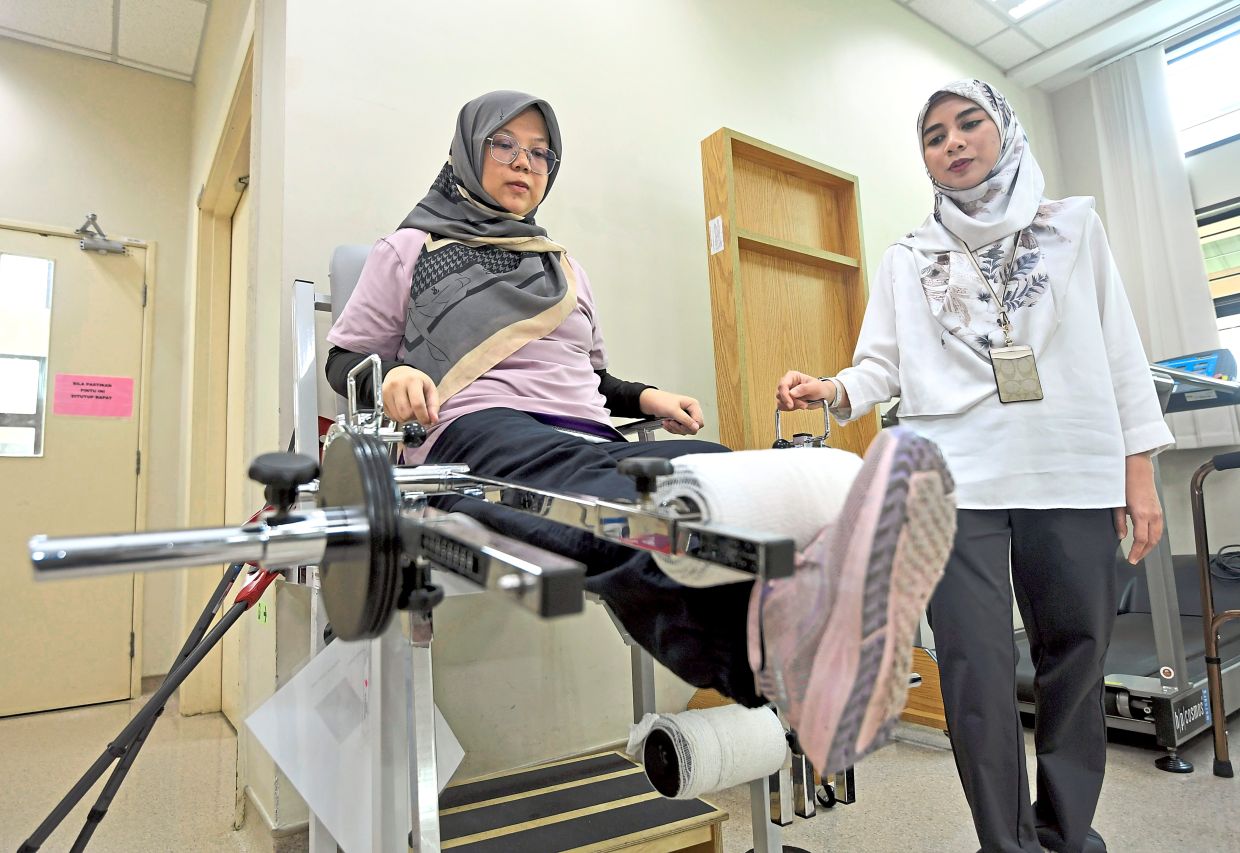
During the prosthetic training period, patients undergo further training to learn how to wear the artificial limb, balance and move about safely. (The weight of a prosthetic leg is between 2kg and 5kg).
The aim is to prepare them physically and mentally for life with an artificial limb, and eventually help them regain mobility and independence.
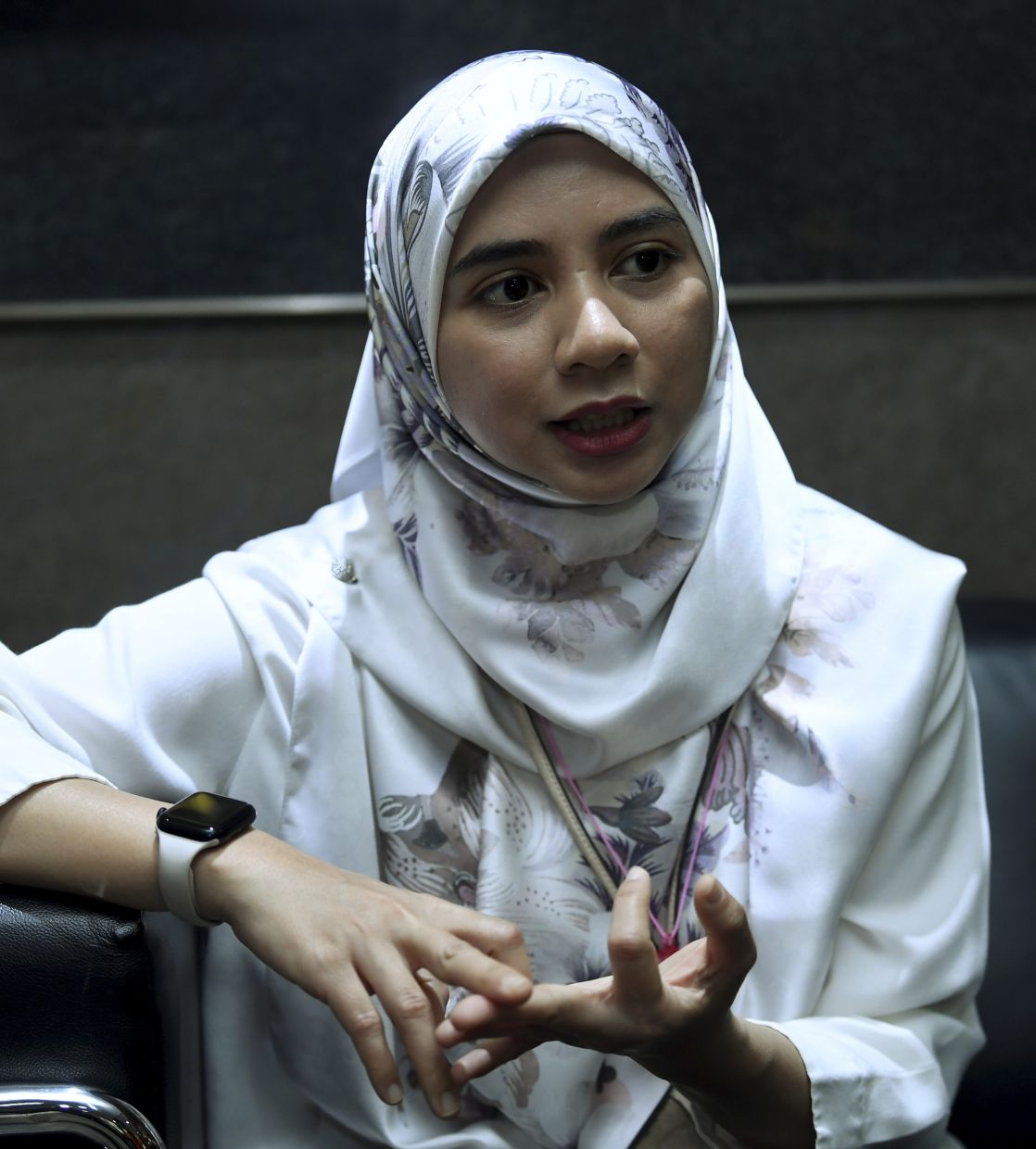
"People may think that once they receive a prosthetic leg, they can immediately put it on and walk. But it is not that simple. They need to build strength, learn to balance and become comfortable using it," says Nur Izwani, who has worked at HRC for 14 years.
Exercises begin with basic movements, such as sitting, standing and transferring from a bed to a wheelchair. Patients gradually progress to half squats, leg lifts and bridge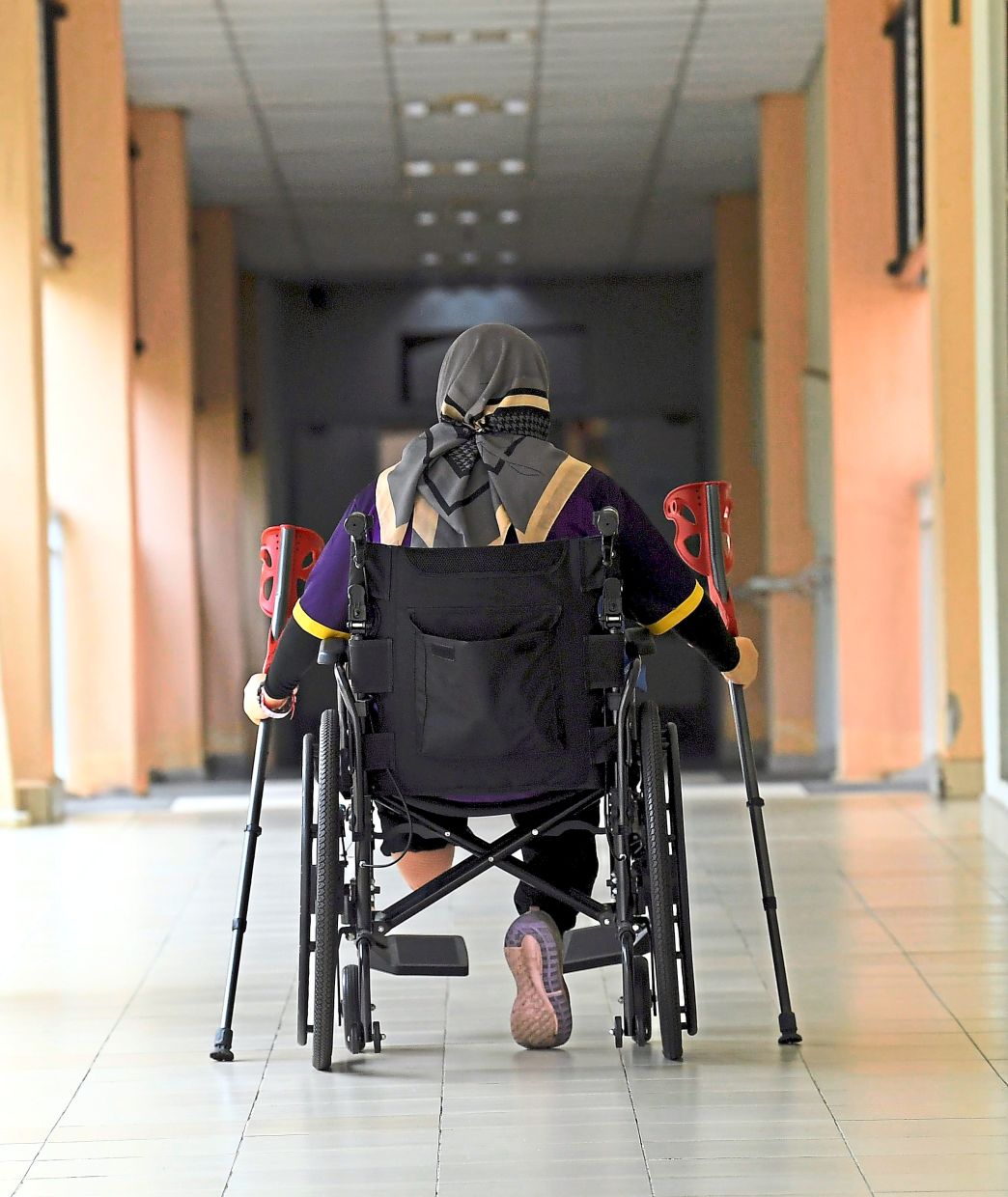
Core and back muscles are also strengthened to improve stability, while balance training helps patients learn to stand steadily, walk and perform everyday activities.
"Every patient has different goals. Some want to walk independently, others want to return to work, while some want to participate in sports. We plan their training according to what they hope to achieve," she says.
Both therapists encourage amputees and their families to explore rehabilitation services and available financial assistance rather than giving up after surgery, Nur Izwani shares.
"Don't give up on yourself. With the right support and rehabilitation, you can regain your confidence and learn to do many things again."
For those who need financial help, amputees with an OKU card receive free treatment at HRC. Assistance with prosthetic limbs and mobility equipment may also be available through organisations and funding programmes, including Social Security Organisation (Perkeso) and zakat.
Rebuilding their confidence
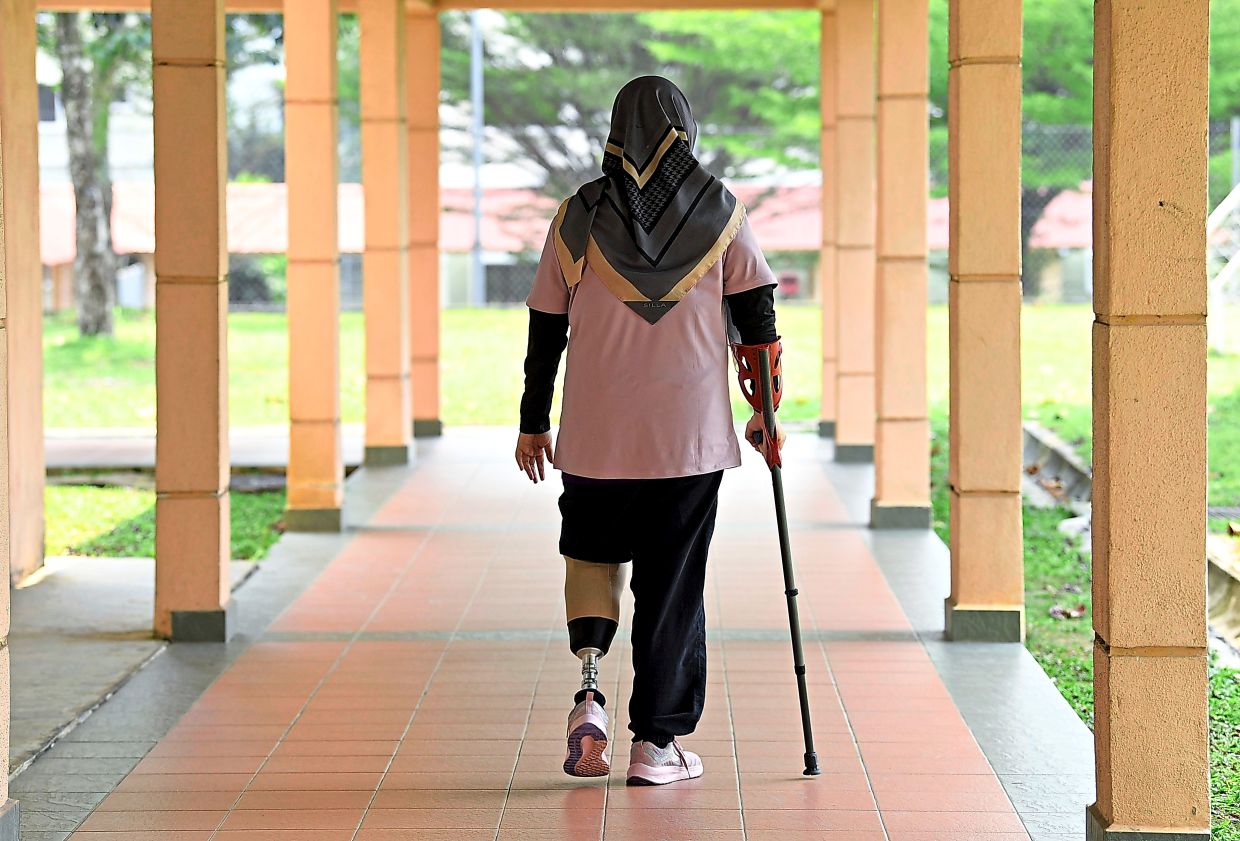
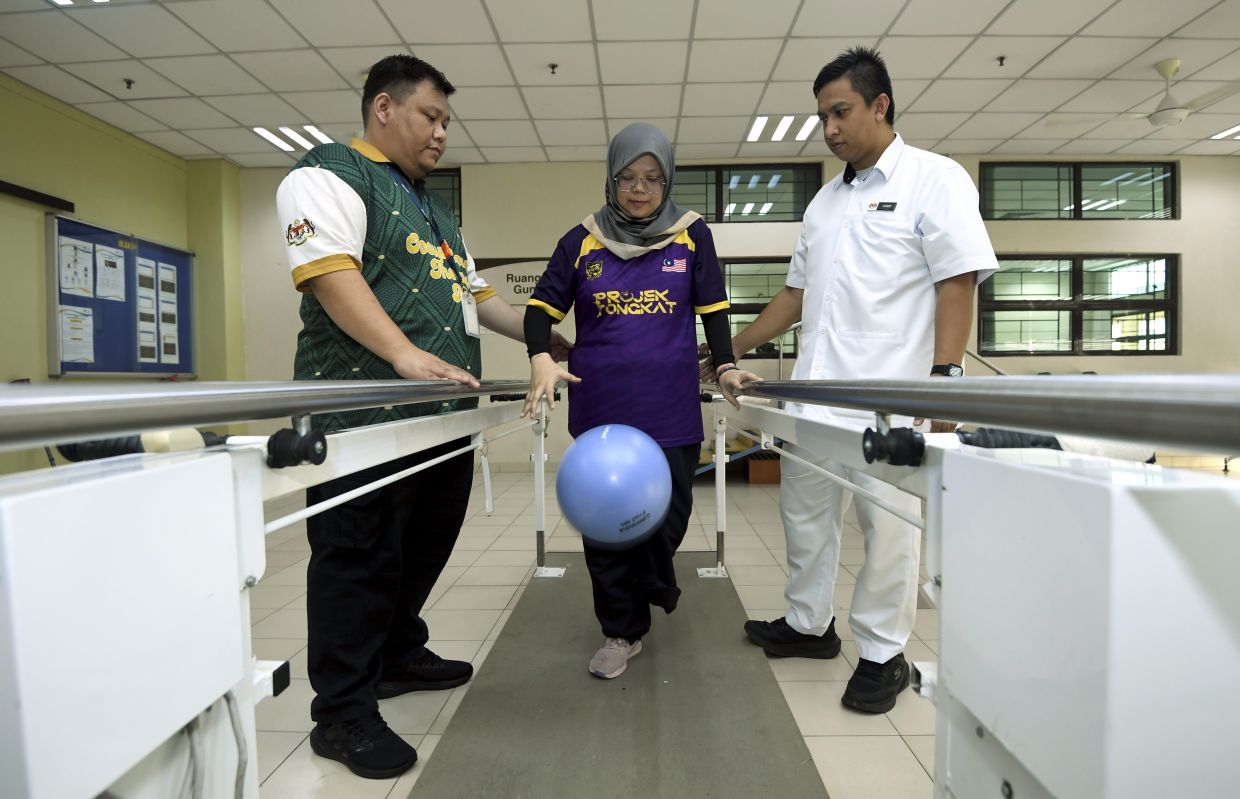
Rehabilitation helps amputees regain their balance and learn to walk again using prosthetic limbs or crutches. Photos: The Star/Azhar Mahfof
Mohd Harfizie (left) and Hospital Rehabilitasi Cheras staff member Asme Safry Arjan guide Nurul Adawiyah Kamarudin through her rehabilitation exercises.
Photo: The Star/Azhar Mahfof
Nur Izwani (right) guides Nurul Adawiyah Kamarudin as the latter works on improving her strength and balance during a rehabilitation session.
Photo: The Star/Azhar Mahfof
'Occupational therapists help amputees relearn daily tasks and regain independence,' says Mohd Harfizie.
Photo: The Star/Azhar Mahfof
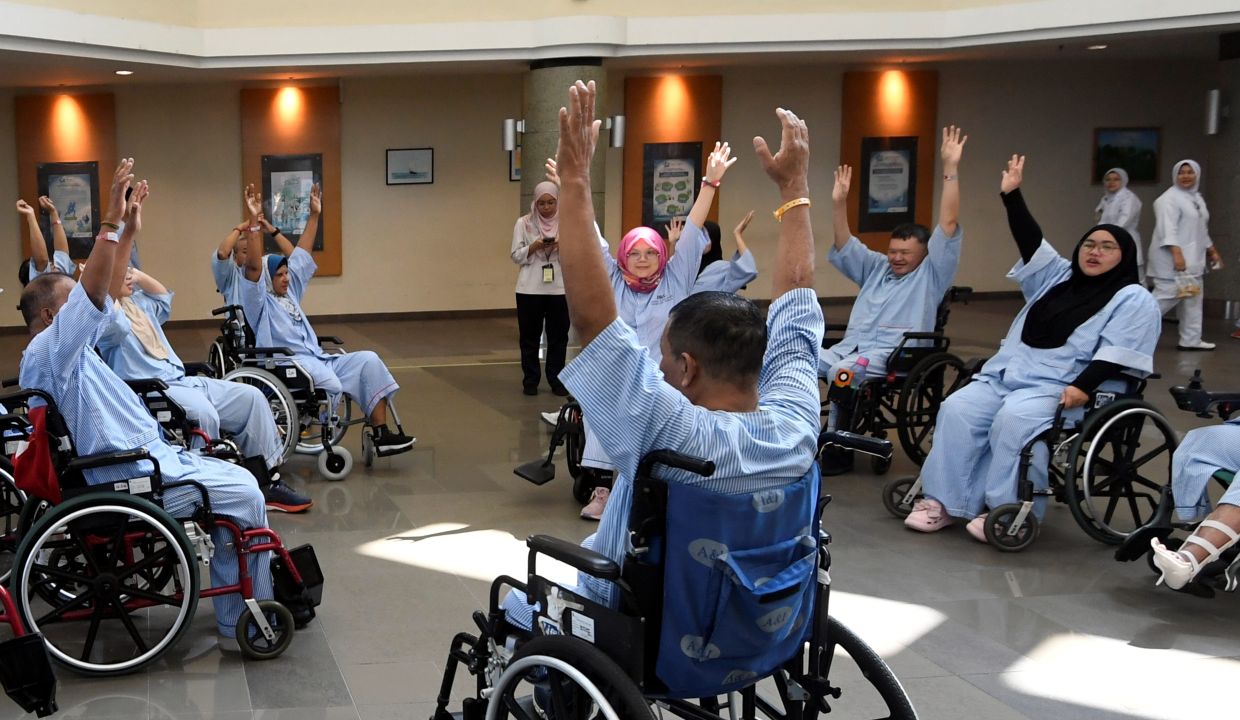
Many amputees struggle emotionally as they adjust to life after losing a limb.
Photo: The Star/Azhar Mahfof
At Hospital Rehabilitasi Cheras in Kuala Lumpur, amputees undergo strength training to improve their mobility and prepare them for a return to community life.
'Amputees need to build strength, learn to balance and become comfortable using a prosthetic leg,' says Nur Izwani.