




At a special school in Kenya, the classrooms look like few others. Instead of standing and lecturing at Rare Gem Talent School, teachers use hands-on lessons focused on sights, sounds, and feelings designed for a unique type of learner: students with dyslexia.
Despite increasing access to public education in Kenya, students with learning disabilities are frequently left behind. Requiring only tweaks to core curriculums, Rare Gem is one of a handful of schools in the country tailored to children with dyslexia and other learning challenges.
Dyslexia affects around 10% of learners and represents a stumbling block to literacy. A lack of accommodation threatens to leave behind a vast swathe of a booming youth population in Kenya – and across the continent.
At his old school, "teachers didn’t understand me,” said Rare Gem student Jason Malak Atati. "This school is much better.”
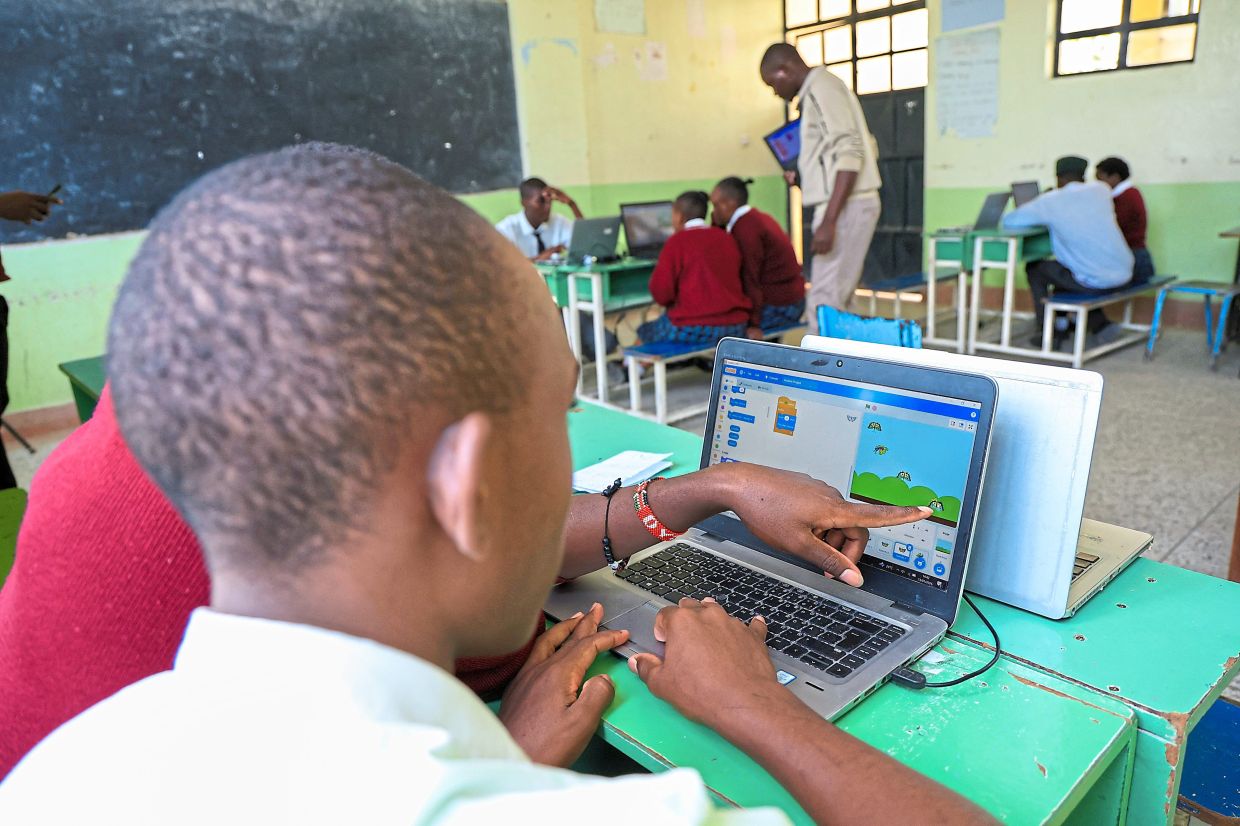
Common issues for children with dyslexia are simple errors that impede literacy, like mixing up letters like "b” and "p” or even the number "9,” said Dennis Omari, a special needs educator. "The early signs to look out for are if children have issues with phonological awareness – not able to listen to exact sounds in a particular language – and when kids fail to read,” said Omari.
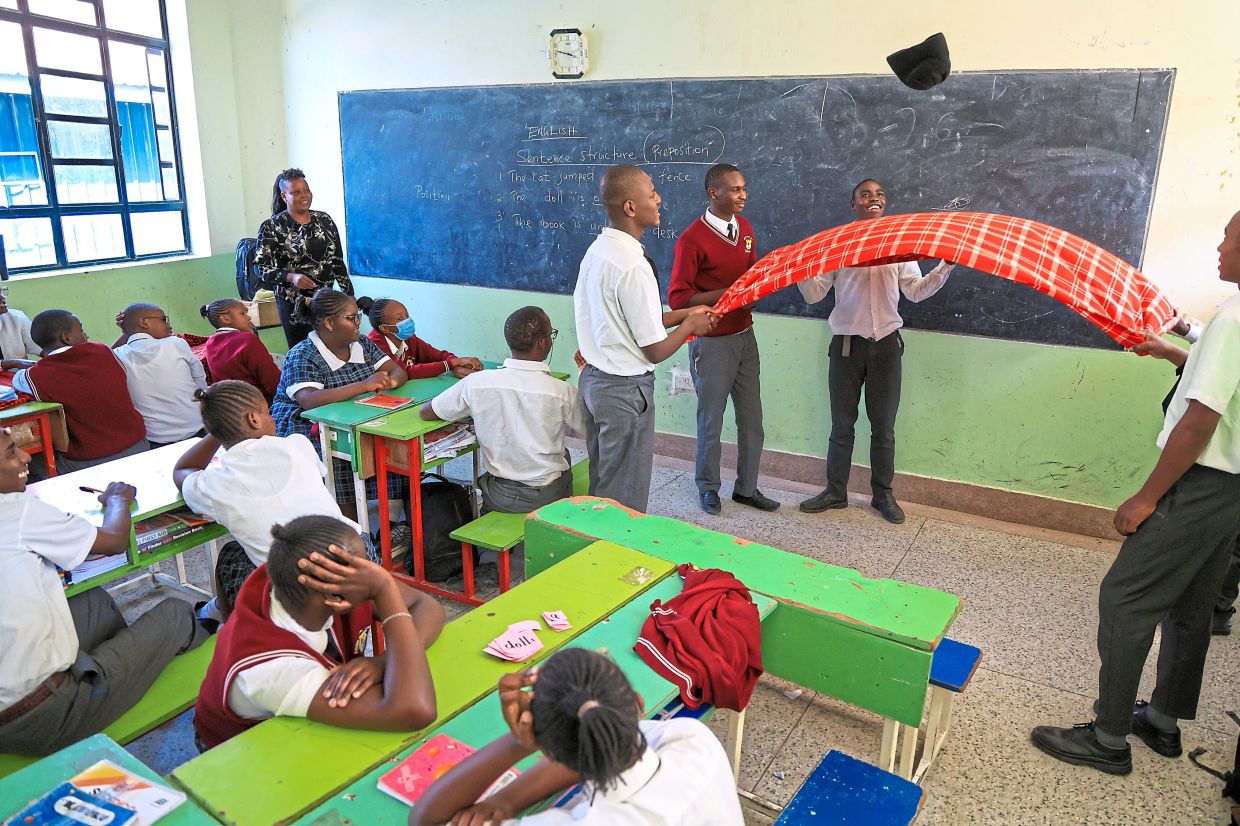
Rare Gem addresses blocks through what Omari calls a multi-sensorial approach to reading, with educators honing in on alternative learning styles. These could be visual, like coding word sounds with colors, auditory - teaching spelling patterns through song - or tactile, with objects used to represent word construction that forms the foundation of reading.
"You teach step by step until the learner gets what you’re teaching, not a lecture method where the teacher stands in front,” said Dorothy Kioko, a teacher at Rare Gem. "You have to have additional knowledge on how to handle them with patience.”
Overcoming challenges
Rare Gem was set up in 2012 through the Dyslexia Organisation Kenya and opened with fewer than 10 learners. Today the school hosts some 210 students, mostly with dyslexia, but also accommodates those with other learning challenges like autism.
"If they are identified early and intervention given early, they improve their skills and learn to identify their talents - and they complete school,” said Phyllis Munyi, the founder of Rare Gem, who started the school after her son faced unaddressed learning challenges from dyslexia.
The school charges tuition fees of US$180 (RM704) a term, less than the cost of popular high-end private schools but significantly higher than the government schools attended by most Kenyan children.
Stigma and a lack of awareness, especially among parents, are the main challenges to getting children into alternative education like Rare Gem early, said Munyi. Another major discouraging factor for students is bullying that they may have faced at their prior school.
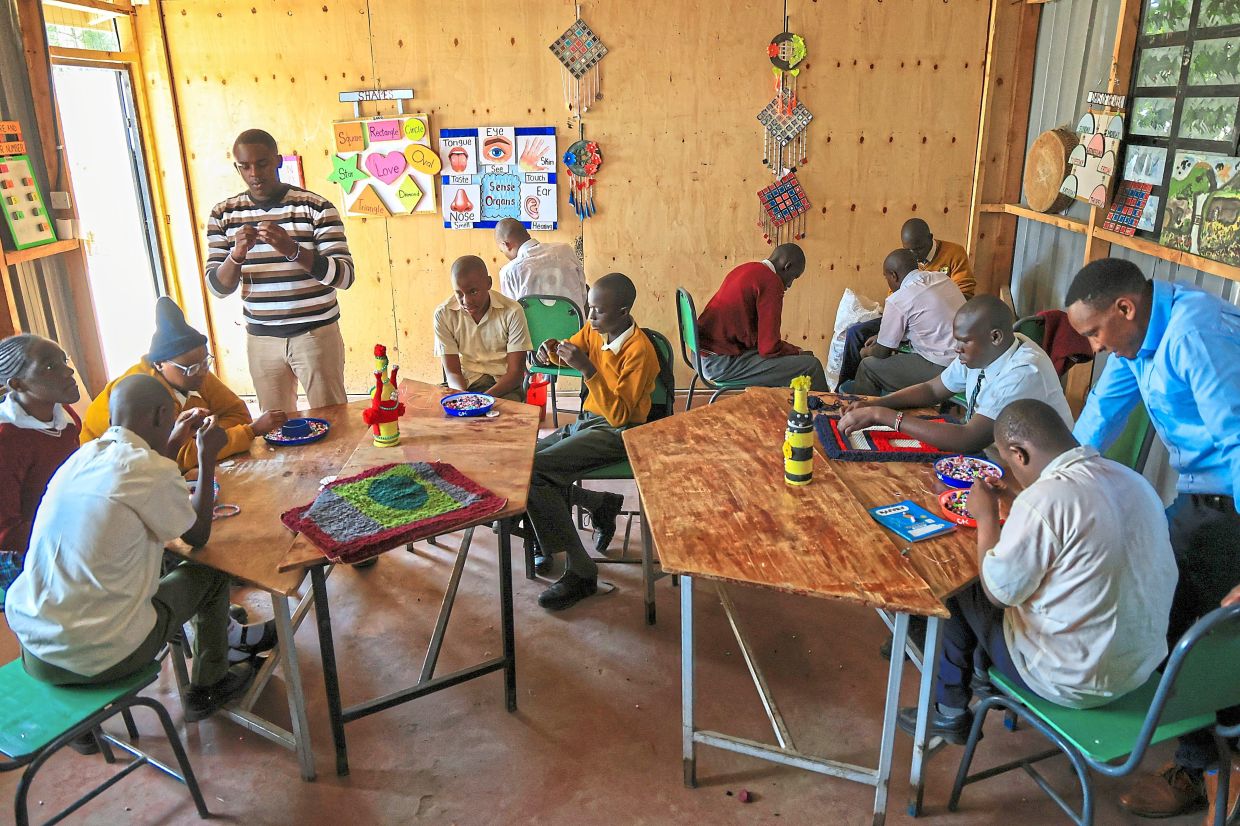
"In other, normal schools, there was a lot of discrimination, a lot of bullying,” said Geoffrey Karani, a former student at Rare Gem. Today, Karani is an art teacher at the school who sees mentorship as a key part of his job. "I’m not only teaching, I’m showing kids that I’ve been on the same journey,” he said.
Kenya has been successful in increasing access to education in recent decades, with the number of students enrolled in primary school rising from 5.9 million in 2002 to 10.2 million in 2023-outpacing population growth.
Yet education access for those with disabilities has lagged. While 11.4% of Kenyan children have special needs, just 250,000 such students are enrolled in the country’s educational institutions, according to So They Can, a nonprofit focused on increasing education access in Africa.Rare Gem may offer a model to increasing access without dramatic overhauls to curriculums. The curriculum at the school is not bespoke, but rather a version of Kenya’s core curriculum tweaked to meet the learning needs of students with dyslexia and other difficulties, said Munyi.
She added: "The curriculum was not designed as a standalone ... nor is it limited to dyslexia.” – AP


